Hear from Our Customers
When land clearing is done right on a North Shore property, you’re not just removing trees. You’re getting a site that’s compliant, clean, and ready for whatever comes next whether that’s a builder breaking ground, a landscaper starting fresh, or simply getting your property back under control after years of unchecked growth.
East Shoreham lots come with real challenges. The mature hardwood canopy, dense native understory, and proximity to Wildwood State Park’s 727-acre forest mean that vegetation here grows thick and fast. Add in the invasive species pressure bamboo that spreads underground, multiflora rose that chokes out everything around it, phragmites pushing into low-lying areas near the Sound and you’ve got a job that requires more than a chainsaw and a pickup truck.
What you get when the job is finished correctly is a site where the root systems are actually addressed, not just the above-ground growth. Debris is hauled away in compliance with Chapter 72 of the Town of Brookhaven Code, which expressly prohibits burying trees and clearing material on your property. No buried piles left behind. No regrowth from root systems that were only cut at the surface. Just a clean, level site that holds up over time.
We’ve been working on Long Island properties long enough to know that East Shoreham is its own category. This isn’t central Suffolk County with flat, open lots and minimal tree cover. You’re on the North Shore, where properties back up against hardwood forest, bluff terrain runs along the Sound, and the Town of Brookhaven’s tree clearing permit requirements apply the moment your lot hits two acres.
We know the Shoreham-Wading River area intimately. We know what grows here, what the town requires, and what it takes to leave a site in genuinely good shape. From the Shoreham Manor section to larger wooded parcels near the Wildwood State Park boundary, we’ve worked in this landscape and that familiarity matters when the job involves regulated trees, wetland-adjacent boundaries, or invasive species that need more than surface-level removal.
We’re Suffolk County licensed and fully insured. Every job we quote is transparent, with clearing, stump grinding, and debris removal broken out as separate line items so you know exactly what you’re paying for before we start.
It starts with a site assessment. Before any equipment rolls in, we walk the property with you, identify what’s regulated under the Town of Brookhaven’s Chapter 70 tree preservation code, and flag anything near wetland boundaries or bluff terrain that requires additional care. If your property is two acres or more, a Tree Clearing Permit is required and we’ll tell you that upfront, not after the invoice arrives.
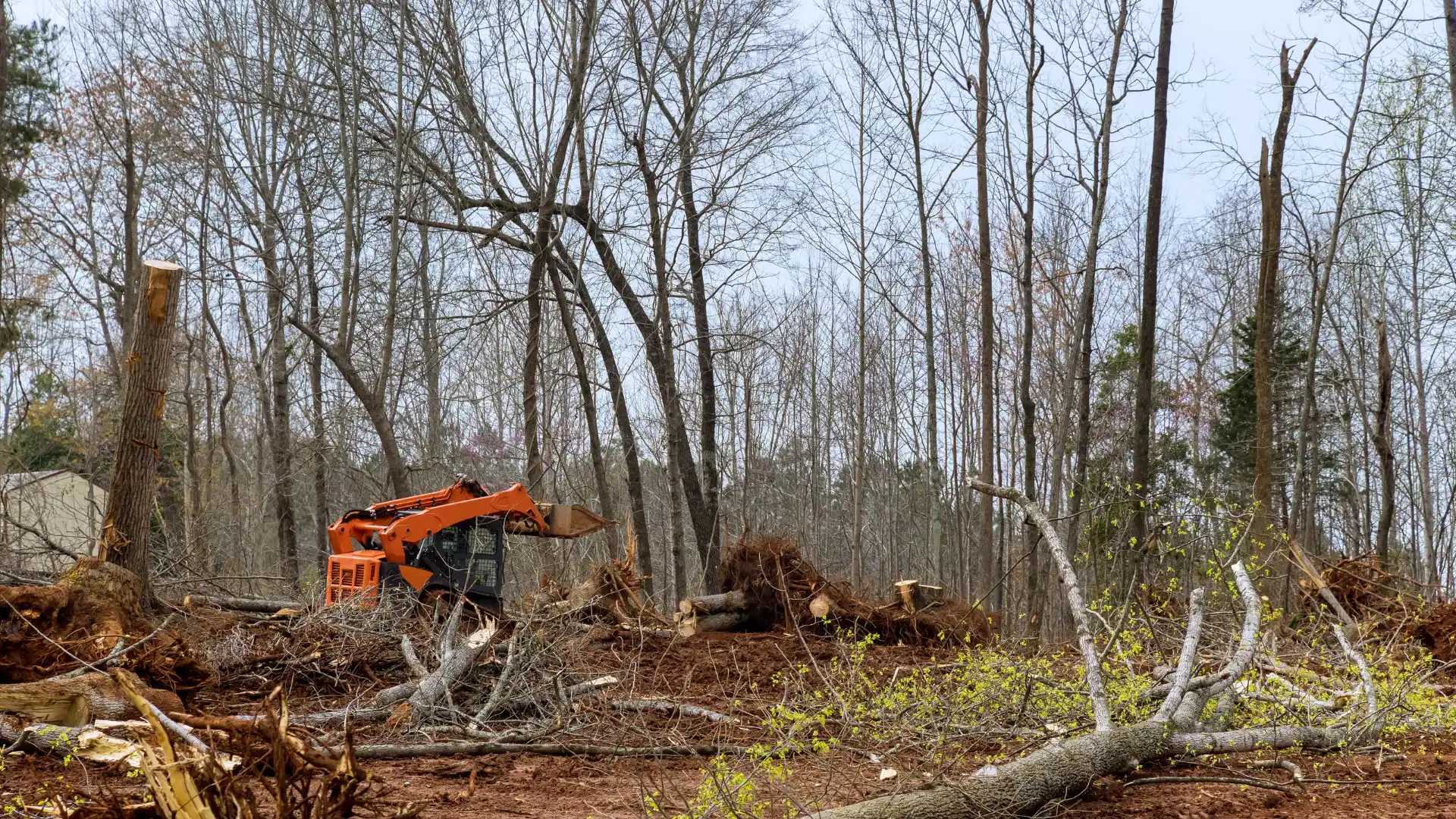
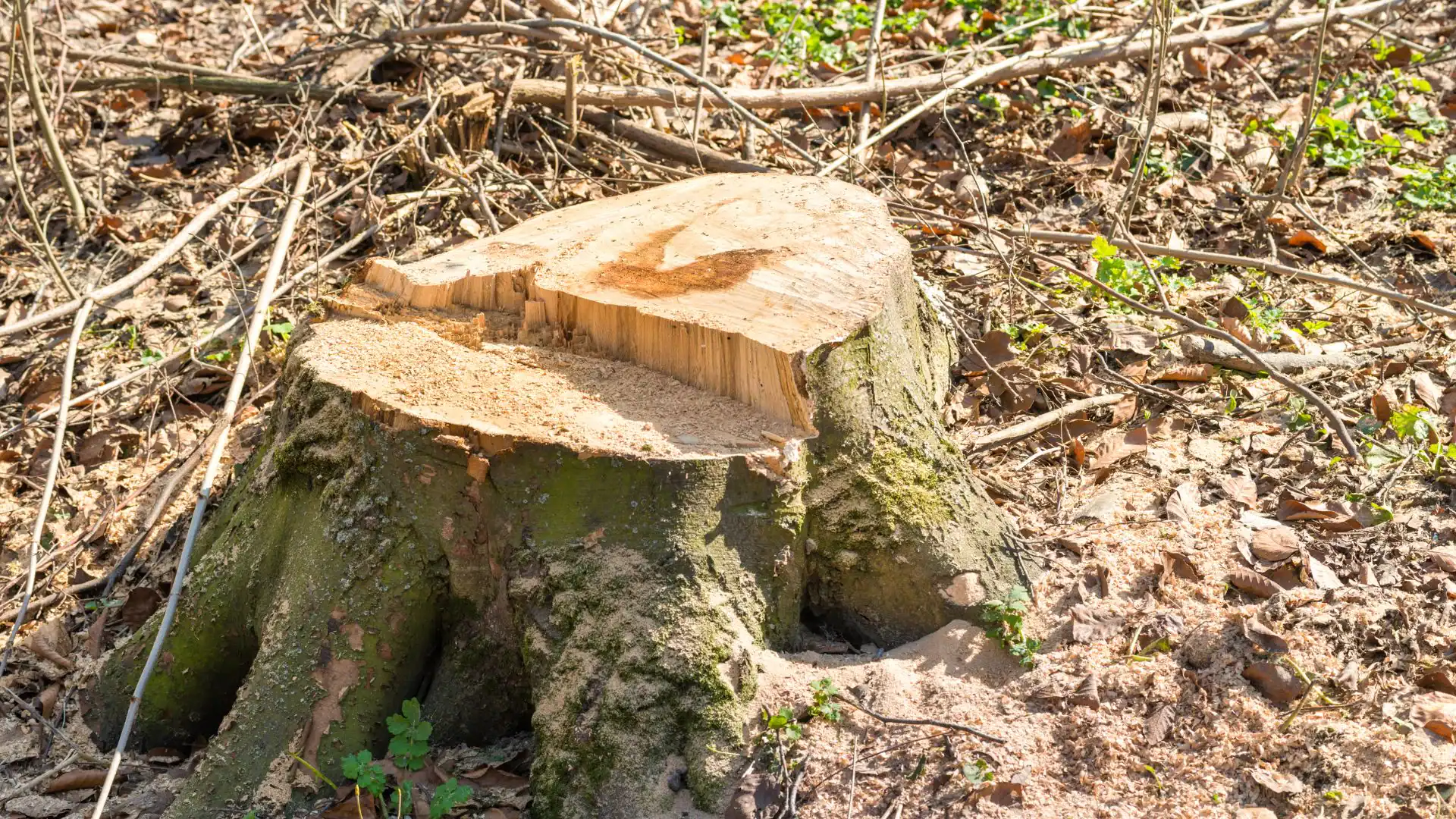
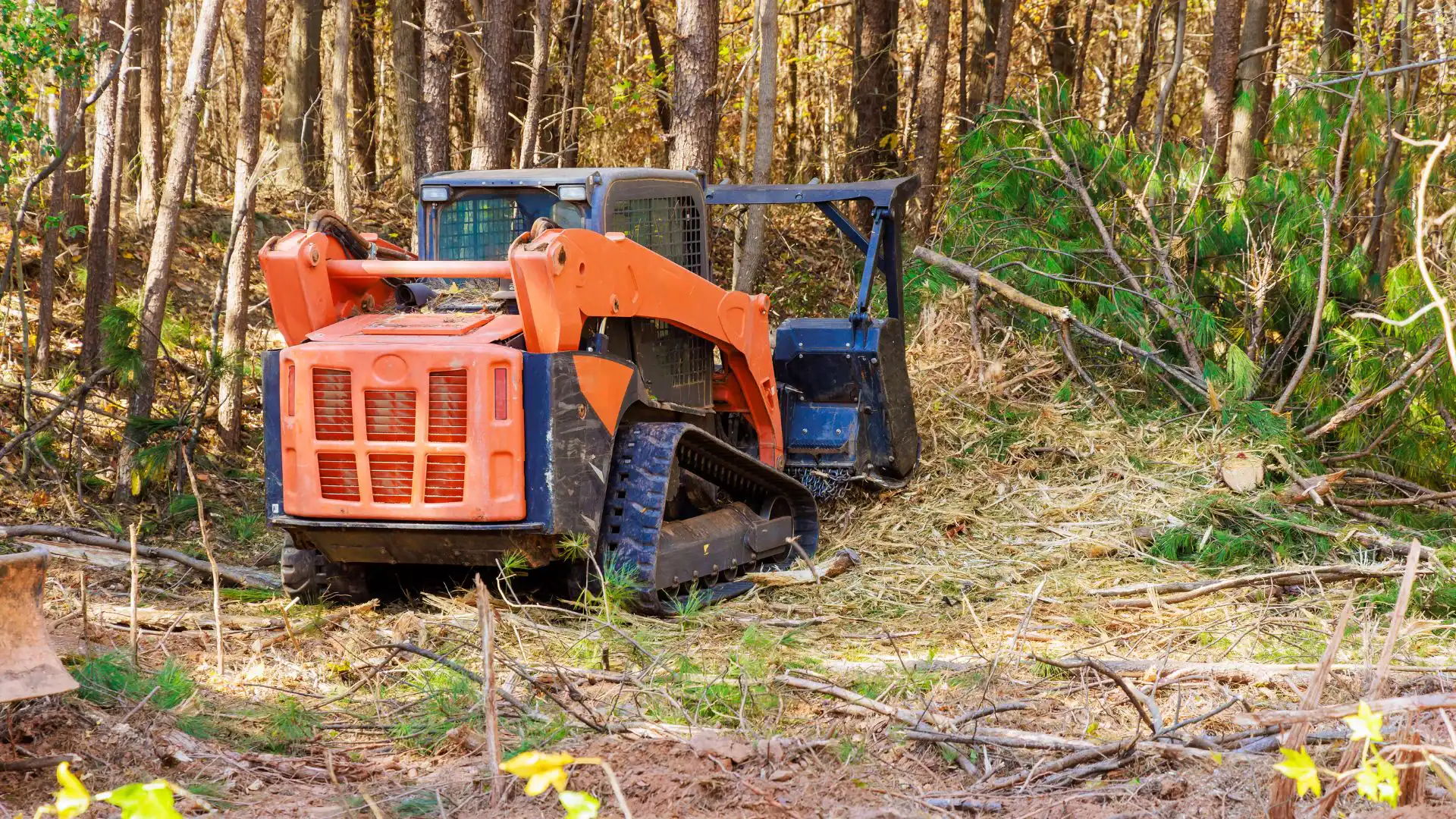
Once the scope is confirmed and any required permits are in order, clearing begins systematically. Trees come down in a controlled sequence, stumps are ground below grade, and invasive species bamboo, multiflora rose, phragmites are addressed at the root level, not just cut back. This matters on North Shore Long Island properties more than most, because invasive root systems left intact will return within a single growing season.
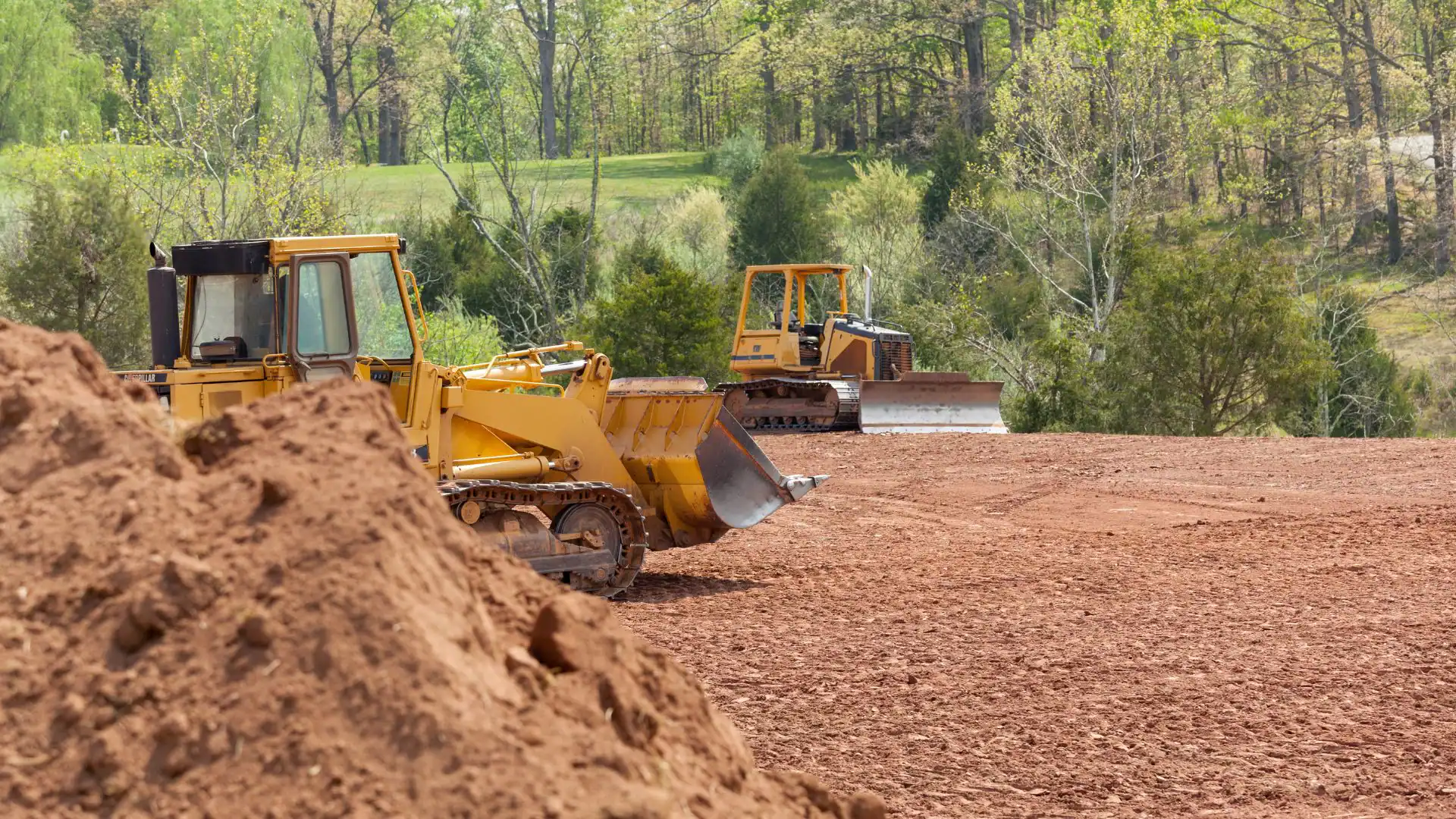
The final stage is debris removal and site cleanup. Under Brookhaven Town Code, on-site burial of trees and clearing material is prohibited so everything that comes off your property is hauled away and disposed of properly. What you’re left with is a clean, level site ready for a builder, a landscaper, or whatever your next step requires. No buried piles. No compliance exposure. No follow-up calls about material left behind.
Ready to get started?
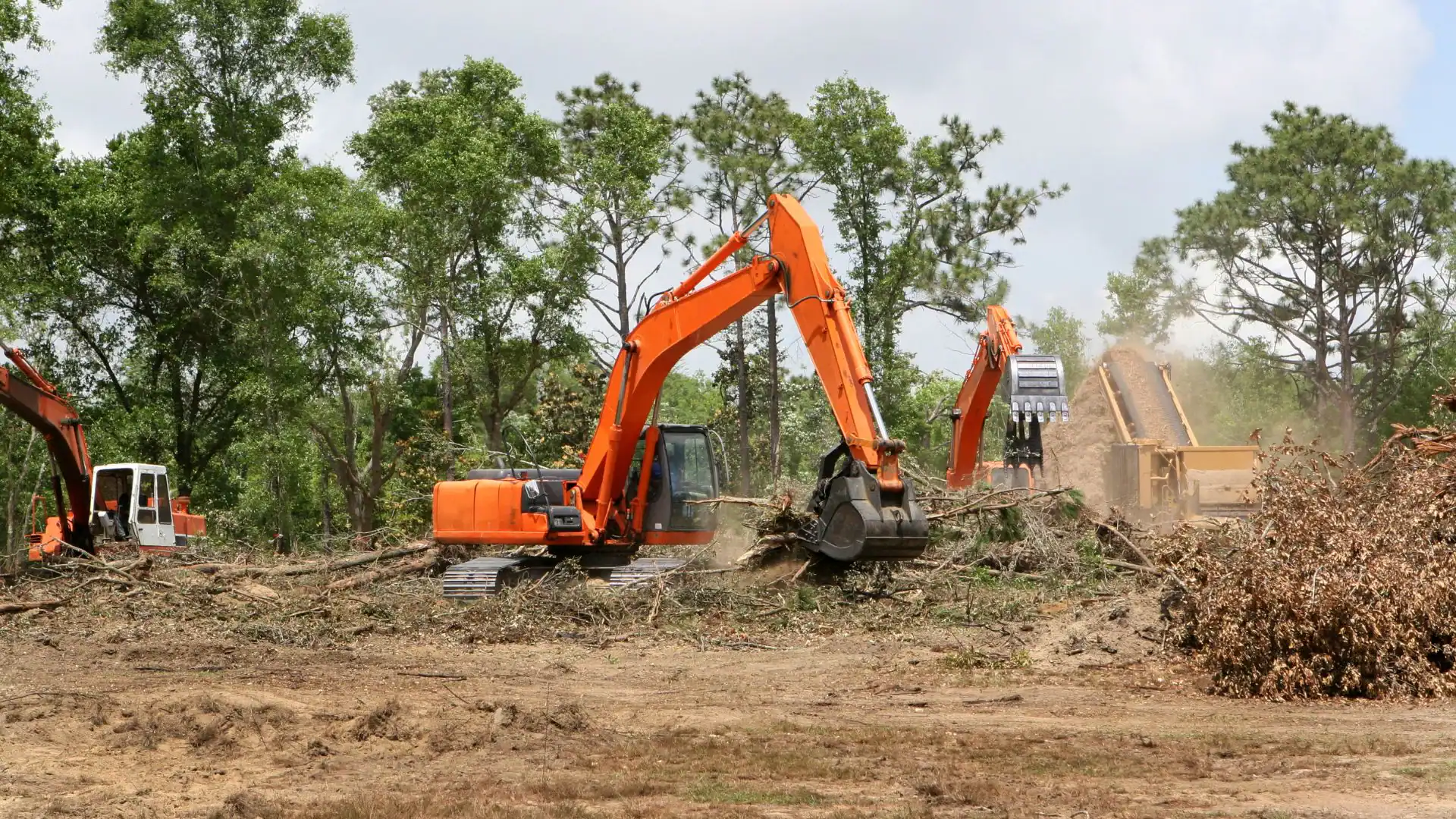
Land clearing in East Shoreham isn’t a single task it’s a sequence. Tree felling, stump grinding, brush clearing, invasive species removal, debris haulage, and site preparation are all part of what a properly executed job looks like here. We handle the full scope under one contract, which means you’re not coordinating three separate contractors to get a lot cleared.
The vegetation removal side of the work is where North Shore properties require the most attention. Bamboo is one of the most common calls we get in this part of Suffolk County running bamboo spreads through underground rhizomes and can cross property lines quickly, creating legal liability for owners who don’t act. Phragmites are a documented problem in the Shoreham-Wading River tidal wetland areas, and they require specific removal methods to prevent regrowth. Multiflora rose and bittersweet are widespread in the wooded understory across East Shoreham lots and need to be extracted properly to stay gone.
For properties preparing for new construction including the larger colonial-style lots in the Shoreham Manor section our lot clearing service covers everything from initial clearing through stump grinding and grading preparation, so your builder has a clean surface to work from. Land reclamation work on neglected or overgrown properties is also a significant part of what we do here, and we’re comfortable assessing properties that haven’t been touched in years and giving you a straight answer on what’s involved.
In the Town of Brookhaven, a Tree Clearing Permit is required for any residential property of two acres or more and that threshold includes contiguous lots under the same ownership, so it’s worth checking your total acreage before assuming you’re exempt. The permit is managed through Brookhaven’s Department of Planning, Environment and Land Management, and it applies to any living woody plant with a trunk diameter greater than three inches measured at three feet from the ground.
If your property is under two acres, you may not need a permit for standard clearing but there are additional considerations if your lot is near a wetland, a water body, or within a regulated buffer zone. East Shoreham’s proximity to Long Island Sound and the tidal wetland areas in the Shoreham-Wading River corridor means wetland adjacency is a real factor for some properties, particularly those in the northern part of the community. Clearing without the required permit exposes you to enforcement action and potential fines, so getting this confirmed before work begins is not optional it’s the first step.
Under Chapter 72 of the Town of Brookhaven Code, burying trees, branches, and clearing debris on your property is expressly prohibited. This is a specific local regulation that catches some property owners off guard and it means that any contractor who pushes your cleared vegetation into a low corner of the lot and covers it with dirt is leaving you legally exposed, not doing you a favor.
All debris from a Gold Coast Landworks clearing job is hauled off your property and disposed of properly. This is a defined part of every job, not an add-on you have to ask for. When we quote a clearing project in East Shoreham, debris removal is broken out as its own line item so you know exactly what that piece of the job costs. What you’re left with is a clean site and no compliance issues not a buried pile that becomes someone else’s problem down the road.
Bamboo is one of the most common calls we get from property owners in this part of Suffolk County, and the frustration is usually the same: it was cut back before and came back thicker. That happens because running bamboo spreads through underground rhizomes horizontal root structures that can extend well beyond the visible stand and survive surface-level cutting without any real damage.
Effective bamboo removal means addressing the root system, not just what’s above ground. Depending on the size of the stand and how long it’s been established, this can involve mechanical excavation of the rhizome network, repeated cutting cycles to exhaust the root system’s energy reserves, or a combination of both. On East Shoreham properties where bamboo has had years to spread sometimes crossing property lines and into neighboring lots the scope of the job needs to be assessed honestly before work begins. We’ll tell you what’s actually involved and what a realistic outcome looks like, not just what you want to hear.
There’s no single number that applies to every property, and anyone who gives you a flat price without seeing the lot is guessing. The real cost depends on the density of the vegetation, the number and size of regulated trees, whether stump grinding is included, how much debris needs to be hauled, and whether any permit fees apply under the Town of Brookhaven’s Chapter 70 requirements.
For a typical wooded residential lot in East Shoreham say, a half-acre to one-acre property with mature hardwood canopy and dense understory clearing costs generally range from a few thousand dollars on the lower end for lighter work up to significantly more for heavily wooded lots requiring full stump grinding and debris haulage. North Shore Long Island properties tend to run higher than more open, inland Suffolk County lots because the vegetation is denser, the terrain can be more complex, and the regulatory environment requires more care. The best way to get an accurate number is a site visit and an itemised quote that way you know exactly what each phase of the job costs before anything starts.
Winter clearing is not only possible on Long Island it’s sometimes the better option. Unlike warmer climates where winter brings wet, unstable ground conditions, Long Island’s frozen winter ground can actually improve equipment access on soft or saturated terrain, particularly on North Shore properties where the soil holds moisture from Long Island Sound proximity and seasonal rainfall.
There’s also a practical advantage to clearing in late fall or winter: the trees are dormant, the understory has died back, and visibility through the property is significantly better than during the growing season. This makes it easier to assess what’s actually on the lot, identify regulated trees, and work efficiently without the dense leaf cover that complicates summer clearing. If you’re preparing a lot for spring construction which is a common scenario in the Shoreham-Wading River area clearing in winter puts you ahead of schedule rather than scrambling to get a contractor on site when every builder in Suffolk County is trying to start at the same time.
Land clearing typically refers to removing trees, brush, and vegetation from a property that’s being prepared for a specific next use new construction, landscaping, or development. Land reclamation goes a step further and describes the process of bringing a property that has been neglected, abandoned, or overtaken by invasive species back to a usable, manageable condition.
In East Shoreham and the broader Shoreham-Wading River area, land reclamation jobs are common on properties that haven’t been actively maintained older lots where bamboo has taken over a back section, inherited properties where years of unchecked growth have made the land functionally unusable, or parcels purchased at a discount specifically because of their overgrown condition. The reclamation process is more involved than standard clearing because the scope is often unclear until you’re actually on the ground root systems are deeper, invasive species are more established, and the site may need multiple passes before it’s genuinely under control. If you’re looking at a property like this in East Shoreham, the first step is an honest site assessment so you understand what you’re actually dealing with before committing to a plan.