
Hear from Our Customers
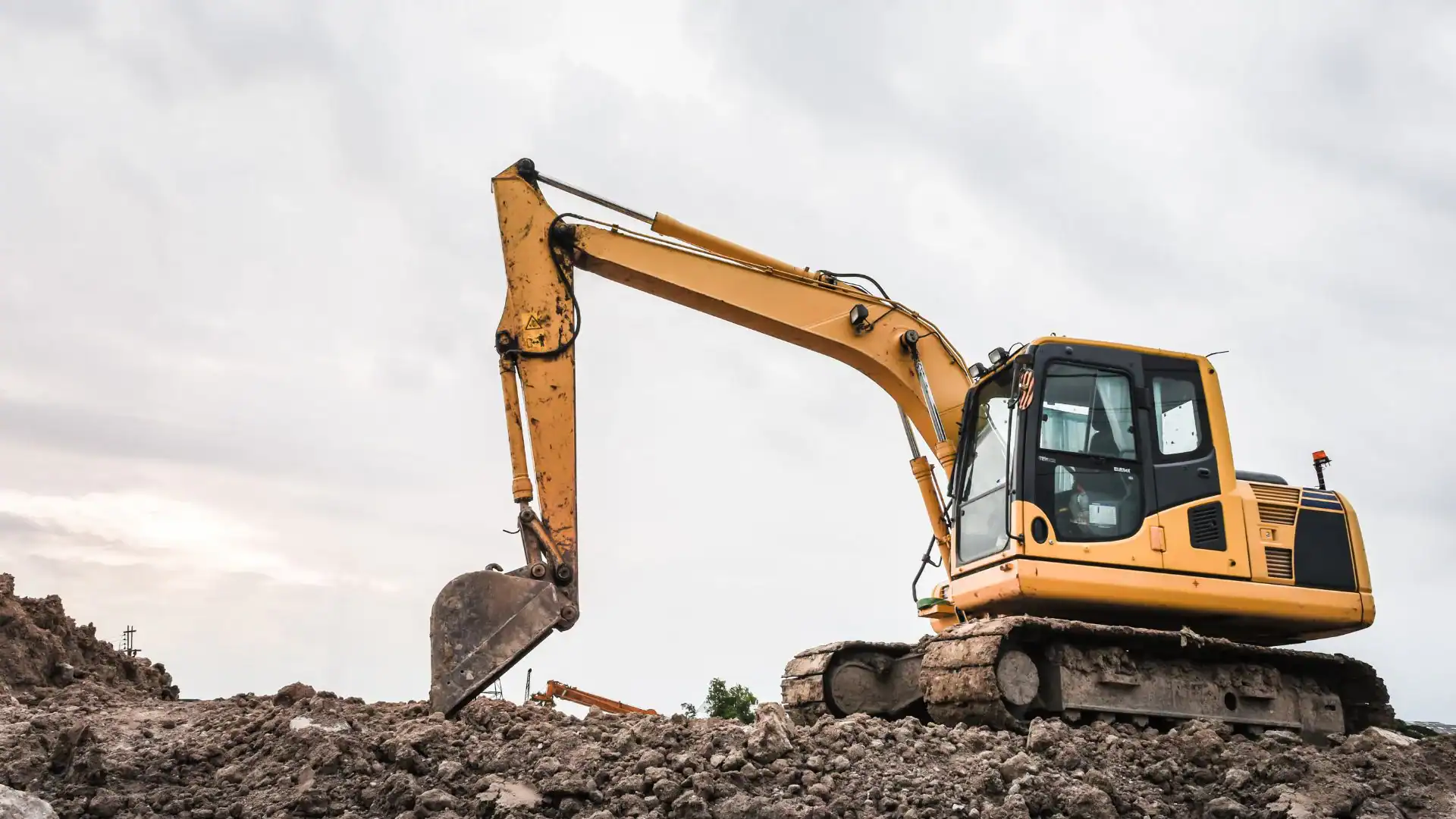
When excavation goes wrong on a tight Baywood lot, the consequences stack up fast. A contractor who underestimates the shallow groundwater table common along Long Island’s South Shore can turn a straightforward foundation dig into a waterlogged delay. One who skips the New York 811 notification before breaking ground can hit a gas line or buried utility that stops the job cold and potentially puts the liability back on you. These aren’t edge cases. They happen regularly in Baywood, and they happen because the contractor didn’t know the ground they were working on.
When the excavation is handled correctly from the start, everything downstream moves the way it’s supposed to. Your pool contractor shows up to a prepared site. Your foundation crew isn’t waiting on a rework. Your drainage system actually functions the way it was designed because the grading was done right the first time. For Baywood homeowners who are already carrying some of the highest property taxes in Suffolk County close to $8,700 a year on average a project that runs clean and on schedule isn’t a luxury. It’s the only acceptable outcome.
The housing stock in Baywood is predominantly post-war construction. That means aging cesspools, decades of layered underground infrastructure, and drainage systems that were never designed for the way the properties are used today. Knowing what’s likely beneath a Baywood lot before the machine arrives isn’t a bonus it’s the baseline for doing this work responsibly.
We’re a licensed and insured excavation contractor serving residential and commercial clients across Long Island, including Baywood and the surrounding South Shore communities in the Town of Islip. Every project whether it’s a pool excavation on a quiet street off Pine Aire Drive or a drainage overhaul near the Bay Shore Road corridor gets the same level of attention and the same commitment to doing the work correctly.
What that means in practice: you get a written quote that doesn’t change when the machine shows up, a crew that knows how to work within the constraints of a standard Baywood residential lot, and a contractor who handles the regulatory side including Town of Islip permit requirements and mandatory New York 811 notification without putting that burden back on you.
There are no subcontractors managing subcontractors here. The people quoting your job are the people doing it, and they’re accountable to you from the first call through to final cleanup.

It starts with a site visit. Before any quote is written, the ground gets looked at access points, lot constraints, proximity to neighboring properties, and any visible indicators of what the subsurface might present. On Long Island’s South Shore, that last part matters more than most contractors admit. Baywood’s sandy outwash soils drain well on the surface but can behave unpredictably in open cuts, and the groundwater table in this area can rise significantly during wet periods. A site assessment that accounts for those conditions upfront is what keeps the quote accurate and the job on schedule.
Once the scope is confirmed, the permit and notification process gets handled before anything else moves. That means a Town of Islip excavation permit where required, New York 811 notification to identify and mark all underground utilities, and any Suffolk County Health Services coordination if the project involves sanitary infrastructure. These aren’t optional steps they’re mandatory under Town of Islip requirements, and skipping them creates real legal and financial exposure for the property owner.
Then the work begins. Excavation is sequenced to protect the site, manage spoil efficiently, and keep access clear. On a typical Baywood residential lot, there isn’t room for a spoil pile to sit for a week dig and haul is coordinated so material leaves the property as the work progresses. Once excavation is complete, grading is done to the specified tolerances and the site is left clean, stable, and ready for whatever comes next.
Ready to get started?
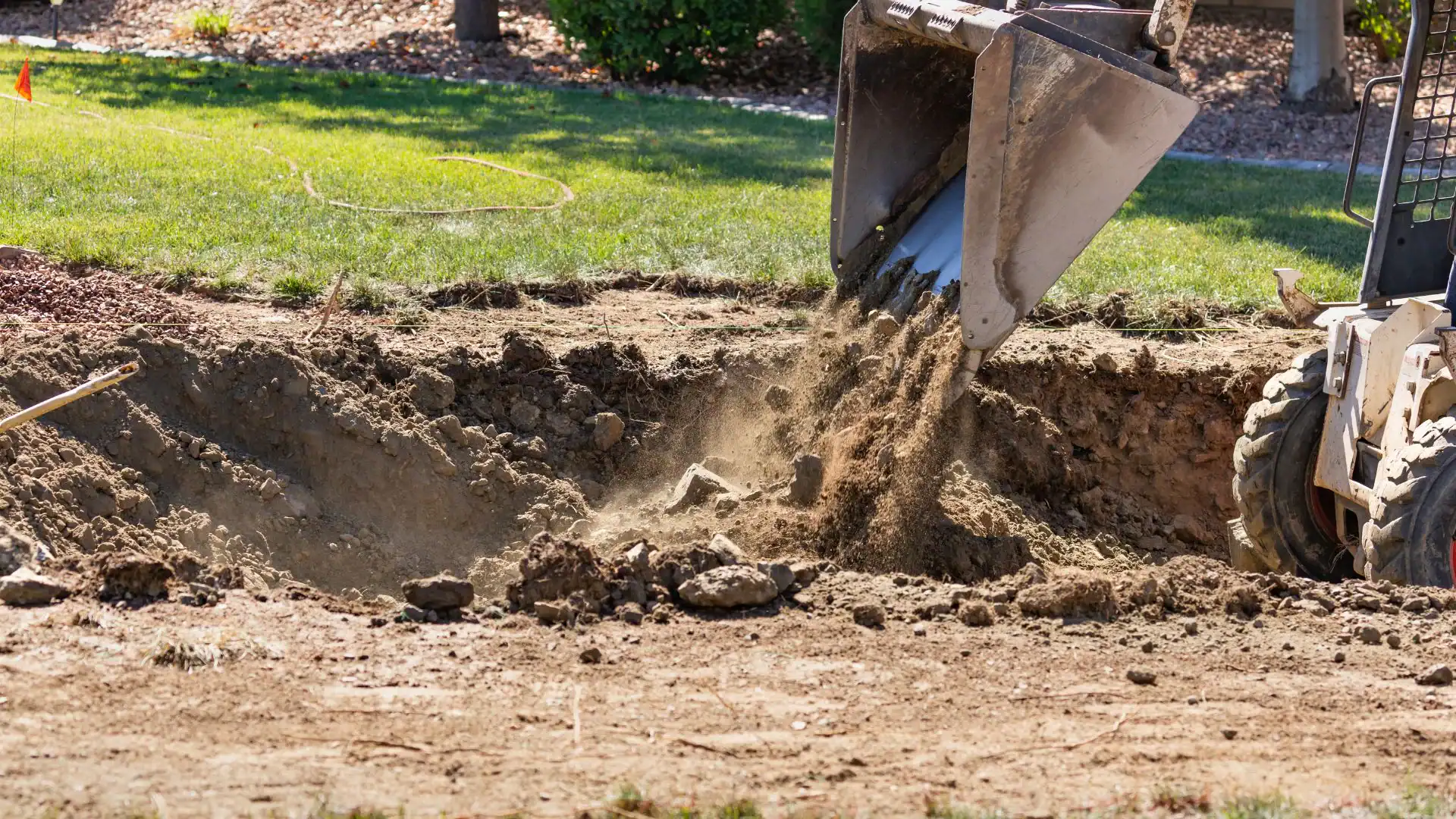
The excavation work we handle in Baywood covers the full range of what residential and small commercial projects in this area typically require. Pool excavation is one of the most common requests in-ground pools are a popular investment across Long Island’s South Shore, and getting the dig right on a standard Baywood lot means working precisely within tight boundaries without disturbing fencing, landscaping, or neighboring property lines. Foundation excavation for home additions and new builds on infill lots is another consistent category, particularly as homeowners with appreciating properties look to expand rather than move.
Drainage excavation is arguably the highest-need service in this area. The flat topography, shallow groundwater table, and sandy soils of Baywood’s South Shore setting create chronic drainage problems for a lot of properties water pooling against foundations, saturated lawns, and moisture issues that trace back to inadequate grading or failing drainage infrastructure. Correcting those problems requires proper excavation and regrading, not just surface fixes.
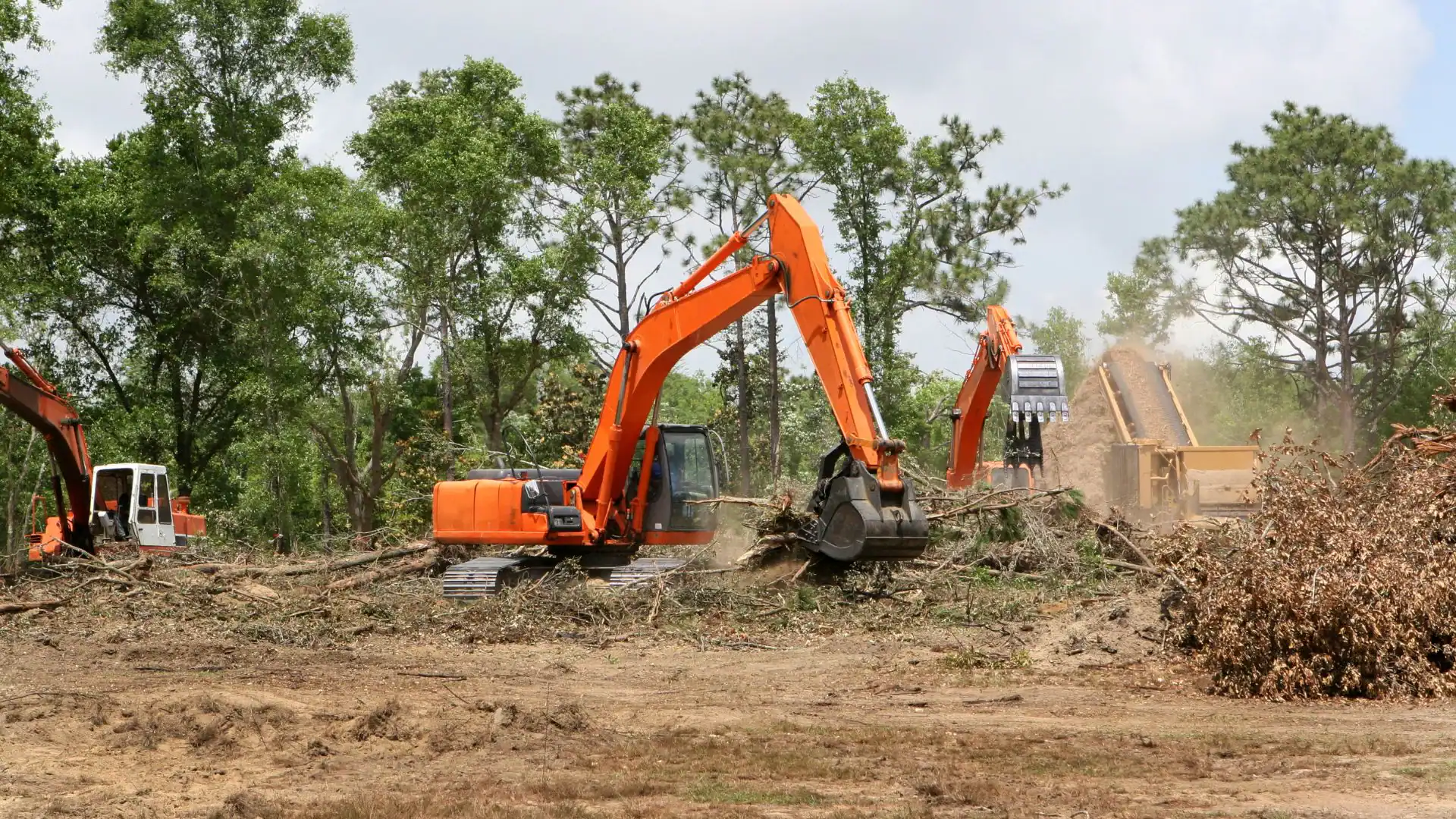
Cesspool and septic replacement excavation is also increasing in Baywood and across Suffolk County, driven by state legislation pushing the transition away from aging cesspools toward nitrogen-reducing systems. That work involves excavation, spoil removal, and full site restoration and it requires a contractor who understands the Suffolk County Department of Health Services requirements that govern every step. Dig and haul services, land clearing, and site preparation for permitted construction round out the scope of what we handle here.
Yes and it’s more involved than most people expect. The Town of Islip requires a written excavation and topsoil removal permit from the Town Board before any earth, sand, gravel, or rock is removed from a property. The application isn’t just a form it requires a plan prepared by a licensed engineer or land surveyor that shows property dimensions, street locations, cross-sections with elevations, and the elevation of the property relative to adjacent highways. That’s a real documentation requirement, and it applies to residential projects in Baywood, not just commercial ones.
On top of the Town Board permit, New York 811 notification is mandatory before any digging begins. The Town of Islip’s own building requirements explicitly state that failure to notify 811 may result in penalties and fines. If your Baywood project also involves any sanitary infrastructure replacing a cesspool, installing a new septic system, or connecting to drainage Suffolk County Department of Health Services approval is required as well. We’re familiar with all of these requirements and can walk you through what applies to your specific project before any work begins.
Excavation pricing in Baywood varies based on the scope of work, the volume of material being moved, access conditions on the lot, and whether dig and haul is included. A straightforward pool excavation on a standard residential lot will sit in a different range than a drainage system overhaul or a full foundation dig for an addition. What you should expect from any reputable contractor is a written, itemized quote that clearly states what’s included excavation volume, spoil removal, grading, site cleanup so you know exactly what you’re paying for before a machine arrives.
What drives costs up unexpectedly on Long Island South Shore properties is subsurface surprises: higher-than-expected groundwater, buried infrastructure from previous construction, or soil conditions that require additional shoring or sequencing. A proper site assessment before quoting significantly reduces the risk of those surprises showing up mid-job. With median property taxes in Baywood running close to $8,700 a year, you’re already managing significant carrying costs on your home the last thing you need is an excavation invoice that doubled after the work started. A fixed-scope, written quote is the standard we work to.
This is one of the most serious risks in residential excavation, and it’s entirely preventable when the job is set up correctly. New York 811 is the state-mandated underground utility notification system when you or your contractor calls 811 before digging, the relevant utility companies send locators to mark the positions of buried gas lines, electrical conduits, water mains, and telecommunications cables on your property. No excavation should begin until that process is complete and all markings are in place.
On a Baywood property that has been developed and modified over 60 or 70 years, the underground picture can be complex. There may be legacy sanitary infrastructure, old drainage lines, or private utilities that weren’t installed to current standards or recorded accurately. A contractor who knows this area understands that 811 marking is the starting point, not the whole answer experienced operators read the ground as they work and adjust when conditions suggest something may be present that wasn’t marked. If a utility is struck despite proper precautions, the contractor’s public liability insurance is what protects you. That’s why verifying that your excavation contractor carries real, adequate coverage before work begins is non-negotiable.
It’s a real factor, and it affects more projects in this area than homeowners typically realize. Baywood sits on Long Island’s glacial outwash plain predominantly sandy soils with relatively high drainage capacity at the surface, but with a groundwater table that can sit surprisingly close to grade, particularly during wet periods in late fall and early spring. For any project that involves below-grade work pool excavation, foundation digs, drainage system installation the depth at which water is encountered can affect how the excavation is sequenced, how long the cut can stay open, and whether dewatering is needed before the next trade can move in.
The practical implication for your project is that timing matters. Below-grade excavation work in Baywood is generally best planned for the drier summer and early fall window, when groundwater levels are lower and the risk of encountering standing water in an open cut is reduced. Projects that get pushed into the November-through-March period face higher risk of wet conditions slowing the work or requiring additional steps. A contractor who does a proper site assessment and accounts for seasonal groundwater conditions in their planning will give you a more accurate timeline and a more predictable outcome than one who ignores this variable entirely.
In most cases, yes and for a lot of Baywood properties, excavation-based drainage correction is the only fix that actually holds. Surface-level drainage products like catch basins and downspout extensions can help with minor issues, but when water is pooling against a foundation, saturating a lawn repeatedly after rain, or finding its way into a basement, the underlying problem is usually a grading issue or a failed drainage system that requires real excavation to address properly.
The flat topography and sandy soils common in Baywood’s South Shore setting mean that water doesn’t have much natural gradient to move away from structures. When original grading has settled or shifted over decades which is common in the post-war housing stock that makes up most of Baywood water ends up sitting where it shouldn’t. Correcting that requires excavating to the right depth, installing appropriate drainage infrastructure (French drains, dry wells, or properly graded swales depending on the site), and regrading the surface so water moves away from the structure and toward a compliant discharge point. Done right, it solves the problem at the source rather than managing the symptoms.
Yes. Cesspool replacement is becoming one of the more common excavation requests across Baywood and the broader Suffolk County area, driven by a straightforward reality: New York State legislation is requiring the transition away from aging cesspools toward modern nitrogen-reducing septic systems, and a significant portion of Baywood’s housing stock predominantly built in the 1950s through 1970s still relies on cesspools that are now decades past their intended service life.
The excavation scope for a cesspool replacement typically involves removing the existing system, excavating for the new septic infrastructure, managing and disposing of the spoil, and restoring the site after installation is complete. Every step of that process in Suffolk County involves the Department of Health Services, which requires a certificate of compliance for any sanitary construction. Working with an excavation contractor who understands those requirements and who can coordinate the excavation scope with the sanitary system installer and the health department inspection process makes the difference between a project that moves forward cleanly and one that stalls on compliance issues. We’re familiar with the Suffolk County Health Services requirements that govern this work and handle the excavation component with that regulatory framework in mind from day one.