Hear from Our Customers
When excavation goes wrong in West Sayville, you feel it fast. Standing water after a storm. A foundation that shifts because the grading was off. A pool dig that hit groundwater nobody planned for. These aren’t worst-case scenarios here they’re what happens when a contractor underestimates what the South Shore actually demands.
West Sayville sits at the edge of the Great South Bay, and that proximity matters more than most homeowners realize before work starts. The water table in low-lying areas of this hamlet can sit just a few feet below grade. Sandy, loamy coastal soils shift differently than what you’d find further inland. A contractor who’s worked in Hauppauge or Smithtown but never dealt with South Shore conditions is going to find that out the hard way on your property.
When the work is done right, you get a finished site that drains the way it should, a foundation that holds, and a yard that doesn’t turn into a pond every time it rains. The homes in West Sayville were largely built in the 1950s and 1960s, which means aging drainage infrastructure and older foundations are common. Getting excavation right on these properties takes experience with what’s already there not just what’s being added.
We’re a licensed, insured excavation contractor serving West Sayville and the broader South Shore corridor including Sayville, Oakdale, Blue Point, Bayport, and the rest of the Town of Islip. This isn’t a company that covers every county on Long Island from a desk. We work this area regularly and understand what excavation looks like when the Great South Bay is a few blocks south and the housing stock is pushing 70 years old.
Every project comes with full NY 811 underground service notification before any digging starts no exceptions. In a community like West Sayville with aging water mains, gas lines, and utility infrastructure that doesn’t always appear on current maps, that step isn’t optional. It’s the baseline.
Our quoting process is written and itemized. What’s included spoil removal, erosion controls, site cleanup is spelled out before a machine touches your property. West Sayville homeowners are investing in properties worth well over $600,000. You deserve a quote that holds.
It starts with a site visit. Before anything is quoted, we assess your property soil conditions, existing drainage patterns, proximity to structures, and any indicators of high groundwater that are common in West Sayville’s bayfront environment. That assessment drives the quote, not a generic price sheet.
Once scope is agreed on and documented, the permitting step comes next. Excavation in West Sayville falls under the Town of Islip Building Division, and certain projects particularly those involving topsoil removal or significant earthmoving require a written permit before work begins. If your project touches sanitary systems, Suffolk County Department of Health Services sign-off is part of the process too. We work within these requirements as a matter of standard practice, not as an add-on service.
Before any digging starts, we notify NY 811 and underground services are located and marked. Then the work begins excavation, grading, cut and fill, dig and haul, or whatever the scope calls for. When the job is done, the site is cleaned up and graded to drain correctly. If summer is your target window which is peak season on the South Shore booking 4 to 6 weeks out gives you the best chance of hitting your timeline.
Ready to get started?
We handle the full range of residential and commercial excavation in West Sayville, NY site preparation, land clearing, cut and fill, dig and haul, trenching, drainage excavation, retaining wall digs, and pool excavation. One contractor, one point of contact, from first dig to final grade.
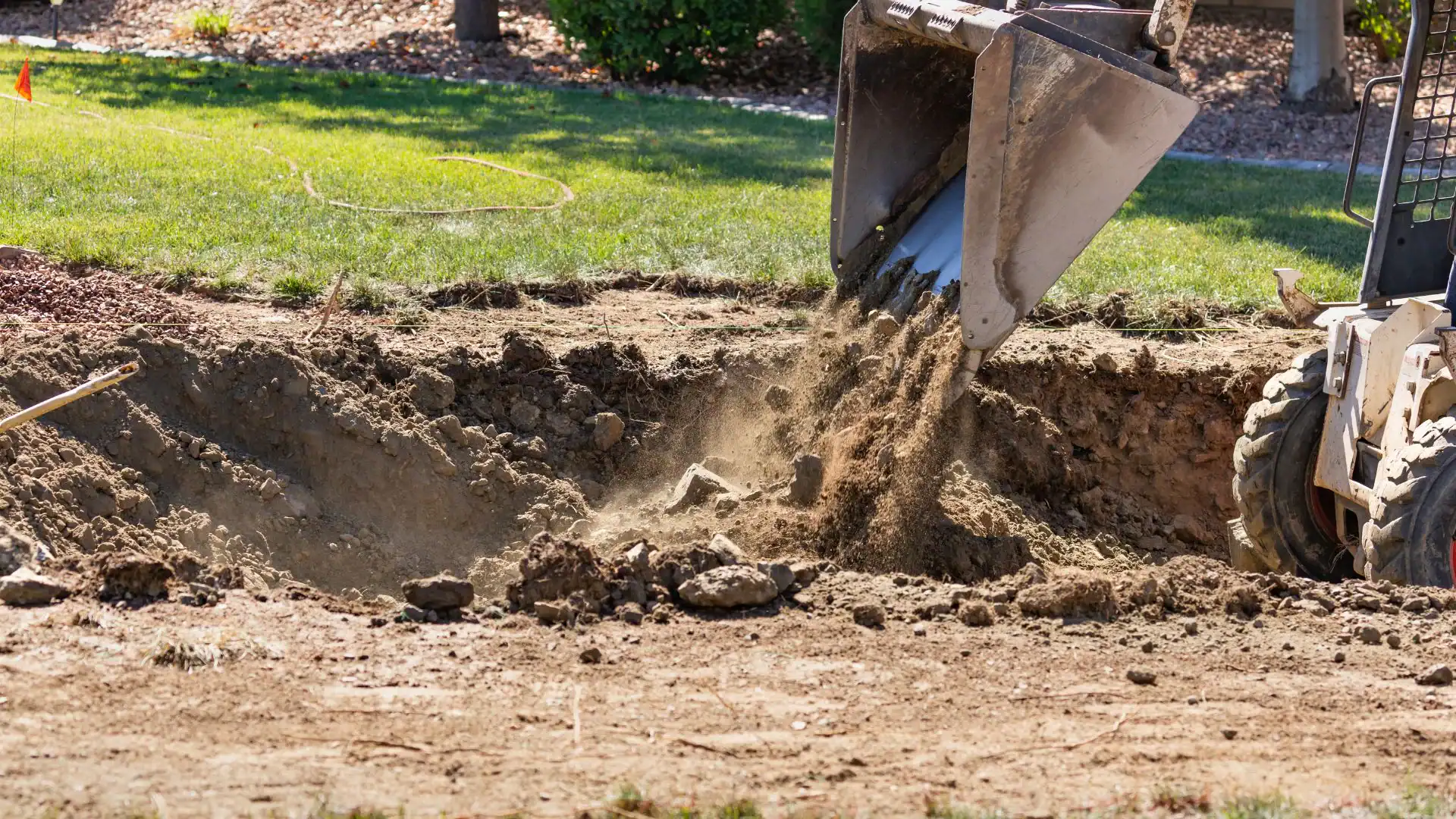
Pool excavation is one of the most requested services in South Shore communities like West Sayville, and it’s also one of the most technically demanding given the local conditions. High water tables require active dewatering management during the dig. Sandy coastal soils need careful shoring to prevent wall instability. These aren’t complications that come up occasionally here they’re standard South Shore realities that we plan for from the start.
Dig and haul is included as a complete service, not an afterthought. In a small, densely built hamlet like West Sayville where lot sizes are modest and neighboring properties are close leaving spoil on site isn’t realistic for most projects. The material is excavated and removed entirely. For drainage remediation work, which is a consistent need in this low-lying bayfront community, the scope typically includes catch basins, dry wells, French drains, or regrading whatever the site actually needs to stop the recurring water problems that older South Shore properties deal with after heavy rain or storm surge.
Yes, in most cases. Excavation in West Sayville falls under the Town of Islip’s Building Division, and the Town’s code requires a written permit before any excavation begins or any soil, sand, or gravel is removed from a property. This applies to most significant earthmoving projects not just new construction.
If your project involves a septic system or cesspool replacement or upgrade, there’s an additional layer: Suffolk County Department of Health Services must inspect the work and issue a certificate of compliance before the Town of Islip will issue a certificate of occupancy. For properties near the Great South Bay shoreline, New York State DEC coastal zone permits may also apply depending on how close the work is to the water. The short answer is that permitting in West Sayville has multiple layers depending on project scope, and working with a contractor who already knows the Town of Islip process saves you time and avoids compliance problems down the road.
NY 811 is New York’s underground utility notification service the equivalent of “Dial Before You Dig.” Before any excavation begins, contractors are required by law to notify NY 811 so that buried utilities can be located and marked. The Town of Islip explicitly requires this notification as part of its building permit process, and failure to comply can result in fines and legal liability.
In West Sayville specifically, this step carries real weight. The community’s housing stock dates primarily to the 1950s and 1960s, which means the underground infrastructure water mains, gas lines, electrical conduits, telecommunications cables is aging and not always precisely mapped on current records. A contractor who skips this step in West Sayville isn’t cutting a corner; they’re creating a genuine risk of hitting a buried service line on your property. We complete NY 811 notification on every single project before any digging starts, and documentation of that notification is available to every client.
West Sayville’s proximity to the Great South Bay means the water table in parts of this hamlet sits very close to the surface in some low-lying areas, within two to four feet of grade. For most excavation projects, that’s manageable with the right planning. For pool excavation specifically, it requires active dewatering during the dig to prevent water intrusion from slowing or complicating the work.
The impact isn’t limited to pools. Foundation excavation for additions, drainage remediation digs, and even trenching for utility lines can encounter groundwater if the site assessment doesn’t account for local conditions before the quote is written. The time of year matters too late winter and early spring are when the water table is typically at its highest on the South Shore, as snowmelt and spring rainfall combine with already-saturated coastal soils. Summer is generally the most favorable window for deep excavation work in West Sayville, which is one reason demand peaks and booking lead times extend during those months.
A complete dig and haul service covers excavation of the material and full removal from the site so you’re not left managing a pile of spoil on a property where there’s often nowhere practical to put it. In a small, densely built hamlet like West Sayville, where lot sizes are modest and neighboring properties are close, leaving excavated material on site is rarely a workable option.
What’s included in the quote should be spelled out in writing before work starts: the volume of material being removed, where it’s going, erosion controls during the work, and site cleanup afterward. What’s not included and what can change a final invoice significantly if it isn’t discussed upfront is how unexpected conditions are handled. Rock, buried debris, and old infrastructure are common surprises on older South Shore properties, and a contractor who doesn’t address those scenarios in the original scope is setting up a conversation you don’t want to have once the machine is already on your property. We put all of that in writing before anything starts.
Excavation pricing in West Sayville depends on the scope, the site conditions, and what’s included in the quote. A basic trenching or grading job on a straightforward residential lot will cost significantly less than a full pool excavation with dewatering on a high water table site near the bay. There’s no honest flat number that applies across the board.
What matters more than the headline number is what the quote actually covers. Spoil removal, erosion controls, site cleanup, and permit coordination all have real costs and if they’re not in the quote, they’ll show up somewhere else. West Sayville homeowners are investing in properties with median values approaching or exceeding $600,000. The goal isn’t to find the lowest number; it’s to find a quote that reflects the actual scope and doesn’t change once work begins. We provide written, itemized quotes for every project so you know exactly what you’re paying for and why before any equipment arrives.
Given that most of West Sayville’s housing stock was built in the 1950s and 1960s, the most common excavation needs tend to fall into a few recurring categories. Septic system and cesspool replacement is one of the biggest drivers many properties in this area still rely on aging sanitary systems that are now decades past their practical lifespan, and Suffolk County has been actively encouraging upgrades through incentive programs tied to nitrogen reduction in the Great South Bay watershed.
Drainage remediation is another consistent need. Older homes in low-lying South Shore communities often have drainage infrastructure that wasn’t designed for current storm intensity, and properties that flood or hold standing water after heavy rain frequently need excavation for catch basins, dry wells, French drains, or regrading to redirect water away from structures. Foundation excavation for additions and garage builds is also common as homeowners invest in modernizing properties they’ve owned for decades. All of these project types require a contractor who understands what’s already in the ground on a 60-to-70-year-old South Shore property because surprises are the norm, not the exception.