Hear from Our Customers
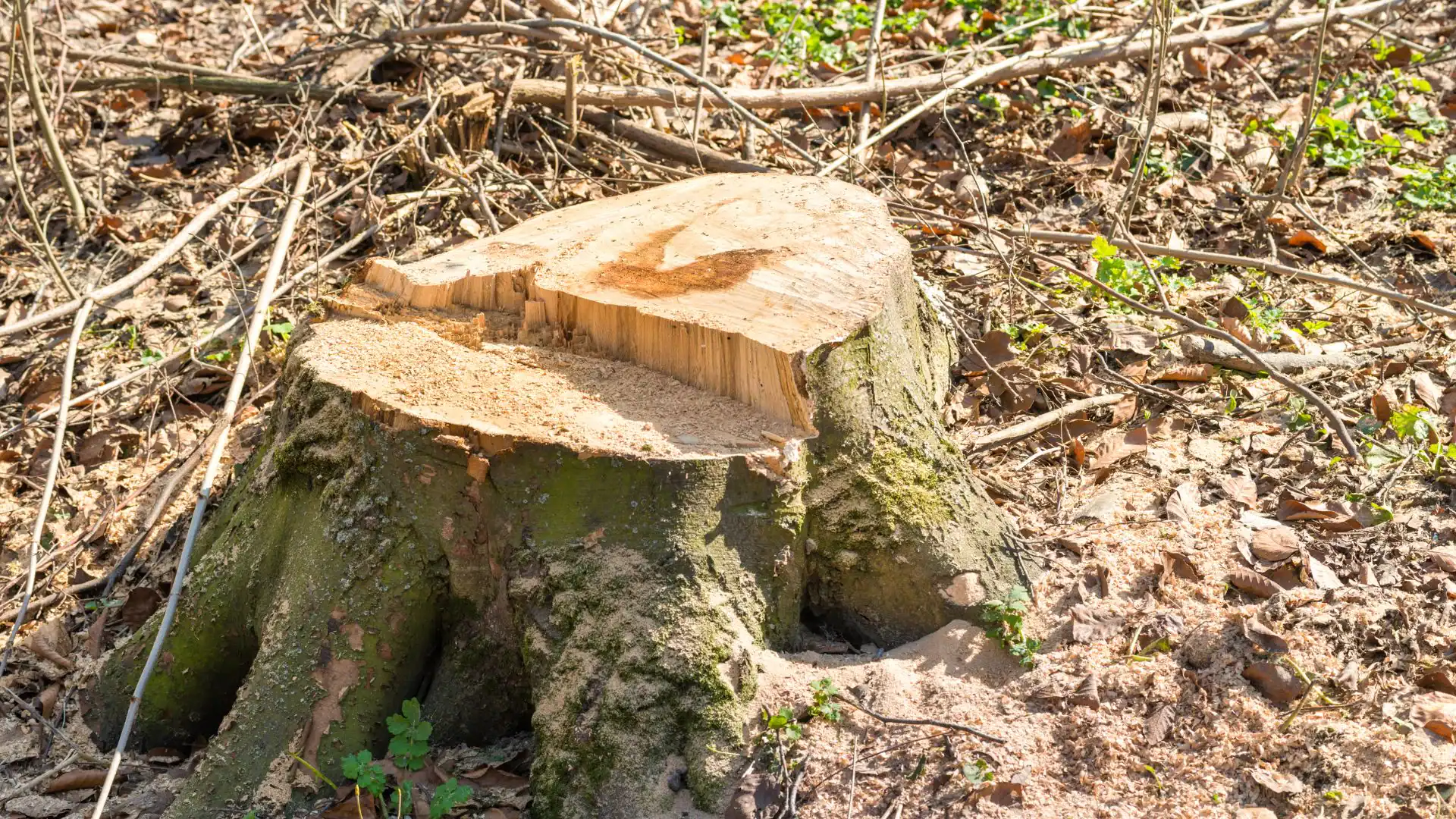
Holtsville sits right on the edge of Long Island’s Pine Barrens, and that matters more than most homeowners realize. The scrub oak and pitch pine on the back half of a lot here don’t just look overgrown they come back hard and fast if the root systems aren’t dealt with properly. Add in Japanese knotweed or multiflora rose, which are both common in central Suffolk County, and a “cleared” lot that was only cut back is already regrowing by the following spring.
Getting it done right the first time means the vegetation is gone not just trimmed. It also means your site is left in a condition that won’t trigger erosion issues in Holtsville’s sandy glacial soils, which drain fast but move easily when there’s no ground cover holding them in place after clearing.
And because a portion of Holtsville falls under the Town of Islip rather than Brookhaven, the permit rules that apply to your property depend on exactly where your parcel sits. That’s not a detail you want to figure out after the fact. When the job is done correctly and compliantly from the start, you’re not dealing with stop-work orders, replanting fines, or a site that needs to be recleared in two years.
We’re a Long Island land clearing contractor that works specifically in Suffolk County not a national platform routing jobs to whoever is available. When you call about a property in Holtsville, you’re talking to someone who already knows the Town of Brookhaven’s Chapter 70 permit thresholds, understands the dual-town jurisdiction that runs through this hamlet, and has cleared properties in this exact landscape before.
That matters in a community like Holtsville. Whether your property is near Buckley Road by the ecology center, inside the Summerfield Estates area off North Ocean Avenue, or somewhere along the Waverly Avenue corridor, the vegetation profile, soil conditions, and regulatory requirements here are specific and they affect how the job gets planned and executed.
We carry full liability insurance, and we’ll provide a certificate before any work begins. Every quote is itemized so you see exactly what you’re paying for before you commit to anything.
It starts with a site assessment. Before we quote anything, we look at the property the vegetation type, the lot size, any drainage features or low-lying areas that might indicate wetland adjacency, and which town jurisdiction governs your parcel. In Holtsville, that last step matters because properties in the southwestern portion of the hamlet fall under the Town of Islip, while the majority are governed by Brookhaven. The permit requirements are different depending on which side of that line your property sits on.
If your project requires a Tree Clearing Permit from the Town of Brookhaven which applies to residential properties of two acres or more, or any commercial property without an approved site plan we walk you through what that process involves before work begins. For clearing projects over one acre, we also flag whether a Stormwater Pollution Prevention Plan is required under Brookhaven’s guidelines, so that obligation doesn’t catch you off guard.
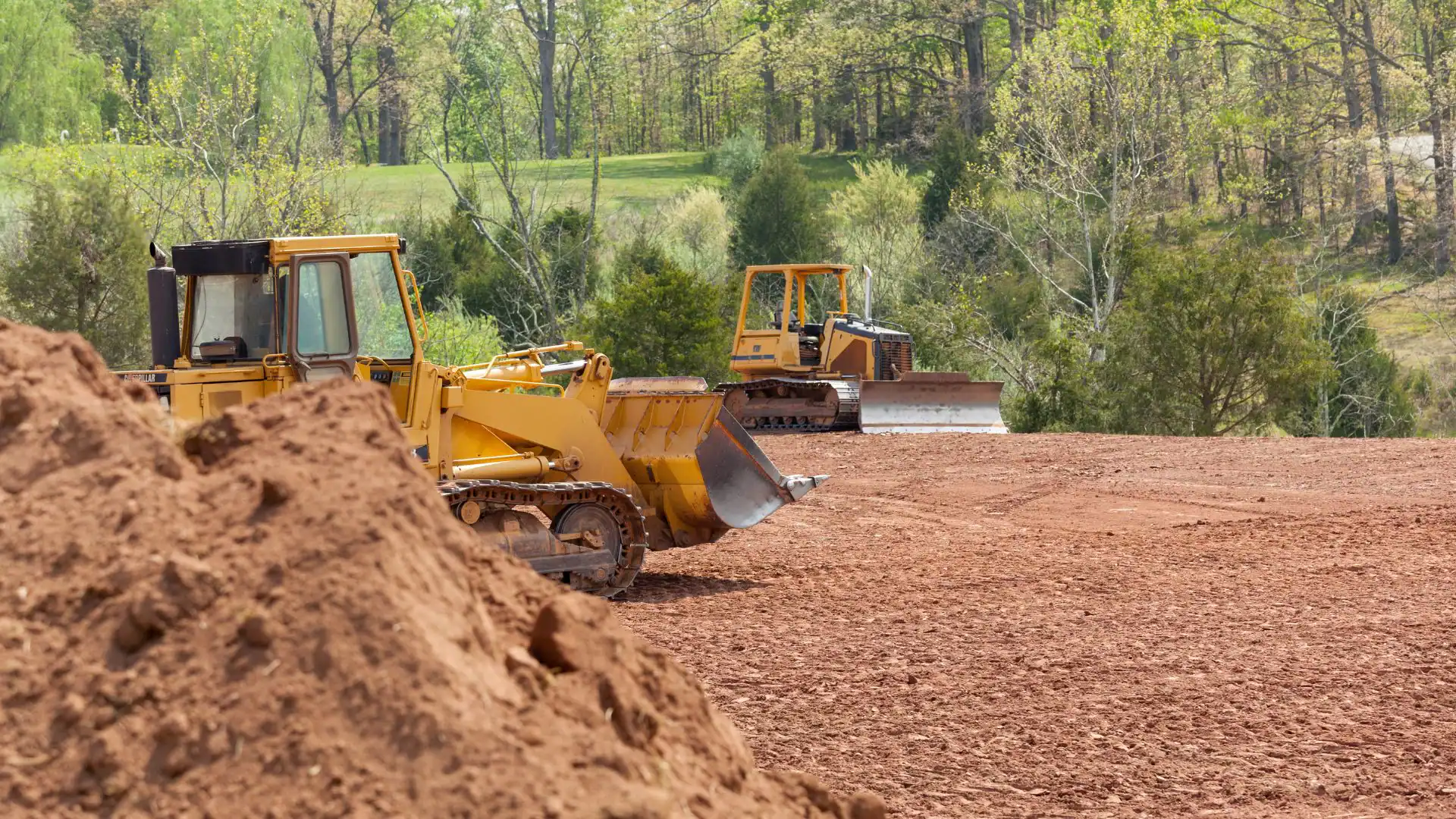
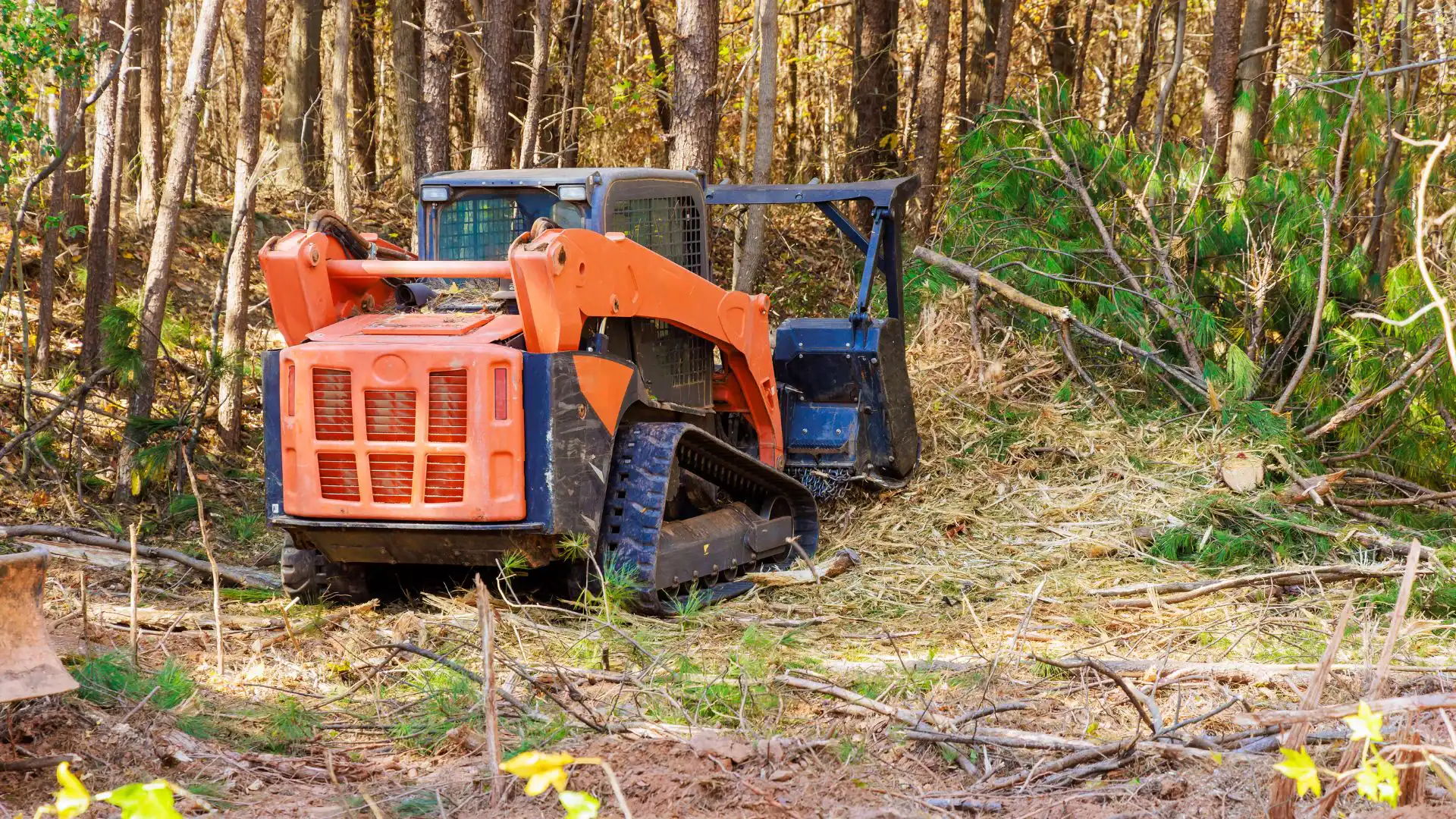
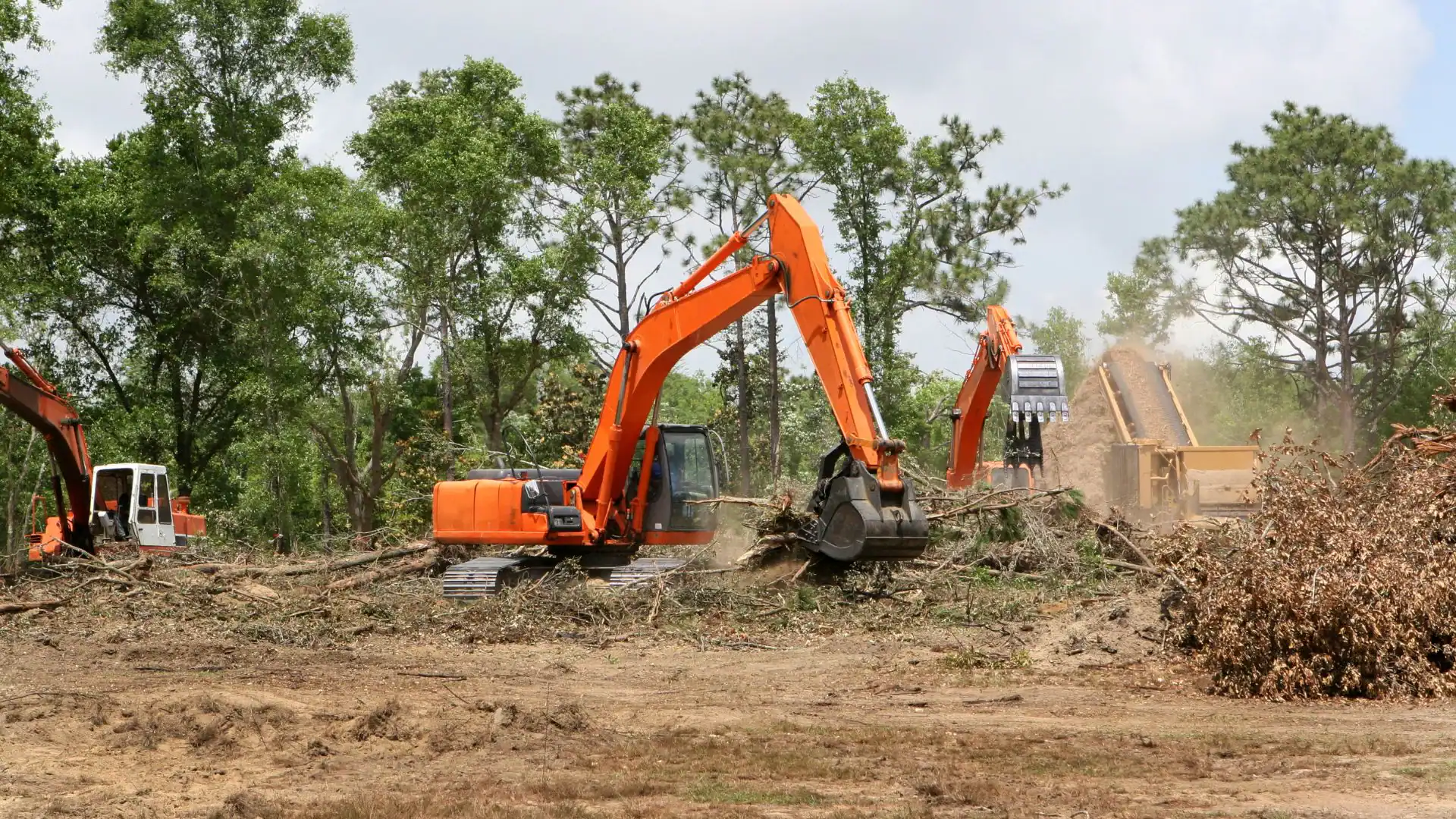
Once the scope is confirmed and permits are in order, the clearing work is matched to what your specific site needs whether that’s brush clearing dense Pine Barrens scrub, grinding stumps, removing invasive species to the root, or full lot clearing ahead of a construction start. Debris removal is quoted as part of the job, not added on at the end. When we leave, the site is clean.
Ready to get started?
Land clearing in Holtsville isn’t one-size-fits-all. A quarter-acre lot in Summerfield Estates with overgrown boundary vegetation is a different job than a two-acre parcel off Portion Road that’s been untouched for a decade and backs onto Pine Barrens scrub. The scope, the equipment, and the permit obligations are all different and that’s exactly how we approach it.
For residential properties, overgrown property clearing and brush clearing services typically involve vegetation removal, stump grinding, and debris hauling. For larger lots or properties near mapped freshwater wetlands which are regulated under both NYSDEC Article 24 and the Town of Brookhaven’s Chapter 81 we assess the buffer requirements before any clearing begins. The 100-foot adjacent area rule means you can have a permit obligation even if the wetland itself isn’t on your property, and that’s something a lot of homeowners in central Suffolk County don’t know until it’s too late.
Land reclamation services for neglected or long-overgrown properties follow the same process, just with a heavier clearing scope. Lot clearing services for properties being prepared for construction are planned around your build timeline and any existing permit schedules. In every case, you get an itemized quote, a clear scope, and a site left in the condition we said it would be no debris piles, no surprises on the invoice.
It depends on your lot size, what you’re removing, and which town your property falls under. In the Town of Brookhaven, a Tree Clearing Permit is required if your residential property is two acres or more including contiguous lots under the same ownership. Any tree with a diameter at breast height of six inches or more on a qualifying property needs to go through the permit process. Commercial properties without an approved site plan also require a permit regardless of size.
Here’s the part most people in Holtsville miss: the hamlet spans two town jurisdictions. The majority of Holtsville is in Brookhaven, but the southwestern portion falls under the Town of Islip, which has its own separate set of tree and clearing regulations. The rules that apply to your property depend on exactly where your parcel sits. Before we quote any land clearing job in Holtsville, we confirm which town governs your lot and advise you on what’s required so you’re not guessing and not at risk of a fine or stop-work order.
In the Town of Brookhaven, unauthorized removal of a designated landmark tree carries fines ranging from $500 to $2,000 per tree and all collected fines go into a dedicated fund for replanting within the town. Beyond the financial penalty, you can also be ordered to replant at your own expense, which often costs more than the original clearing job would have with a permit in place.
There’s also the debris disposal angle that catches people off guard. Brookhaven’s Chapter 72 specifically prohibits burying trees or debris on property within the town only acceptable fill is permitted. So even how you dispose of what’s cleared is regulated, not just the clearing itself. Working with us means you’re not discovering these rules after the fact through a code enforcement notice.
Freshwater wetlands in central Suffolk County are regulated under NYSDEC Article 24, and the standard adjacent area buffer is 100 feet from the wetland boundary. That means if there’s a mapped wetland within 100 feet of where you’re planning to clear even if the wetland itself is on a neighboring property or a drainage corridor you may need a state permit before any vegetation removal can happen.
On top of the state layer, the Town of Brookhaven’s Chapter 81 adds its own local wetlands and waterways protections, prohibiting clearing within a wetland, established buffer area, or jurisdictional area without town approval. Holtsville’s position in central Long Island, above the sole-source aquifer that supplies drinking water to much of the island, is part of why these protections are enforced seriously here. We check wetlands mapping as part of every site assessment if your property has any adjacency issues, you’ll know before work begins, not after a stop-work order.
A Stormwater Pollution Prevention Plan commonly called a SWPPP is a document that outlines how a construction or land disturbance project will manage stormwater runoff and prevent sediment from leaving the site. In the Town of Brookhaven, clearing projects over one acre may trigger a SWPPP requirement, and this is noted directly on the town’s Tree Clearing Permit checklist.
It’s especially relevant in Holtsville because central Long Island’s soils are predominantly sandy glacial outwash they drain fast, but they also move easily when there’s no vegetation holding them in place. After clearing, an unprotected site can shed significant sediment into the local drainage system with even a moderate rain event. If your project is over an acre, we’ll flag the SWPPP question during the site assessment and make sure that obligation is addressed before work starts, not discovered during a town inspection.
Land clearing costs in Suffolk County vary based on lot size, vegetation density, stump count, and what’s being done with the debris after. A lightly overgrown residential lot might run in the range of $1,500 to $3,500. A heavily wooded or Pine Barrens-adjacent property with dense scrub oak, mature pitch pine, and invasive species to the root can run significantly higher often $5,000 to $12,000 or more per acre depending on conditions.
What affects the number most is debris removal and stump grinding, which are often where quotes fall apart. Some contractors give a low headline number and then add debris hauling and stump work as line items after the job is done. Every quote from us is itemized before work begins clearing, stump removal, and debris disposal are all called out separately so you know exactly what you’re committing to. No invoice surprises.
Yes and it requires a different level of care than a rural lot clearing job. In communities like Summerfield Estates off North Ocean Avenue, where homes sit on quarter-acre lots and neighbors are close, clearing work is very visible and the expectations around site presentation, equipment management, and boundary awareness are higher. Damage to a neighboring fence line or encroachment on adjacent vegetation in a community like that isn’t just a repair cost it’s a neighbor dispute.
When we work near gated communities or dense residential areas in Holtsville, we plan equipment access carefully, confirm property boundaries before any cutting begins, and make sure the site is left clean and presentable before we leave. Debris doesn’t get piled at the boundary for someone else to deal with removal is part of the scope. If the community has HOA rules that affect when or how work can be performed, that’s a conversation we have before scheduling, not something we figure out on the day.