Long Island's geology and coastal exposure create basement moisture problems most homeowners don't see coming. Here's what's actually going on — and what to do about it.
If you’ve ever gone downstairs after a heavy rain holding your breath, you already know what we’re talking about. That damp smell, the wet patch along the wall, the sump pump running longer than it should — these aren’t just annoyances. They’re early signals of a problem that gets worse the longer it’s ignored.
Long Island’s geography makes basement moisture almost inevitable without the right protection in place. The good news is that it’s a solvable problem — when the right systems are designed for the way water actually moves through this specific landscape. We walk you through exactly that on this page.
Long Island isn’t just near the coast — it is, in every meaningful sense, surrounded by it. Long Island Sound to the north, the Atlantic to the south, and a water table that sits only a few feet below the surface in many neighborhoods. That’s not a recipe for dry basements.
The island’s glacial geology is a big part of the story. When the glaciers retreated thousands of years ago, they left behind layers of sand, gravel, and clay — and those layers behave very differently depending on where your home sits. Add in the aging housing stock, most of which was built during the post-war boom between 1945 and 1975, and you have tens of thousands of homes whose original waterproofing systems have long since worn out.
The soil under your yard is either working with your foundation or against it — and on Long Island, it’s often the latter. In North Shore communities like Syosset, Brookville, and Old Westbury, clay-heavy soil is common. Clay doesn’t drain. After a storm, it holds water against your foundation walls for days, building what engineers call hydrostatic pressure — the slow, relentless force of saturated soil pressing against concrete. Eventually, that pressure finds a way through.
Closer to the South Shore, the soil shifts toward sand and glacial deposits that drain faster but create their own problems. Sandy soil can shift over time, opening new pathways for water to travel along the outside of your foundation walls. It’s a different mechanism, but the result — water in your basement — is the same.
What makes Long Island especially challenging is that the water table itself is shallow. In many areas, it sits just a few feet below the surface. After a significant rain event or snowmelt, it rises. When it rises close enough to your foundation, water doesn’t need a crack to get in — it seeps through the pores of the concrete itself. This is why a basement that’s been dry for years can suddenly develop problems after a particularly wet spring. The water table crossed a threshold it hadn’t reached before.
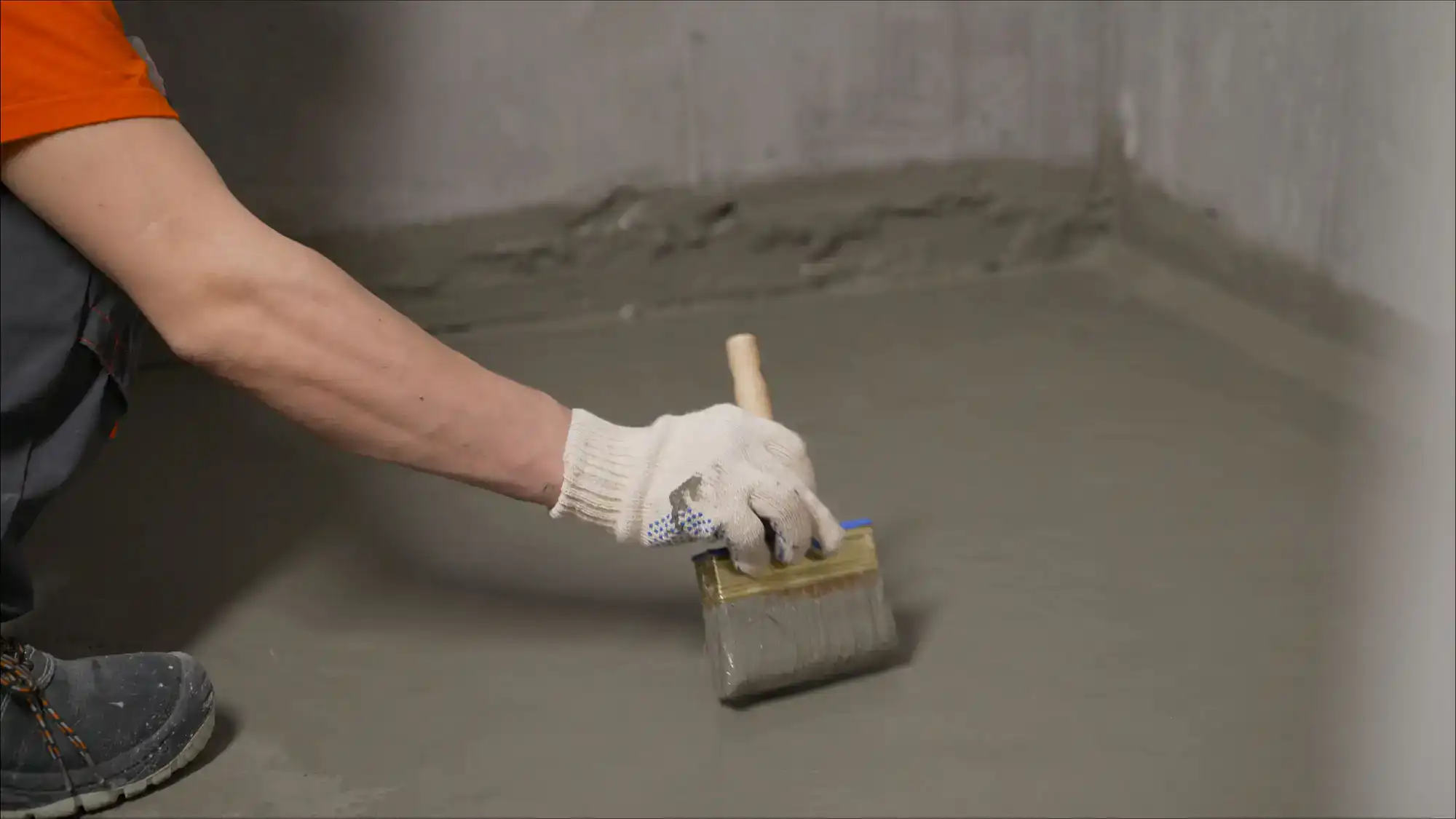
This is also why interior sealant products from the hardware store tend to fail. They address the surface, not the source. When hydrostatic pressure is the driver, painting the inside of your basement walls doesn’t stop the water — it just redirects it, often into the wall itself, where it accelerates deterioration and mold growth out of sight.
Understanding your soil and your water table isn’t just academic. It directly shapes which waterproofing approach will actually hold up on your property.
Long Island gets hit. That’s just the reality. Multiple nor’easters every year, tropical storm remnants in late summer and fall, and the occasional direct hurricane impact — each one saturates the ground, raises the water table, and tests every drainage and waterproofing system on the island simultaneously.
Hurricane Sandy in 2012 was the most dramatic example most Long Island homeowners can point to. Tens of thousands of homes were damaged, and entire South Shore communities — Freeport, Lindenhurst, Long Beach, Massapequa — saw flooding that reached well beyond the shoreline. But Sandy was extreme. The more common and insidious threat is the accumulation of ordinary storms: a nor’easter that drops four inches of rain over 48 hours, followed two weeks later by another one, on soil that never fully dried out in between.
There’s also a detail that surprises many homeowners: saltwater. Storm surges from major Atlantic events push seawater miles inland across Long Island’s South Shore. Saltwater is more destructive to concrete than freshwater because it corrodes both the concrete itself and the steel reinforcements inside it. If your home is anywhere near the South Shore or a tidal inlet, this is a real factor in how your foundation ages.
On the North Shore, the exposure is different but still significant. Long Island Sound storm surges and sustained nor’easter rainfall affect communities from Great Neck through Port Washington, Oyster Bay, and Cold Spring Harbor. The terrain varies, the drainage patterns vary, and the solutions need to reflect that. A system designed for a Freeport property near the bay is not the same as one designed for a hillside home in Huntington — and anyone who tells you otherwise hasn’t spent enough time working on Long Island.
Want live answers?
Connect with a Gold Coast Landworks expert for fast, friendly support.
The word “waterproofing” gets used loosely, and that’s part of why so many homeowners end up disappointed with results. Real basement waterproofing isn’t a single product or a single step — it’s a system, and a good one starts with understanding where the water is actually coming from before recommending anything.
That diagnosis matters more than most people realize. Water can enter a basement through foundation cracks, through porous concrete under hydrostatic pressure, through window wells, through failed drainage systems, or through the floor itself when the water table rises. Each of those entry points calls for a different response. A contractor who skips the diagnosis and goes straight to selling you an interior drainage system may be solving the symptom while leaving the cause untouched.
Interior waterproofing systems — French drains, sump pump installations, interior drainage channels — are designed to manage water that has already entered the foundation zone. We collect it, route it, and pump it out before it can cause damage. Done properly, they’re effective and often the most practical solution for existing homes where exterior excavation isn’t feasible.
Exterior waterproofing takes a different approach: it tries to stop water from reaching the foundation in the first place. This typically involves excavating around the foundation, applying a waterproof membrane to the exterior walls, installing drainage board, and improving the drainage layer around the footing. It’s more invasive and more expensive, but for homes with severe hydrostatic pressure or chronic exterior moisture infiltration, it’s often the more complete solution.
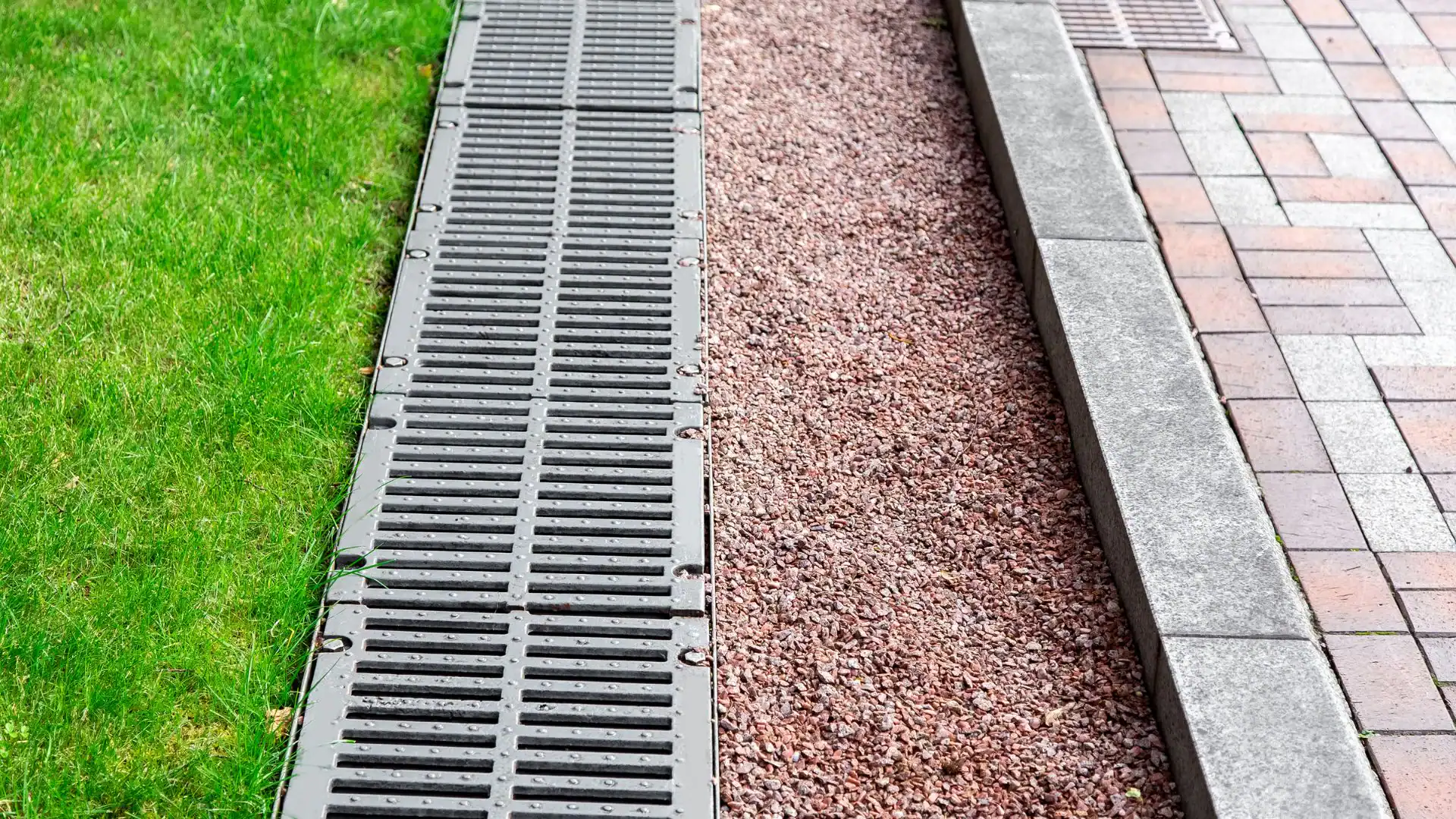
In practice, the right answer for most Long Island homes is some combination of both — along with attention to what’s happening above ground. This is where grading and drainage come into the picture. If your yard slopes toward your foundation, if your downspouts are discharging next to the house, or if surface water is pooling against your foundation after every storm, no interior system will fully compensate for that. The water has to go somewhere, and without proper grading and surface drainage, it goes straight down — into the soil, against your foundation walls, and eventually into your basement.
This is something we pay close attention to on every property we assess. The outdoor drainage situation and the underground waterproofing system are not separate problems — they’re the same problem viewed from two angles. Addressing both is what separates a fix that lasts from one that buys you a few dry seasons before the calls start again.
Sump pump installation is often part of the equation as well. A properly sized sump pump with a battery backup is essential in areas with a high water table or frequent storm events — which describes most of Long Island. The operating cost is minimal, typically around $10 to $15 per month, compared to the thousands of dollars in damage a failed or absent system can allow.
Not every Long Island home has a full basement. Many — particularly older homes built before the post-war boom, and some ranch-style homes throughout Nassau and Suffolk Counties — have crawl spaces instead. And crawl spaces are, in many ways, even more vulnerable to moisture than basements, because they’re out of sight and rarely inspected until something goes wrong.
A damp crawl space does more than smell bad. It creates ideal conditions for mold growth, it accelerates wood rot in the structural framing above it, and it pushes humid air up into the living areas of the home. In Long Island’s humid summers, a wet crawl space can make an entire house feel damp, drive up cooling costs, and create air quality problems that are hard to trace back to their source.
Crawl space waterproofing typically involves a combination of vapor barriers, proper drainage, and sometimes full encapsulation — sealing the crawl space off from ground moisture entirely and conditioning the air inside it. It’s not a glamorous fix, but it’s one of the more impactful things you can do for the long-term health of an older home.
Moisture control in basements and crawl spaces is also closely tied to foundation protection. Concrete that is repeatedly saturated and dried weakens over time. The freeze-thaw cycles that Long Island winters bring — temperatures dropping below freezing, then climbing back above it, sometimes multiple times in a single week — cause existing cracks to expand and contract. A hairline crack that poses minimal risk in October can be a significant water entry point by March. Staying ahead of moisture is how you stay ahead of foundation repair.
One thing worth understanding clearly: standard homeowners insurance and NFIP flood policies generally do not cover groundwater damage entering through foundations and floors. Many Long Island homeowners in FEMA flood zones assume they’re fully protected. They’re not. The only reliable protection against groundwater damage is a properly engineered waterproofing system — not a policy.
Basement moisture on Long Island isn’t a freak occurrence — it’s a predictable consequence of the island’s geology, climate, and aging housing stock. The water table is shallow, the storms are frequent, and most homes were built with waterproofing systems that were never designed to last this long. Knowing that makes the path forward clearer.
The right approach addresses the full picture: surface drainage, proper grading, foundation waterproofing, and moisture control working together as a system. Not a quick patch. Not a coat of sealant. A solution that accounts for how water actually moves through your specific property.
If your basement has been giving you trouble — or if you simply want to protect a home you’ve invested in before a problem develops — we’re here to help. Reach out to schedule an assessment and get a straight answer about what your foundation actually needs.
Summary:
Article details: