Standing water, soggy soil, and cracked hardscaping are more than annoyances — they're warning signs. Here's what Long Island homeowners need to know.
Most Long Island homeowners don’t go looking for a drainage contractor. They go looking for answers — why is there still water in the yard three days after it rained, why does the basement smell like mildew every spring, why does the lawn look like it’s slowly dying despite all the care put into it. The problem isn’t always obvious, and the connection between what you’re seeing and what’s actually happening underground isn’t always clear. That’s what this page is for. We’ll walk through the signs that something is wrong, explain what’s driving it on Long Island specifically, and help you understand when it’s time to call someone in.
The most obvious sign is standing water — puddles that show up after every storm and stick around long after the rain stops. If water is sitting in your yard for more than 24 to 48 hours, your property isn’t draining the way it should. That’s not just a nuisance. It’s a signal that something in the soil, the grade, or the existing drainage infrastructure isn’t doing its job.
Other signs are quieter but just as telling. A lawn that stays soggy and soft underfoot, even days after rain, is saturated at the root level. Mulch that keeps washing off your beds, soil that erodes along slopes or near downspouts, or hardscaping that’s starting to crack and shift — these are all symptoms of water moving where it shouldn’t and accumulating where it can’t escape.
Water pooling against the side of your house is one of the more serious warning signs, and it’s worth understanding why it happens so frequently on Long Island properties — particularly on the North Shore.
The Gold Coast region sits on glacially deposited, clay-heavy soils. Unlike the sandy soils you find on the South Shore, which drain relatively quickly, clay holds water. It can stay saturated for two to five days after a significant storm, and during that time, water has nowhere to go but sideways — often toward the lowest point available, which is frequently the base of your foundation. Many homes in communities like Oyster Bay, Old Westbury, Huntington, and Brookville were built in the 1950s through 1970s, and their original grading has shifted, settled, or was never adequate to begin with. The ground around a home should slope away from the foundation — at least six inches of drop over the first ten feet. When it doesn’t, water follows the path of least resistance straight toward the structure.
The consequence isn’t just a damp basement. Water that sits against a foundation creates hydrostatic pressure — a slow, sustained force that widens micro-cracks in concrete and block walls. Those cracks let in more water. More water creates larger cracks. Left alone, this progression leads to structural damage that can cost $15,000 to $30,000 or more to repair. The drainage installation that prevents it costs a fraction of that.
One sign to watch for inside the basement: a white, chalky residue on the walls called efflorescence. It forms when water moves through concrete and deposits minerals on the surface. It’s not dangerous on its own, but it’s a reliable indicator that water is migrating through your foundation walls — and that the problem outside is already affecting the inside of your home.
If you’ve invested in your property’s landscaping — mature trees, perennial beds, a well-kept lawn, a patio or retaining wall — poor drainage is quietly working against all of it.
Most landscape plants can’t tolerate prolonged root saturation. When soil stays waterlogged for days at a time, roots are deprived of oxygen and begin to rot. You’ll notice it first as yellowing, wilting, or thinning in areas that seem to get enough water. The plants aren’t dying from drought — they’re drowning. Turf grass is especially vulnerable, and the soggy, spongy feel underfoot in certain parts of the yard is often the first thing homeowners notice before they start connecting the dots.
Erosion is another consequence that tends to sneak up on people. Water moving across unmanaged soil carries topsoil with it. Mulch washes off beds after every storm. Slopes lose their definition. Over time, the soil that was supporting your plantings and hardscaping literally moves somewhere else. Retaining walls begin to lean or separate at the joints. Driveways and patios develop cracks as the base material beneath them shifts with the freeze-thaw cycles Long Island winters bring.
There’s also a quality-of-life dimension that doesn’t get enough attention: standing water breeds mosquitoes. One inch of still water is all it takes for mosquito larvae to develop. On Long Island, where coastal wetlands already create significant mosquito pressure through the warmer months, a yard with persistent drainage problems can become genuinely unusable from May through October. That’s not a minor inconvenience — it’s your outdoor space, and it shouldn’t be off-limits because of a solvable drainage problem.
Want live answers?
Connect with a Gold Coast Landworks expert for fast, friendly support.
Once you’ve identified the warning signs, the next question is what to do about them. The honest answer is that it depends on your specific property — the soil type, the existing grade, where the water is coming from, and where it needs to go. There’s no universal fix, and any contractor who recommends the same solution for every yard without assessing it first isn’t giving you a real answer.
What we do before recommending anything is conduct a thorough site assessment — looking at how water moves across and through your property, what the soil conditions are, and what the actual source of the problem is, not just the visible symptoms. From there, the right solution might be a French drain, a catch basin, a dry well, a grading correction, or some combination of all of them.
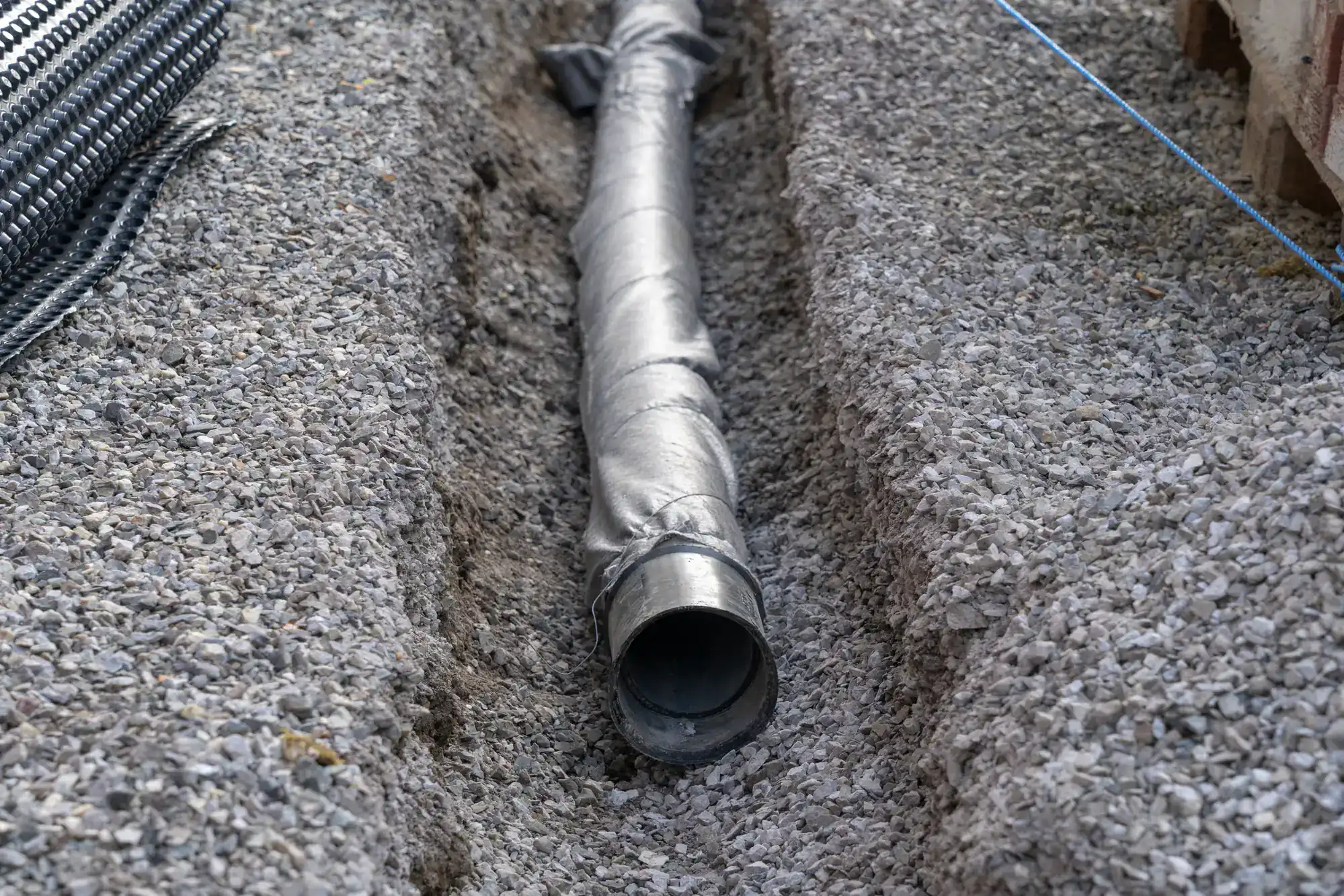
French drains are one of the most commonly installed drainage solutions, and for good reason — they work well in a wide range of situations. A French drain is essentially a trench filled with gravel and a perforated pipe that collects subsurface water and redirects it to a safe outlet. For yards with clay-heavy soil that holds water near the surface, a properly installed French drain can make a dramatic difference. The key word is “properly” — the pipe needs to be the right diameter, installed at the right depth and slope, wrapped in filter fabric appropriate for the soil type, and connected to an outlet that actually has somewhere to discharge the water. A French drain with no functional outlet is just a temporary holding tank.
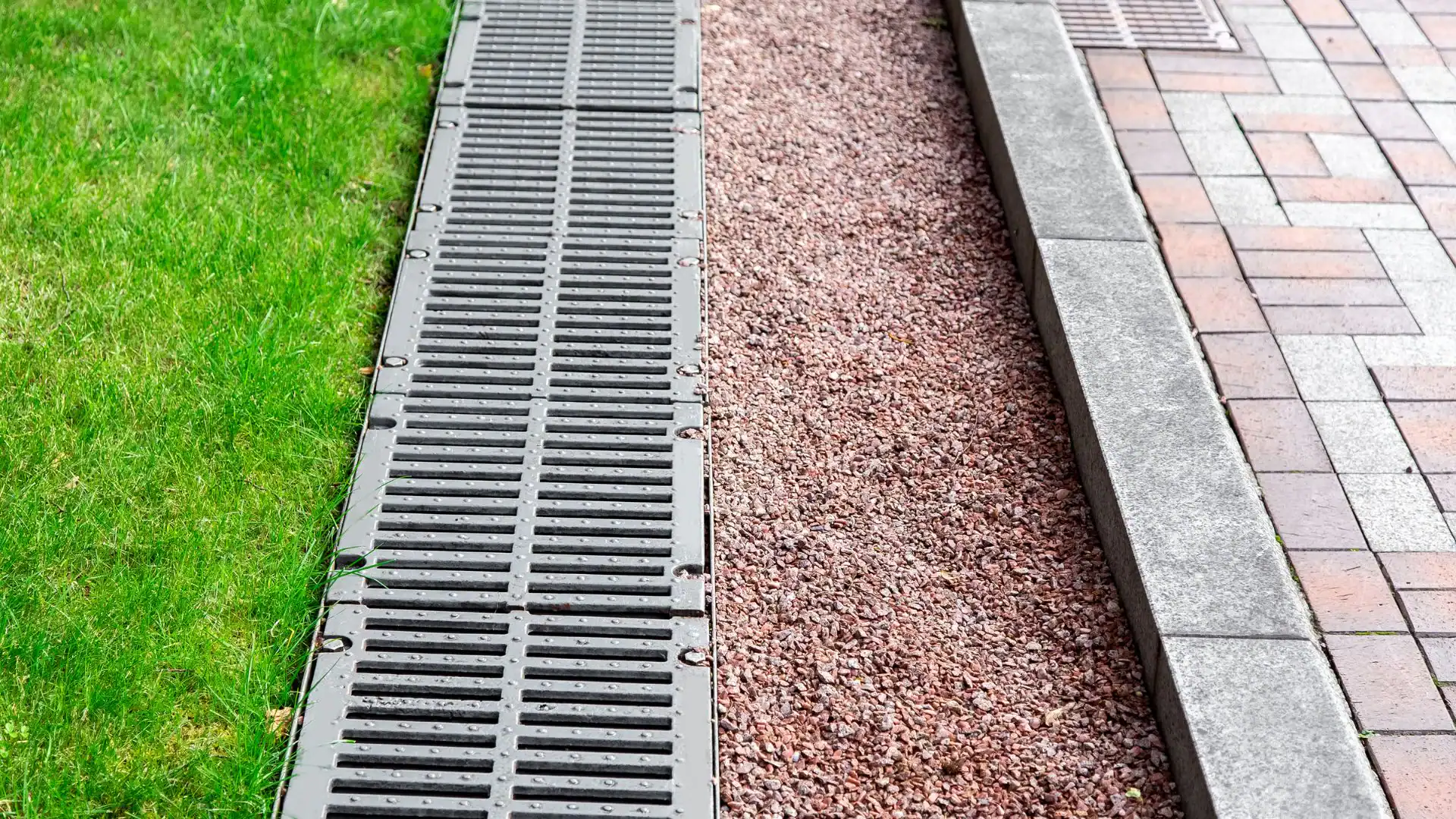
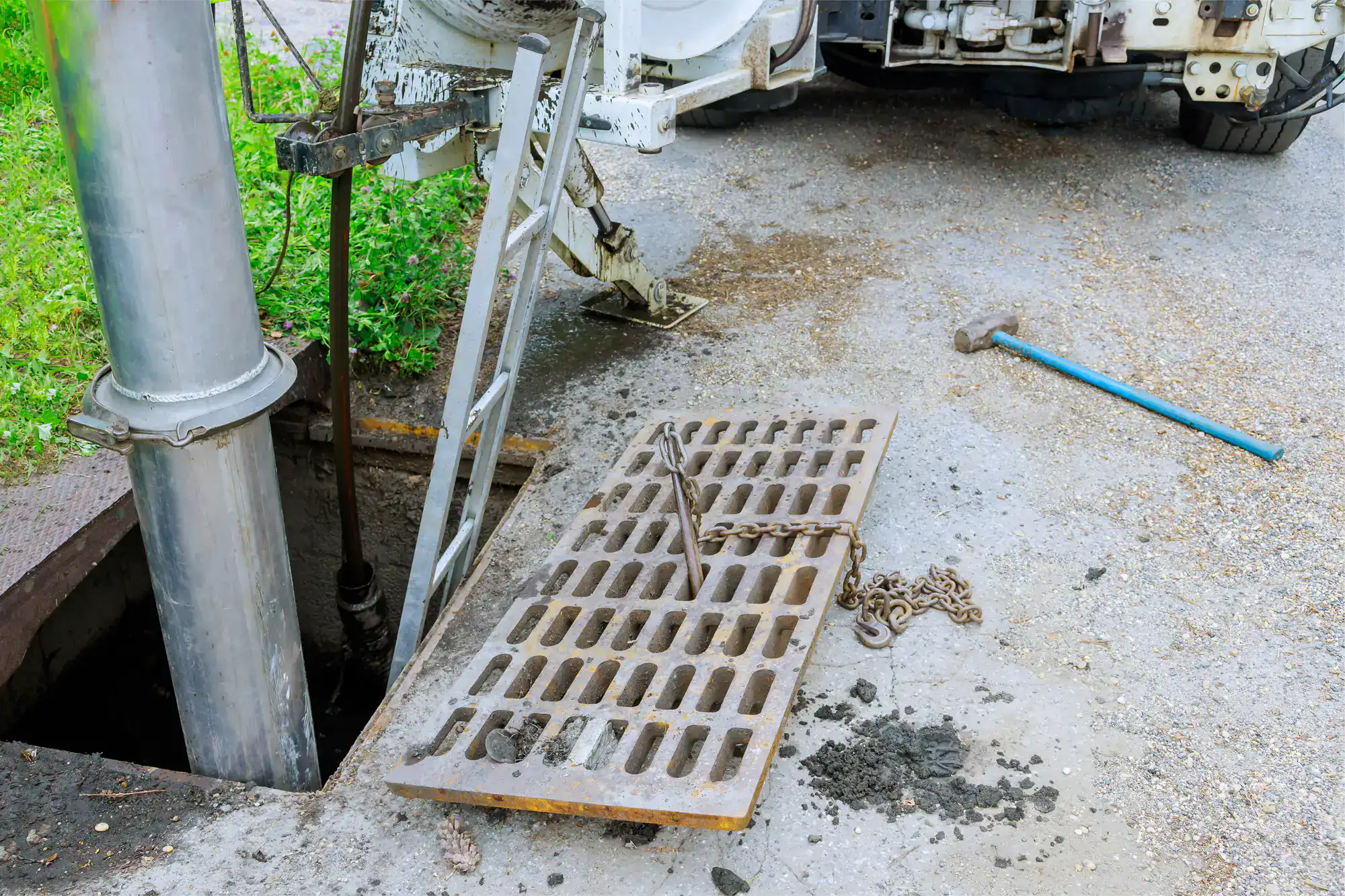
Catch basins serve a different purpose. They’re surface-level collection points — grated inlets that capture water running across hard surfaces like driveways, patios, and low-lying areas of the yard where water concentrates. If you have a spot that floods every time it rains and the water is coming from the surface rather than rising from below, a catch basin connected to an underground pipe system is often the right answer. They’re common in driveways and along the edges of patios where runoff has nowhere to go.
Dry wells are underground chambers that collect water and allow it to percolate slowly into the surrounding soil. They’re particularly useful for managing downspout discharge — the concentrated flow of water coming off your roof during a storm. Without a way to disperse that water, downspouts can deposit hundreds of gallons directly against your foundation in a single rain event. A dry well positioned away from the house gives that water a place to go. In the clay soils of the North Shore, dry well sizing and placement need to account for slower percolation rates, which is another reason a proper site assessment matters before any installation begins.
You can install the best French drain system available, and it will still underperform if the underlying grade is working against it. Grading — the physical slope and contour of your land — is what determines where water goes before any drainage infrastructure even comes into play. Get the grade right, and a lot of drainage problems either solve themselves or become much easier to manage. Get it wrong, and no amount of pipe and gravel will fully compensate.
For Long Island homeowners, this matters more than it might in other parts of the country. Much of Nassau County, particularly in communities like East Meadow, Levittown, and along the South Shore, is relatively flat. Water doesn’t move off flat land on its own — it sits. On the North Shore, where lots tend to be larger and more varied in topography, improper grading around older homes is one of the most common root causes of chronic drainage problems. Decades of soil settlement, landscape changes, and added hardscaping have gradually altered the way water flows across properties that were originally graded adequately.
Correcting the grade around a home isn’t a dramatic undertaking in most cases. It involves reshaping the soil so that it slopes away from the foundation and directs water toward a drainage outlet or a lower area of the property where it can safely disperse. When done alongside drainage installation, it ensures the entire system works as a unit — the grade moves water toward the collection point, the collection point moves it into the pipe, and the pipe moves it to the outlet. That complete chain is what separates a drainage solution that holds up through a Nor’easter from one that fails the first time Long Island gets three inches of rain in an afternoon.
Stormwater management on Long Island isn’t a luxury — it’s a practical necessity. The island receives nearly 47 inches of rain per year on average, well above the national average, and that’s before accounting for the concentrated intensity of hurricane season and the spring snowmelt period when the ground is still partially frozen and can’t absorb water fast enough to keep up.
If anything on this page sounds like your yard, your basement, or your property — don’t wait for it to get worse. Drainage problems don’t resolve on their own. The water that pools near your foundation this spring is doing the same slow damage it did last spring, and the spring before that. The cost of addressing it now is almost always a fraction of what it costs to repair the consequences later.
The right time to call is before the next major storm, not after. Whether you’re seeing standing water, soggy soil, foundation moisture, eroding landscaping, or just something that’s felt off for a few seasons and you’ve never gotten a clear answer on — a proper assessment is the starting point.
We work with homeowners across Long Island, and we’re straightforward about what we find and what we recommend. If you’re ready to stop guessing and get a real answer, reach out and let’s take a look at what’s actually going on with your property.
Summary:
Article details: