If your basement takes on water every time it storms, you're not alone — and the fix is more straightforward than you might think.
Foundation waterproofing is the process of protecting your home’s foundation walls and floor from water intrusion — whether that water is coming from surface runoff, groundwater pressure, or both. It’s not a single product or a single method. It’s a system, and the right system depends on where the water is coming from and how it’s getting in.
The most important distinction most homeowners don’t know: interior waterproofing manages water after it enters your foundation system, while exterior waterproofing stops it before it ever contacts the wall. Both have a place. But they are not interchangeable, and recommending one when the other is needed is one of the most common — and costly — mistakes in this industry.
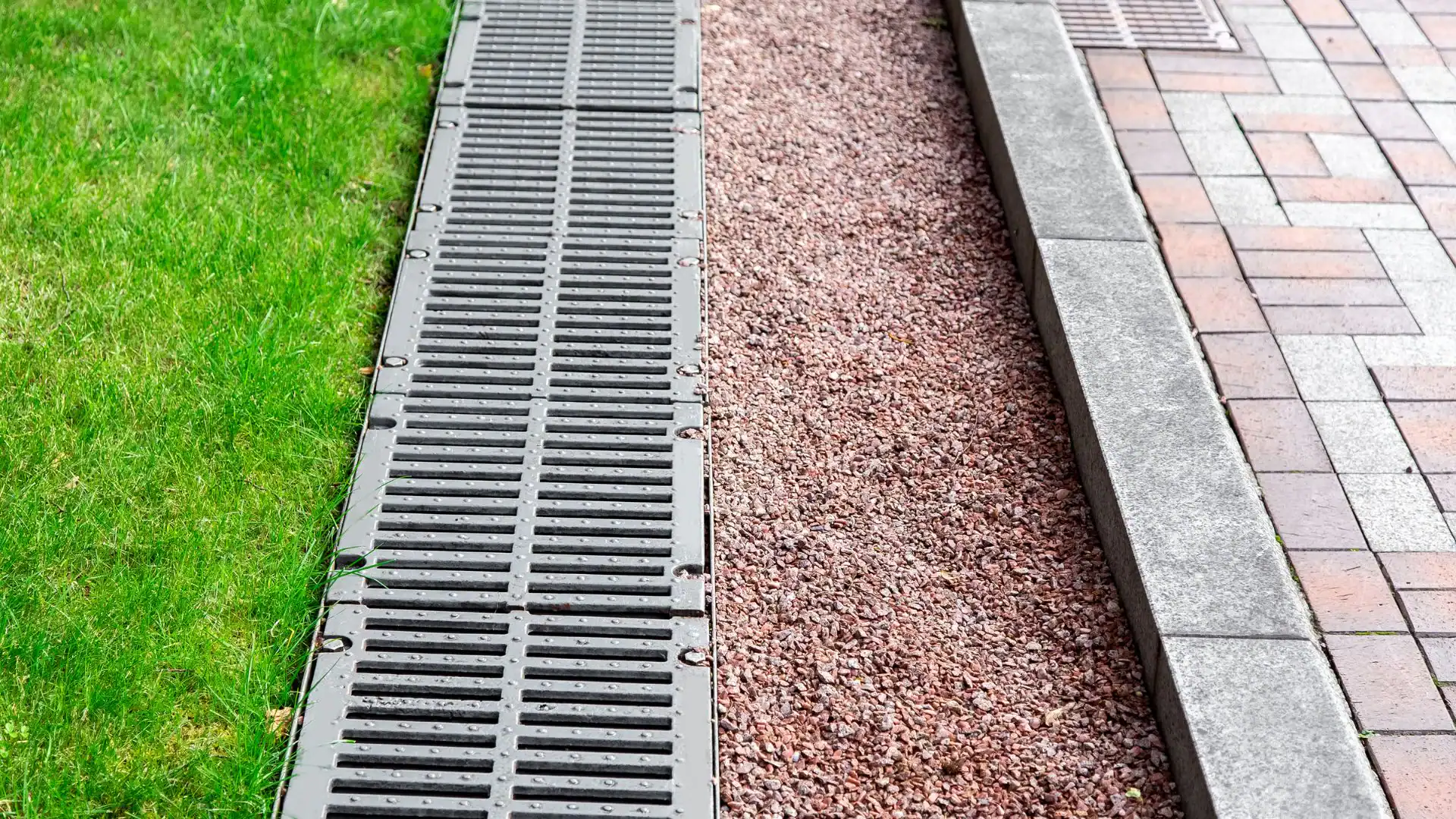
Interior waterproofing — French drains, perimeter drain systems, sump pumps — works by intercepting water that has already made it through or beneath the foundation and redirecting it before it spreads across your floor. It’s effective, it’s less disruptive to install, and for many homes it’s the right call. If your water problem is primarily a matter of groundwater rising through the floor slab or minor seepage through mortar joints, an interior system can handle it well.
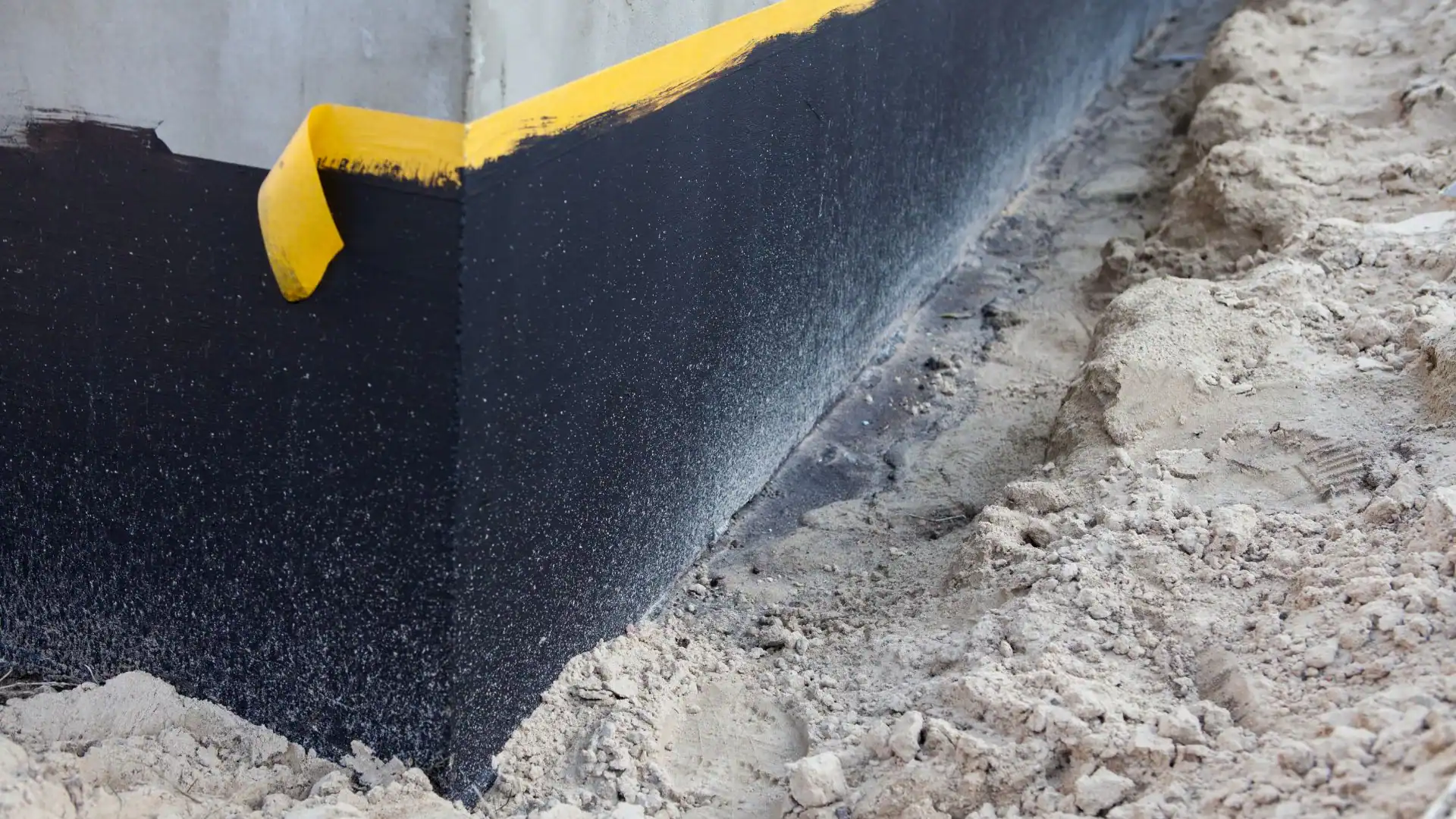
Exterior waterproofing is a different animal. It requires excavating the soil around the foundation perimeter — all the way down to the footing — cleaning the foundation wall, repairing any cracks, applying a waterproof membrane, installing a drainage board, and then backfilling with the right material so water drains away from the house instead of pooling against it. It’s more involved, but it’s also the only approach that actually protects the foundation wall itself from sustained water pressure.
Here’s why that matters: when water pushes against your foundation wall for days or weeks at a time — which is exactly what happens in Suffolk County after a heavy storm, thanks to the clay-heavy soil that holds moisture like a sponge — the wall absorbs that pressure. Over time, that pressure finds its way through cracks, through mortar joints, through any weak point it can find. An interior system catches what gets through. An exterior system prevents it from getting through in the first place.
For homes with deteriorating concrete block walls, significant foundation cracks, or chronic flooding that an interior system hasn’t resolved, exterior waterproofing isn’t the expensive option — it’s the correct one. The homes built in the 1950s, ’60s, and ’70s that make up so much of Suffolk County’s housing stock were constructed with minimal or no exterior waterproofing. Whatever was applied at the time has long since cracked, peeled, or failed entirely. Those foundations are working without a safety net.
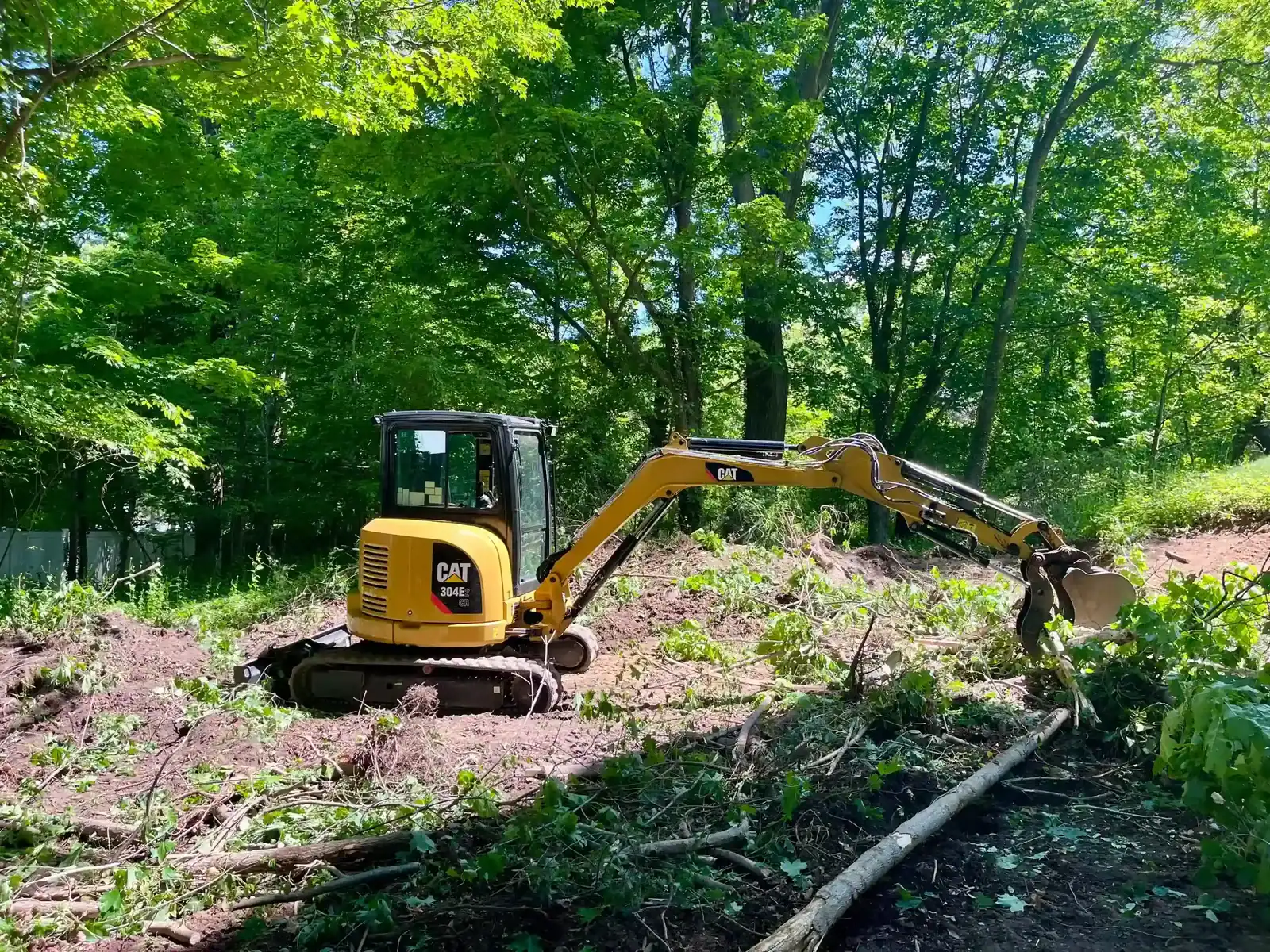
The process starts with excavation. The soil around the foundation perimeter is carefully removed — all the way down to the footing, which for a full basement typically means digging six to ten feet below grade. This is not a job that can be done with a shovel and a weekend. It requires real excavation equipment, operated by someone who knows what they’re doing around a foundation.
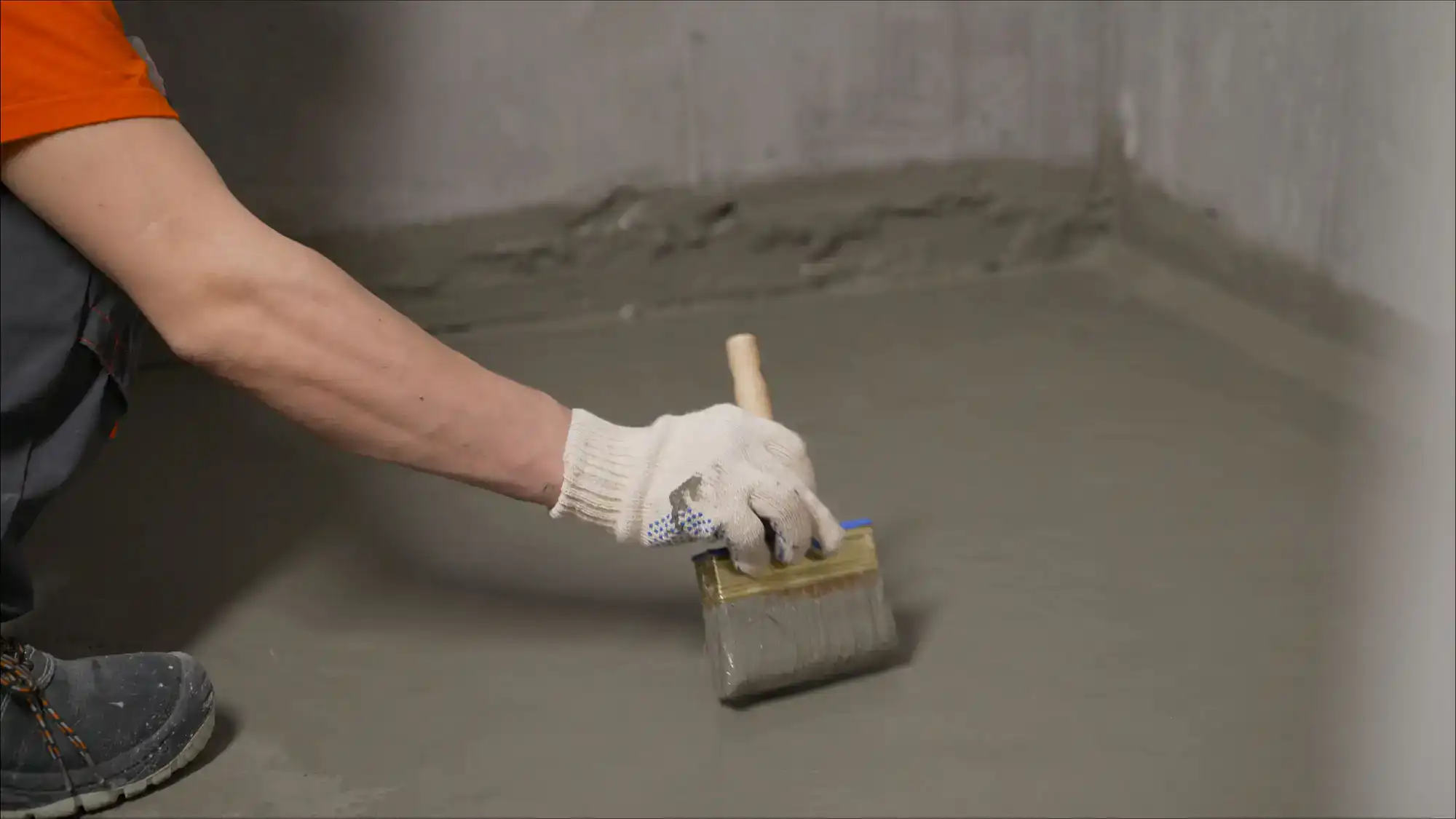
Once the wall is exposed, it gets cleaned — thoroughly. Dirt, old coatings, efflorescence (the white mineral deposits you may have noticed on your basement walls), and any loose material are removed. Then cracks are repaired, typically with hydraulic cement or epoxy injection, before anything else goes on the wall. Applying a membrane over an unrepaired crack is like painting over rust — it looks fine for a while, then fails faster than if you’d done nothing.
The waterproof membrane goes on next. Quality systems use rubberized asphalt or polymer-modified membranes that remain flexible through freeze-thaw cycles — a critical feature in a Long Island climate where temperatures swing dramatically between seasons. A drainage board is then installed over the membrane to protect it during backfilling and to channel water downward toward the footing drain. At the base of the excavation, perforated pipe in gravel intercepts groundwater and directs it away from the structure.
Then comes backfilling — and this step matters more than most people realize. The soil that gets excavated is typically clay, which drains poorly and holds water against the foundation. Backfilling with that same clay defeats much of the purpose of the waterproofing system. The right approach uses clean gravel or crushed stone directly against the foundation, with clay soil placed at the surface for grading. The finished grade should slope away from the house — at least six inches over ten feet — so surface water runs away from the foundation rather than toward it.
When the job is done correctly, you shouldn’t be able to tell it was done at all — except for a basement that stays dry.
Want live answers?
Connect with a Gold Coast Landworks expert for fast, friendly support.
Suffolk County isn’t a typical market for foundation waterproofing, and the solutions that work in other parts of the country don’t always translate here. The geology is different. The water table is different. The storms are different. And the housing stock is different. Understanding those factors is what separates a contractor who knows Suffolk County from one who’s just applying a standard pitch to a new zip code.
Long Island is, geologically speaking, a terminal moraine — a ridge of debris left behind by retreating glaciers at the end of the last Ice Age. That origin explains why the soil varies so dramatically from one neighborhood to the next, and why water behaves so unpredictably from one property to the next.
In inland communities like Huntington, Smithtown, and Commack, the soil tends to be heavy with clay. Clay is nearly impermeable — it absorbs water but releases it extremely slowly. When rain soaks into clay-heavy soil, that water has nowhere to go quickly. It sits against your foundation, building hydrostatic pressure for days after the storm has passed. The storm ends; the pressure doesn’t. That sustained pressure is what forces water through foundation walls, and it’s why homes in these areas can flood days after a rain event, not during it.
Closer to the South Shore — in communities like Babylon, Bay Shore, and Islip — the soil shifts toward sand, which drains faster under normal conditions. But sandy soil near the coast comes with its own complications: it shifts over time, it provides less structural support, and the water table in low-lying coastal areas can be only a few feet below the surface. When the water table rises after a storm, it pushes upward through the floor slab and laterally through the walls. Gutters and downspouts don’t address that — only a properly designed drainage system does.
The Long Island aquifer — the sole source of drinking water for Nassau and Suffolk Counties — is a reminder that groundwater is present throughout this island at varying depths. In many neighborhoods, that groundwater is close enough to the surface to be a constant variable in how your foundation performs. It’s not a problem unique to older homes or poorly built homes. It’s a geological reality that every Suffolk County homeowner is dealing with, whether they know it or not.
The August 2024 flooding across northern Suffolk County made this visible in a way that was hard to ignore. Systems that had been functioning for years backed up within hours. Basements that had never flooded before took on water. That event was a reminder that Suffolk County’s exposure to nor’easters, tropical storm remnants, and heavy coastal rainfall creates conditions that test every foundation — and that the homes without proper waterproofing are the ones that show it first.
How much does foundation waterproofing cost in Suffolk County?
It depends on the scope of the work and the approach required. Interior waterproofing systems — French drains, sump pump installation — typically run between $5,000 and $8,000 for a comprehensive installation. Exterior waterproofing, which involves excavation and membrane application, generally ranges from $5,000 to $15,000 depending on the size of your foundation and the complexity of the excavation. Those numbers sound significant until you compare them to what major foundation repairs cost after years of unaddressed water intrusion — often $25,000 or more, before mold remediation. Prevention is almost always the better financial decision.
Can I fix a wet basement with waterproofing paint from the hardware store?
No. Waterproofing paints and sealers are surface treatments. They can handle minor condensation, but they cannot withstand sustained hydrostatic pressure — the kind that builds up in Suffolk County’s clay-heavy soil after a storm. They peel, they crack, and they fail, often within a single freeze-thaw cycle. If water is getting into your basement through the walls or floor, the source is pressure, not surface porosity. That requires a system, not a coating.
Does my home need exterior waterproofing, or will an interior system be enough?
This is the most important question to get right, and the honest answer is: it depends on your specific situation. Interior systems are appropriate for many homes and many types of water intrusion. But if your foundation walls are showing significant cracking, if you have a concrete block foundation with deteriorating mortar joints, or if you’ve already had an interior system installed and it’s not keeping up — exterior waterproofing is likely what your home actually needs. In Suffolk County, where the combination of clay soil and a shallow water table creates sustained hydrostatic pressure, exterior waterproofing is often the more durable long-term solution for homes with chronic water problems.
Will the excavation damage my landscaping?
Exterior waterproofing does require digging around the foundation perimeter, which will disrupt plantings and any hardscaping close to the house. We perform our own excavation work and take the restoration as seriously as the waterproofing itself. We backfill correctly, establish proper grade, and leave your yard in a condition that reflects the quality of the work underneath it. The key is making sure the same team that digs is accountable for what the property looks like when we leave.
How do I know if I need foundation waterproofing at all?
Visible flooding is the obvious sign, but it’s rarely the first one. Efflorescence — the white, chalky mineral deposits on concrete walls — means water has been moving through the wall. A persistent musty smell means moisture is present even when the floor is dry. Hairline cracks in the foundation wall mean freeze-thaw cycles are doing their work. Any of these, taken alone, is worth a professional look. Taken together, they’re telling you the same thing: water is working on your foundation, and it’s been at it for a while.
The right contractor for this work isn’t necessarily the one with the lowest bid or the most aggressive sales pitch. It’s the one who can look at your specific foundation, in your specific neighborhood, and tell you honestly what’s causing the problem and what will actually fix it — not just what’s easiest to sell.
Ask whether we perform our own excavation or subcontract it. Ask for specific warranty terms in writing. Ask whether we’ve worked in your town, with your soil conditions, on homes like yours. The answers tell you a lot about whether you’re talking to someone who knows this work or someone who knows how to sell it.
If you’re dealing with a wet basement, foundation cracks, or just want to understand what your home is up against before the next storm season, we’re here to take a look. We work throughout Suffolk County — from Huntington and Northport to Babylon, Smithtown, Patchogue, and everywhere in between — and we bring our own equipment and crew to every job. Reach out to schedule a free inspection and get a straight answer about what your foundation actually needs.
Summary:
Article details: