
Hear from Our Customers
When the drainage problem is gone, everything changes. The backyard is usable again after a rainstorm, not three days later. The basement stays dry through spring when the groundwater table rises across central Suffolk County. The lawn stops dying in waterlogged patches, and you stop watching the same corner of your yard turn into a pond every time the sky opens up.
Coram’s housing stock is predominantly from the 1960s through the 1980s and the original drainage systems in those homes were not built for the storm intensity Long Island sees today. After August 2024 dropped nearly 9.4 inches of rain on western Suffolk County in a single day, a lot of homeowners in this hamlet realized their yard drainage situation wasn’t going to fix itself. A properly installed French drain system intercepts that water before it reaches your foundation, redirects it to a defined outlet, and keeps doing that for the next 30 to 40 years.
What makes the difference here specifically is the soil. Coram sits in central Suffolk County where the surface layer can feel sandy, but clay pockets beneath it stop water from draining downward. That water has to go somewhere and without a French drain system designed for that subsurface condition, it goes into your foundation, under your slab, or sideways through your neighbor’s yard. A system designed around what’s actually happening under your property is what produces results that last.
We’re a residential drainage contractor serving Long Island homeowners and the work we do in Coram is specific to Coram. That means understanding how the ridge terrain that runs through this hamlet affects water flow from one property to the next. It means knowing that a home near the Route 25 and Route 112 corridor drains differently than one tucked into a neighborhood like Tanglewood Park or North Isle Village. It means knowing Brookhaven Town’s stormwater code, not just showing up with a shovel.
We handle the full scope of the job site assessment, drainage design, permitting research, utility marking through 811, installation, and full yard restoration after the work is done. You don’t have to coordinate any of that. Every French drain system we install is built with the right materials for Long Island’s freeze-thaw winters: proper perforated pipe, geotextile filter fabric, clean drainage stone, correct slope, and a defined outlet point that complies with the Town of Brookhaven’s stormwater discharge requirements. That’s what a system that actually lasts looks like.
It starts with a free on-site assessment not a phone quote. Coram’s terrain and soil variability make that step non-negotiable. A property on the west side of the hamlet near Selden can behave completely differently from one closer to Middle Island, even if they’re a mile apart. We walk the property, identify where the water is entering, where it’s pooling, and what the subsurface conditions look like. That assessment drives the design the trench depth, pipe placement, gravel specification, and outlet location are all determined by what we find on your specific property.
Once the system is designed, we handle all utility marking through New York State’s 811 call-before-you-dig process before any excavation begins. We also confirm whether your project requires any review under Chapter 86 of the Brookhaven Town Code, which governs stormwater runoff management and prohibits redirecting drainage onto neighboring properties without prior approval. You won’t have to navigate any of that yourself.
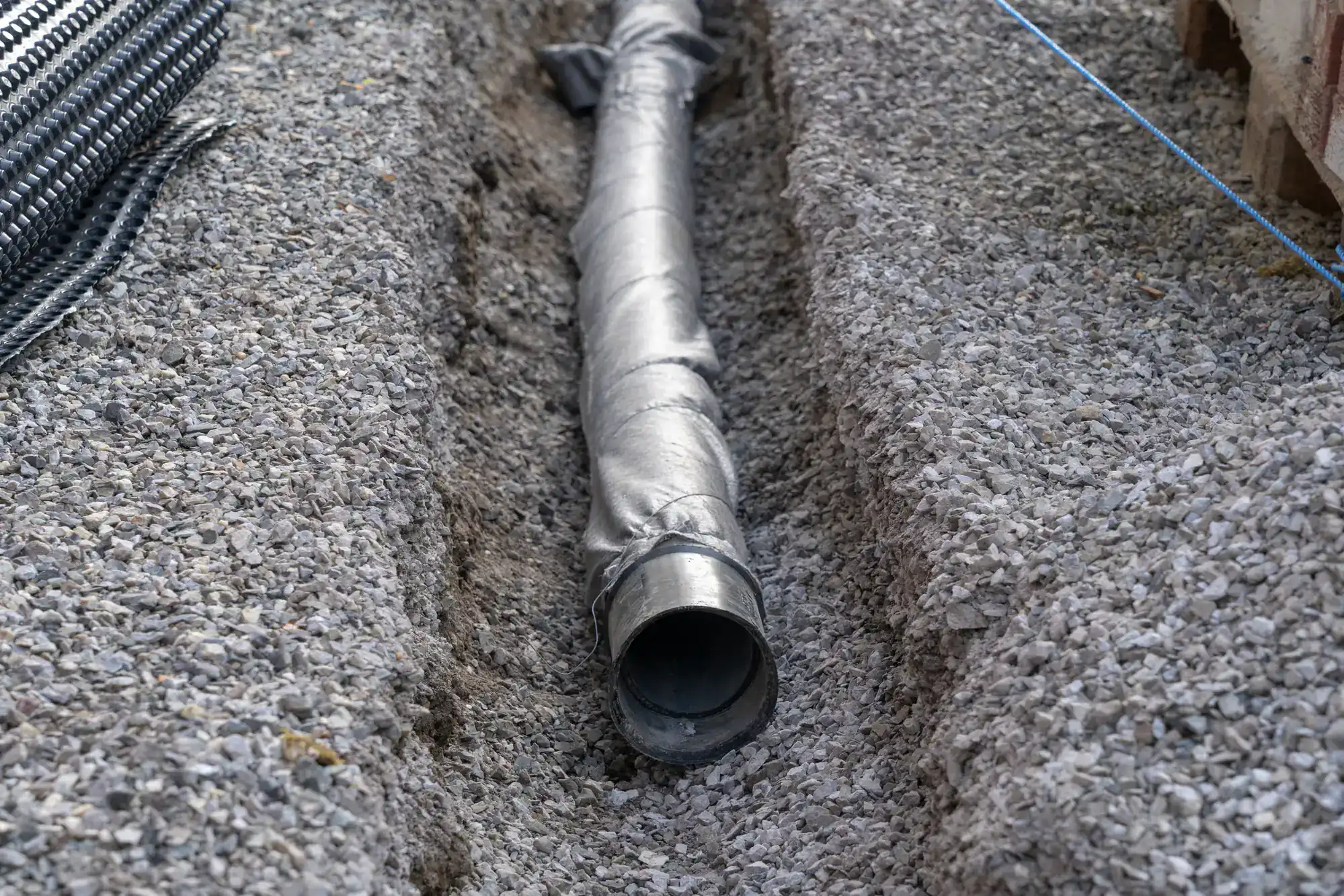
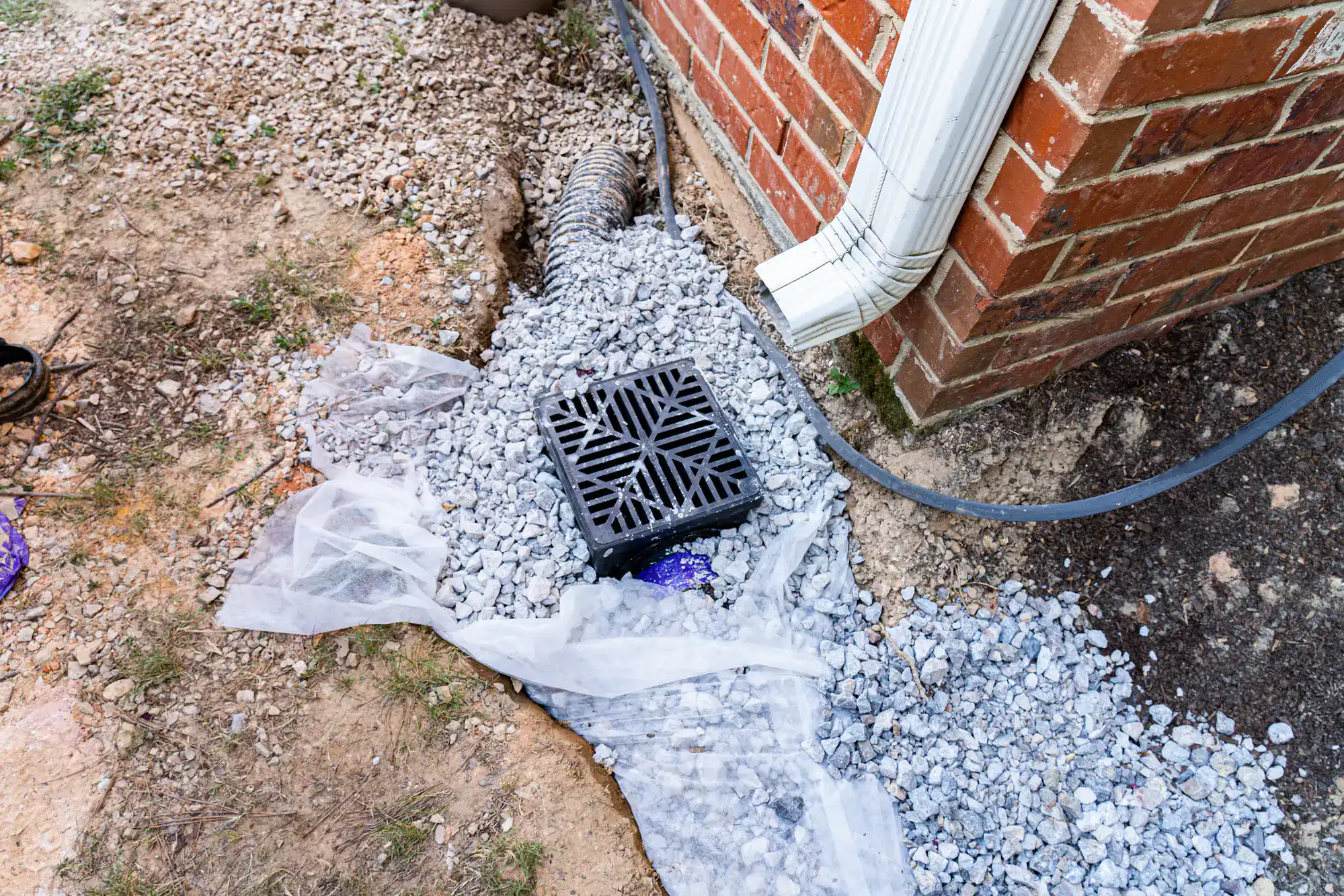
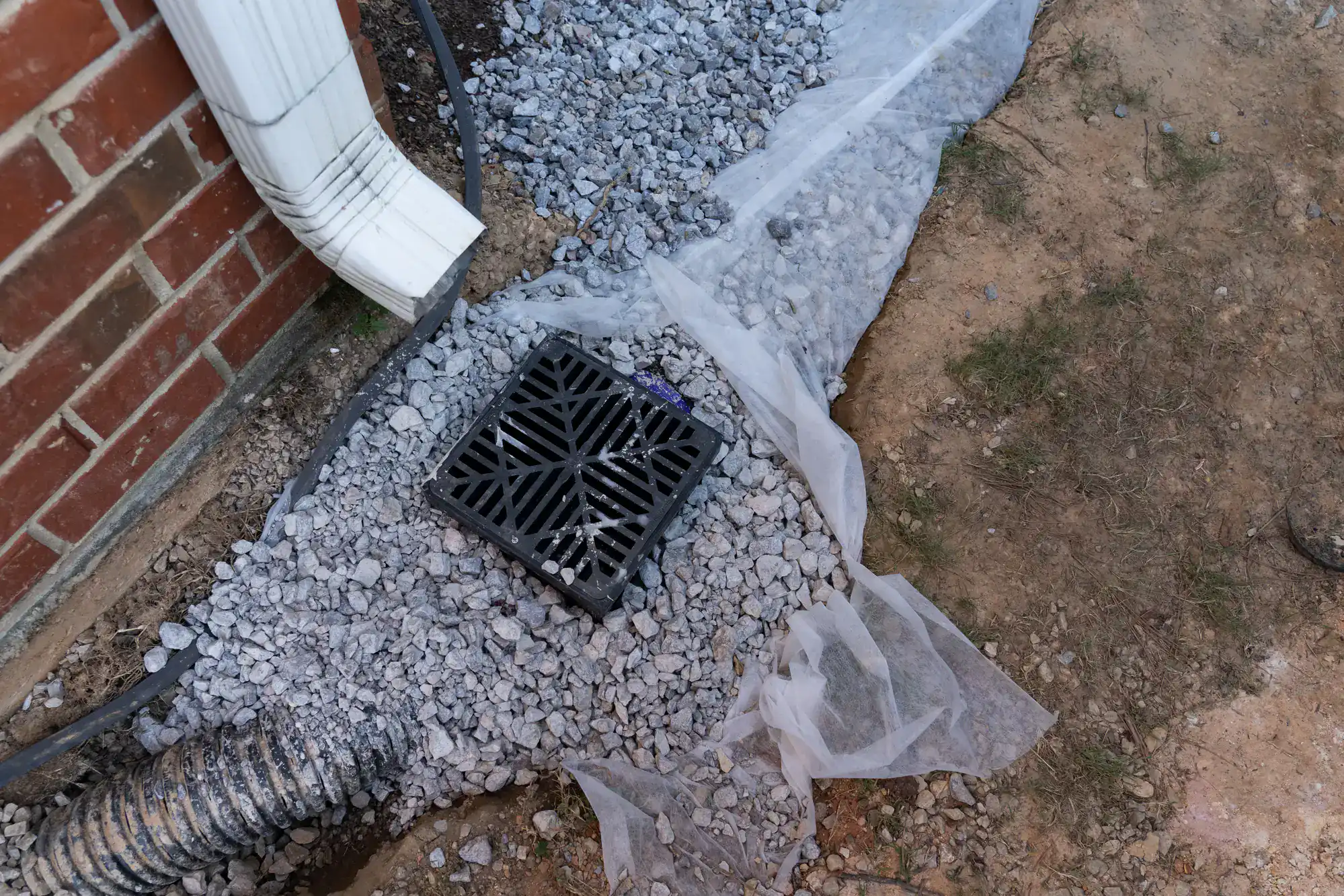
Installation typically involves trenching to the appropriate depth for Long Island’s frost line, setting perforated pipe in clean drainage stone, wrapping the system in geotextile filter fabric to prevent silt infiltration, and connecting to a defined outlet whether that’s a daylight discharge point, a dry well, or an approved catch basin. After the system is in the ground, the yard is restored: topsoil replaced, surface graded, and grass seeded or sodded to match. The disruption is temporary. The fix is not.
Ready to get started?
Residential French drain installation in Coram, NY covers the full range of drainage problems that homeowners in this hamlet deal with soggy yards that won’t dry out, water intrusion at the foundation, hydrostatic pressure building against basement walls, and surface runoff that pools near the house after every significant rain. We design the system for your property to address the actual source of the problem, not just the visible symptoms.
Every installation we complete includes a site-specific drainage assessment, professional excavation to frost-safe depth, schedule 40 or equivalent perforated pipe, clean washed drainage stone, non-woven geotextile filter fabric to protect the pipe from silt and root intrusion, and a properly designed outlet that meets the Town of Brookhaven’s stormwater discharge standards. Homes in the Longwood Central and Middle Country school districts with established landscaping get full surface restoration as a standard part of the job not an add-on. The system is built to survive Long Island winters, which means depth and materials are selected with freeze-thaw cycles in mind, not ignored.
For homeowners in communities like Bretton Woods, Country Village Estates, or the broader Coram area who are dealing with drainage that has gradually worsened over the years, the honest answer is usually that the original system if there was one has reached the end of its functional life. A new French drain system, installed correctly, resets that baseline and protects a home that, at today’s median Coram values, is worth close to $490,000. That’s worth doing right.
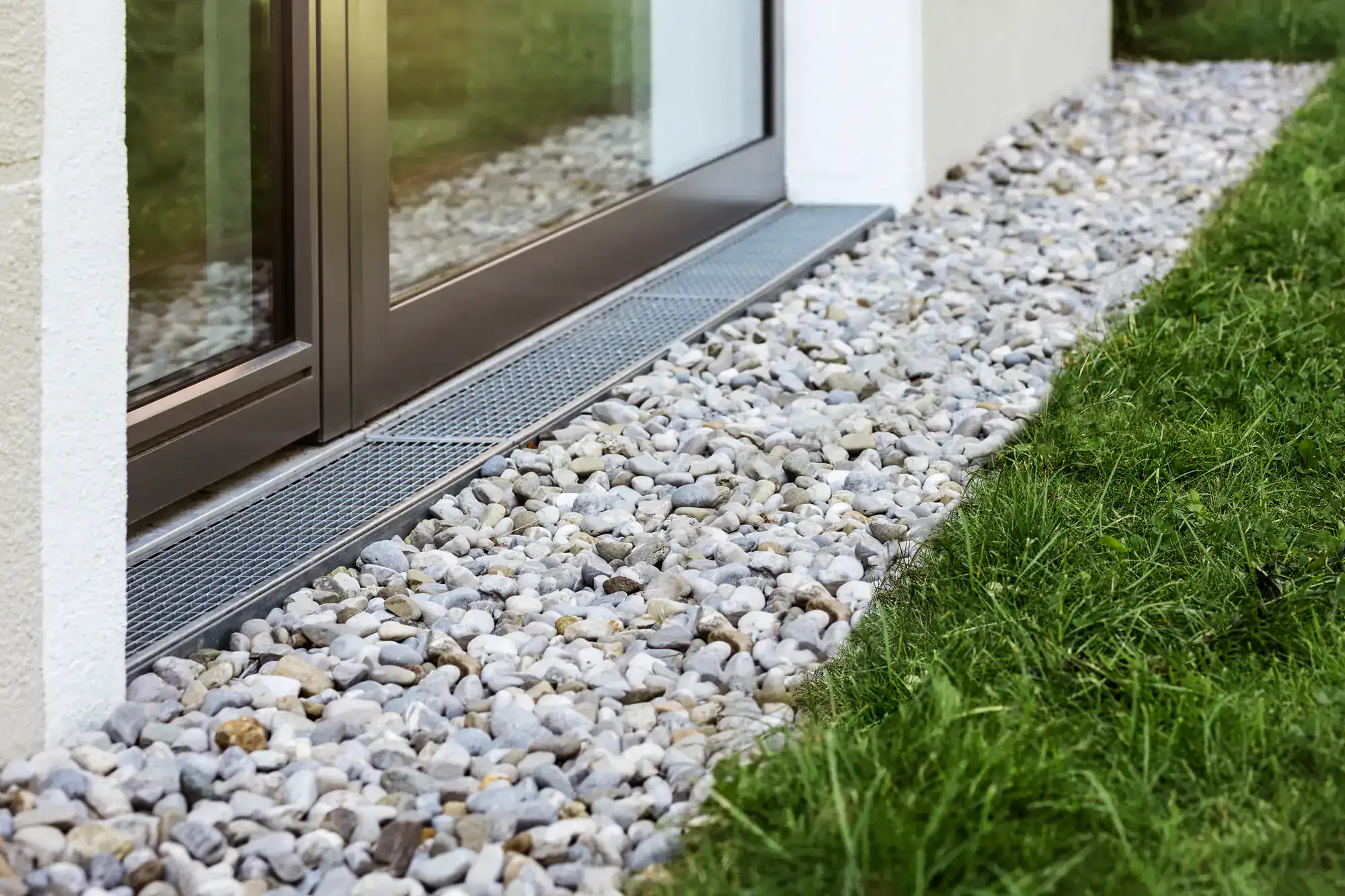
For most residential French drain installations in Coram, a traditional building permit is not required but that doesn’t mean there are no rules to follow. The Town of Brookhaven enforces Chapter 86 of its Town Code, which governs stormwater runoff management. One of the key provisions is that you cannot divert stormwater onto a neighboring property or into a public right-of-way without prior approval from an authorized body. That means the outlet point of your French drain system has to be designed and located correctly from the start.
Before any excavation begins, New York State law also requires utility marking through the 811 call-before-you-dig program. We handle this as a standard pre-installation step. If your property is near any mapped drainage features or environmentally sensitive areas, additional review through Brookhaven’s Division of Environmental Protection may apply. When you work with us, all of this is handled as part of the job you don’t have to figure out what applies to your property on your own.
Most residential French drain installations in Coram fall somewhere between $5,000 and $12,000, with the national average sitting around $9,250. The actual cost for your property depends on several factors: the linear footage of pipe required, the depth needed to get below the frost line, the soil conditions encountered during excavation, the location and type of outlet point, and whether yard restoration involves seeding or sod.
What’s worth keeping in mind is the comparison. Foundation crack repair and waterproofing on Long Island runs $15,000 to $50,000. Mold remediation starts at $3,000 and goes up fast depending on how far it’s spread. With Coram’s median home value approaching $490,000, a French drain system that prevents that kind of damage is one of the better investments a homeowner can make. We provide a clear, specific quote after the on-site assessment no ballpark numbers over the phone, because the soil and slope conditions on your specific property are what drive the actual number.
This is one of the most common questions we hear from homeowners in Coram and across central Suffolk County, and the answer comes down to what’s happening beneath the surface. Coram’s top layer can feel sandy and relatively loose, but clay pockets are common underneath and clay is nearly impermeable. Water percolates through the sandy surface layer, hits the clay horizon, and then has nowhere to go vertically. It moves laterally instead, pooling in low spots, saturating root zones, and building up against foundation walls.
The ridge terrain that runs through parts of Coram adds another layer to this. Properties at lower elevations can receive subsurface water moving from uphill neighbors water that traveled underground for a significant distance before surfacing in your yard. A French drain system intercepts that lateral water movement before it reaches the problem areas on your property, redirects it to a defined outlet, and keeps your yard draining the way it should regardless of what the soil layer beneath looks like. Surface regrading alone won’t fix this you have to address what’s happening underground.
Yes a French drain installed too shallow will freeze during a Long Island winter, and when it freezes, the pipe can crack or shift, which compromises the entire system. This is one of the most common failure points in installations done by contractors who don’t account for the local frost depth. Long Island’s freeze-thaw cycles are real and recurring, and a system that isn’t buried deep enough to stay below the frost line is going to have problems within the first few winters.
The fix is straightforward: install the pipe at the correct depth from the start. For Long Island, that means getting the pipe below the frost line, which is typically around 36 inches in this region. We use pipe and fittings rated for the thermal stress of seasonal temperature swings, and the drainage stone surrounding the pipe provides additional insulation and structural stability. A system built to these specifications handles Long Island winters without issue and continues functioning correctly when spring snowmelt and groundwater rise create the highest drainage demand of the year.
A properly installed French drain system lasts 30 to 40 years. The systems that fail in five years or fewer almost always come down to the same handful of shortcuts: the wrong pipe type, no geotextile filter fabric or the wrong grade of fabric, insufficient drainage stone, improper slope that lets water sit in the pipe instead of flowing to the outlet, or pipe buried too shallow to survive freeze-thaw cycles. In Coram’s soil conditions where fine particles from clay pockets can infiltrate an unprotected pipe over time skipping the filter fabric is particularly damaging. Silt infiltration clogs the pipe from the inside, and once that happens, the system stops functioning and has to be dug up and replaced.
The other common failure is no defined outlet. A French drain that collects water but has nowhere to discharge it just becomes a saturated trench. Every system we install has a specific outlet point designed to comply with Brookhaven Town’s stormwater code so the water has a clear path out of your property. Get those fundamentals right and the system runs for decades without issue.
It’s a fair concern, especially for homeowners in Coram who have spent years building out their lawns and landscaping. The installation does require excavation typically a trench 18 to 24 inches wide and 24 to 36 inches deep depending on the system design and frost depth requirements. For a standard residential yard drainage project, that work is usually completed within one to three days depending on the scope and linear footage involved.
What you’re left with after installation is a restored surface, not a torn-up yard. Topsoil is replaced, the grade is re-established, and grass is seeded or sodded to match the surrounding lawn. Established plantings and landscaping features are worked around wherever possible during the design phase, not treated as an afterthought. The visible disruption is temporary measured in days. The drainage problem it solves has likely been building for years, and in homes built during Coram’s postwar suburban expansion, the original drainage infrastructure was never going to last forever. A new system, installed correctly, gives you 30 to 40 years of reliable drainage and a yard you can actually use after a rainstorm.