
Hear from Our Customers
When a French drain system is installed correctly, you stop managing a water problem and start ignoring it because it handles itself. No more spongy patches in the lawn. No more checking the basement after every nor’easter. No more wondering whether that musty smell is going to turn into something expensive.
East Northport’s southern neighborhoods sit on soil that was literally named for its clay content. The area historically called Clay Pitts didn’t earn that name by accident the red clay deposits that run through the ground here absorb water slowly and hold it even longer. That’s not a landscaping quirk. It’s the reason water migrates toward your foundation instead of draining away from it, and it’s why a properly engineered French drain for your yard isn’t optional on a lot of these properties it’s overdue.
The housing stock adds another layer. Most homes here were built in the late 1950s and early 1960s, when drainage was an afterthought. Original grading has shifted. Trees that were saplings when the house went up have root systems that redirect surface flow. Whatever drainage infrastructure existed when the house was new is 60-plus years old. A French drain installation today isn’t a luxury upgrade it’s correcting what should have been done from the start, and protecting a home that’s now worth well over $600,000.
We work across Long Island’s North Shore, and East Northport is part of that territory in a specific, hands-on way. We understand the difference between the sandy glacial till that drains reasonably well in some areas and the clay lenses embedded throughout that create localized failures no one sees coming until a heavy rain exposes them. That distinction matters when you’re designing a French drain system because the wrong approach for your soil type produces a system that fails within a few years.
We’re a water drainage contractor that focuses on doing the job right the first time. That means a real site assessment before any design recommendation, proper pipe depth that accounts for Long Island’s frost penetration, the right geotextile filter fabric, washed angular gravel, and a defined discharge point that actually moves water off your property. From properties along Larkfield Road to neighborhoods near the Pulaski Road corridor, we’ve seen what East Northport’s ground does to drainage and we build systems that account for it.
It starts with a free on-site assessment not a phone estimate, not a square-footage guess. We come to your property, look at the topography, evaluate where water is entering and where it’s pooling, and assess the soil conditions specific to your lot. In East Northport, that assessment often reveals clay lenses or subsurface conditions that aren’t visible from the surface, and those details drive the system design. There’s no way to get that right without standing on your property.
Once we’ve identified the source of the problem and mapped the right system, we handle the permitting process through the Town of Huntington Building Department. New York State law also requires utility marking through 811 before any excavation we coordinate that as a standard part of every job. You don’t have to navigate any of that on your side.
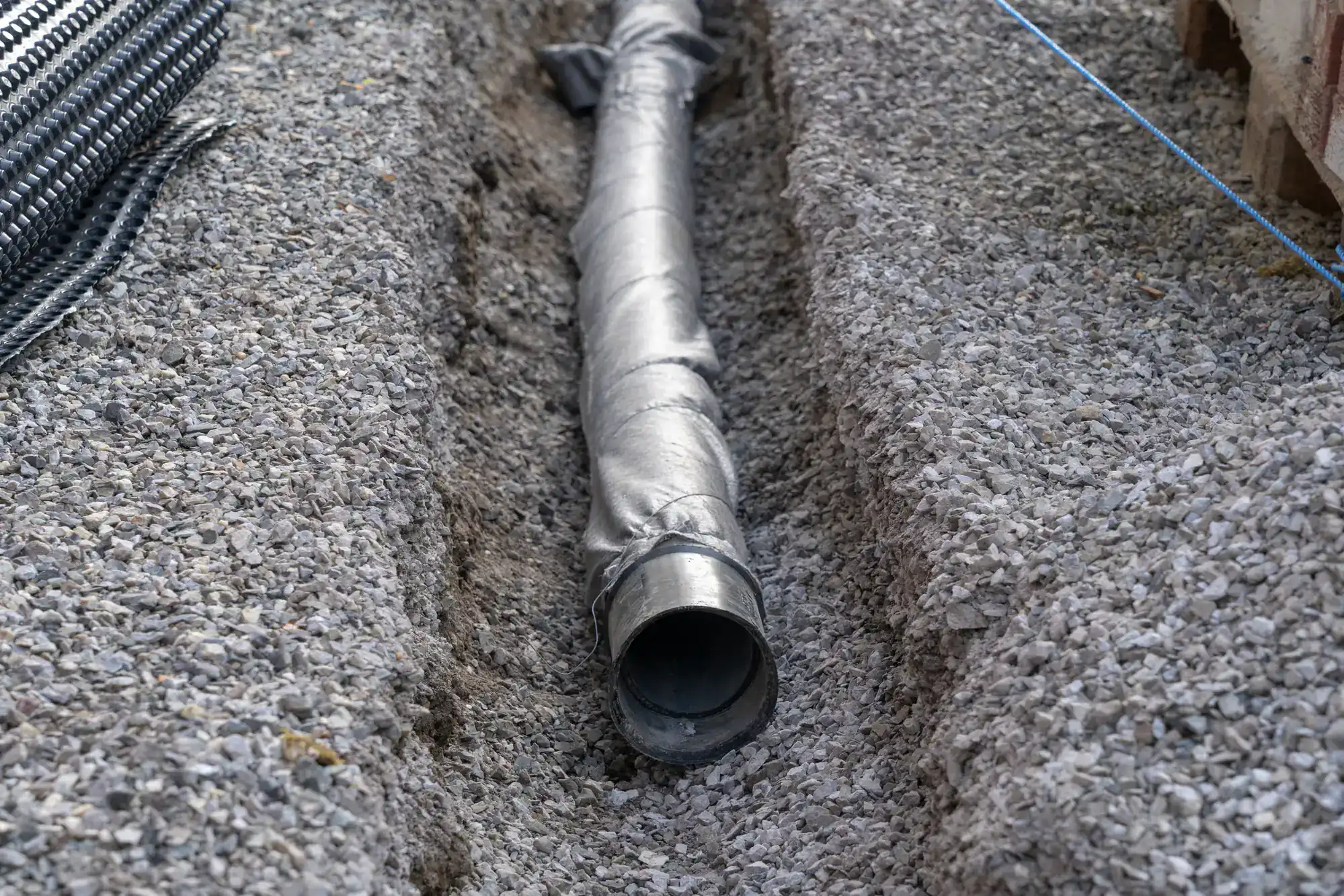
Installation means trenching to the appropriate depth deep enough to stay below Long Island’s frost line, which can reach 36 to 42 inches in a hard winter. Pipe goes in with proper slope, fabric wraps the gravel to keep clay fines from clogging the system over time, and the trench is backfilled and graded. Topsoil and seeding restore the surface. When we leave, your yard looks like a yard again not a construction site.
Ready to get started?
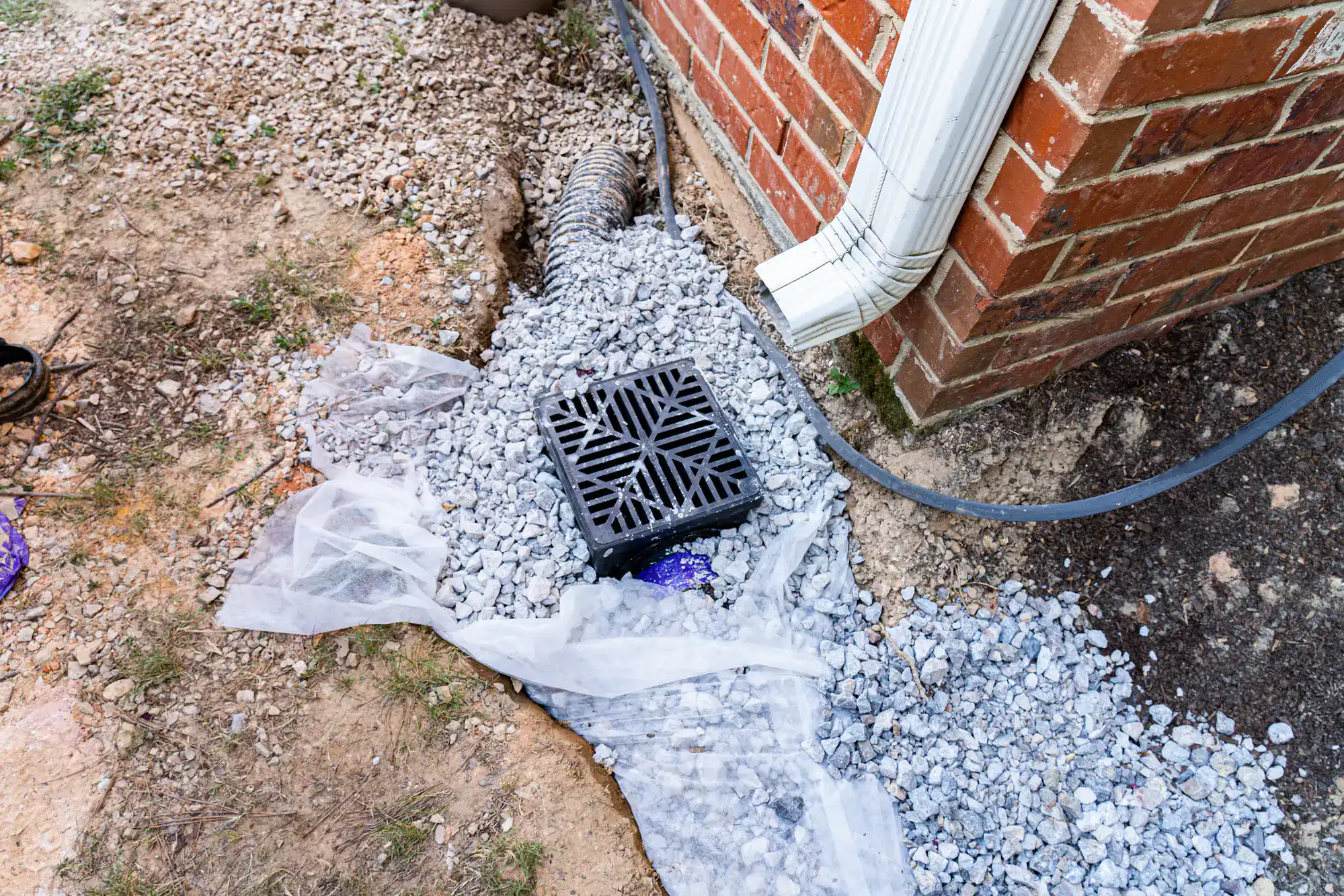
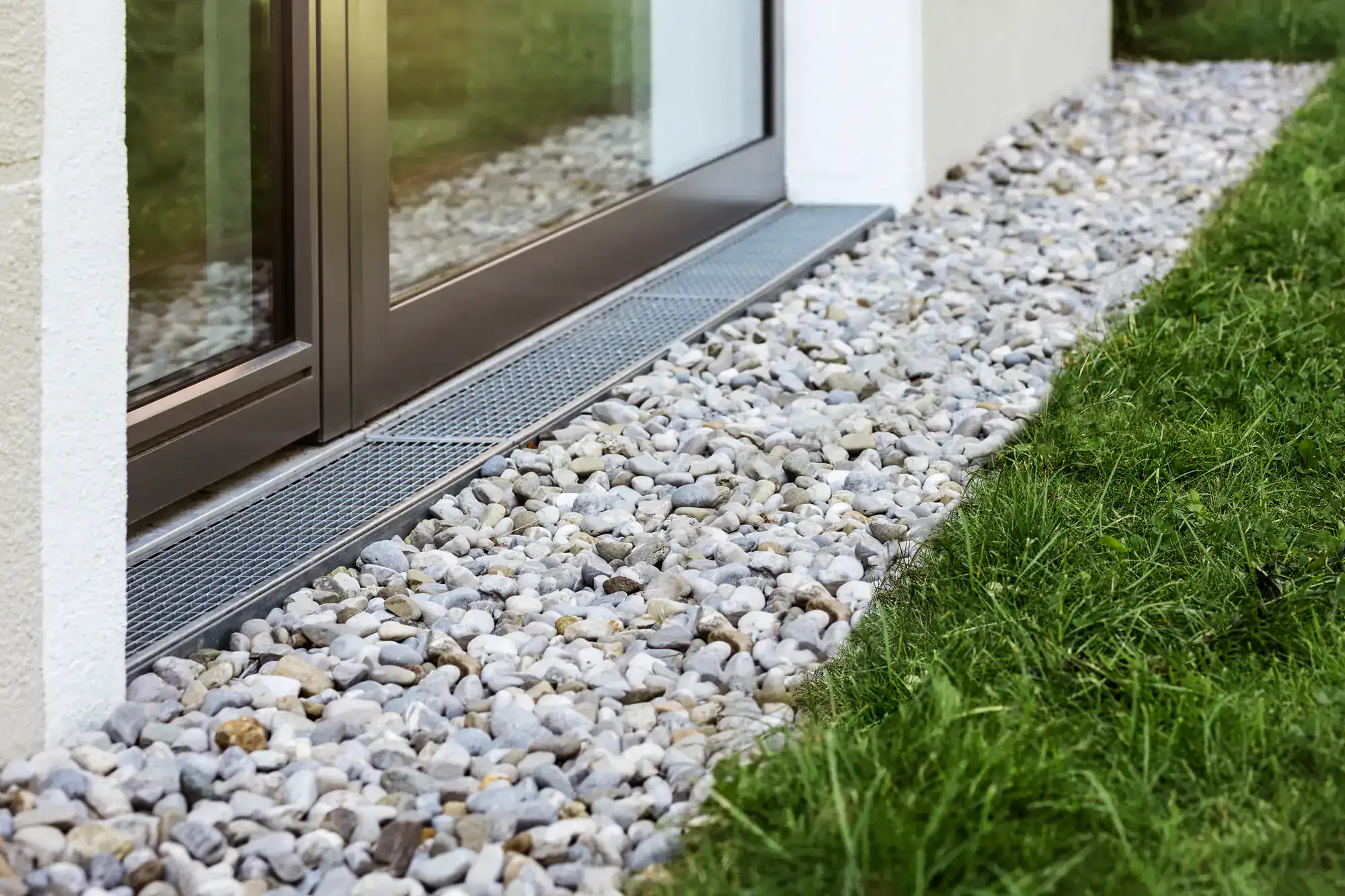
Every French drain system we install in East Northport is designed around what’s actually happening on your property not a one-size approach copied from a warmer, flatter market. The materials matter: perforated pipe sized for your water volume, double-punched geotextile filter fabric that keeps clay particles out of the gravel bed over the long term, and washed angular gravel (not rounded stone, which doesn’t compact and drain the same way). Slope is engineered at the right pitch so water moves consistently toward the discharge point without backing up.
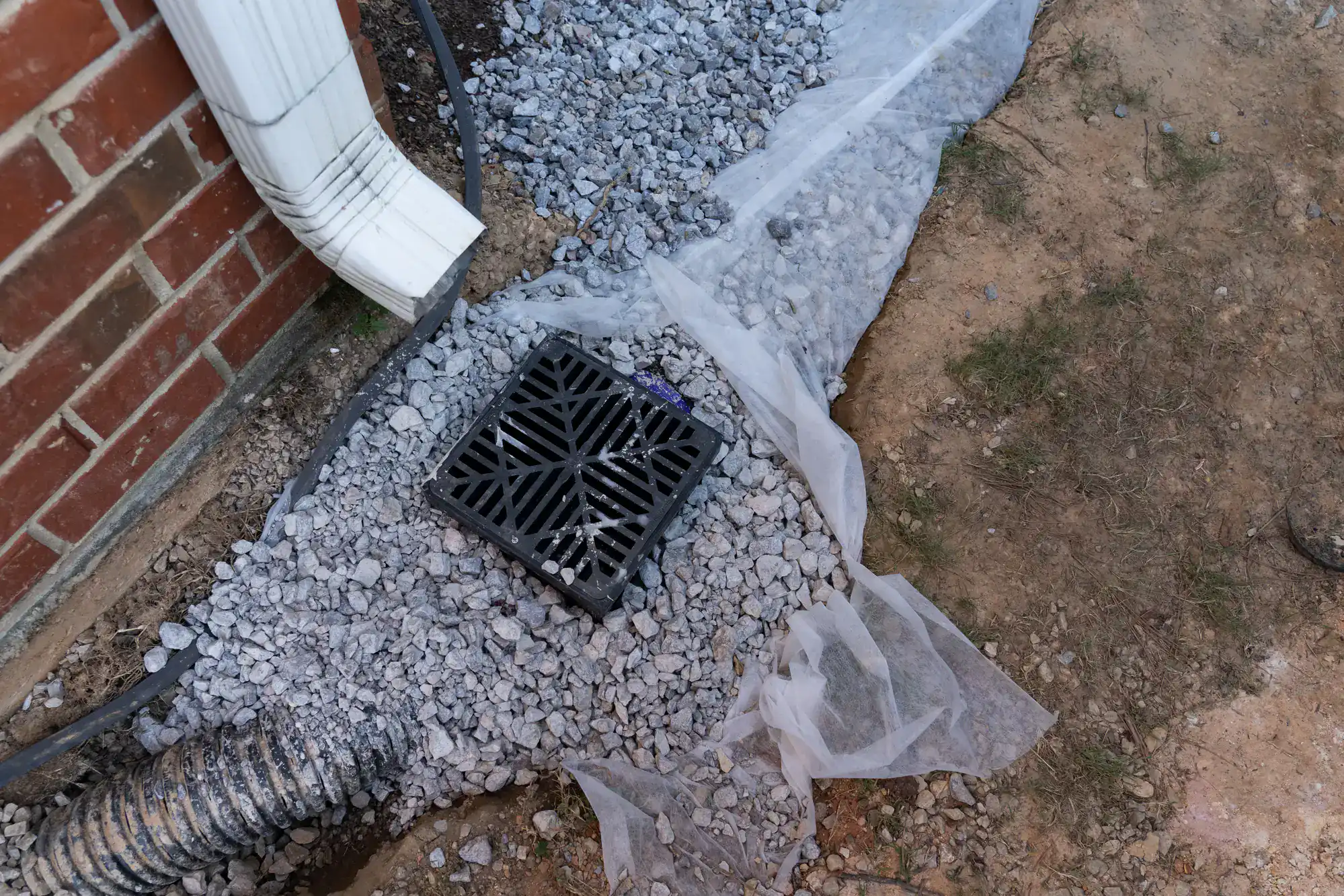
Discharge options depend on your property layout and what the Town of Huntington will permit. Water can daylight to a slope, discharge into a dry well, connect to a catch basin, or outlet into a vegetated area with adequate permeability. We assess what’s viable on your lot and what’s compliant with local stormwater management requirements before we recommend anything. In Huntington, soil testing is sometimes required to confirm the ground can handle the water load we handle that evaluation as part of the process.
Whether you’re dealing with a soggy backyard that won’t recover after rain, a basement that takes on moisture every spring when snowmelt saturates the ground, or a low spot that’s been collecting water for years, the system is designed to address the actual source not just move the symptom somewhere else on your property.
It depends on the scope of the system and where it discharges. East Northport falls under Town of Huntington jurisdiction, and the Town has a stormwater management code that governs any installation that alters how water moves across your property or discharges into the public storm sewer system. For most residential French drain installations in East Northport, a building permit is required and in some cases, soil testing is needed to confirm the ground can handle the added water load before the Town will sign off.
The short answer is: don’t assume you don’t need one. We manage the permitting process through the Town of Huntington Building Department as a standard part of every job. We also coordinate the required 811 utility marking before any excavation begins that’s a New York State legal requirement, not optional. You shouldn’t have to figure out the regulatory side of this on your own, and with us, you don’t have to.
Most residential French drain installations in East Northport run somewhere between $5,000 and $12,000, depending on system length, depth, soil conditions, and where the water needs to discharge. Shorter perimeter systems on smaller lots come in at the lower end. Longer runs, deeper installations to account for frost depth, or systems that require connecting to a dry well or catch basin push the number higher. Per linear foot, professional installation on Long Island typically runs $20 to $60 or more for complex work.
What’s worth keeping in mind is the comparison. Foundation crack repair and waterproofing in this market starts at $15,000 and can reach $50,000 depending on damage severity. Mold remediation starts at $3,000. A wet basement that flags on a buyer’s inspection can reduce your asking price by 10 percent or more and in East Northport, where median home values are around $675,000, that’s real money. A French drain system installed now costs a fraction of what chronic water intrusion eventually demands in repair costs.
The most common reason is clay-heavy soil that absorbs water slowly and releases it even more slowly. East Northport’s southern neighborhoods sit on ground that was historically called Clay Pitts a name that came directly from the extensive red clay deposits in the area. Clay soil has very low permeability. When it gets saturated, water has nowhere to go quickly, so it pools on the surface and migrates laterally rather than draining straight down.
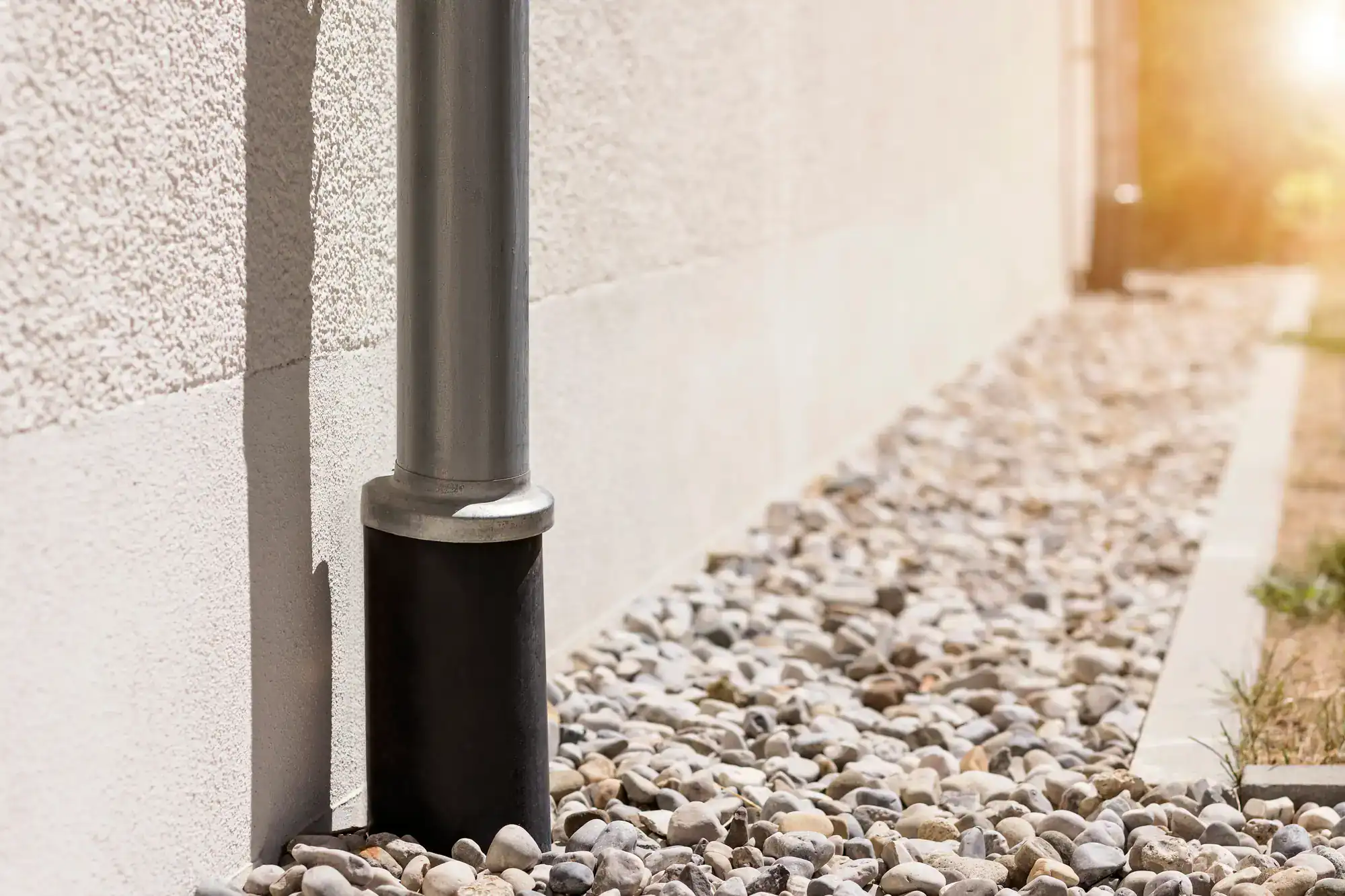
There’s also the factor of aging drainage infrastructure. Most homes in East Northport were built in the late 1950s and early 1960s, and whatever grading or drainage was done at the time has shifted over six decades. Mature trees have altered surface flow patterns, and original grading no longer directs water away from the problem areas the way it once did. A French drain for your yard intercepts that water before it pools, channels it through a gravel bed and perforated pipe, and moves it to a defined discharge point which is the only permanent fix for what clay soil does to surface drainage.
Deeper than most people expect and deeper than a lot of contractors actually go. Long Island’s frost depth design standard runs 36 to 42 inches in a hard winter. A French drain pipe buried at 12 inches, which is common in DIY installs and in work done by general landscapers who add drainage as an afterthought, will freeze, crack, and fail in its first real Long Island winter. Once the pipe cracks, the system is compromised and the water problem returns.
The required depth also depends on what the drain is doing. A surface drainage system designed to intercept yard runoff doesn’t need to go as deep as a foundation drain designed to relieve hydrostatic pressure against a basement wall. Both need to be below the frost line to survive East Northport winters reliably. This is one of the most common failure points we see in existing systems that weren’t installed correctly and it’s one of the clearest reasons why drainage work should be done by someone who knows North Shore Long Island’s climate, not a contractor applying warmer-market standards to a Long Island job.
A French drain system built with the right materials and installed at the correct depth will last 30 to 40 years. The variables that determine longevity are the quality of the filter fabric, the type of gravel used, the pipe depth relative to frost penetration, and whether the discharge point stays clear and functional over time. Systems that fail early almost always have one or more of those elements wrong wrong fabric that lets clay fines migrate into the gravel bed and clog it, rounded stone instead of angular gravel, shallow pipe that freezes and cracks, or a discharge point that gets blocked and backs up.
In East Northport specifically, the clay soil makes filter fabric selection more important than it would be in a sandier environment. Clay particles are fine enough to work through lower-quality fabric over time, gradually reducing the system’s permeability until it stops draining effectively. We use double-punched geotextile fabric specifically because it holds up against the fine-particle soil conditions common throughout this area. Done right, this is a system you install once and don’t think about again for decades.
Both windows work, and each has a practical case for it. Spring roughly March through May is when most East Northport homeowners discover they have a drainage problem, because snowmelt combines with spring rain to saturate ground that’s already at capacity after winter. If you’re calling in spring because water just appeared in your basement or your yard is a swamp, that urgency is real and installation can move forward as soon as the ground is workable and permits are in order.
Fall September through October is the other strong window. The ground is still workable, the crew schedule is typically more flexible than peak spring season, and you go into winter with a system already in place rather than spending another spring dealing with the same problem. What doesn’t work is waiting until the ground freezes, which in East Northport can happen as early as December in a cold year. Once the frost sets in, excavation becomes impractical. If you’re reading this in winter after a flooding event, the right move is to get the assessment scheduled now so installation can begin as soon as conditions allow in early spring.