
Hear from Our Customers
Most homes in Farmingville were built in the late 1960s and early 1970s. That means the drainage provisions if there were any are now 50-plus years old, silted out, or simply gone. What you’re left with is a yard or basement that holds water in ways the original builder never planned for, and a problem that gets worse every season you don’t address it.
The terrain here makes it more complicated than a typical drainage job. Farmingville sits on the Ronkonkoma Moraine the point where the glacier that formed Long Island stopped moving. That left behind a mix of clay, gravel, boulders, and sand in unpredictable layers beneath your yard. When rain or snowmelt hits those clay layers, it can’t go down. It moves sideways, straight toward your foundation or into whatever low spot is in its path. A properly installed French drain intercepts that water before it gets there.
Once the system is in, you stop managing the problem after every storm. Your basement stays dry in March. Your yard recovers within a day or two of heavy rain instead of sitting saturated for a week. And the foundation you’ve spent decades protecting stops being a liability.
We’re a local drainage contractor serving Farmingville and the surrounding Brookhaven hamlets Selden, Holtsville, Holbrook, and the communities in between. We’re not a national platform matching you with whoever’s available. We’re the crew that shows up, looks at your specific property, and tells you what’s actually going on before we propose anything.
Farmingville’s drainage problems aren’t generic. The slope off Bald Hill concentrates runoff in ways that flat-yard solutions simply don’t address. We’ve worked in this area long enough to know that two homes on the same street can have completely different drainage behavior depending on where they sit on that moraine. That kind of local knowledge shapes how we design every system we install.
We’re fully licensed and insured in New York State, and we handle all Brookhaven Town permit requirements including stormwater compliance under Chapter 86 so you don’t have to figure that out on your own.
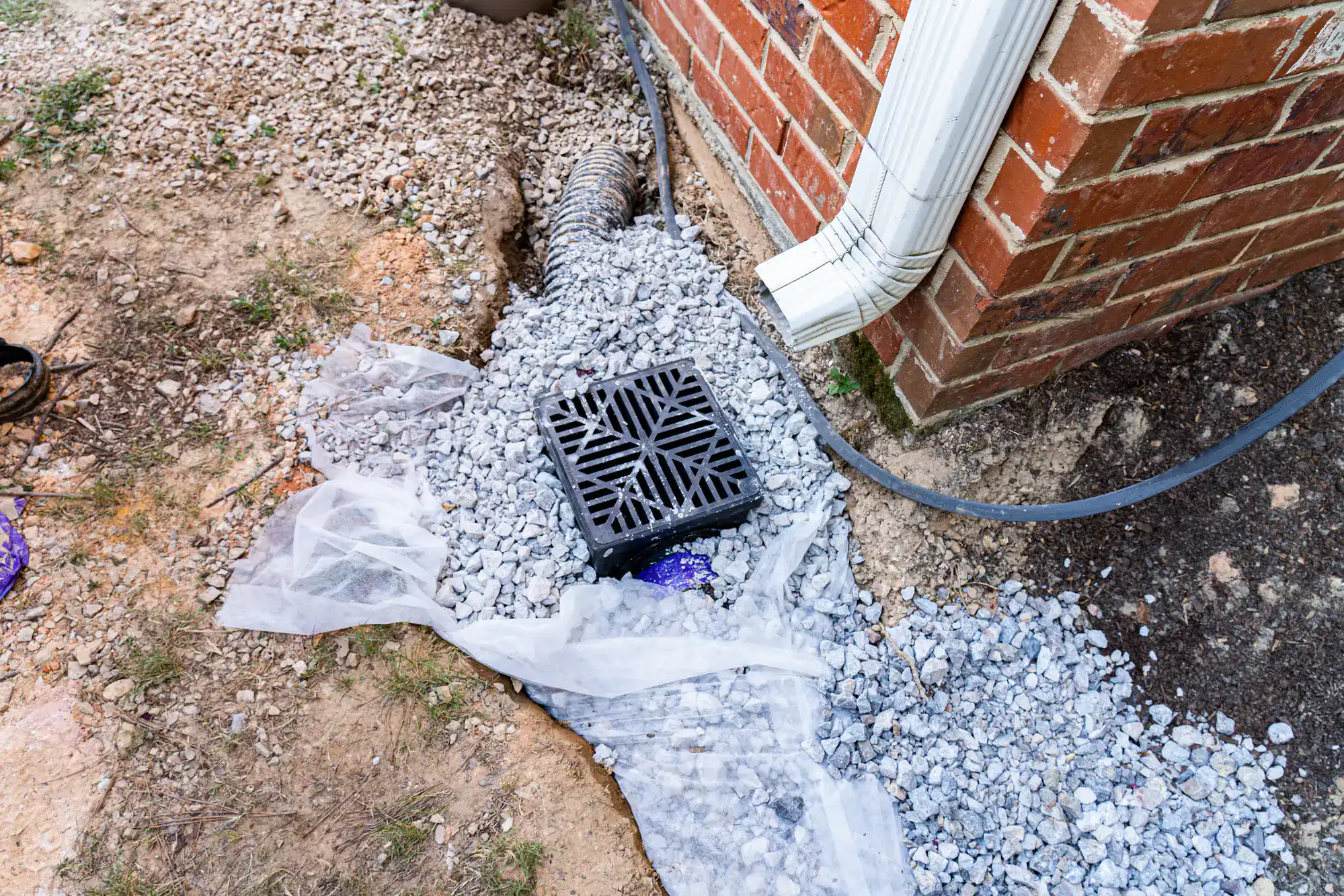
It starts with a free on-site assessment no charge, no obligation. We come to your Farmingville property, walk the yard, look at where water is entering and where it’s going, and give you a straight answer about what’s causing it and what will actually fix it. We’re not going to sell you a sump pump if what you need is an exterior curtain drain intercepting slope runoff before it reaches your house.
Once you decide to move forward, we handle the permitting. Because Farmingville is the seat of Brookhaven Town, the Division of Stormwater at 1 Independence Hill oversees stormwater compliance in this area. Projects that alter drainage flow or create new discharge points may require a permit submission we manage that process start to finish. We also call 811 before any excavation, which is required by New York State law and something every legitimate contractor does without being asked.
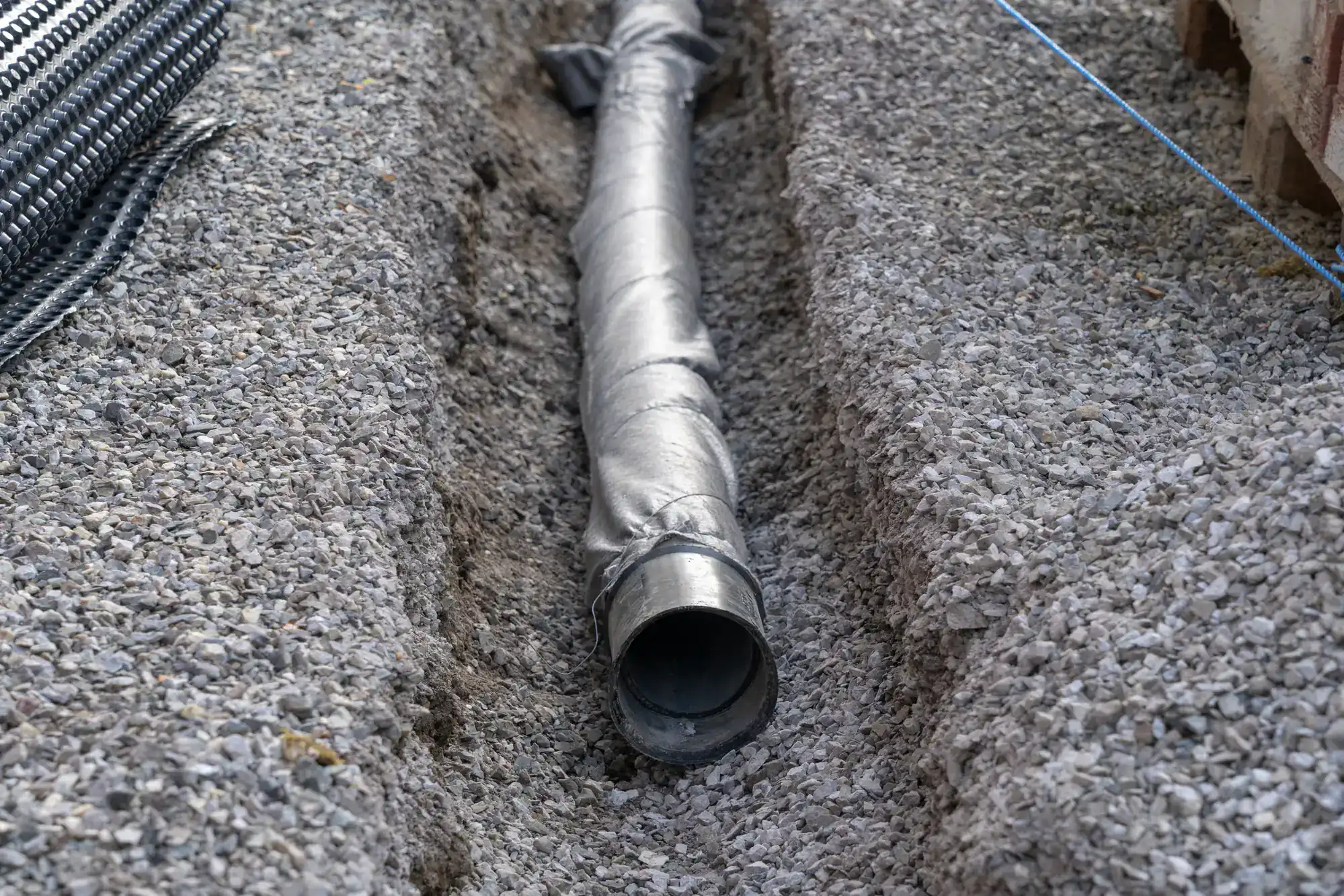
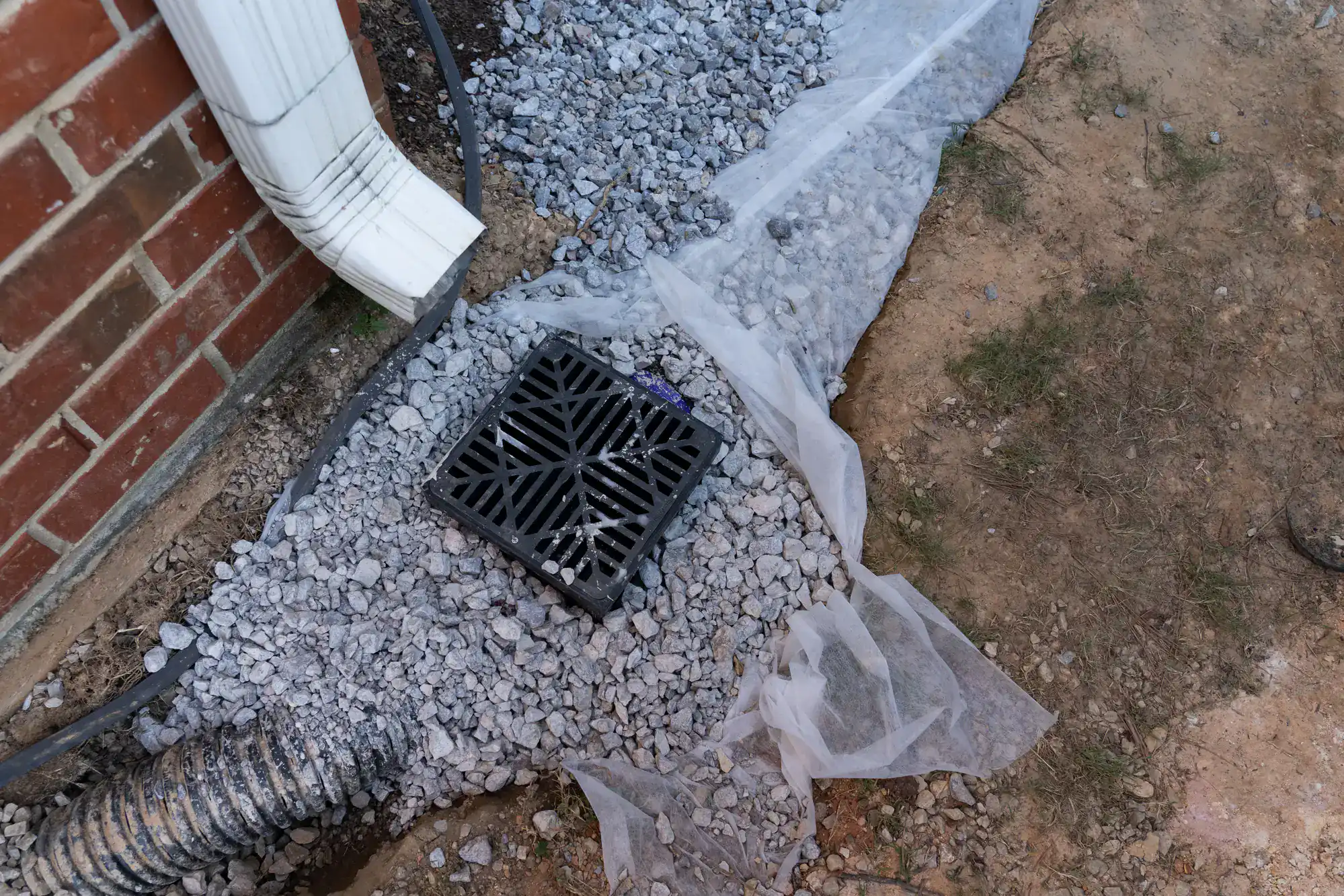
The installation itself involves trenching to the appropriate depth for Long Island’s frost line typically deeper than what you’d see in a warmer climate wrapping the gravel bed in geotextile filter fabric, and setting a defined discharge point that routes water away from your structure. When we’re done, we restore the surface: topsoil, seed, or sod to match what was there. The system is underground. What you’ll notice is that it works.
Ready to get started?
Every French drain system we install in Farmingville is designed around what’s actually in the ground here. Moraine soil is not uniform sandy loam it’s layered, unpredictable, and full of fine particles that will clog a drainage system within a few years if the wrong materials are used. We use double-punched geotextile filter fabric wrapped around the entire gravel bed, not just the pipe. We use washed angular gravel, not round pea gravel that lets fines migrate through. These aren’t upgrades they’re the baseline for a system that holds up in this soil.
Pipe depth matters here more than in most places. Long Island’s ground frost can reach 24 to 36 inches in a hard winter. A French drain installed too shallow will freeze, crack, and fail before you’ve gotten three winters out of it. Every system we install is set below the frost line for this region because a drainage system that fails in February is no drainage system at all.
Whether you’re dealing with a yard that pools after every storm, a basement that takes on water each spring, or runoff coming downhill from the street or a neighbor’s property, the solution starts with understanding which problem you actually have. That’s what the free site assessment is for and it’s where every job we do in Farmingville begins.
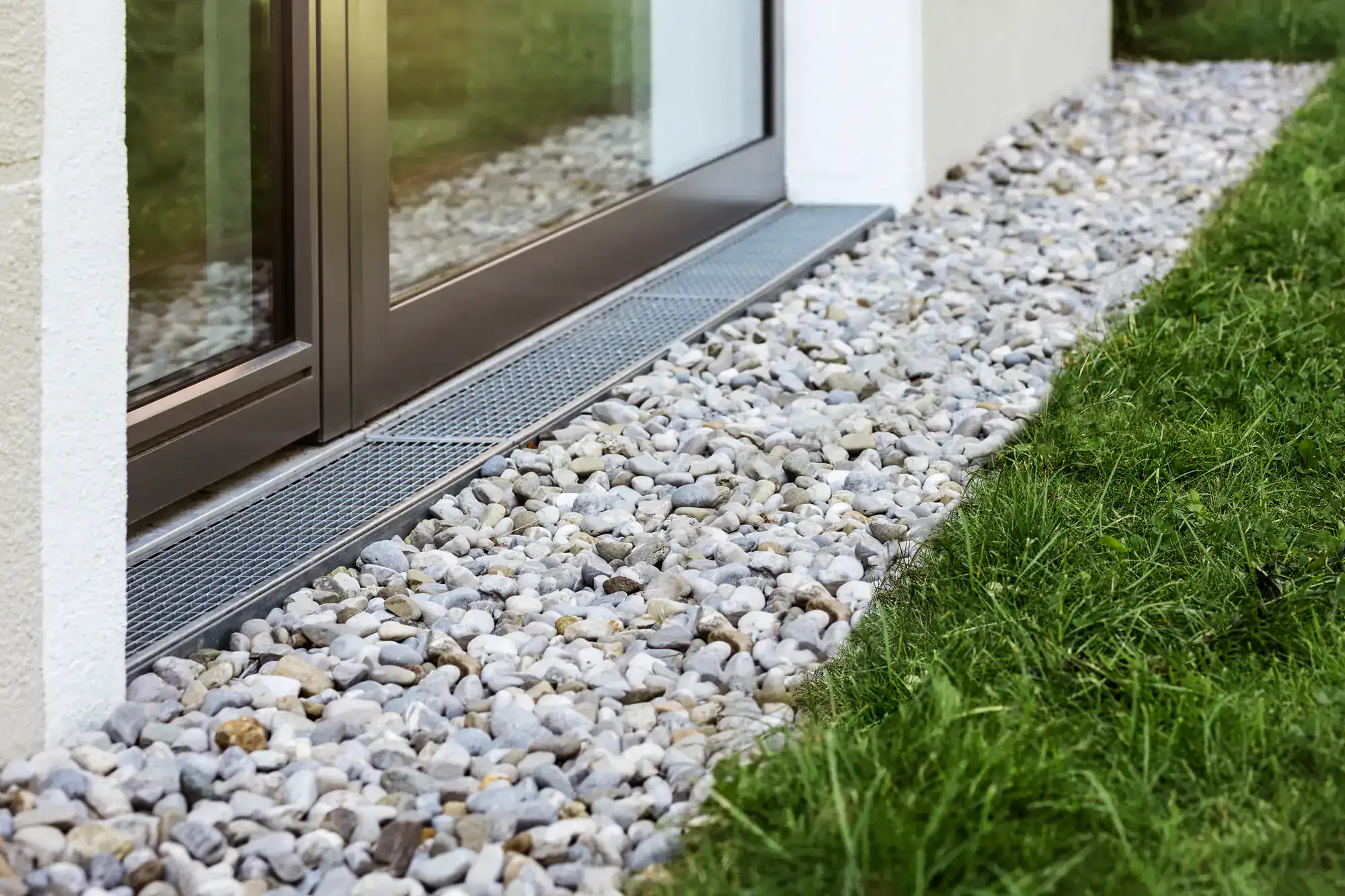
Farmingville’s position on the Ronkonkoma Moraine is the short answer. Beneath your yard, there are layers of glacial till clay, gravel, boulders, and sand deposited without any pattern when the glacier stopped here thousands of years ago. When rain or snowmelt saturates the upper soil, it hits one of those clay layers and can’t percolate down. Instead, it moves sideways along the path of least resistance, which is often toward a low point in your yard or straight at your foundation.
On top of that, Farmingville’s elevation and slope mean that water from uphill whether from the street, a neighbor’s yard, or the grade off Bald Hill can concentrate on your property faster than the soil can absorb it. You don’t need a major storm for that to become a problem. Even a moderate rain event can overwhelm a yard that’s sitting in the path of that lateral water movement. A French drain intercepts it before it pools.
Most residential French drain installations in the Farmingville area fall somewhere between $5,000 and $12,000, with the average closer to $9,000 depending on the length of the trench, the depth required, the outlet type, and how complex the water source is. On Long Island, where labor costs and permit requirements are above the national average, you should expect pricing at or above the national midpoint for a properly engineered system.
What’s worth keeping in mind is what you’re comparing that cost against. Foundation crack repair on Long Island runs $15,000 to $50,000. Mold remediation starts around $3,000 and climbs fast once structural materials are involved. A wet basement that shows up in a home inspection can reduce your sale price by 10 percent or more on a home valued at $550,000, that’s $55,000 off the table. A French drain isn’t an expense you’re choosing. It’s the least expensive version of a problem that only gets worse the longer it goes unaddressed.
It depends on the scope of the project, but in many cases, yes some level of permit or compliance review is required. The Town of Brookhaven adopted Chapter 86 of its Town Code in 2008, which governs stormwater management and erosion control. The Division of Stormwater, headquartered right here at 1 Independence Hill in Farmingville, oversees SPDES compliance and stormwater pollution prevention for projects that alter drainage flow or create new discharge points.
For a standard residential French drain, the main considerations are whether the project changes how surface water moves across the property, where the outlet point discharges, and whether the work is near any wetlands or flood zones. We handle all permit submissions and regulatory compliance for projects in Farmingville you don’t need to navigate Brookhaven’s permitting process on your own. We also handle the required 811 utility marking call before any excavation begins, which is a New York State legal requirement that applies to every job regardless of size.
Interior waterproofing things like sump pumps, interior drain tile systems, and basement wall sealants manages water after it’s already inside. It collects it, redirects it, and pumps it out. That approach can be appropriate in certain situations, but it doesn’t address where the water is coming from or why it’s getting in.
A French drain is an exterior solution. It intercepts water in the ground or at the surface before it ever reaches your foundation. For Farmingville homeowners dealing with slope-driven runoff water moving downhill from the street or a neighbor’s property and concentrating against the house interior waterproofing won’t solve the problem. It’ll just manage it indefinitely. If the source of your water is lateral movement through the soil or surface runoff concentrating at your foundation line, the fix needs to happen outside, not inside. That’s one of the things a proper site assessment makes clear which solution actually addresses your specific problem, not just the symptom you’re seeing.
A properly installed French drain system should last 30 to 40 years. The key word is properly. On Long Island, two installation details determine whether a system holds up or fails within a few years: depth and materials.
Depth matters because ground frost on Long Island can reach 24 to 36 inches in a severe winter. Pipe installed too shallow will freeze, expand, and crack and once the pipe is compromised, the system backs up and fails. Material matters because Farmingville’s moraine soil contains fine silt particles that will infiltrate a poorly wrapped gravel bed and clog the system over time. Systems installed with the right geotextile fabric, washed angular gravel, and proper pipe depth in this soil type will continue draining effectively for decades. Systems that cut corners on any of those three things tend to show problems within the first five to ten years sometimes sooner. When you’re getting quotes, asking specifically about frost-depth installation and filter fabric type will tell you a lot about what you’re actually buying.
It depends on the ground conditions at the time, but winter installation in Farmingville is more challenging than in coastal or southern communities. Farmingville’s elevation on the Ronkonkoma Moraine means the ground freezes earlier and deeper here than in lower-lying areas of Suffolk County. Once frost has penetrated significantly into the soil, excavation becomes difficult and the trench can’t be properly graded or backfilled without risking settling issues when the ground thaws in spring.
That said, there are periods during a typical Long Island winter particularly in early December or during mild stretches in February where the ground hasn’t fully frozen and installation is feasible. The only way to know for sure is a site visit. If you’re calling because you just had a bad flooding event and want to get ahead of spring snowmelt, that’s exactly the right instinct. We’ll come out, assess the site, and tell you honestly whether installation makes sense now or whether scheduling it for early spring is the smarter move for your specific property. Either way, getting on the calendar before March is worth doing spring is the busiest season for drainage work in this area.