Hear from Our Customers
A lot that’s been left alone for a few seasons in Farmingville doesn’t stay manageable for long. The Ronkonkoma Moraine’s sandy, nutrient-rich soils are ideal growing conditions for pitch pine, scrub oak, and invasive species multiflora rose, Oriental bittersweet, bamboo that colonize disturbed ground fast. What starts as a rough back corner becomes a dense thicket that’s inaccessible, a fire risk, and a problem that compounds every year you wait.
When that ground gets cleared properly, everything changes. You can extend your lawn, start your build, install that pool, or simply walk to the back of your own property without fighting through brush. For homeowners near Bald Hill or along the rolling slopes off Horseblock Road, where lots tend to carry more grade and more mature tree cover than the flatter areas around Lake Ronkonkoma, that kind of reclaimed space is genuinely meaningful.
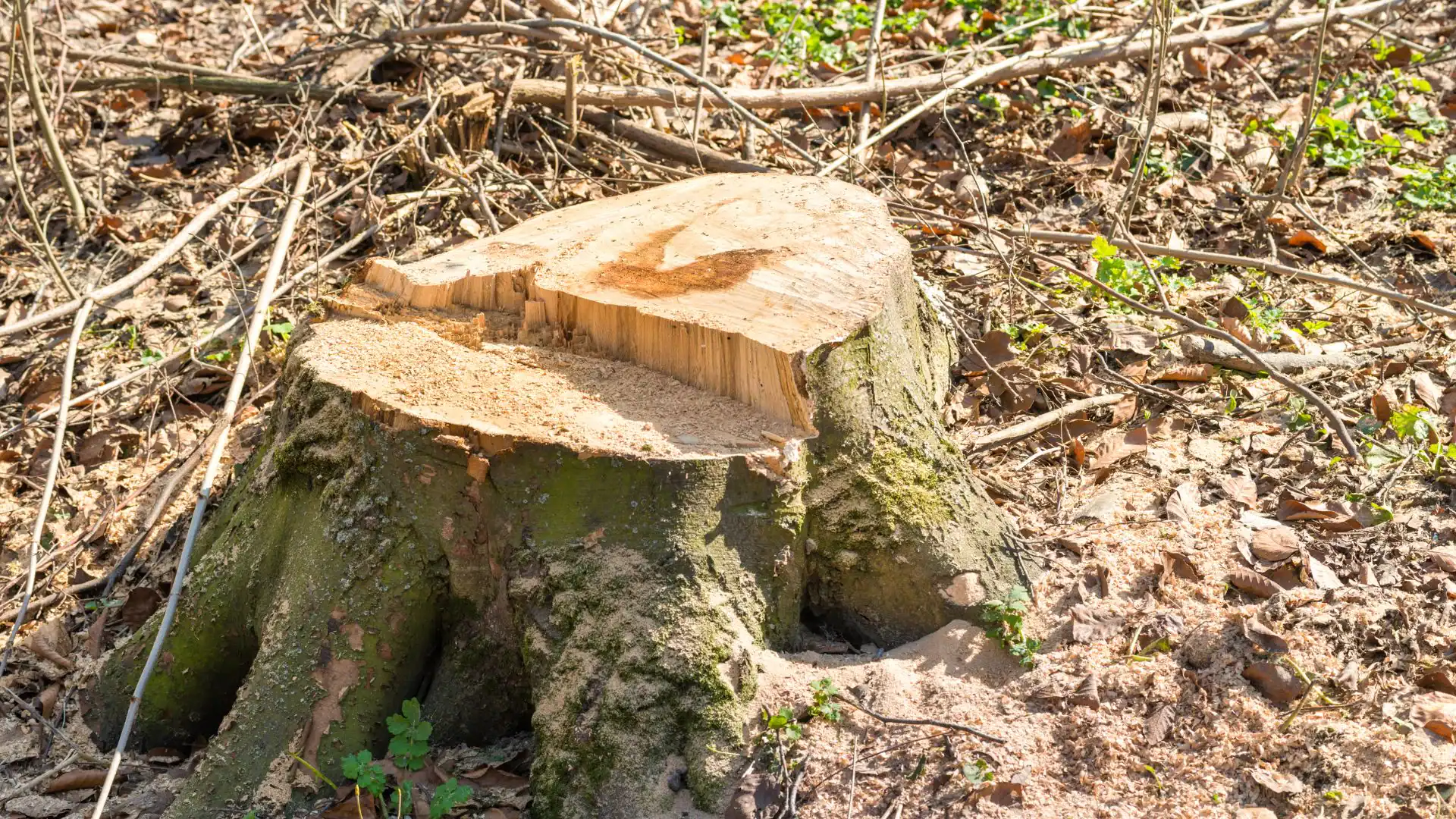
What you don’t want is a half-cleared lot with stumps cut flush and debris pushed to the fence line. That’s not a cleared lot that’s a problem in a different form. The job isn’t done until the vegetation is gone, the stumps are ground below grade, and the site is ready for whatever comes next. That’s the standard every Farmingville property deserves.
We’re a Long Island land clearing and earthworks contractor serving Farmingville and the surrounding Brookhaven hamlets Selden, Centereach, Lake Ronkonkoma, Medford, and beyond. This isn’t a tree service that occasionally takes on clearing work. Land clearing, lot clearing, brush clearing, and land reclamation are the core of what we do and that focus shows in how jobs get done.
Most clearing projects in Farmingville require more than one trade if you hire the wrong contractor. A tree company fells the trees, a stump grinder comes out separately, and you’re left figuring out who hauls the debris. With us, that’s one call, one quote, one crew from start to finish. You’re not the project manager between three different companies.
We also know Brookhaven Town’s Tree Clearing Permit requirements which apply to residential properties of two acres or more and commercial sites without an approved plan because we’ve navigated that process many times for clients right here in Farmingville. If your project needs a permit, we’ll tell you before anything moves.
It starts with a site visit. Before anything gets quoted, we walk the property with you assessing the vegetation type, the terrain, the access points, and any permit requirements that apply to your specific lot. In Farmingville, that last part matters. Brookhaven Town Hall is located right here at 1 Independence Hill, and the Town actively enforces its tree clearing permit requirements. If your project triggers a permit because of lot size, scope, or proximity to a sensitive area we identify that upfront, not after equipment is already on site.
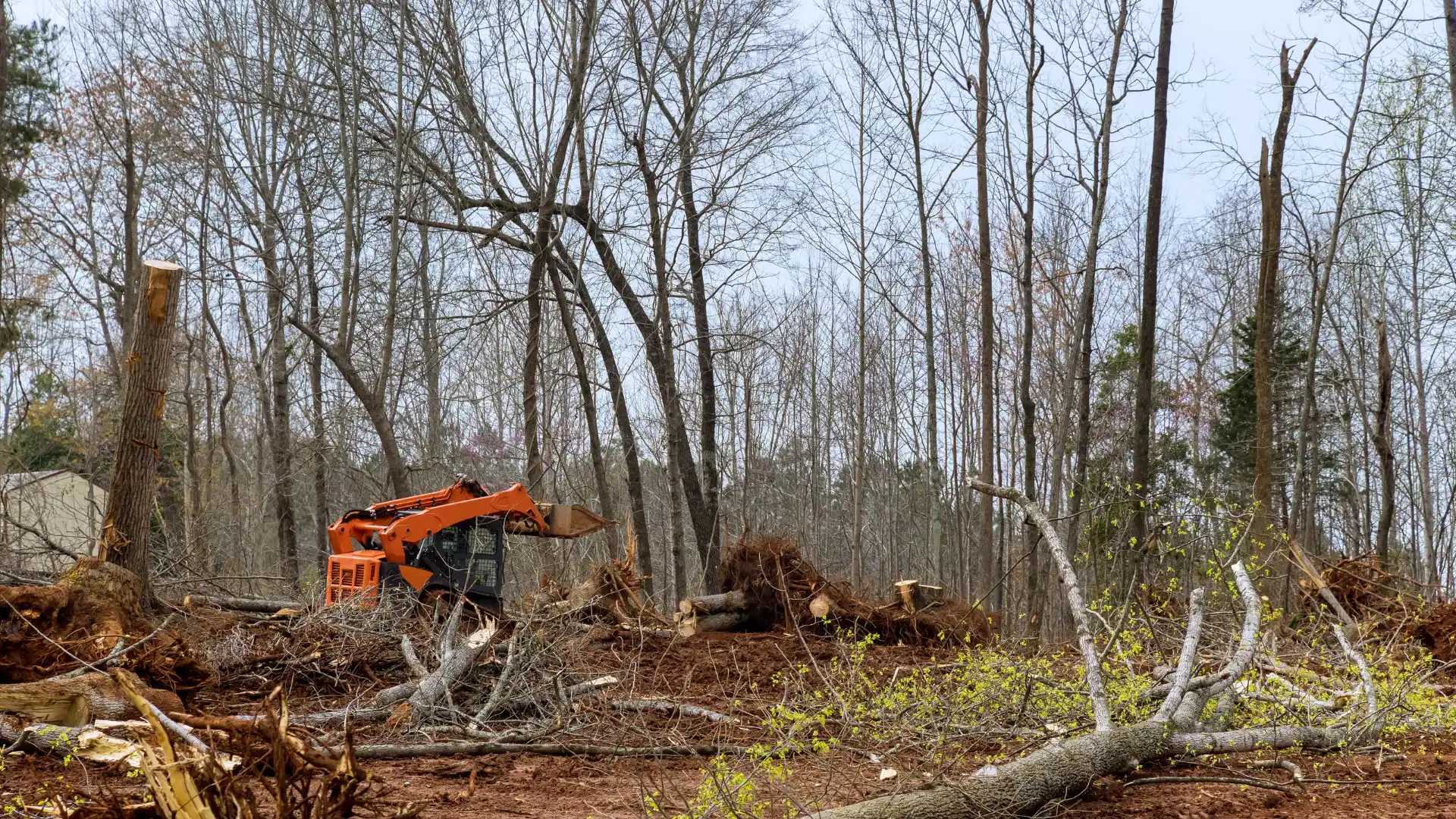
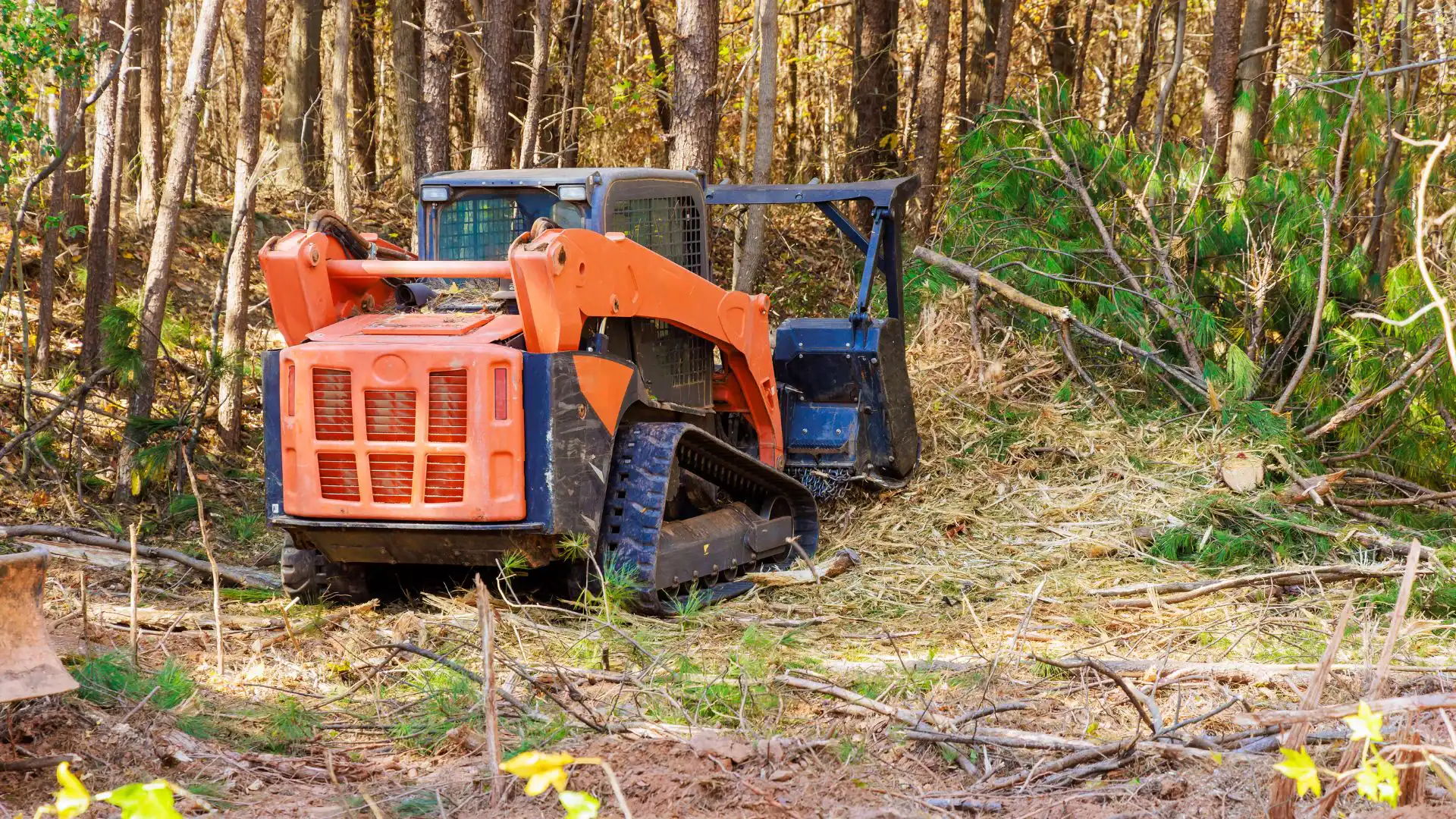
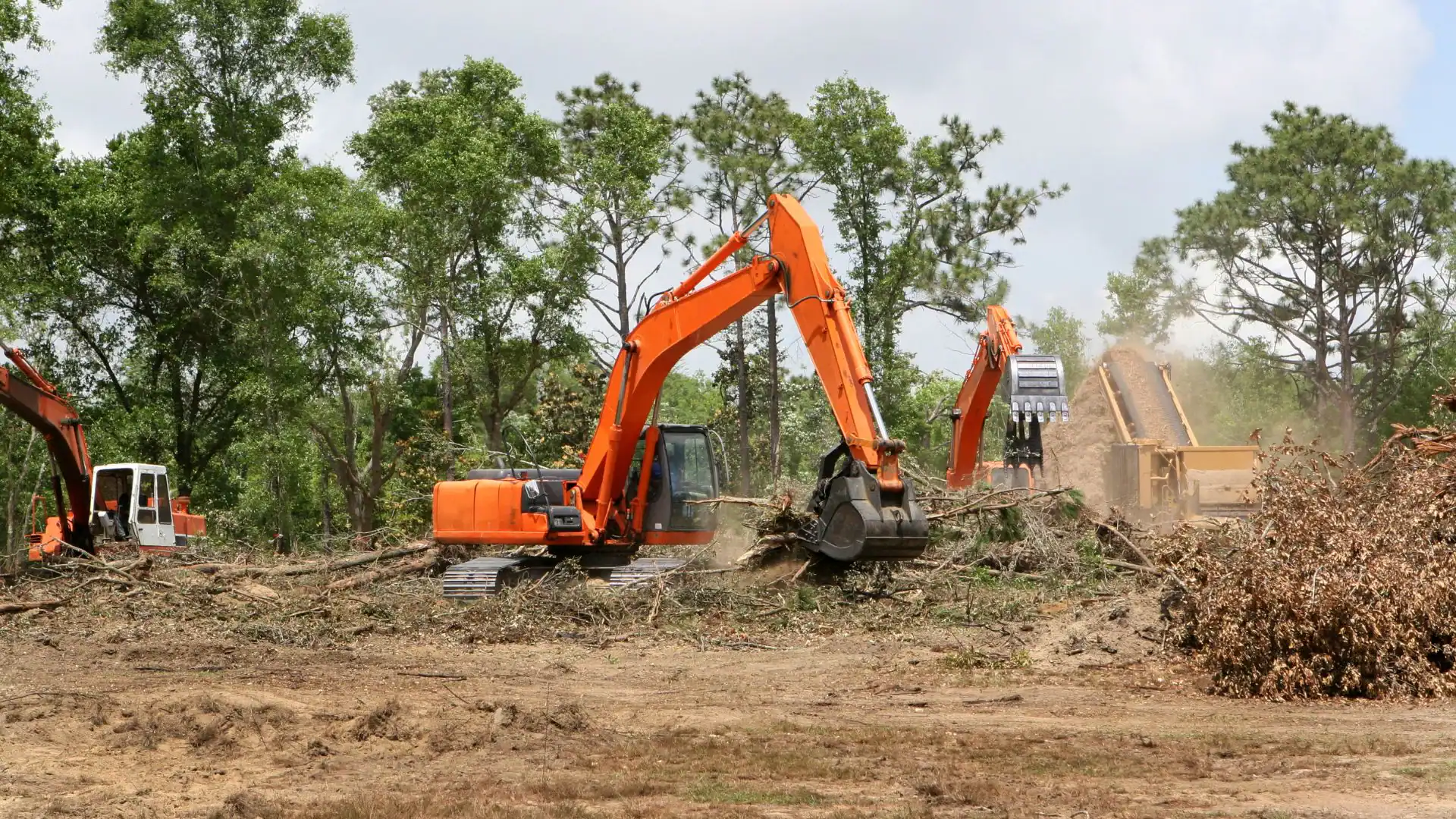
Once the scope is clear and the quote is approved, we schedule the work. The clearing sequence depends on what’s there: large canopy trees come down first, then the understory and brush, then stump grinding. If invasive species like bamboo or multiflora rose are present both common on Farmingville properties those require specific removal techniques to address the root systems, not just the above-ground growth. Cutting invasive bamboo at the surface and walking away means it’s back in two seasons. We remove it correctly.
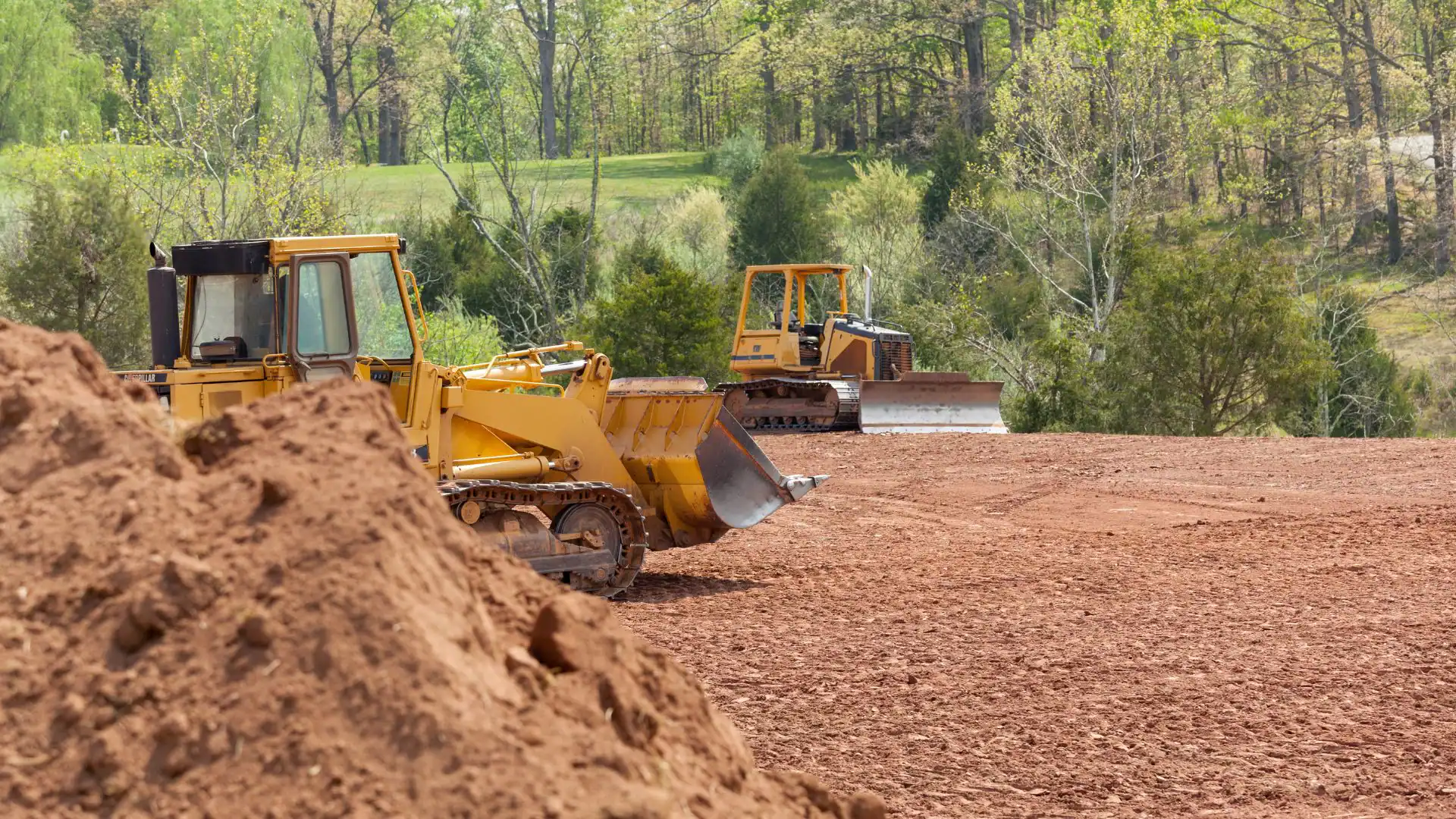
Debris is processed on site where possible chipped and mulched or hauled away as part of the quoted scope. When we leave, the site is clean. Not “mostly clear with a few piles near the tree line.” Clean. Ready for your builder, your landscaper, or your next step whatever that is.
Ready to get started?
Not every clearing job is the same, and in Farmingville, the range is wide. Some properties need targeted brush clearing along a fence line that’s been consumed by bittersweet vines. Others need full lot clearing ahead of a new build every tree down, every stump ground, the site graded and ready. Some are land reclamation jobs: properties that haven’t been touched in years and have reverted to dense, multi-species woodland on sandy moraine soil. Each of these is a different scope, and each gets quoted that way.
Vegetation removal services in Farmingville regularly involve more than just trees. The moraine’s ecology supports dense scrub oak thickets, pitch pine stands, and a persistent layer of invasive species that standard tree services aren’t always equipped to handle correctly. Bamboo removal, for example, requires excavating the underground rhizome system the root network that drives regrowth. Without that step, you’re clearing the same ground again in a few years.
For larger residential properties and any commercial or development work, Brookhaven’s Tree Clearing Permit requirements apply. Active projects like the recent large-scale residential development on Maple Lane and the commercial site plan currently in environmental review near Farmingville confirm that this is a market where compliance isn’t optional it’s part of the job. Every project we quote accounts for what the Town requires, so you’re not caught off guard after work begins.
In Farmingville, you’re in the Town of Brookhaven and Brookhaven has specific tree clearing permit requirements under Chapter 70 of the Town Code. For residential properties of two acres or more, a permit is required before any clearing begins. Commercial properties without an approved site plan also require a permit, as does any clearing that goes beyond what was previously approved by the Town.
For residential lots under two acres which covers most of Farmingville’s Cape Cod and ranch-style housing stock you may still need a permit depending on the scope, the size of the trees involved, and whether the work is near a wetland or water body. Because Brookhaven Town Hall is based right here in Farmingville, the Town is not a distant authority it’s a local institution that actively enforces these rules. Before any clearing work begins on your property, we assess exactly what your project requires so there are no surprises and no enforcement notices after the fact.
Pricing depends on what’s on the property, how much of it needs to go, and what the terrain looks like. For a standard residential lot clearing job in Farmingville under an acre, light to medium vegetation you’re typically looking at somewhere in the $1,500 to $4,500 range. A wooded lot with established oaks, pitch pine, and stump removal can run $3,500 to $8,000 or more depending on the scope. Targeted brush clearing or invasive species removal on a smaller area tends to fall in the $800 to $2,500 range.
What drives cost in Farmingville specifically is the terrain and the vegetation type. Properties on or near the Ronkonkoma Moraine particularly those with slope, sandy soil, and deep-rooted oak and pine take more time and more equipment than a flat, lightly vegetated lot. Invasive bamboo adds cost because it requires excavation of the underground rhizome system, not just surface cutting. The most important thing is getting a detailed, itemised quote before anything starts so you know exactly what you’re paying for and there’s no number change at invoice time.
Land reclamation is the right term when a property has been neglected long enough that standard clearing isn’t sufficient when years of unchecked growth have turned a lot into dense, established woodland that requires a more intensive intervention to bring back to a usable state. In Farmingville, this happens more often than you’d expect. The Ronkonkoma Moraine’s sandy soils and Long Island’s growing season which runs from roughly April through October mean that an unmanaged lot can transition from rough scrub to established pitch pine and scrub oak woodland within a decade.
Land reclamation services typically involve a sequenced approach: large canopy removal first, then understory clearing, then stump grinding, then invasive species treatment and debris processing. The goal is to return the property to a state where it can be maintained, built on, or landscaped without the previous decade of growth fighting back. If your Farmingville property has been sitting unmanaged whether it’s an inherited parcel, a vacant lot, or a rear yard that was never cleared after you bought the house a site visit will tell you quickly whether you need standard clearing or a full reclamation approach.
Three invasive species come up regularly on Farmingville and central Suffolk County properties: multiflora rose, Oriental bittersweet, and invasive bamboo. All three are persistent, all three spread aggressively if left untreated, and all three require more than just cutting them down at the surface.
Multiflora rose forms dense, thorny thickets that are listed as invasive in New York State it spreads by seed and root, and regrows from the root crown if not properly addressed. Oriental bittersweet is a vine that smothers native trees and shrubs, and its root system needs to be fully removed to prevent regrowth. Bamboo is arguably the most problematic: the underground rhizome network can extend well beyond the visible plant, and cutting bamboo at the surface does nothing to stop it from returning. Effective bamboo removal requires excavating the rhizome system which means the right equipment, not just a chainsaw and a brush cutter. New York State also has regulations governing the transport and disposal of invasive plant material, which a knowledgeable contractor will follow as a matter of course. Correct removal and disposal is part of every invasive species job we handle.
Spring and fall are the two busiest windows, and both make sense for different reasons. Spring roughly March through May is peak demand because homeowners and developers need lots cleared before summer construction starts. If you’re planning a build, a pool installation, or a major landscaping project for summer, early spring is when you want the clearing done. Booking early in the season matters because scheduling fills up quickly.
Fall is the second strong window, particularly once leaves drop in late October. Deciduous trees are easier to assess and fell without foliage, and the cooler, drier conditions make for better equipment access on Farmingville’s sandy moraine soils, which can become loose and difficult to navigate when wet. Winter clearing is also worth considering for the right project frozen or firm ground actually improves equipment access on hilly terrain, and dormant vegetation is easier to work through. Long Island nor’easters and ice storms also create urgent post-storm clearing needs that don’t follow a seasonal schedule. The short answer: there’s no bad time to clear, but spring books fastest, so if you have a project tied to a construction start date, reach out sooner rather than later.
The most common complaint about land clearing contractors on Long Island and it comes up consistently in reviews is the quote that looks reasonable upfront and doubles by the time the invoice arrives. The way to protect yourself is to ask for an itemised quote, not a single number. A complete quote should separate the clearing work itself, stump grinding, debris removal and disposal, and any permit-related costs if applicable. If those line items aren’t broken out, you don’t actually know what you’re buying.
For Farmingville properties specifically, a few things tend to get underquoted by contractors who aren’t familiar with the area. Stump removal on moraine terrain where root systems run deep in sandy soil takes more time than on flat, clay-heavy ground. Invasive species like bamboo require additional excavation work that should be scoped and priced separately, not discovered mid-job. And if your property is two acres or more, the Brookhaven Tree Clearing Permit is a real cost and timeline factor that should be part of the conversation from the first visit. Ask the question directly, and make sure the answer is specific.