
Hear from Our Customers
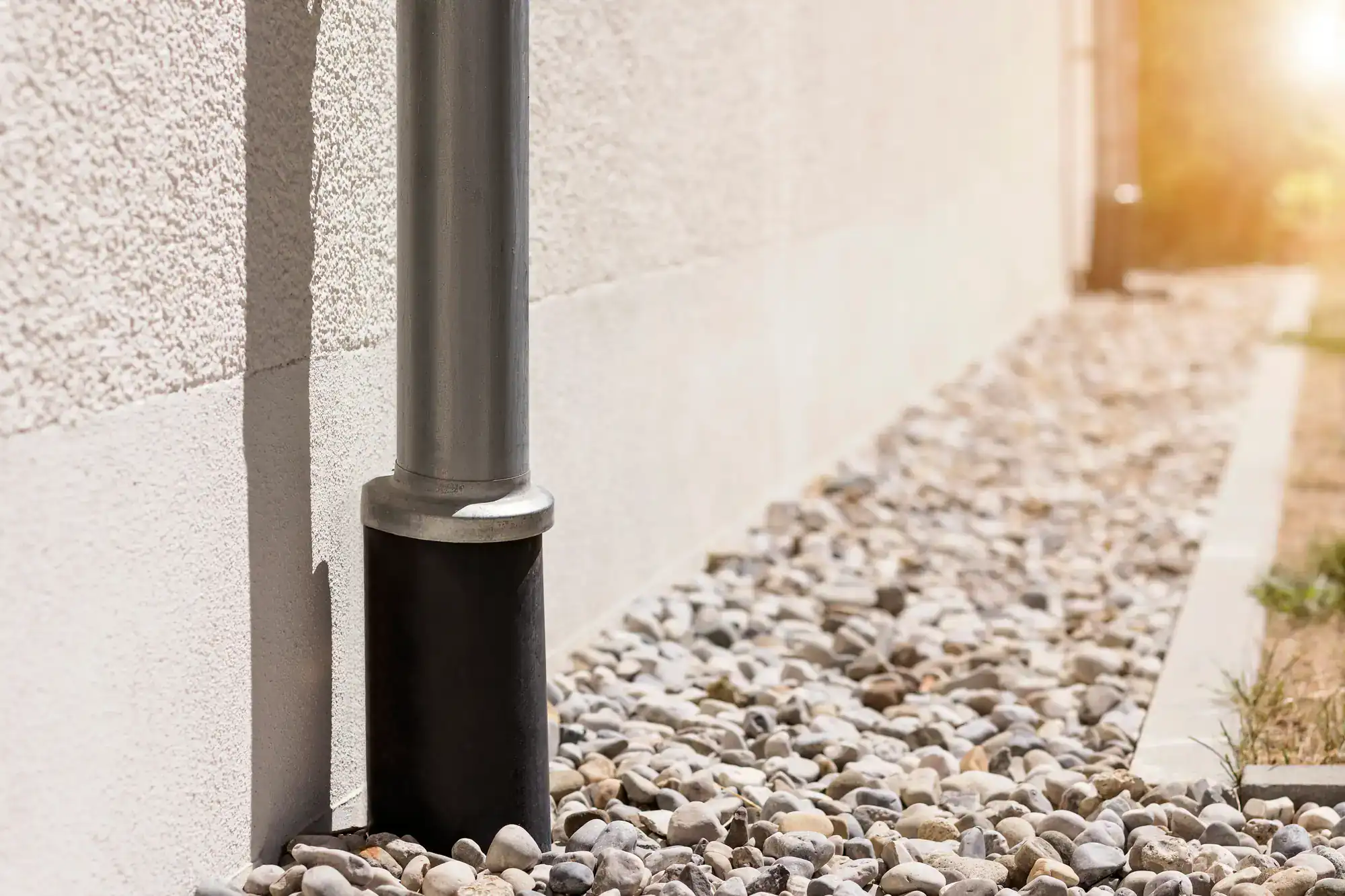
Once we install a properly designed French drain system, the difference is immediate and lasting. Water that used to sit against your foundation for days gets intercepted before it ever gets close. The soggy corner of your yard that killed the grass every spring finally drains the way it should. You stop worrying every time the forecast calls for two inches of rain.
That matters more in Huntington than most places. The North Shore sits on glacially deposited clay-heavy terrain soil that holds water like a sponge and releases it slowly, if at all. Unlike the sandy outwash soil you’d find on the South Shore, clay soil in neighborhoods like Dix Hills, West Hills, and Cold Spring Harbor doesn’t let water pass through. It pools. It migrates. It builds hydrostatic pressure against your foundation walls over time, and that pressure eventually wins.
Huntington also receives around 46 to 48 inches of rain annually well above the national average of 38 inches with no real dry season to give your yard a break. A French drain system built for these conditions isn’t a luxury. For a home worth $767,000 or more, it’s one of the most straightforward investments you can make to protect what you already have.
We work specifically on the North Shore of Long Island, which means we’re intimately familiar with the clay-heavy glacial soil that makes drainage such a persistent challenge in Huntington. We design every system around those actual conditions, not a generic template. From Huntington Village to the wooded lots of Dix Hills, to the waterfront properties near Lloyd Harbor we’ve worked across this town’s range of terrain and housing stock.
We know the Town of Huntington’s stormwater management code inside and out. We know which properties near Huntington Harbor, Cold Spring Harbor, or Centerport Harbor may require additional review before work begins. We handle the 811 utility marking process, the permit research, and the outlet compliance questions so you don’t have to navigate any of that on your own. The name Gold Coast Landworks reflects where we work and the standard that comes with it.
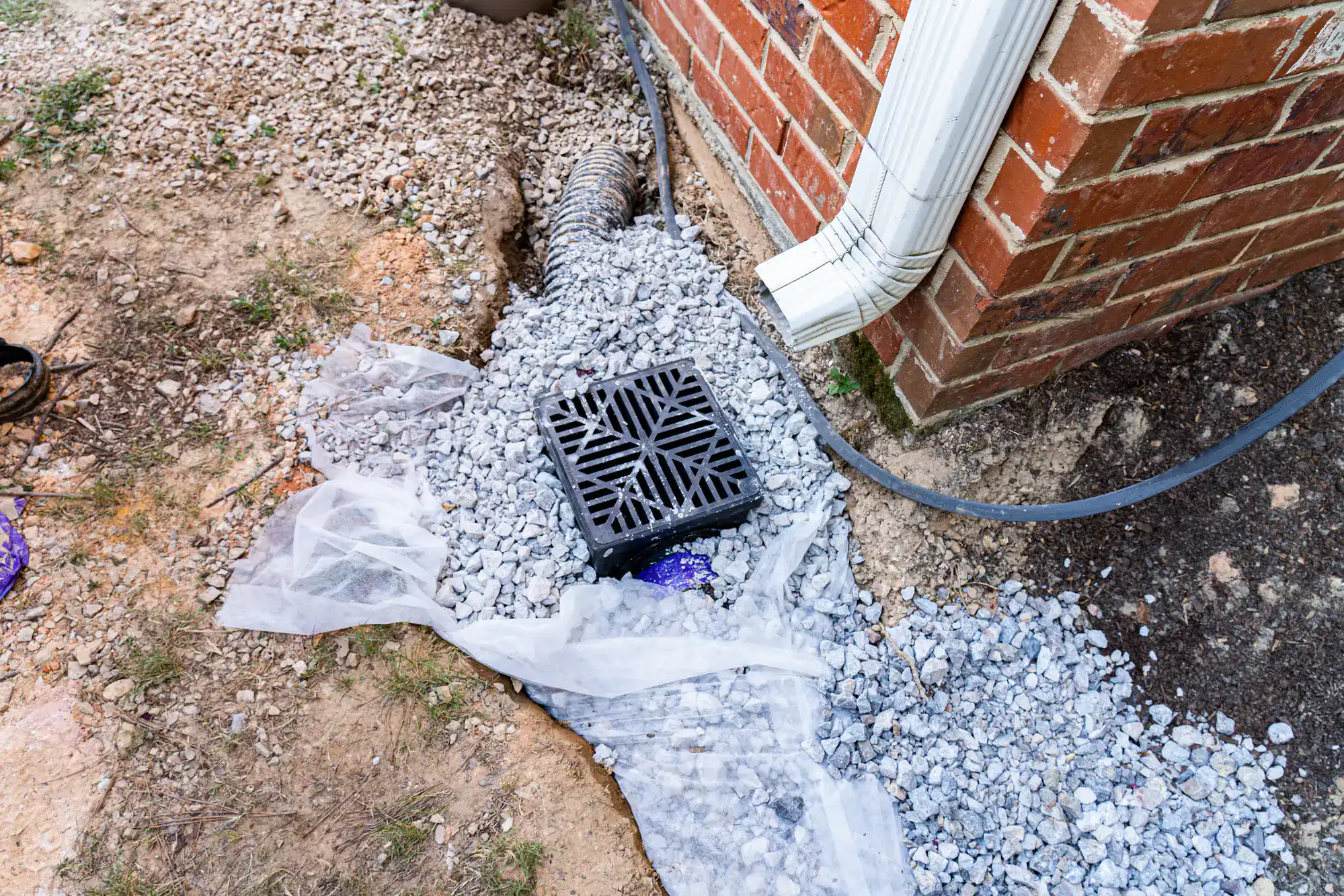
It starts with a free on-site assessment. We come to your Huntington property, look at where the water is coming from, how the land is graded, what the soil is doing, and where a drain outlet can be placed in compliance with the Town’s stormwater code. You get a clear picture of the problem and a straightforward recommendation no obligation, no pressure.
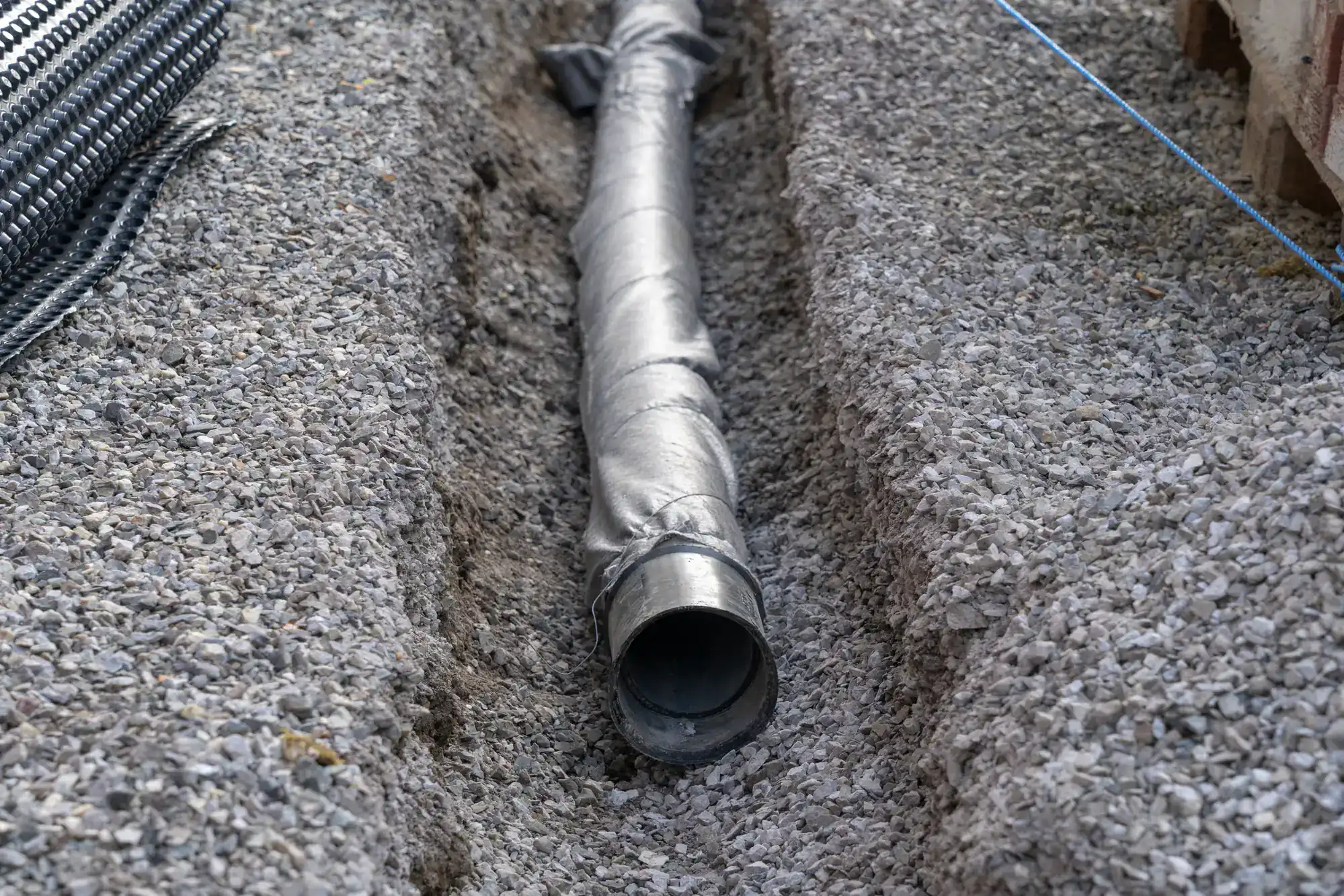
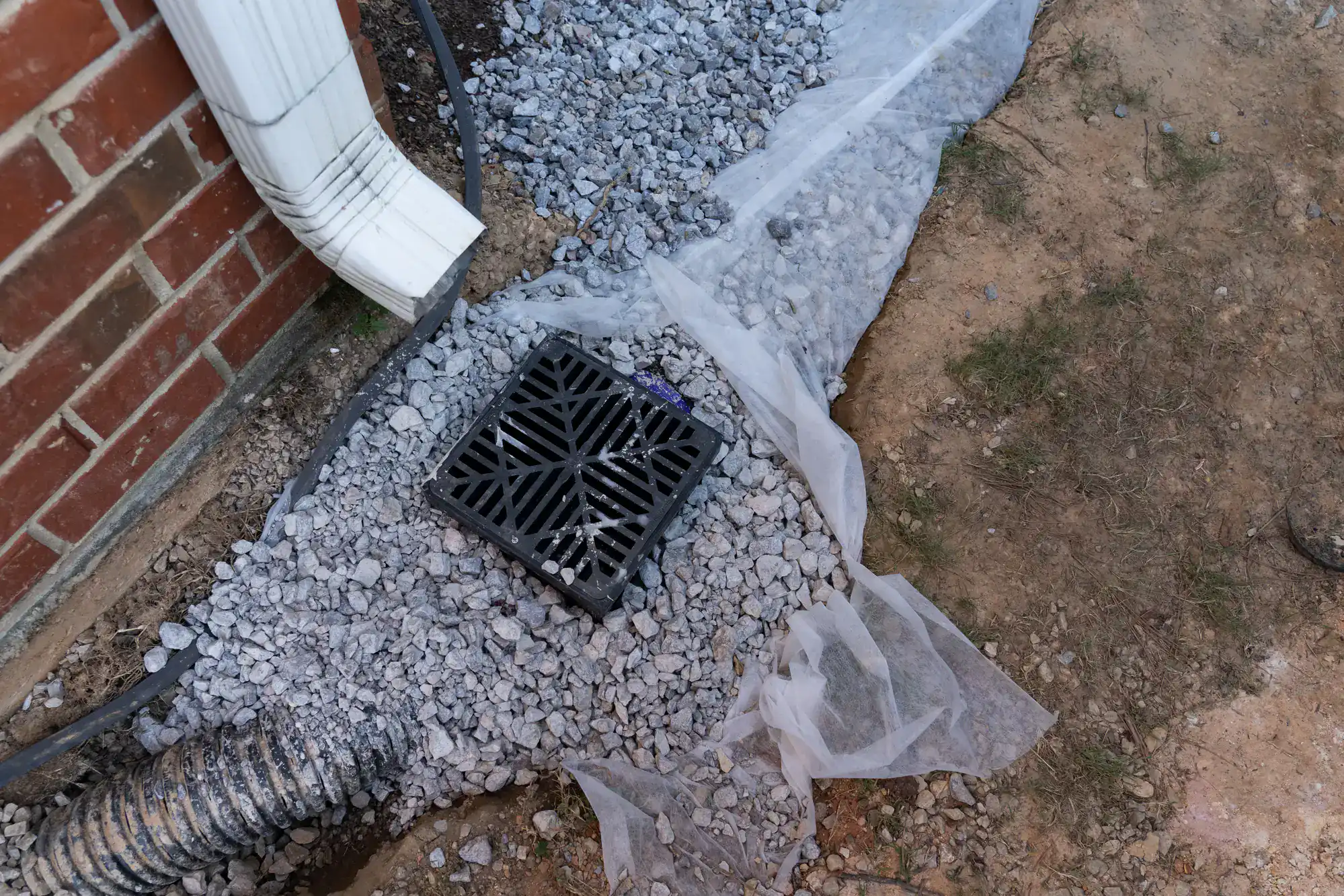
Once you move forward, we trench the drainage path using the slope and layout the system requires. In Huntington’s clay soil, that means rigid perforated pipe not cheap corrugated tubing wrapped in geotextile fabric that prevents silt from infiltrating and clogging the system over time. The gravel bed uses washed angular stone, not pea gravel, because angular stone holds void space that actually moves water. Slope is set at a consistent grade so water flows to the outlet and doesn’t sit in the pipe.
After installation, we backfill the trench, restore topsoil, and seed or sod the surface to match. If you have mature landscaping established trees, garden beds, or a lawn you’ve spent years maintaining we work around it carefully. The goal is a yard that drains correctly and looks like the work was never done.
Ready to get started?
Every French drain system we install in Huntington is designed around what’s actually happening on your specific property not a standard package dropped in without a real site read. The clay-heavy soil common throughout Huntington, Northport, Centerport, Greenlawn, and East Northport behaves differently than what you’d find further south or east on Long Island, and our system design reflects that. Fabric selection, gravel void ratio, pipe specifications, and outlet placement all get calibrated to what North Shore soil and Long Island’s freeze-thaw winters actually demand.
For properties near Huntington Harbor, Cold Spring Harbor, or Lloyd Harbor, we factor in the potential for wetland proximity review under NYS DEC guidelines before any work begins. For the rolling, wooded lots in Dix Hills and West Hills, we account for topographic complexity water running downhill from multiple directions requires a drainage layout that addresses the whole picture, not just the most obvious symptom.
Whether you’re dealing with a saturated yard, water migrating toward your foundation, or a basement that takes on moisture every spring, the system we install is built to last 30 to 40 years. That lifespan only holds if the materials and installation are right from the start and that’s exactly what we focus on.
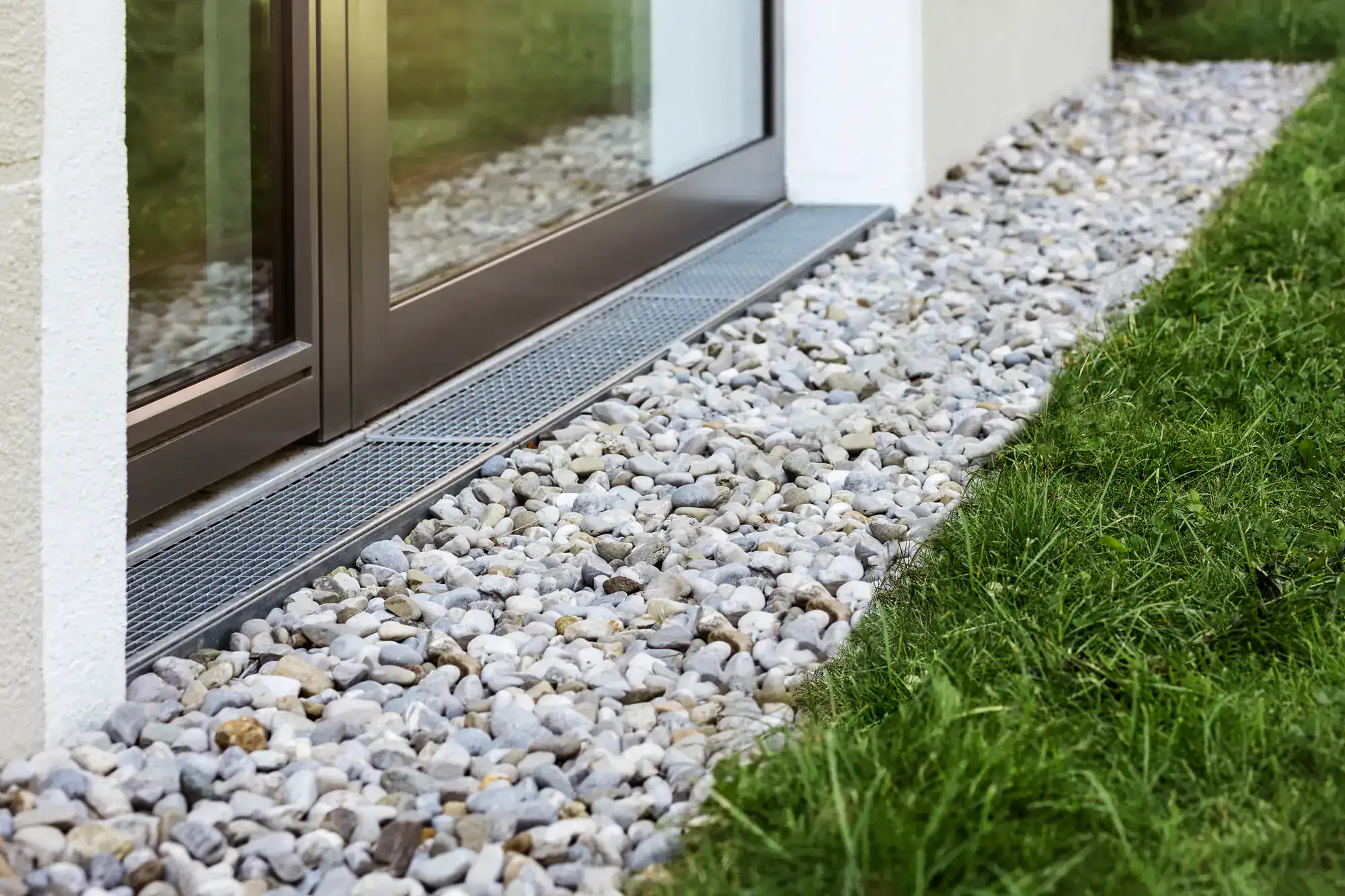
Yes and in clay soil, it’s often the most effective solution available. The challenge with clay-heavy soil on Long Island’s North Shore is that water doesn’t percolate downward the way it would in sandy soil. It saturates the upper layers and then moves laterally, pooling in low spots and pushing against foundations. A French drain doesn’t rely on the surrounding soil to absorb water it intercepts the water and physically redirects it away from the problem area through a gravel bed and perforated pipe to a defined outlet point.
The key is making sure the system is built correctly for clay conditions. That means using geotextile fabric that wraps the entire gravel bed to prevent clay particles from migrating into the stone and clogging the system over time. It also means using washed angular gravel not pea gravel because angular stone maintains the void space that allows water to move. A French drain installed without proper fabric in clay soil can fail within a few years. One we install correctly can function for 30 to 40 years without issue.
Most residential French drain installations in Huntington fall somewhere between $5,000 and $12,000, with the average project landing around $7,000 to $9,500 depending on the scope of work. Factors that affect cost include the length of the drain run, the complexity of the terrain, how much gravel and pipe is required, whether a new outlet point needs to be established, and whether any permit review is needed particularly for properties near Huntington Harbor, Cold Spring Harbor, or other wetland-adjacent areas in town.
It’s worth putting that number in context. Foundation crack repair on Long Island runs $15,000 to $50,000. Mold remediation starts at $3,000 and climbs quickly depending on how far it’s spread. With the median home value in Huntington sitting at $767,000, the cost of a properly installed drainage system is a straightforward investment compared to what water damage costs when it’s left unaddressed for one or two more seasons.
It depends on the specifics of your property and the scope of the work. Huntington operates under Chapter 170 Stormwater Management code, which governs how drainage discharge is handled meaning you can’t simply outlet a French drain wherever is convenient. The outlet placement has to comply with Town regulations, and in some cases, additional review is required.
Properties near Huntington Harbor, Cold Spring Harbor, Centerport Harbor, or other designated wetland areas may require review from the NYS Department of Environmental Conservation before work begins. New York State also requires all contractors to call 811 before any excavation to mark underground utilities gas, electric, water, cable. We handle all of that as part of the project. You don’t need to research the Town’s regulatory requirements on your own. We know what applies to your situation before we ever break ground.
They solve related but different problems, and in some cases you need both. A French drain is an exterior drainage system it intercepts water in the yard or around the foundation before it reaches the structure. It works by gravity, redirecting subsurface water through a gravel-filled trench and perforated pipe to an outlet point away from the home. It’s the right solution when the primary issue is water accumulating in the yard or migrating toward the foundation from the surrounding soil.
A sump pump is an interior solution it collects water that has already entered the basement or crawl space and pumps it out. It’s reactive where a French drain is preventive. For many Huntington homes, especially older homes in Huntington Village or the hillier sections of Dix Hills and West Hills where clay soil and topography both work against drainage, the most complete solution is a French drain on the exterior to reduce the volume of water reaching the foundation, paired with a sump pump as a backup for what gets through. We can assess which approach or which combination actually fits your property.
Most residential French drain installations in Huntington take one to two days for the actual installation work. Larger projects properties with complex topography like the rolling wooded lots in West Hills or Dix Hills, or homes requiring longer drain runs to reach a compliant outlet point can run two to three days. The free site assessment we do beforehand gives you a realistic timeline specific to your property before any work is scheduled.
Timing within the year also matters. Spring is when most Huntington homeowners realize they have a drainage problem the combination of snowmelt and April rains reveals everything the frozen ground was hiding. That creates a busy window from March through May. Fall is the second-best time to install, before the ground freezes and while conditions are still workable. Installing before winter means your system is in place and functioning by the time the next spring melt cycle hits. If you’re dealing with an active problem right now, it’s worth getting the assessment scheduled sooner rather than later.
This is more common than most homeowners expect, and it’s almost always traceable to one of a few installation failures. The most frequent cause in Huntington’s clay soil is a system installed without proper geotextile fabric or with fabric that wasn’t wrapped correctly around the gravel bed. Over time, clay particles migrate into the stone, fill the void space, and the system loses its ability to move water. Corrugated pipe instead of rigid perforated pipe is another common culprit, as corrugated pipe collapses and deforms over time, especially under the freeze-thaw stress of Long Island winters.
Insufficient slope is another issue if the pipe wasn’t installed with a consistent grade, water sits in low sections of the run rather than flowing to the outlet. When we assess a failed system, we look at all of these factors and give you a straight answer on whether the existing system can be rehabilitated or needs to be replaced. Sometimes it’s a targeted fix. Sometimes the materials used were simply wrong for the conditions and starting over is the more cost-effective path long-term. Either way, you’ll know exactly what you’re dealing with before any decision is made.