Hear from Our Customers
If your yard floods every time a nor’easter rolls through Long Island Sound, you already know the problem isn’t going away on its own. Water doesn’t lie it finds every low point, every weak spot, and every place your current drainage system wasn’t built to handle. The fix isn’t a quick patch. It’s a system designed around how water actually moves across your specific property.
More than half the homes in Huntington were built in the 1940s, ’50s, and ’60s. That original grading has shifted. Those original drain tiles have corroded or clogged. And the development that’s happened around these homes over the past 60-plus years has changed how surface water flows in ways the original builders never accounted for. If your drainage feels like it’s fighting a losing battle, that’s probably exactly what’s happening.
What changes after we install a properly designed drainage system isn’t just the yard it’s the worry. You stop checking the weather forecast with dread. You stop watching the corner of your basement after every heavy rain. Your lawn becomes usable again. And your foundation stops taking on water that was never supposed to reach it in the first place.
We’re a landscape drainage contractor serving Huntington and the surrounding North Shore communities from Cold Spring Harbor and Centerport to Dix Hills, Greenlawn, and Northport. This isn’t general landscaping with a drain thrown in. Drainage design is a specific discipline, and it requires understanding how water moves across land before a single shovel goes in the ground.
What separates a drainage system that works from one that doesn’t is the assessment that happens before installation. Where is the water coming from? What’s the soil doing beneath the surface? Is the water table a factor near the harbor? Is the slope of your property sending your neighbor’s runoff straight toward your foundation? Those questions have to be answered first and that’s where most failed drainage jobs went wrong.
We hold the required NY Home Improvement Contractor licensing for Suffolk County and carry full liability and workers’ compensation insurance. When you hire a drainage contractor in Huntington, that’s the baseline. Everything above that baseline is what actually determines whether your yard drains.
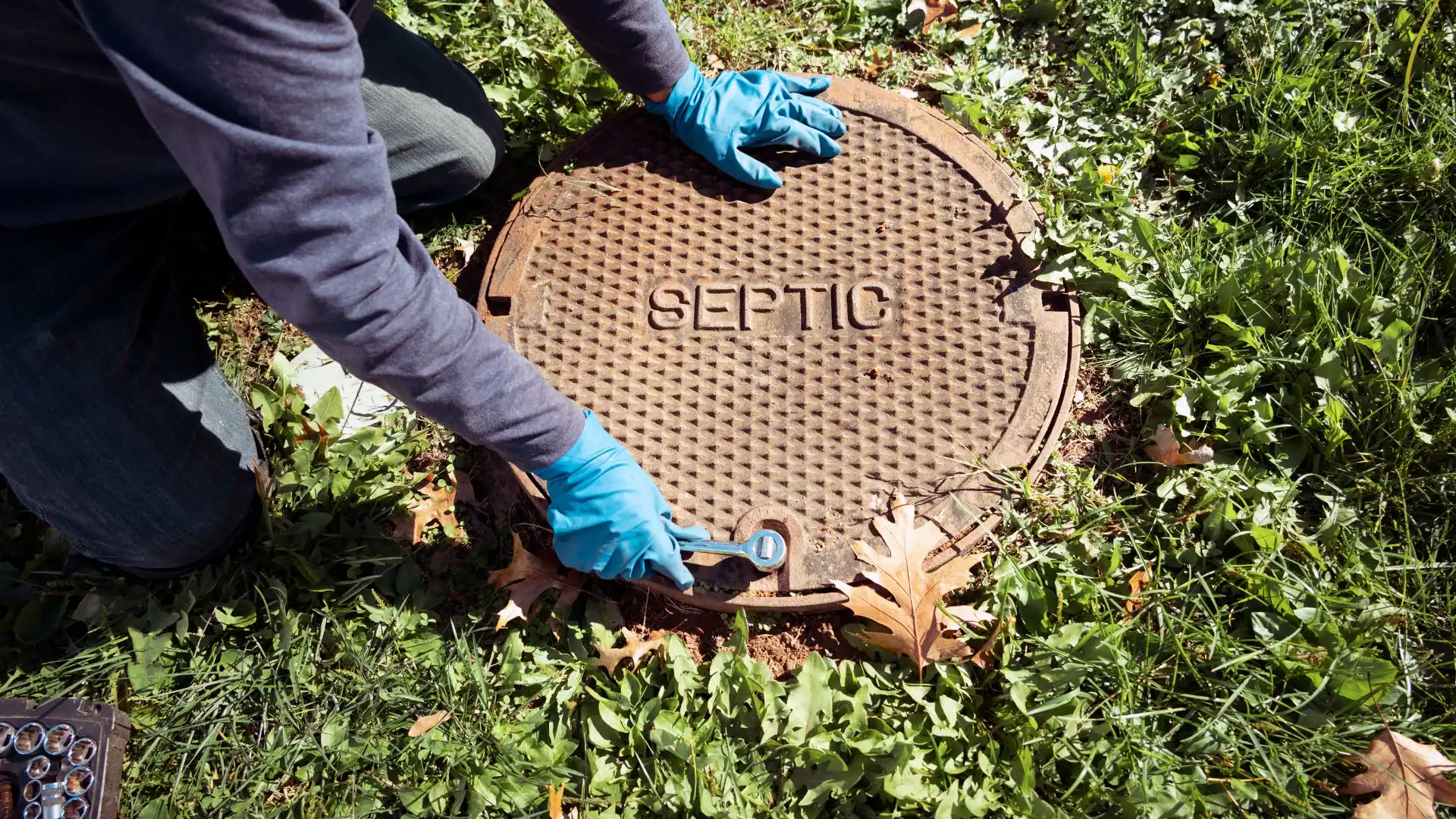
It starts with a site assessment. Before any design is proposed, we need to understand the full picture where the water is entering, where it’s pooling, what the grade looks like, what’s underneath, and whether the water table is a factor. In Huntington’s harbor communities like Centerport and Lloyd Harbor, groundwater levels can be influenced by tidal proximity, which changes what kind of system will actually work. That assessment drives everything that comes after.
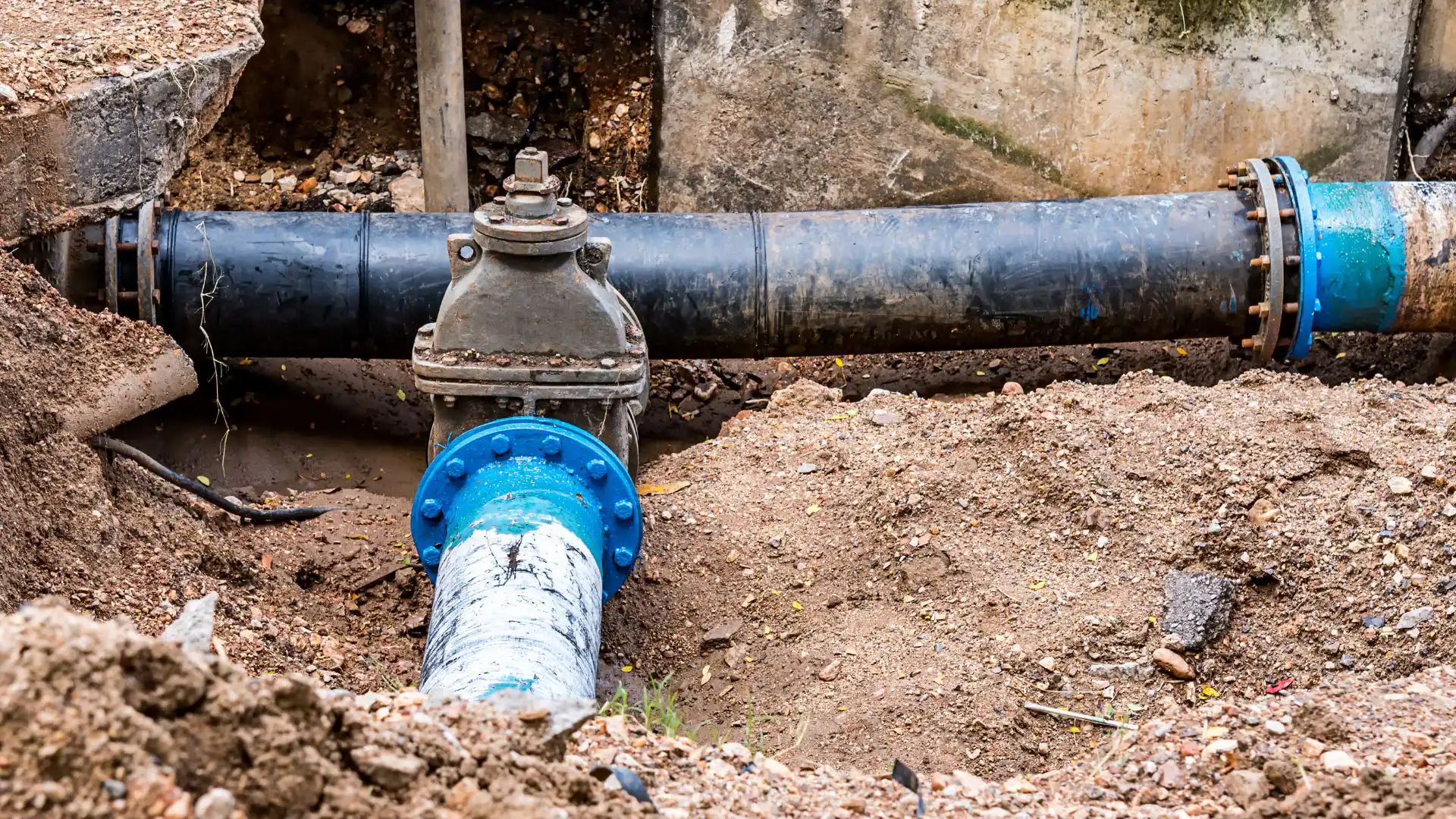
From there, we design a drainage system around your property’s specific conditions not a generic template. That might mean a French drain to intercept subsurface water, a catch basin to capture surface runoff at a low point, channel drains along a driveway or patio edge, a dry well to handle roof discharge, or a combination of all of the above. The Town of Huntington’s Chapter 170 Stormwater Management code governs how drainage systems can connect to or discharge into the municipal storm sewer system, and any work we do needs to be designed with that in mind from the start.
Once the system is installed, we restore the yard. Disturbed turf, topsoil, and any affected landscaping are addressed as part of the project not as an afterthought. The goal is a yard that drains properly and looks like the work was done right.
Ready to get started?
Drainage services in Huntington cover a wider range of conditions than most contractors acknowledge. The terrain here isn’t flat Cold Spring Harbor drops steeply toward the harbor, West Hills rolls through wooded terrain, and properties near Huntington Bay sit at the intersection of surface water and shallow groundwater. A drainage system that works on a flat South Shore lot isn’t automatically the right solution for a sloped North Shore property, and the design has to reflect that.
The core services we offer include French drain installation, catch basin and channel drain systems, dry well installation, yard regrading, downspout redirection, and subsurface drainage for foundation protection. These components are rarely standalone solutions most properties in Huntington need a combination of two or more working together. The system is sized for peak rainfall events, not average conditions. That matters here because a nor’easter delivering four to five inches of rain over 36 hours is a different stress test than an afternoon thunderstorm.
Every project includes a written scope of work and a written quote before anything starts. You know what’s being installed, why it’s being installed, and what it costs before a single piece of equipment arrives. That’s not a bonus. That’s how drainage work should be done.
This is one of the most common points of confusion, and it costs homeowners real money when they call the wrong contractor first. A plumber handles blocked or broken pipes inside your home’s drainage system if a drain line is clogged or a pipe has failed, that’s their territory. We handle how water moves across and through the land itself grading, French drains, catch basins, dry wells, and surface water redirection. These are fundamentally different problems.
If your yard floods, your basement takes on water after heavy rain, or water pools against your foundation, that’s a landscape drainage issue. The fix lives outside the home, in how water is captured, redirected, and dispersed across your property. Calling a plumber for that problem typically results in a service call that doesn’t solve anything and a second call to a drainage contractor anyway. Start with the right contractor for the actual problem.
Failed drainage jobs in Huntington follow predictable patterns. The most common one is a system that was sized for normal rainfall but not for the kind of sustained heavy rain that nor’easters bring to the North Shore. A French drain that handles an inch of rain in an hour can be completely overwhelmed by four inches over 36 hours and if it was never designed for that scenario, it was never going to hold up when it actually mattered.
Other common failure modes include pipes installed without adequate fall so water stagnates instead of moving, no geotextile fabric used so silt clogs the system within a year or two, and a single drainage component installed when the property actually needed multiple interconnected components working together. If your previous fix didn’t work, it wasn’t bad luck something in the design or installation was wrong. A proper site assessment will identify exactly what failed and why, before any new work is proposed.
It depends on the scope of the project. The Town of Huntington’s Chapter 170 Stormwater Management code governs drainage work that connects to or discharges into the town’s municipal storm sewer system. If your drainage system ties into the town’s MS4 infrastructure in any way, that work needs to comply with Chapter 170 and the town’s stormwater discharge rules.
At the state level, New York’s SPDES permit system through the NYSDEC applies to construction activities that disturb more than one acre of land. Most residential drainage projects fall below that threshold, but larger properties or more extensive grading projects may require SPDES authorization. The practical takeaway is that a contractor working in Huntington needs to be familiar with both the town code and the state permit thresholds because if they’re not, any compliance issues that result become your problem as the property owner. This is one area where hiring a contractor who actually knows the local regulatory landscape matters.
Most residential drainage projects fall somewhere between $2,000 and $8,000, depending on the scope, the components required, and how much excavation the site demands. A straightforward French drain installation on a relatively flat lot is going to cost less than a multi-component system on a sloped North Shore property that requires catch basins, channel drains, and a dry well working in combination. The site assessment drives the scope, and the scope drives the cost.
The more useful number for Huntington homeowners is the cost of not addressing it. Foundation repair from water intrusion runs $23,000 to $48,000 for structural work. Basement flooding averages $10,000 to $26,000 per incident. With median home values in Huntington approaching $1 million, the math on drainage investment is straightforward a properly designed system is one of the most cost-effective things you can do to protect a high-value property. A written quote before any work starts means you know exactly what you’re committing to.
Yes, and it’s one of the factors that makes drainage design on Long Island different from many other parts of the country. Long Island’s water table varies significantly by location in low-lying areas near Huntington’s harbors and coastal wetlands, the water table can be quite shallow, which directly limits the effectiveness of infiltration-based drainage solutions like standard dry wells. If the ground is already saturated at a shallow depth, a dry well has nowhere to send water.
In those situations, we design the drainage system to account for where the water is actually going to go which might mean redirecting surface water away from the property rather than trying to infiltrate it, or using a system sized to handle the volume until the water table drops. Properties near Centerport Harbor, Lloyd Harbor, and Huntington Bay are most likely to encounter this. It’s one of the reasons a site-specific assessment matters more here than in areas with deeper, more consistent water tables.
A properly designed and installed drainage system should last 20 to 30 years or more with minimal maintenance. The components that tend to fail earliest are the ones that were either undersized for the conditions or installed without proper filtration fabric silt migration into the aggregate surrounding a French drain is the most common cause of premature system failure, and it’s entirely preventable with the right installation practices.
In Huntington’s climate, where the system faces nor’easters in the fall, freeze-thaw cycles through winter, heavy spring rains, and summer thunderstorms, the long-term durability of the installation matters. Pipes need to be rated for the conditions. Connections need to be secure. And the system needs to be designed with enough capacity that it isn’t running at its limit every time it rains hard. Annual inspection of catch basins and outlet points clearing debris before the heavy rain seasons is the main maintenance task that keeps a well-built system performing for the long haul.