Hear from Our Customers
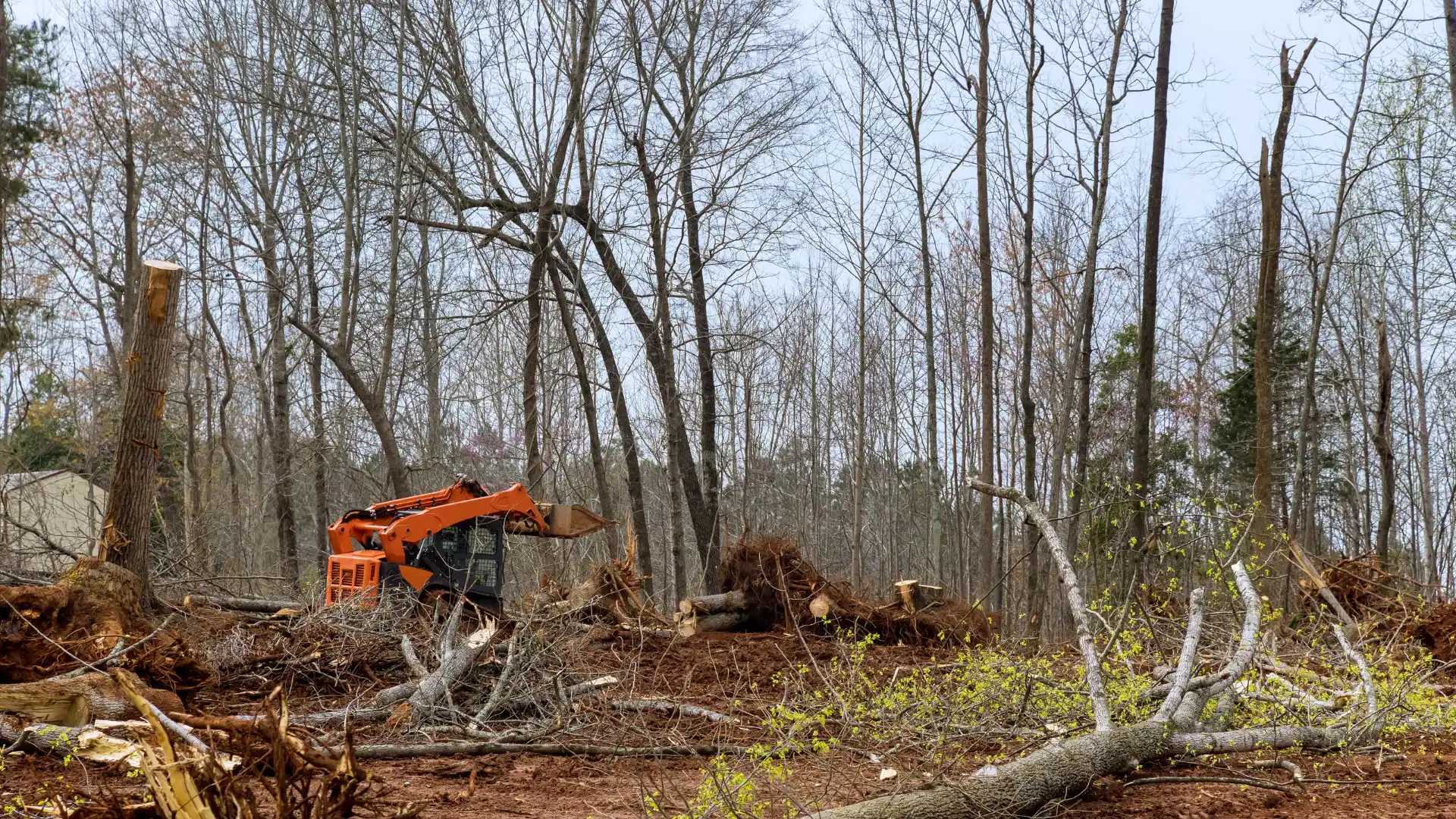
Most people hiring for land clearing in Huntington aren’t just dealing with a few overgrown shrubs. They’re dealing with decades of unchecked growth mature oaks, dense understory, invasive species like Japanese knotweed and Oriental bittersweet that have taken over entire sections of the lot. Surface clearing doesn’t fix that. If the root systems stay, the problem comes back within a season.
What you actually want is a property you can use. That means clear sight lines, a level surface, stumps gone, and debris hauled off not pushed to the corner and left for you to deal with. That’s the difference between a clearing job and a finished job.
Huntington’s North Shore terrain adds another layer. The glacially formed hills, shifting soils, and proximity to wetlands and harbors in places like Centerport and Cold Spring Harbor mean access points, drainage patterns, and environmental buffers all factor into how a job gets done. A contractor who doesn’t account for those conditions isn’t just doing subpar work they may be exposing you to DEC violations you didn’t even know were possible on your own property.
We operate across Long Island with a specific focus on the North Shore market and that means knowing the Town of Huntington’s tree preservation ordinance the way most contractors don’t. Before any equipment gets scheduled, we assess which trees on your property meet the 6-inch DBH threshold that triggers a permit requirement. We walk you through the application process with the town’s Planning Department, and we don’t start work until you’re covered. That protects you from the tripled fees and per-tree fines the town enforces for unauthorized removal.
This isn’t a minor detail. It’s the difference between a clean project and an expensive problem. Whether you’re clearing a wooded lot in Cold Spring Harbor, reclaiming an overgrown property in Elwood, or preparing land for new construction in Huntington Station, we handle the compliance side so you can focus on what comes next.
It starts with a site visit. Before we quote anything, we walk the property with you assessing the vegetation, identifying protected trees, flagging any wetland buffers or DEC-sensitive areas near the lot line, and getting a clear picture of what the job actually involves. In Huntington, that site walk also determines whether a tree permit application needs to go to the town’s Planning Department before work can begin. We handle that process and build the timeline around it, so permit approval doesn’t become a bottleneck in your project.
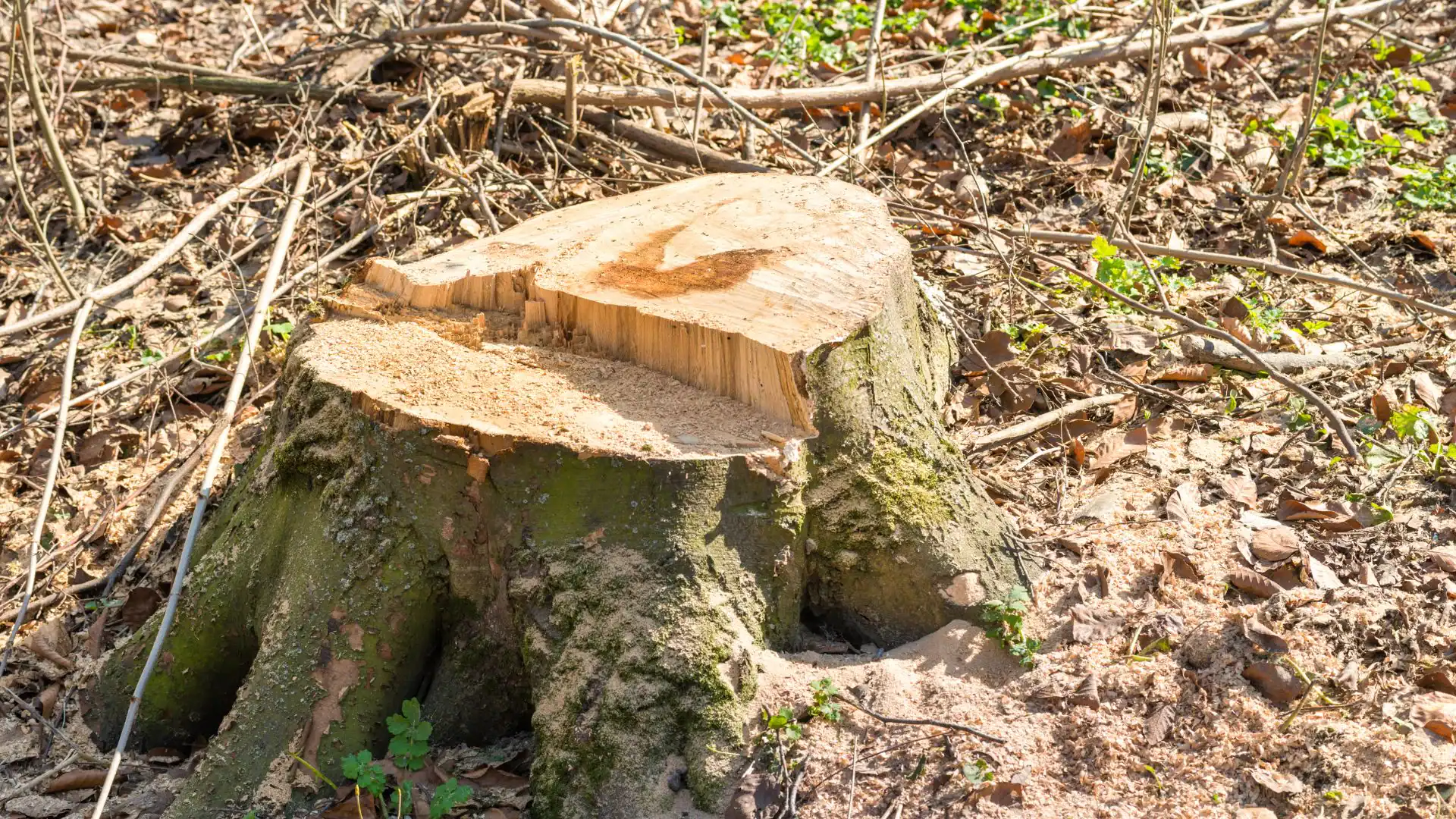
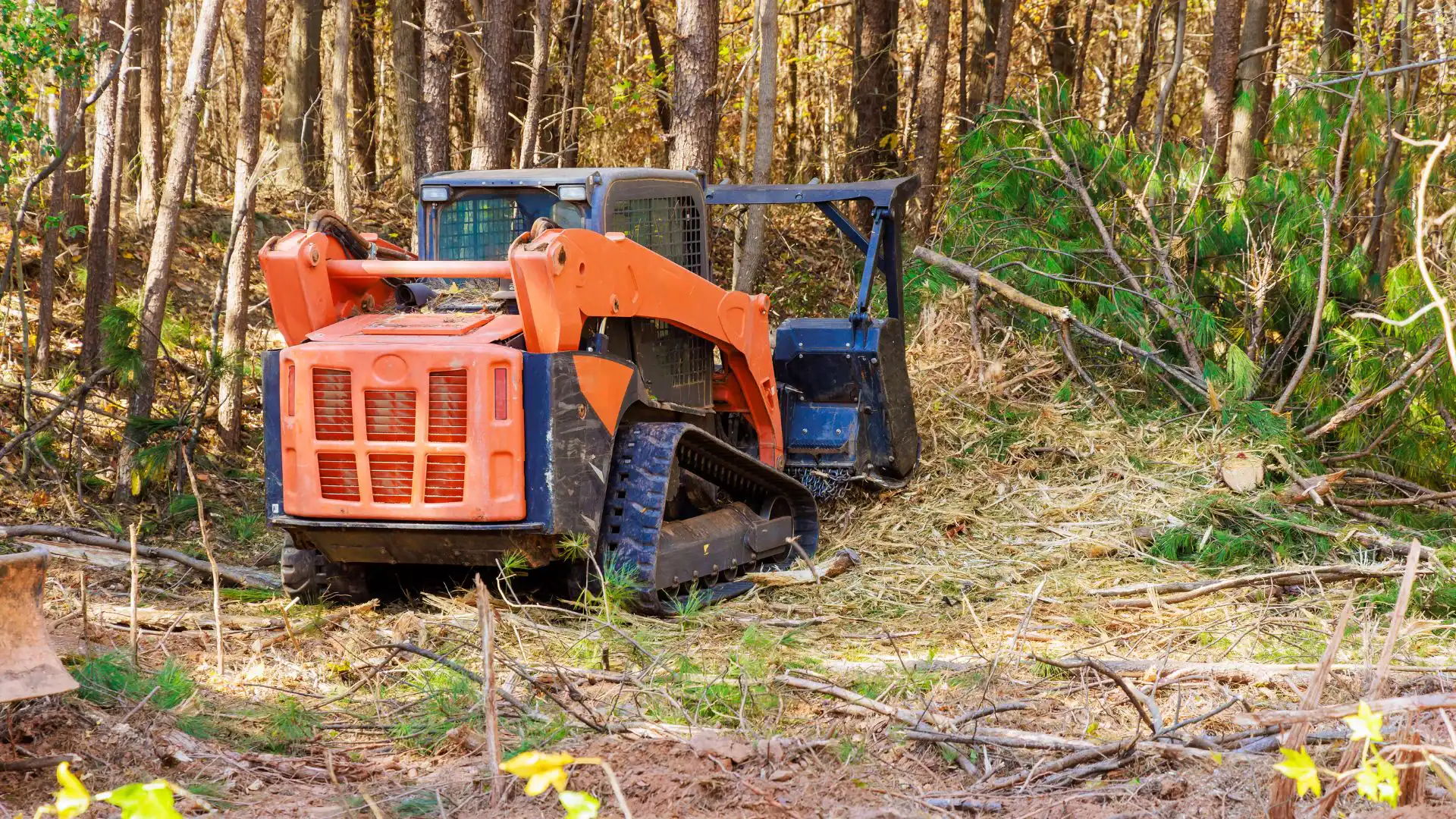
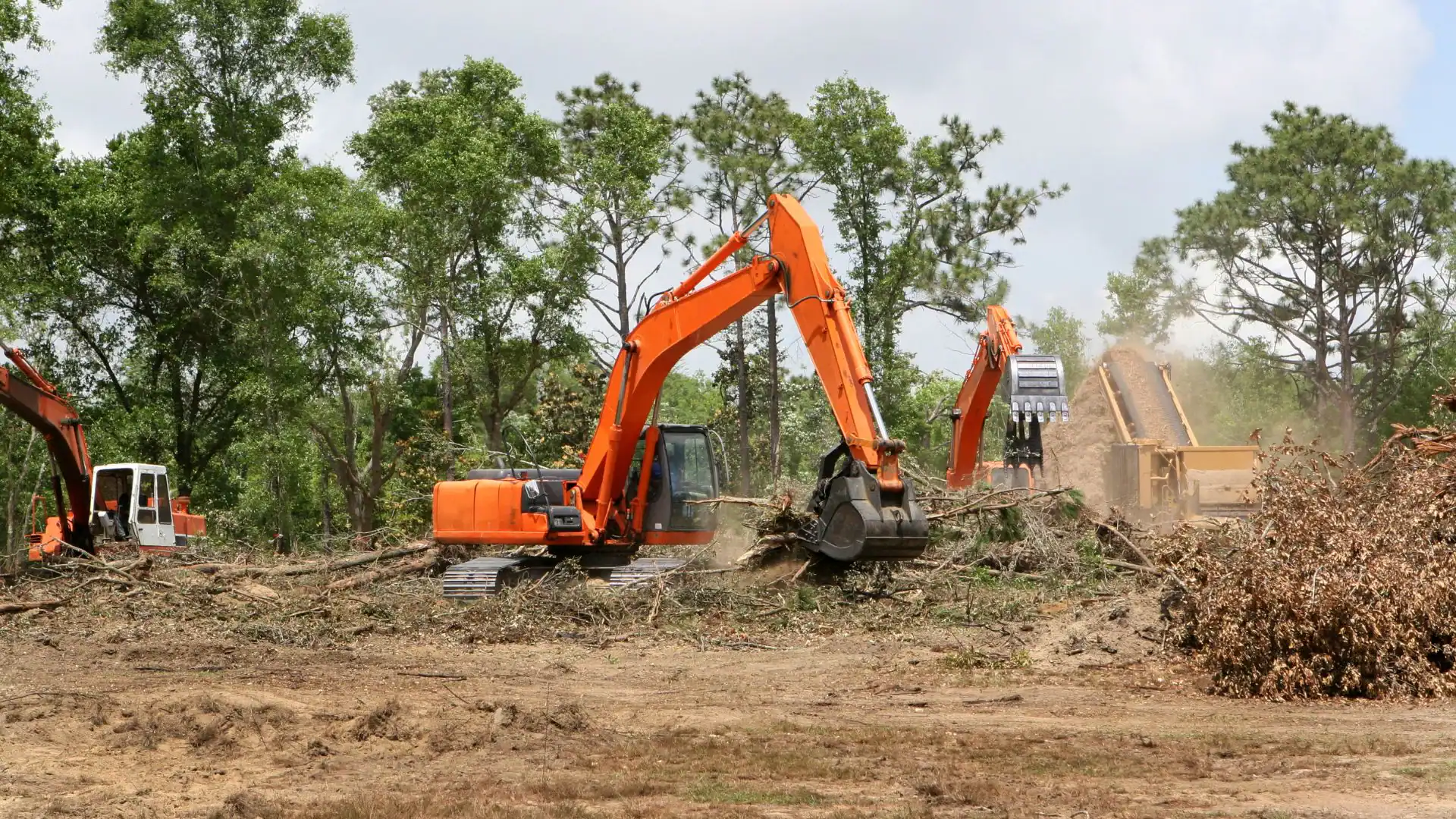
Once permits are in order, clearing begins systematically. Invasive species come out first multiflora rose, bittersweet, knotweed because leaving those root systems in place undermines everything else. Then we work through the canopy layer, taking down what’s permitted and preserving what adds value to the property. Stump grinding follows, and debris is either chipped on-site or hauled off entirely, depending on what you need.
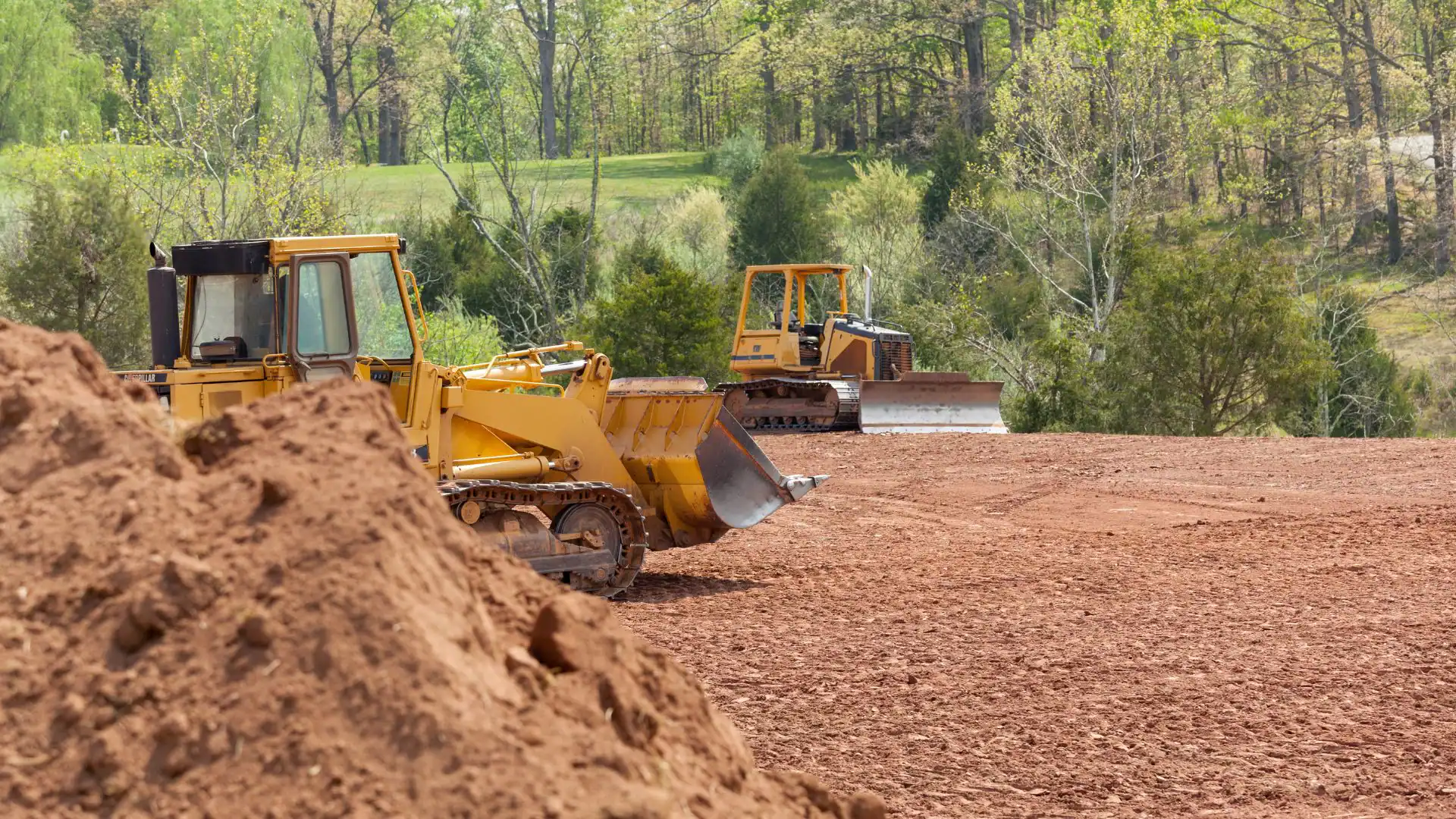
The final step is site cleanup and a walkthrough with you. When we leave, the property is clean, level, and ready for whatever comes next landscaping, construction, or simply being able to walk your own land again.
Ready to get started?
Not every lot in Huntington needs the same approach. A heavily wooded estate in Lloyd Harbor with mature hardwoods, DEC-adjacent wetlands, and a permit-heavy removal list is a completely different job from a residential lot in South Huntington that’s been overtaken by scrub brush and invasive shrubs. We quote each job based on what’s actually there clearing, stump grinding, and debris removal are each broken out as separate line items so you know exactly what you’re paying for before anything starts.
For overgrown property clearing and full land reclamation work, we assess the full scope upfront: canopy layer, understory, invasive species load, stump count, and site access. Properties in Dix Hills, Fort Salonga, and Greenlawn often have larger lots with decades of unmanaged growth, and those jobs require a phased, systematic approach rather than a single-pass clear. We build the scope around the property, not around a standard package.
We also handle lot clearing services for new construction and teardown-rebuild projects coordinating timelines with builders, permit approvals, and construction start dates so clearing doesn’t delay your project. If your lot sits near one of Huntington’s coastal communities or protected natural areas, we factor DEC wetland buffers into the scope from day one.
Yes the Town of Huntington requires a permit from the Planning Department before you remove, destroy, or substantially alter any tree that measures 6 inches or more in diameter at breast height (DBH). This applies to private residential and commercial properties throughout Huntington, including all of its hamlets from Cold Spring Harbor to Dix Hills.
The part most homeowners don’t find out until it’s too late: if clearing work begins before the permit is issued, the town assesses the application fee at three times the standard amount. On top of that, violations of the tree preservation ordinance can carry fines of up to $1,000 per tree. That’s a significant financial exposure on a property where you might have 20 or 30 trees that meet the threshold. Before any clearing work is scheduled on your Huntington property, the permit question needs to be answered and we make sure it is.
Land clearing costs in Huntington vary considerably based on lot size, vegetation density, terrain, and what’s included in the scope. A straightforward residential brush clearing job on a quarter-acre lot in South Huntington or Greenlawn will cost significantly less than a full land reclamation project on a multi-acre wooded estate in Lloyd Harbor or Cold Spring Harbor. As a general range, residential lot clearing in Huntington runs anywhere from a few thousand dollars for lighter work to $15,000 or more for heavily wooded, stump-heavy, or access-challenged properties.
What drives cost up most often is scope creep from vague quoting contractors who price clearing without separating out stump grinding and debris removal, then charge for both separately once the job is underway. We quote every job with itemized line items so you know exactly what clearing, stump grinding, and hauling each cost before we start. No surprises when the invoice arrives.
Huntington has a well-documented invasive species problem the town even maintains a formal Invasive Plant Sub-Committee to track and manage it. The most common invasives found on residential and rural properties across Huntington include Japanese knotweed, multiflora rose, Oriental bittersweet, English ivy, Japanese barberry, and Norway maple. All of them establish aggressively on neglected or disturbed land and are common across hamlets like Elwood, Fort Salonga, and Centerport.
These species do affect clearing, and significantly. Knotweed in particular regrows from root fragments if not removed correctly surface cutting just stimulates it. Bittersweet vines can be so deeply embedded in mature trees that clearing the canopy without addressing the vine load creates a hazard. When we scope a clearing job in Huntington, invasive species identification is part of the initial site walk, and removal is factored into the quote. The goal isn’t just a cleared site today it’s a site that stays clear.
Processing times through the Town of Huntington’s Planning Department vary depending on the volume of applications and the complexity of the removal request. For straightforward residential removals, you’re typically looking at a few weeks from application submission to permit issuance. More complex requests particularly those involving large numbers of trees, replacement planting conditions, or properties near protected natural areas can take longer.
The key is starting the process early. If you’re planning a construction project, a pool installation, or a major landscaping renovation that requires clearing, the permit timeline needs to be built into your project schedule from the beginning not treated as an afterthought. Approved permits in Huntington are valid for one year from the date of issue, so there’s room to work within that window once it’s granted. We initiate the permit process as early as possible and keep you updated on status so that clearing can begin the moment approval comes through.
Brush clearing targets the dense understory layer the shrubs, vines, bramble, and scrub growth that makes a property inaccessible or unusable without necessarily removing mature trees. It’s the right approach when the canopy is worth preserving but the ground-level vegetation has gotten out of hand. A lot of Huntington properties particularly in Greenlawn, Elwood, and the more wooded residential areas fall into this category. The mature oaks and maples are assets. The multiflora rose and bittersweet underneath them are not.
Full land clearing involves removing the canopy layer as well trees, stumps, and all and is typically required for new construction, major site preparation, or properties where the entire vegetation layer needs to come out. In Huntington, full clearing almost always triggers the town’s tree permit process, while targeted brush clearing may or may not depending on whether any trees meeting the 6-inch DBH threshold are in the work zone. We assess that distinction during the site walk and scope the job accordingly.
It can, but it requires careful coordination with New York State DEC regulations before any work begins. Huntington has significant coastal and freshwater wetland resources Huntington Harbor, Centerport Harbor, Cold Spring Harbor, and numerous inland ponds and wetland areas throughout the town. Any clearing work within or adjacent to these areas falls under DEC jurisdiction, and depending on proximity, a state permit may be required in addition to the town’s tree removal permit.
The buffer distances matter here. DEC-regulated wetland buffers typically extend 100 feet from the wetland boundary, and work within that zone requires a separate review and approval process. For waterfront properties in Lloyd Harbor, Huntington Bay, Eatons Neck, or Centerport, this is not a theoretical concern it’s a real part of the permitting picture. We identify DEC-sensitive areas during the initial site walk and factor the regulatory requirements into the project timeline and scope before quoting. Clearing near water in Huntington is doable, but it needs to be done right.