
Hear from Our Customers
If your yard stays soggy for days after a storm, or you’ve started noticing moisture along your basement walls, the problem isn’t going away on its own. Port Jefferson’s combination of clay-bearing glacial soils and steep upland slopes means water doesn’t drain the way it would in flatter, sandier communities further south on the island. It pools, saturates, and eventually finds its way into your home.
A properly installed French drain system intercepts that water before it reaches your foundation. You get a yard you can actually use, a basement that stays dry, and the peace of mind that comes with knowing your home is protected not just patched. For homes near the harbor or on sloped lots in Belle Terre and Old Field, that’s not a luxury. It’s a necessity.
The financial case is straightforward too. Foundation repair on Long Island runs $15,000 to $50,000. Mold remediation starts at $3,000. In a market where Port Jefferson homes are valued above $710,000, a drainage system that costs a fraction of that isn’t an expense it’s protection on one of the most significant assets you own.
We’re named for the Gold Coast not as a marketing angle, but because this is the region we work in and actually understand. The Gold Coast is Port Jefferson’s backyard. The hilly terrain, the harbor proximity, the clay soil, the nor’easters that roll through every winter and spring we’re not reading about these conditions on a spec sheet. We’re working in them.
We serve Port Jefferson village and the surrounding communities: Belle Terre, Old Field, Mount Sinai, and Port Jefferson Station. Every assessment starts on-site, because no two properties drain the same way especially on the North Shore, where slope, soil composition, and groundwater depth can vary significantly from one street to the next.
Port Jefferson is an incorporated village with its own building department and stormwater ordinances, separate from the Town of Brookhaven. We know the local regulatory landscape, and we handle all permit research and applications as part of every project.
It starts with a free on-site assessment not a phone quote, not a ballpark estimate based on square footage. We walk your property, evaluate the slope, identify where water is entering or pooling, and determine the best outlet option. In Port Jefferson, that assessment also includes checking proximity to the harbor, any tidal wetland buffers, and whether your property falls under village code, Brookhaven stormwater regulations, or both. That’s not something you want to figure out after the trench is already dug.
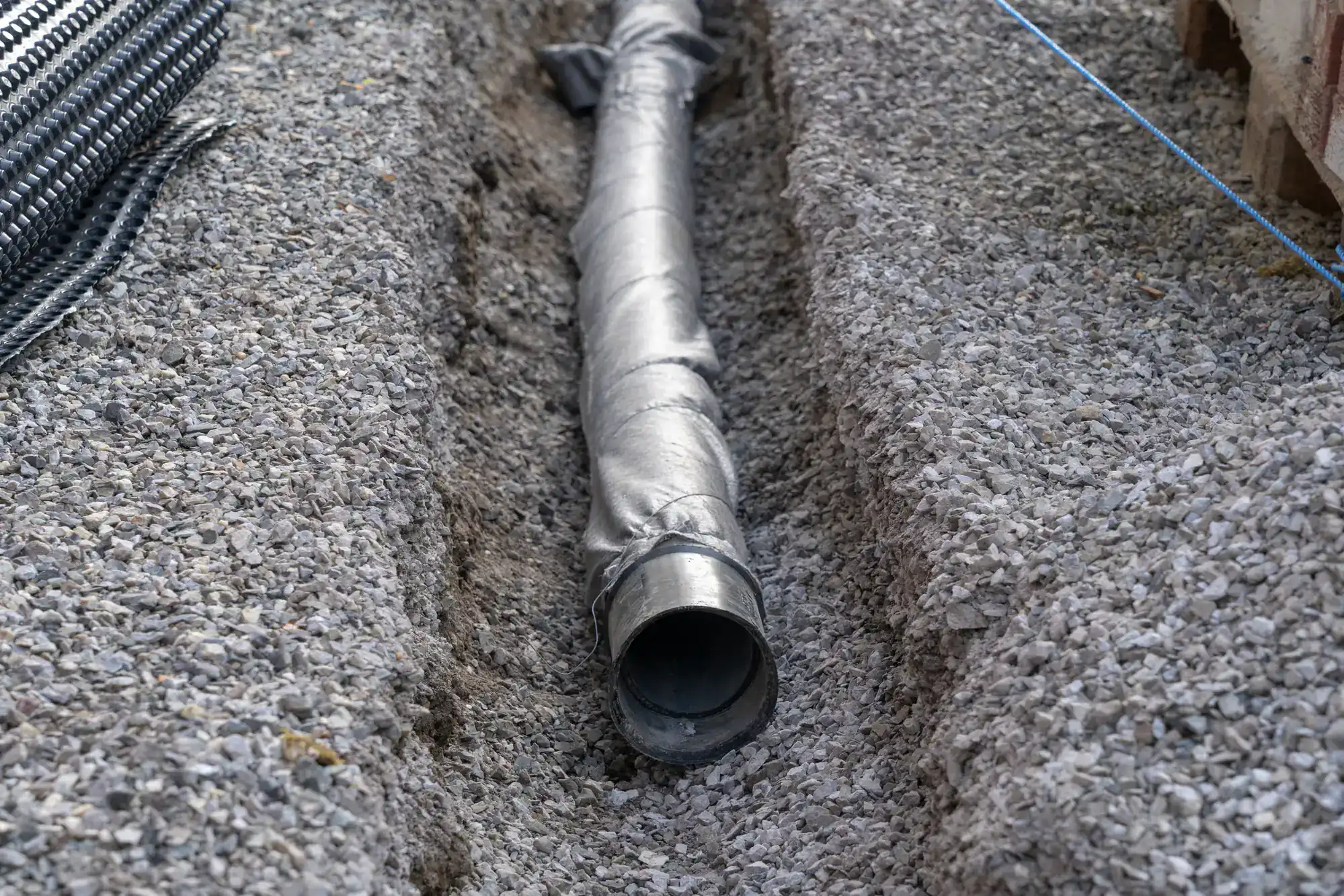
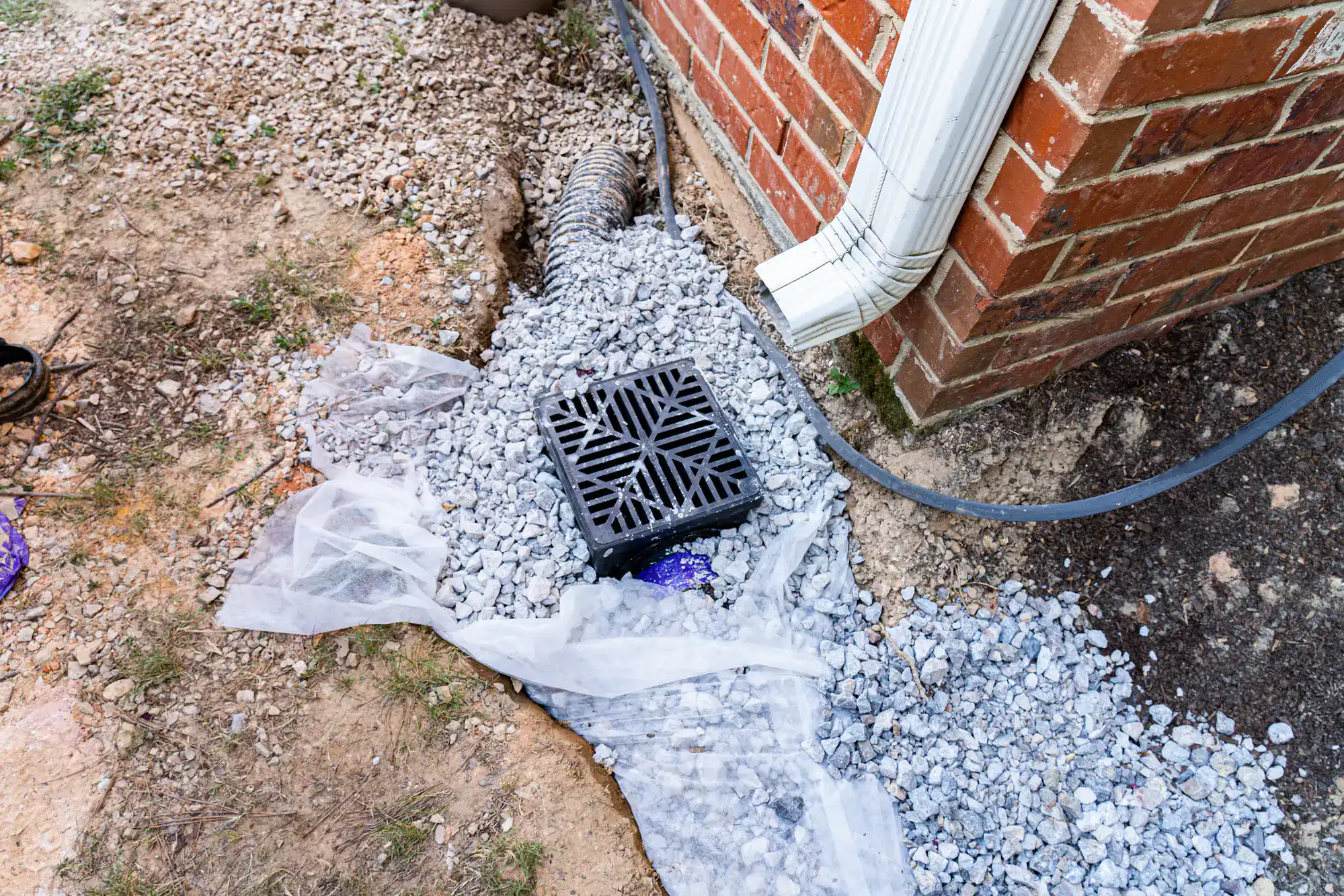
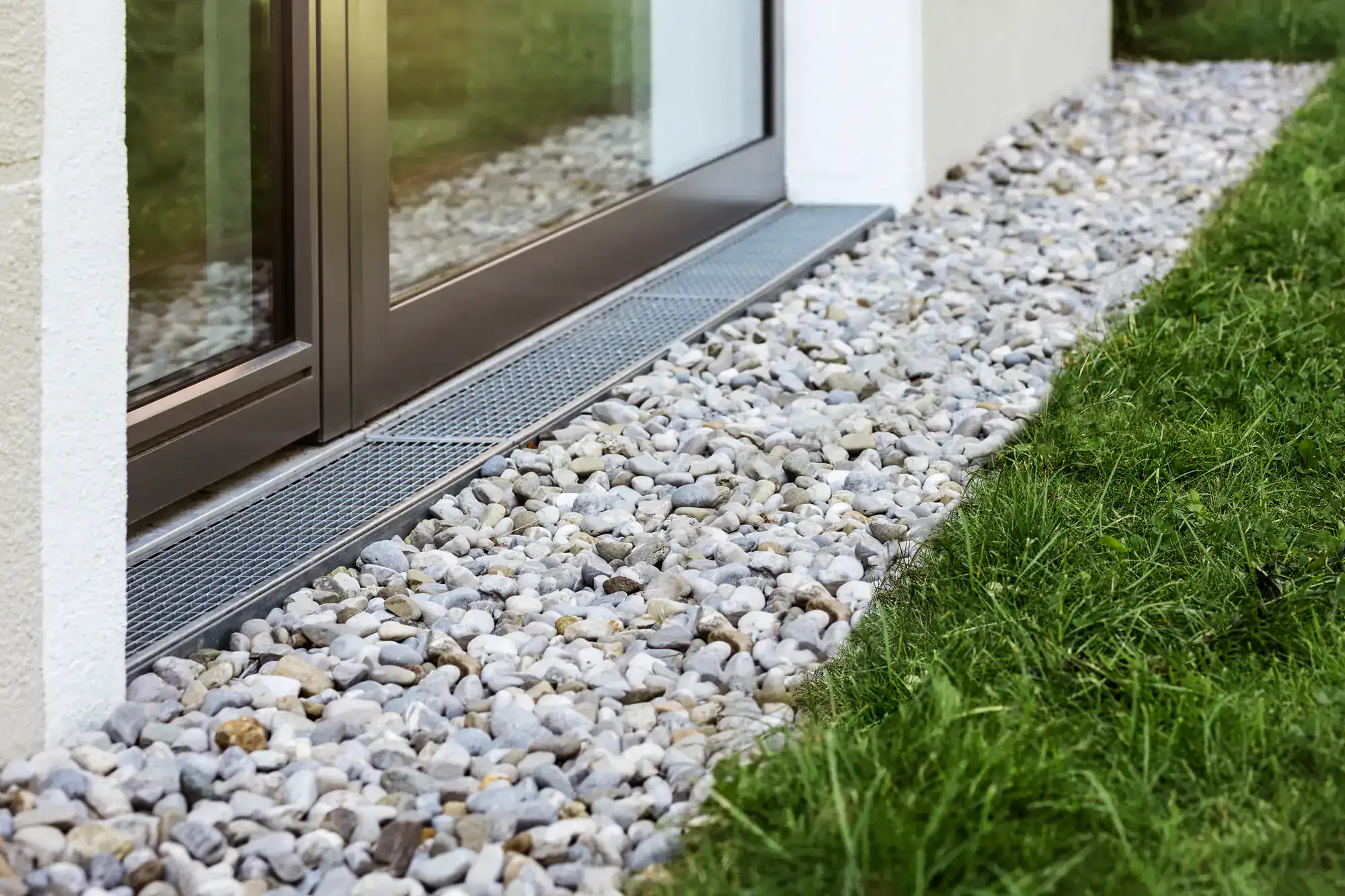
Once the plan is set, we handle any required permits before any equipment touches your yard. Excavation is done with care especially on properties with mature trees, stone walls, or established gardens that are common throughout Port Jefferson and Belle Terre. We install perforated pipe bedded in washed angular gravel, wrapped in geotextile filter fabric to prevent silt infiltration, sloped precisely for consistent flow to the outlet. These aren’t optional details. They’re what separates a system that works for 30 years from one that fails in three.
After installation, topsoil is restored and the disturbed area is seeded or sodded to match. The drainage benefit is permanent. The disruption to your yard is temporary.
Ready to get started?
French drain installation in Port Jefferson isn’t the same job it is in a flat, sandy South Shore community. The Harbor Hill moraine creates real slope and real runoff. The clay content in North Shore glacial soils holds moisture for days after a rain event. The water table is shallower here than in many other parts of Long Island, which means groundwater pressure against foundation walls is a genuine and recurring problem, not an edge case.
Every installation we complete includes a thorough site assessment, full permit handling through the Village of Port Jefferson and the Town of Brookhaven where applicable, professional excavation, proper pipe and gravel selection for local soil conditions, and complete yard restoration when the work is done. For properties with particularly high groundwater or sites near the harbor, we’ll tell you upfront if additional drainage measures like a dry well or supplemental surface drain are needed to fully solve the problem. No surprises after the fact.
Pricing for French drain installation in Port Jefferson typically ranges from $5,000 to $9,500 depending on linear footage, outlet complexity, soil conditions, and permit requirements. Properties in Belle Terre, Old Field, or on steep wooded lots may fall toward the higher end of that range given the excavation demands. What you won’t find is a vague quote that balloons once work begins.
It depends on the scope of work, but in many cases yes. Port Jefferson is an incorporated village with its own building department and stormwater management ordinances, which operate separately from the Town of Brookhaven’s regulations. If your project involves significant grading, land disturbance, or a drainage outlet that connects to a municipal system, a permit is likely required. Properties near Port Jefferson Harbor or any tidal wetland buffers may also trigger additional review under Brookhaven’s Chapter 81 wetlands regulations or NYSDEC stormwater requirements.
This is one of the more complex permitting environments on Long Island you’re potentially dealing with village code, town code, and state environmental regulations all at once. We research the specific requirements for your property before any work begins and handle all permit applications on your behalf. You don’t need to navigate that process yourself.
The short answer is soil composition and slope. Port Jefferson sits on the Harbor Hill moraine a glacially deposited landform that gives the North Shore its hilly terrain. The soils in this area contain clay deposits from that glacial history, and clay doesn’t drain well. It holds moisture, stays saturated, and can remain waterlogged for days after a rain event that would drain quickly in a sandier community further south on Long Island.
Add in the fact that North Shore slopes funnel surface runoff directly toward foundations and low-lying areas, and you have a recipe for chronic yard saturation. A French drain system intercepts that water at the source either at grade where runoff collects, or below grade where groundwater is building pressure. The fix isn’t regrading topsoil or adding mulch. It’s giving the water an engineered path to follow before it reaches your home.
Most residential French drain installations in Port Jefferson fall between $5,000 and $9,500. The range is wide because the variables are real linear footage of pipe, depth of excavation, soil conditions, outlet type, and whether permits are required all affect the final number. Properties in Belle Terre, Old Field, or on steep wooded lots tend to run toward the higher end because the excavation is more demanding and the outlet placement is more complex.
What you shouldn’t do is choose a contractor based on the lowest initial quote without understanding what’s included. A system installed with corrugated plastic pipe instead of proper perforated PVC, missing filter fabric, or insufficient gravel will fail usually within a few years. At that point you’re paying to have it redone. The cost of a properly installed system is a fraction of what foundation repair or mold remediation costs, and in a Port Jefferson market where homes are valued above $710,000, getting it right the first time is worth the investment.
A French drain can absolutely help with high groundwater but the design matters more in this scenario than in a straightforward surface runoff situation. Port Jefferson’s proximity to the harbor and Long Island Sound means the water table in many parts of the village is shallower than in inland communities. That groundwater exerts hydrostatic pressure against foundation walls and can cause moisture intrusion even when it hasn’t rained recently.
A perimeter French drain installed at the right depth below the footing of your foundation relieves that pressure by giving groundwater a path to travel away from the structure before it builds up. In some cases, especially for properties very close to the harbor or in low-lying areas, a French drain works best in combination with a dry well or sump system. We’ll tell you during the site assessment exactly what your property needs. We’re not going to sell you a single solution if the conditions call for something more comprehensive.
Grading and a French drain solve different problems, and sometimes you need both. Grading addresses surface water it reshapes the ground so water flows away from your foundation rather than toward it. That’s effective when the issue is purely about how water moves across the surface of your yard. But if the problem involves subsurface groundwater, saturated soil that holds moisture for extended periods, or water that’s entering through your foundation wall rather than over the surface, grading alone won’t fix it.
In Port Jefferson, many homes have both issues simultaneously the slopes send surface water toward the foundation, and the clay soil traps it there. A site assessment is the only way to diagnose which problem you’re actually dealing with. We look at where the water is entering, how long it takes to drain after a rain event, and what the soil profile looks like. From there, we can tell you whether grading, a French drain, or a combination of both is the right call for your specific property.
A properly installed French drain system should last 30 to 40 years. The factors that shorten that lifespan significantly are almost always installation-related, not material failures. The most common issues we see on Long Island are corrugated plastic pipe that collapses or clogs over time, missing or inadequate geotextile filter fabric that allows silt to infiltrate the gravel bed, insufficient slope that causes water to sit in the pipe instead of flowing to the outlet, and outlets that were placed without accounting for seasonal groundwater levels.
On the North Shore specifically, freeze-thaw cycles add another variable. Pipe installed too shallow will freeze in winter, crack, and fail before the first spring thaw. Long Island’s frost depth requirements need to be factored into every installation something that gets overlooked when drainage work is treated as an add-on by a landscaper rather than a primary service. Every system we install is built to handle Port Jefferson winters, not just Port Jefferson summers.