Hear from Our Customers
Most people don’t call about land clearing until the problem has been growing for years. By the time you’re searching, the bamboo has crossed the property line, the back lot looks nothing like it did when you bought the place, or you’re trying to break ground on a project and the site simply isn’t ready. That’s the moment we’re built for.
What you get on the other side of a proper clearing job isn’t just less vegetation it’s a usable property. Whether you’re preparing for a pool, an addition, a landscaping overhaul, or new construction, the cleared site is the foundation everything else is built on. Get that wrong, and every step after it gets harder.
East Setauket’s heavily wooded lots and North Shore soil conditions mean clearing here isn’t the same as clearing a flat suburban parcel in another part of Suffolk County. The root systems are deeper, the invasive species are more established, and properties near Conscience Bay or the Mill Pond may have wetland buffer requirements that affect how and where work can happen. Knowing that before the first machine rolls in is the difference between a job that goes smoothly and one that gets stopped by a code officer halfway through.
We work across Long Island’s North Shore, and East Setauket is the kind of market where that local familiarity actually matters. The vegetation here is different. The regulations here are different. And the properties large, wooded, often older, often adjacent to protected land or coastal water require a contractor who’s thought through the job before they quote it.
We know Brookhaven’s Tree Clearing Permit requirements. We know what running bamboo looks like when it’s been spreading underground for a decade. We know that burying cleared debris on your property isn’t just messy it’s a violation of Brookhaven’s Town Code. These aren’t things you should have to explain to a contractor you hire. They’re things we bring to the table from the start.
From wooded residential lots off Route 25A to larger parcels near the Three Village school district boundary, we’ve seen what land clearing in East Setauket actually involves and we quote accordingly.
It starts with a site assessment. Before anything is quoted, we walk the property, identify the vegetation types, note any boundary conditions, and flag anything that affects the scope including whether your lot size or location triggers Brookhaven’s Tree Clearing Permit requirement under Chapter 70. If your property is two acres or more, or if you’re clearing beyond what’s been previously approved by the Town, that permit is required before work begins. We handle that conversation upfront, not after you’ve already committed to a timeline.
From there, you get an itemised quote. Clearing, stump grinding, debris removal broken into separate line items so you know exactly what you’re paying for and why. No bundled number that mysteriously grows once the crew is on site.
The clearing itself is sequenced based on what’s actually on the property. Invasive species like Japanese knotweed and running bamboo require a different approach than standard brush and tree removal particularly bamboo, where cutting the canes without excavating the rhizome network just accelerates regrowth. We work through the site methodically, and when we’re done, all cleared material is removed. Brookhaven’s Chapter 72 prohibits burying debris on your property, and we don’t leave you with a pile at the back of the lot that becomes next year’s problem.
Ready to get started?
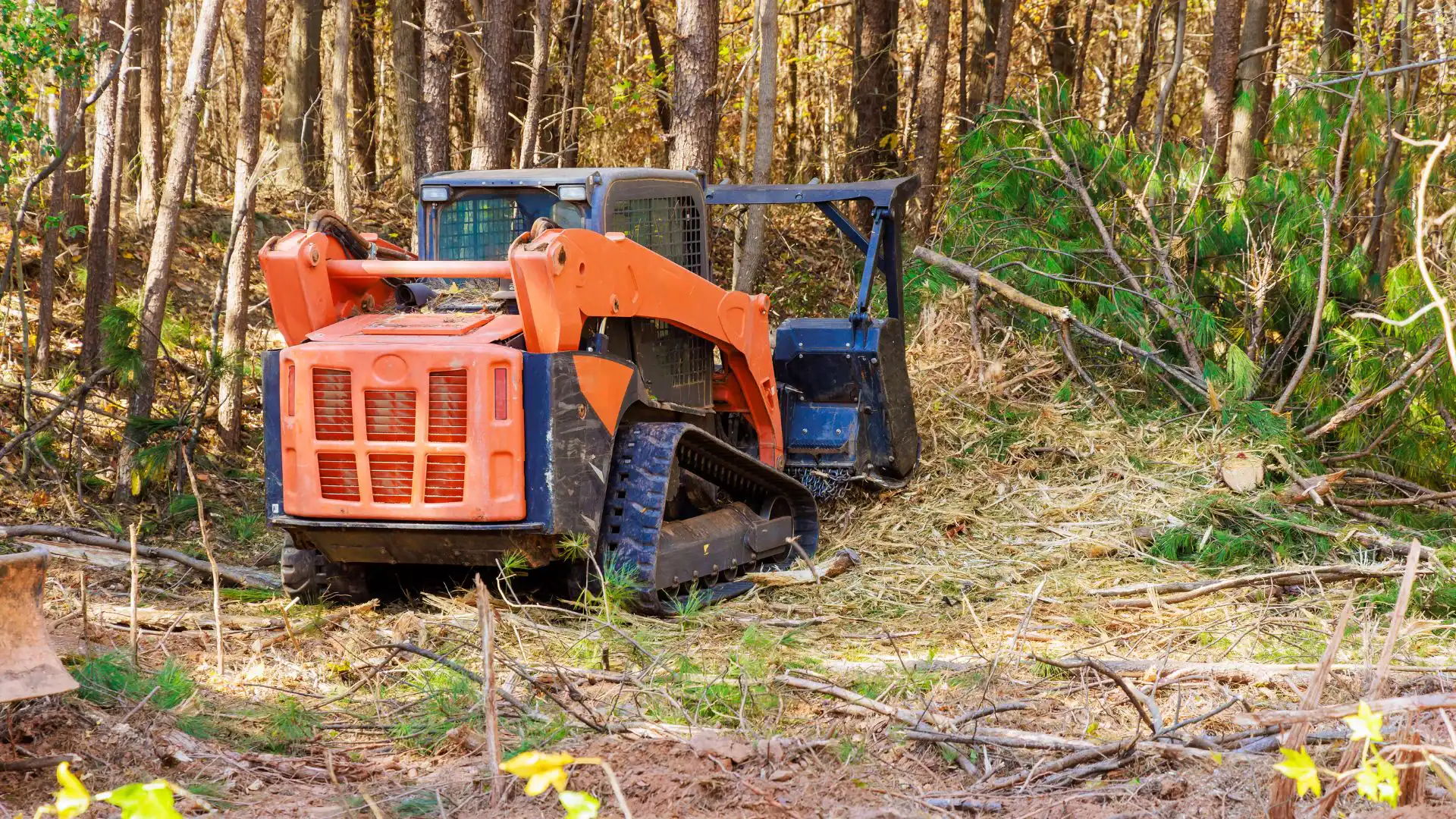
Land clearing in East Setauket covers a lot of ground depending on what you’re dealing with. For some properties, it’s a straightforward brush clearing job overgrown edges, scrub growth along a fence line, vegetation reclaiming a yard that hasn’t been touched in a few seasons. For others, it’s a full land reclamation project: decades of invasive species, downed trees, storm debris, and a lot that looks nothing like the one you bought or inherited.
Our services include land clearing, brush clearing, lot clearing, vegetation removal, stump grinding, and overgrown property clearing handled as a complete scope rather than a handoff between multiple contractors. If your property is near Conscience Bay or any other water body in the East Setauket area, we assess wetland proximity as part of the initial evaluation. Properties within certain distances of freshwater or tidal wetlands require NYSDEC review before clearing, and we factor that in before your timeline is set.
For Three Village homeowners dealing specifically with invasive species bamboo, Oriental bittersweet, porcelain berry, or Japanese knotweed we approach removal at the root level, not just the surface. Suffolk County has some of the most aggressive invasive plant infestations on Long Island, and surface cutting without addressing the root system is money spent twice. We also want to mention that clearing dense brush and overgrown vegetation along your property edges is one of the most effective ways to reduce tick habitat a real and documented concern in Suffolk County, which carries one of the highest Lyme disease rates in the state.
It depends on your lot size and what you’re clearing. Under Brookhaven’s Chapter 70 Tree Preservation ordinance, a Tree Clearing Permit is required for residential properties of two acres or more including contiguous lots under the same ownership. It’s also required for any clearing that goes beyond what was previously approved by the Town, regardless of lot size. If you’re on a smaller residential lot in East Setauket and you’re removing a few trees or clearing brush along a boundary, you may not need a permit. But if you’re not sure, the safest move is to have someone check before work starts because a stop-work order mid-job is far more disruptive than a permit application upfront.
There’s also a separate consideration for properties near water. If your East Setauket property is within 100 feet of a freshwater wetland or 300 feet of a tidal wetland, NYSDEC regulations may apply on top of Brookhaven’s local requirements. Conscience Bay and the Setauket Mill Pond area both create buffer zones that affect what clearing is permissible and where. We assess this as part of every quote.
Clearing costs vary significantly based on lot size, vegetation density, and what the job actually involves. A basic brush clearing job on a smaller residential lot might run a few hundred dollars. A full lot clearing project on a heavily wooded East Setauket property particularly one with established invasive species, significant tree removal, stump grinding, and debris haulage can run several thousand dollars or more depending on scope.
What matters most is that the quote you receive is itemised. Clearing, stump grinding, and debris removal are separate work streams with separate costs, and a quote that bundles them into a single number makes it very easy for that number to grow once work is underway. We break every quote into line items so you know what you’re paying for before you commit. On North Shore Long Island properties, where lots tend to be larger and vegetation denser than in more suburban parts of Suffolk County, that transparency matters more than it might elsewhere.
Late fall through early spring roughly October through March is generally the preferred window for tree removal and heavy clearing work. Trees are dormant, the canopy is down, and ground disturbance to surrounding vegetation is minimized. Brookhaven’s own planning guidance recommends scheduling tree removal during dormancy where possible, and it also tends to be easier to see the full scope of the job without a full leaf canopy blocking sight lines.
That said, spring and summer clearing is common and often necessary particularly for invasive species management. Japanese knotweed and running bamboo are most visible and most aggressively growing between April and August, which is often when property owners finally decide to deal with them. Storm-related clearing doesn’t follow a calendar at all. Long Island’s exposure to nor’easters and summer storm systems means debris clearing can be needed any time between June and November. We work year-round and schedule based on what your property actually needs, not what’s most convenient for us.
This is one of the most common questions we get on North Shore Long Island properties, and it’s worth answering honestly: cutting bamboo without addressing the rhizome network underground does not solve the problem. Running bamboo spreads via underground root systems that can extend 20 feet or more from the visible canes, and cutting the above-ground growth actually stimulates more aggressive regrowth from the root system beneath. Within a single growing season, you’re often back to where you started or worse.
Effective bamboo removal requires excavating the rhizome network, not just cutting the surface. This takes the right equipment and a willingness to go deeper than a standard brush hog pass. It’s one of the reasons bamboo removal is a specialty service in East Setauket and across Suffolk County the equipment and approach are genuinely different from standard clearing. If your East Setauket property has running bamboo along a fence line or boundary, we’ll assess the extent of the rhizome spread during the site visit and quote accordingly. Follow-up treatment may also be recommended depending on how established the root system is.
Yes, but there are regulatory steps that apply specifically to properties near water, and they need to be handled before clearing begins. New York State DEC regulations impose buffer distances around both freshwater and tidal wetlands 100 feet for freshwater, 300 feet for tidal. Any clearing within those buffers requires NYSDEC review and potentially a permit. East Setauket’s coastal geography, particularly around Conscience Bay and Port Jefferson Harbor to the north, means a meaningful number of properties in the area fall within or near these buffer zones.
This isn’t a reason to avoid clearing near water it’s a reason to work with a contractor who checks these things before quoting. We assess wetland proximity as part of every site evaluation in East Setauket. If NYSDEC review is required, we’ll tell you upfront, explain what it means for your timeline, and work through the process alongside you. What we won’t do is start clearing on a coastal property and leave you to deal with a state enforcement notice after the fact.
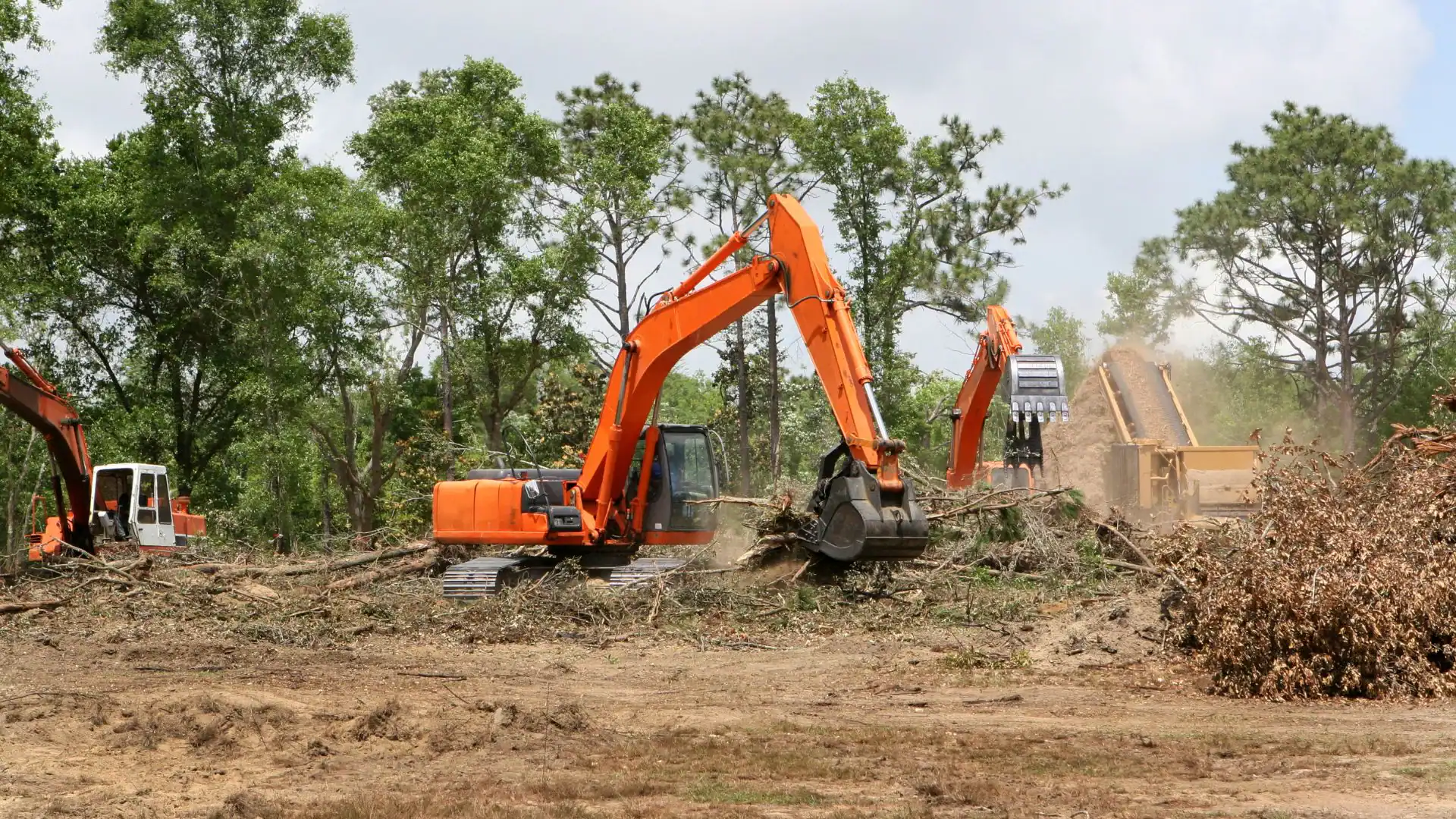
All cleared material is removed from your property or processed on-site through legitimate disposal chipping, hauling, or a combination of both depending on the volume and type of material. This isn’t optional in Brookhaven. Chapter 72 of the Town Code expressly prohibits burying trees, branches, or cleared debris on property within the Town of Brookhaven. That means a contractor who pushes material to the back of your lot and buries it isn’t just leaving you with a mess they’re leaving you with a code violation.
We include debris removal as a standard part of every clearing job in East Setauket, and it’s broken out as a separate line item in your quote so there’s no ambiguity about what disposal is covered. When the job is done, the site is clean cleared, not just cut. For larger jobs involving significant tree volume, we can also discuss whether chipped material has any use on your property before it’s hauled, which occasionally makes sense for mulching or other landscape applications. Either way, you won’t be left managing the aftermath of the clearing yourself.