Hear from Our Customers
Excavation done poorly doesn’t just look bad it costs you. Drainage problems that show up six months after the job, grading that sends water toward your foundation instead of away from it, a stop-work order because the contractor didn’t pull the right permit. These aren’t hypothetical outcomes. They happen regularly on Long Island, and they’re expensive to fix after the fact.
Huntington’s North Shore terrain is genuinely varied. A lot in Centerport or Cold Spring Harbor sits on completely different soil and grade conditions than a parcel in Greenlawn or Huntington Station. The glacial till that runs through the town’s hilly western and northern hamlets West Hills, Fort Salonga, Dix Hills holds water differently than the sandier soils closer to the harbor. A contractor who doesn’t know that difference will move your dirt without understanding what the water is going to do next.
What you actually want is a finished site that works one that drains correctly, sits at the right grade, and holds up after the first heavy rain. That’s the outcome that matters, and it’s the standard every project we complete is built around.
We’re a Long Island-based excavation contractor with direct experience across the full range of Huntington’s communities from the estate-scale waterfront properties of Lloyd Harbor and Huntington Bay to the established residential neighborhoods of East Northport, Greenlawn, and Melville. We’re not routing your call through a national network. When you reach out about a project in Huntington, you’re talking to someone who has actually worked this terrain.
Every project comes with full licensing and insurance you can verify, written quotes that say exactly what’s included, and operators who understand the specific compliance requirements of the Town of Huntington including the grading permit process under Chapter 87 and the street excavation permit administered through the Superintendent of Highways. That’s not a bonus feature. It’s how professional excavation work gets done in Suffolk County without putting your project or your property at risk.

It starts with a site assessment not a generic quote over the phone. Huntington’s terrain varies enough that the conditions on your specific lot matter before any number gets put on paper. Slope, soil type, proximity to water, existing drainage, access for equipment all of it gets evaluated before we commit to a scope or a price. That’s how you avoid the surprise invoice that looks nothing like the original quote.
Once scope is confirmed, permits come before any machine touches the ground. In the Town of Huntington, that means understanding when a grading permit is required under Chapter 87, whether your project involves any street excavation that requires a separate permit through the Superintendent of Highways, and whether your property’s proximity to tidal water or wetlands common in hamlets like Halesite, Centerport, or Eatons Neck triggers additional DEC review. We also contact 811 before every dig, without exception. New York State law requires it, and in a town with decades of utility infrastructure running under established neighborhoods, it’s not a step you skip.
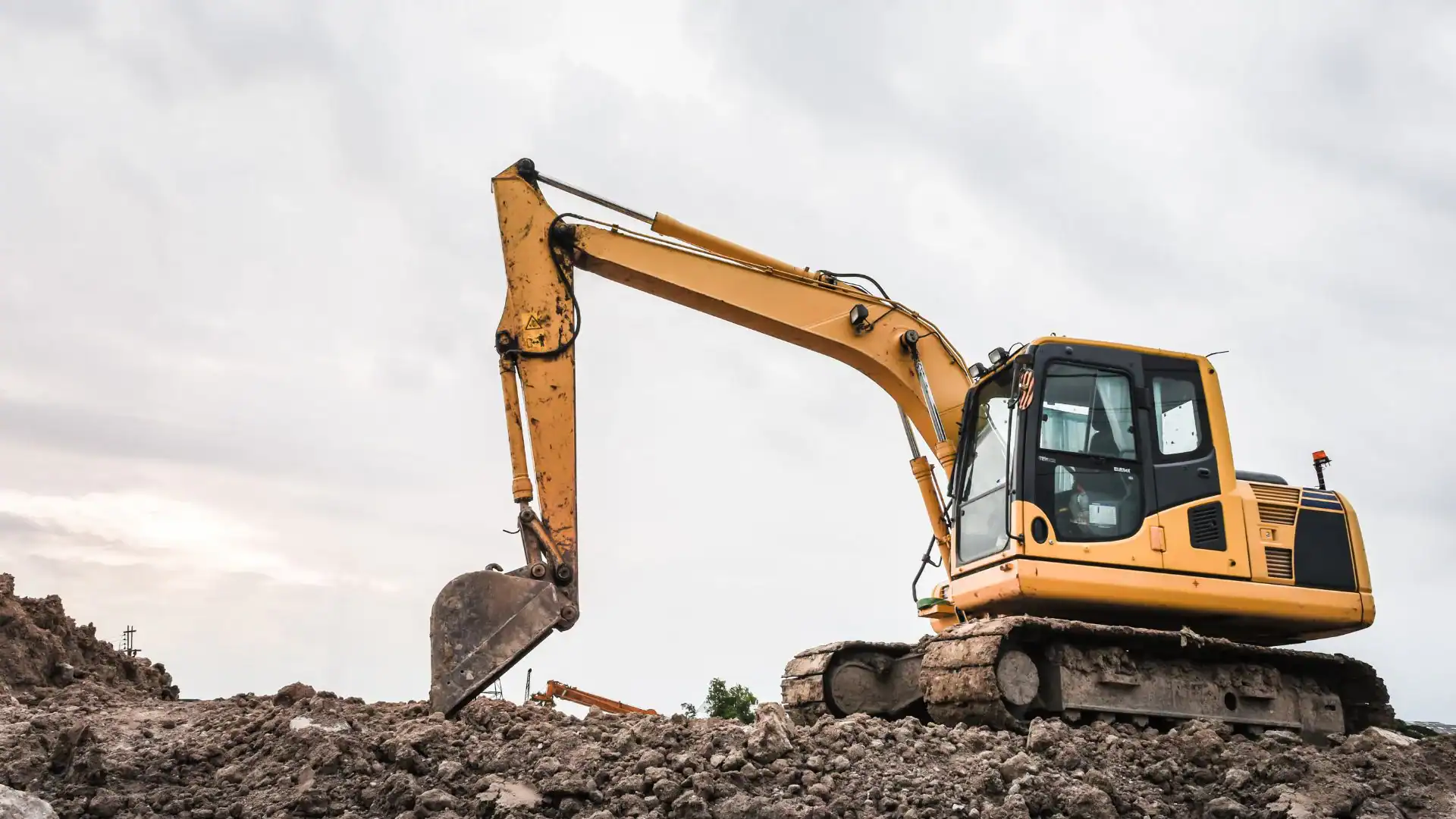
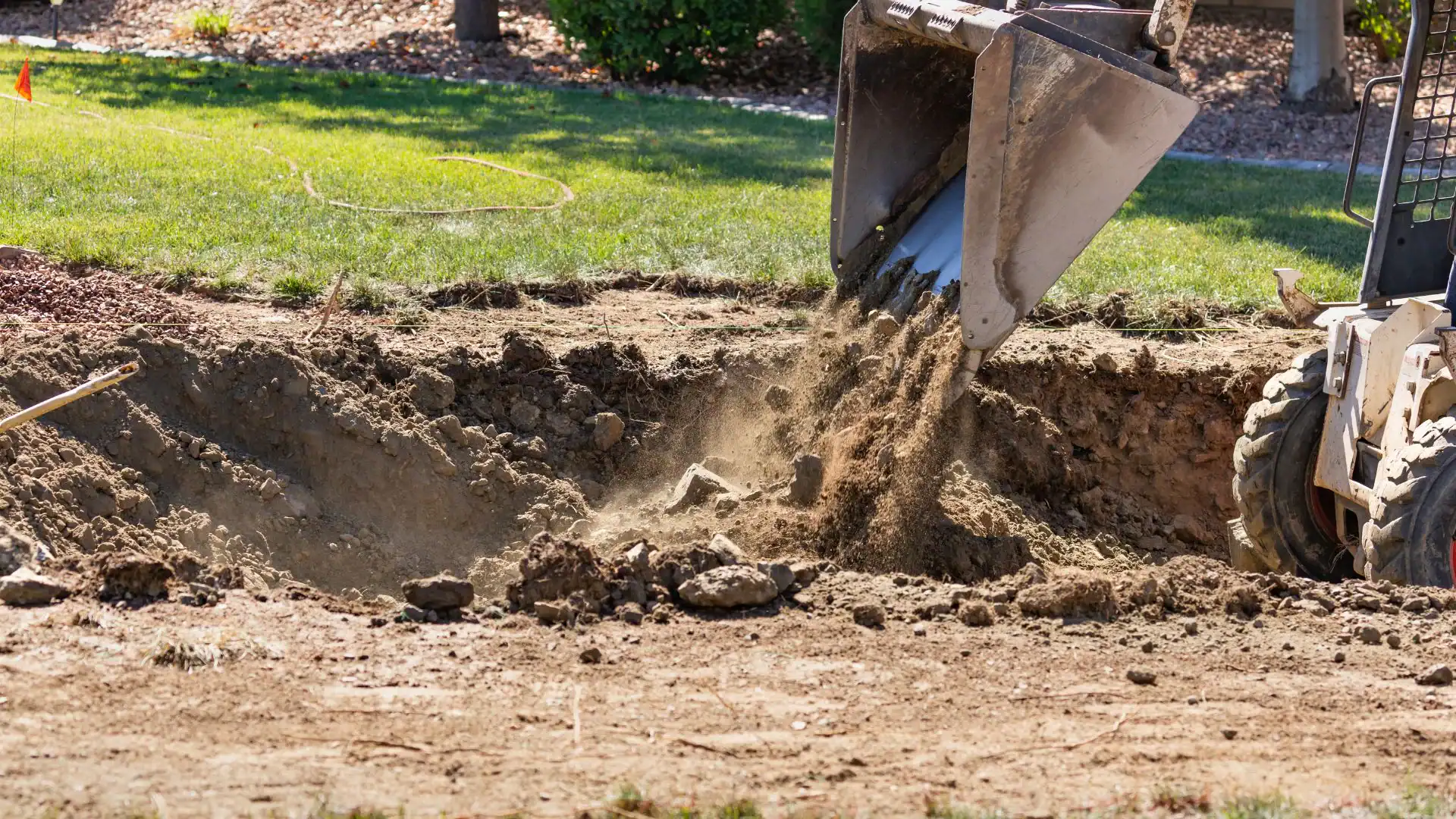
From there, the work proceeds in a clear sequence excavation, spoil removal, grading to finished levels, and site cleanup. You know what’s happening and when, and the finished site is left in a condition that’s ready for whatever comes next.
Ready to get started?
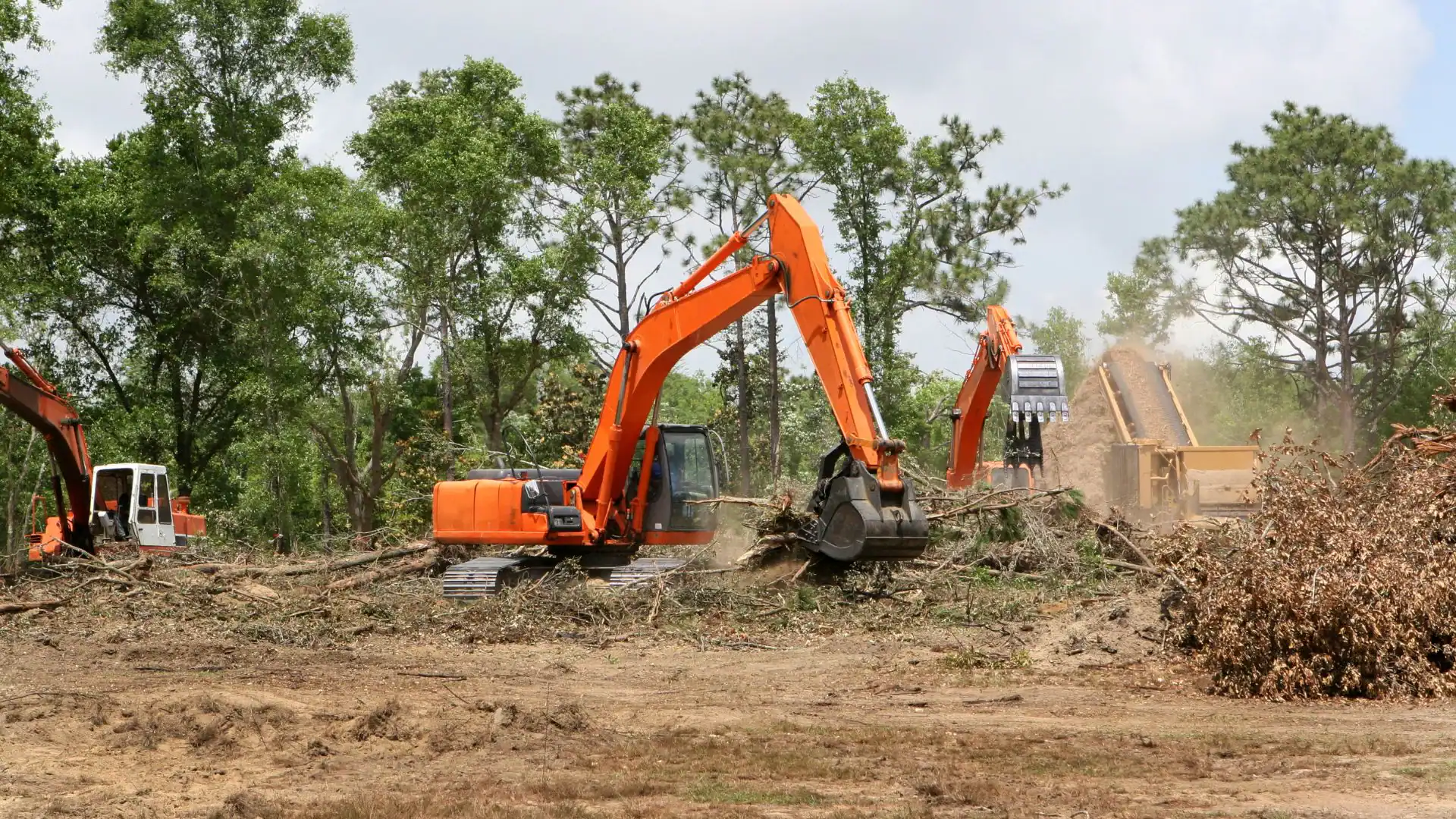
We handle the full range of residential and commercial excavation services in Huntington site preparation for new construction, foundation excavation, land clearing, cut and fill work, dig and haul services, drainage excavation, drywell installation, retaining wall excavation, and grading. Whether you’re building on a flat Melville lot or cutting into a steep wooded hillside in West Hills, the scope of work adapts to what your site actually requires.
Drainage work is a particular focus in Huntington for good reason. The clay-bearing glacial till soils common across the town’s northern and western hamlets drain poorly, and sloped properties in areas like Dix Hills, Fort Salonga, and Cold Spring Harbor compound the problem. Suffolk County’s groundwater-dependent water supply also means drywells are the primary stormwater management tool across the region and they need to be sized, placed, and excavated correctly to function. We approach every drainage-related excavation with the finished water management outcome in mind, not just the dirt removal.
For commercial and institutional projects site preparation along the Route 110 corridor in Melville, infill development in Huntington Station, or institutional construction near Cold Spring Harbor Laboratory the same professional standard applies. Clear scope, verifiable credentials, permit compliance, and a finished site that’s ready for the next phase of your project.
In most cases, yes. Under Chapter 87 of the Town of Huntington’s municipal code, it’s unlawful to regrade, alter, or change the contour or topography of any land including filling depressions or excavating without a grading permit issued by the Department of Engineering Services. The requirement applies broadly, including to properties in the town’s designated Hillside Areas, which cover a significant portion of the hilly western and northern hamlets like West Hills, Fort Salonga, and parts of Cold Spring Harbor.
There are limited exceptions primarily for work performed in conformance with an already-approved subdivision or site plan that has an active building permit. But for standalone grading, drainage work, or excavation on a residential lot in Huntington, you’ll typically need a permit before any work begins. Contractors who skip this step are leaving you exposed to stop-work orders and remediation costs. We handle the permit process as part of the project, not as an afterthought.
Excavation pricing in Huntington varies based on site conditions, project scope, spoil volume, and access and the terrain variability across the town means there’s a real difference between what a straightforward lot in Greenlawn costs versus a steep, wooded parcel in Dix Hills or a waterfront property in Lloyd Harbor that requires environmental review before work can begin.
For a standard residential dig a foundation excavation, pool excavation, or drainage project on a typical Huntington suburban lot you’re generally looking at a range that starts in the low thousands and scales with scope, soil conditions, and haul distance. Projects involving significant cut and fill work, rock or clay subsoil, or permit-required environmental review will run higher. The most important thing you can do is get a detailed written quote that specifies exactly what’s included spoil removal, grading to finished grade, site cleanup so the final invoice isn’t a surprise. That’s the standard we hold ourselves to on every Huntington project.
Yes, and it’s something to get ahead of early. Huntington has a significant number of properties near tidal waters, harbors, and wetlands particularly in waterfront communities like Halesite, Centerport, Eatons Neck, Lloyd Harbor, and Huntington Bay. Excavation near these areas can trigger additional review requirements from the New York State Department of Environmental Conservation, and in some cases a jurisdictional determination from the U.S. Army Corps of Engineers may be required before work can begin.
These aren’t insurmountable hurdles, but they do add time to the pre-construction process, and a contractor who doesn’t flag them upfront can put your project significantly behind schedule. We identify potential environmental review requirements during the initial site assessment before scope is finalized and before any permits are pulled so you’re not discovering a DEC requirement after you’ve already committed to a construction timeline.
Yes and this applies to every excavation project in New York State, without exception. New York 811 is the statewide utility notification service, and contractors are legally required to contact them before breaking ground so underground utilities can be located and marked. This covers gas lines, electrical conduit, telecommunications, water mains, and stormwater infrastructure.
In Huntington’s established neighborhoods many of which were built out during the postwar suburban boom of the 1950s and 1960s utility infrastructure has been in the ground for decades, and it isn’t always precisely where the maps say it is. Striking an unmarked gas line or electrical conduit isn’t just a project delay it’s a liability event that falls on the property owner when the contractor isn’t properly insured or didn’t follow the law. We contact 811 before every dig, document the markings, and adjust our excavation plan accordingly. It’s a non-negotiable step on every job we take.
The primary construction window on Long Island runs from roughly May through October, and that’s when excavation contractors in Huntington book up fastest. If you have a project planned for spring or summer, reaching out in late winter gives you the best chance of securing your preferred start date especially for larger or more complex jobs that require permitting lead time.
Ground freeze is a real constraint from mid-December through late February in most years. While Huntington’s coastal location moderates temperatures somewhat compared to inland areas, frozen ground can delay or complicate excavation and affect site stability. Spring saturation from snowmelt and April rainfall is also a factor, particularly on the clay-bearing soils common in the town’s hilly hamlets where water moves slowly. Projects that begin in late April or early May on those sites need to account for potentially saturated conditions in the first few weeks. We factor all of this into project scheduling so you’re not hit with avoidable delays.
Yes, and you should make sure your contractor does both not just one. A common issue with lower-tier operators on Long Island is that they’ll complete the excavation and leave the spoil on site, either because they don’t have a haul arrangement or because they quoted the dig without including removal. That leaves you responsible for finding a separate hauler, coordinating a second mobilization, and potentially dealing with a pile of material sitting on your property longer than expected.
We handle dig and haul as a complete service. Spoil is removed from your Huntington property and disposed of properly not stockpiled on a neighboring lot or left at the curb. For projects in tighter neighborhoods like Huntington Village surrounds, East Northport, or Halesite where lot boundaries are close and neighbors are nearby, clean site management isn’t just professional courtesy it’s a practical necessity. Your written quote will specify exactly what’s included in spoil removal so there’s no ambiguity about what leaves the site and when.