Hear from Our Customers
Most excavation problems don’t start in the ground. They start with a contractor who didn’t account for the site conditions, didn’t pull the right permits, or didn’t understand what they were getting into on a wooded East Hampton lot. By the time that becomes obvious, you’re already behind schedule and over budget.
Northwest Harbor’s terrain is genuinely different. The soils here are glacially deposited a mix of sandy outwash and heavier till with boulders buried in places you won’t find until the bucket hits them. The lots in Northwest Woods are large, the roads are narrow, and a significant portion of the hamlet sits within or near regulated wetland areas governed by the DEC and the East Hampton Town Trustees. That’s not a reason to avoid a project it’s a reason to hire someone who’s done this work here before.
When the site assessment is done right, the permits are handled correctly, and the equipment is matched to what the job actually requires, you get a finished site that’s ready for the next phase. No stop-work orders. No surprise invoices. No cleanup calls to a second contractor to fix what the first one got wrong.
We serve the East End with a clear understanding of what makes excavation work in Northwest Harbor different from anywhere else in Suffolk County. The Town of East Hampton has its own building department, its own Trustees with jurisdiction over coastal and tidal areas, and a clearing envelope requirement that means a licensed surveyor has to stake your property before clearing work can even begin. That’s not something you learn from a generic contractor it’s something you learn from doing this work in this town.
Whether the project is a new custom build on a wooded lot off Northwest Road, a pool excavation near Three Mile Harbor, or site preparation for a major renovation in Northwest Woods, we assess the site honestly, coordinate the permits properly, and execute the work with the precision that a property in this market demands. The clients working in Northwest Harbor have invested significantly in these properties. That matters, and it shows in how we approach every job.

It starts with a real site visit not a phone estimate. Northwest Harbor lots vary too much for guesswork. The soil conditions, the proximity to wetlands, the tree canopy, the road access for equipment all of it gets assessed before any quote is written. That’s how you get a number that actually reflects the job, not one that falls apart when the machine hits a boulder three feet down.
From there, permitting gets sorted. Depending on the project, that may mean a building permit from the Town of East Hampton, a Trustees permit if the work is near the waterfront or tidal areas, and in some cases a DEC wetlands permit under Article 24 or Article 25. If clearing is involved, the clearing envelope survey needs to be in place before work begins that’s a Town of East Hampton requirement under Chapter 107, and skipping it creates problems that are expensive to fix after the fact.
Once permits are confirmed and the site is properly set up with erosion controls which matter here given how close many Northwest Harbor properties are to Gardiners Bay and Three Mile Harbor excavation proceeds in a sequence that’s been planned, not improvised. Land clearing where needed, excavation to the required depth and grade, spoil removal, and final grading to achieve the drainage and elevation the project calls for. The goal at the end is a site that’s ready for the next contractor, not one that needs remediation first.
Ready to get started?
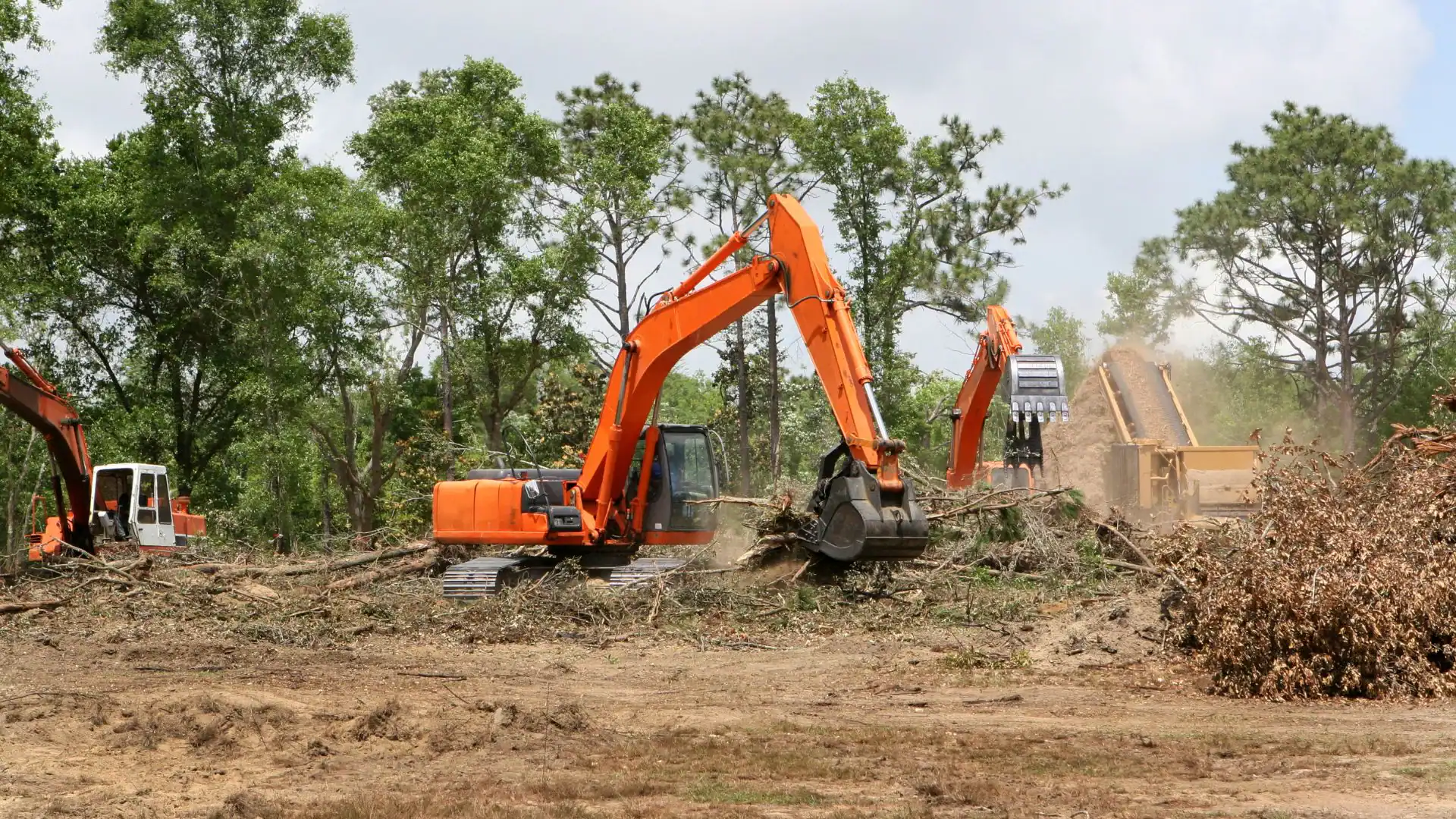
We handle the complete range of excavation and site preparation work that Northwest Harbor projects require. That includes land clearing within the permitted envelope on wooded Northwest Woods lots, foundation excavation for new custom builds, pool excavation, cut and fill grading, trenching for utilities and drainage, and dig and haul for spoil removal. When the full earthworks scope runs through one contractor, the coordination is cleaner, the timeline is tighter, and there’s one clear point of accountability if anything needs to be addressed.
Every project in this area gets treated with the environmental compliance it requires. Erosion and sediment controls are standard on every site not optional add-ons because the proximity to tidal waterways in Northwest Harbor means runoff isn’t just a regulatory issue, it’s a practical one. Mature trees outside the clearing envelope are protected. Equipment is selected with access in mind, because getting a large machine down Old Northwest Road or Cedar Point Road without damaging road edges or neighbouring properties takes planning, not just horsepower.
The clients working in this market whether they’re homeowners, architects, or builders managing a luxury new build expect a contractor who operates at the level the project demands. That’s the standard we hold every job to.
In most cases, yes and in Northwest Harbor specifically, the permitting picture is more layered than in most other Long Island communities. A standard building permit from the Town of East Hampton is required for construction-related excavation, including foundations, pools, and significant grading work. But depending on where your property sits, you may also need a permit from the East Hampton Town Trustees if the work is near the waterfront, tidal flats, or coastal areas which applies to a meaningful portion of Northwest Harbor given its position between Gardiners Bay and Three Mile Harbor.
If the project involves clearing vegetation, the Town requires a licensed surveyor to stake the clearing envelope before the permit is issued that’s a specific East Hampton requirement under Town Code Section 107-7B(h) that doesn’t exist in most other municipalities. And if the site is near a regulated wetland, a DEC permit under Article 24 or Article 25 may also be required. The short answer is: don’t assume. The permit requirements here are real, the enforcement is active, and working without the right approvals creates problems that are far more expensive than the permits themselves.
Significantly, and it’s one of the most common reasons excavation quotes fall apart on the East End. Northwest Harbor sits on the Harbor Hill Moraine the terminal moraine left by the last glacial advance which means the soils here are a mix of sandy outwash deposits and heavier glacial till with boulders and cobbles buried at unpredictable depths. In some areas of Northwest Woods the digging is relatively straightforward. In others, you hit rock or dense till well before you reach your target depth, which changes both the equipment requirements and the time on site.
We quote a Northwest Harbor excavation only after a proper site visit. The only way to produce an accurate number is to assess the actual conditions soil type, drainage characteristics, depth to any obstructions before writing the proposal. That’s how you avoid the situation where the original quote doubles by the time the job is done. It also affects timeline: boulder removal, for example, requires different equipment and more time than a clean sandy dig, and that needs to be factored into the project schedule from the start, especially if you’re working toward a spring completion date before the summer season.
The clearing envelope requirement is one of the most important and most frequently overlooked regulatory details for excavation and land clearing projects in the Town of East Hampton. Under Town Code Section 107-7B(h), any building permit application that involves vegetation removal must include a staked survey prepared by a licensed land surveyor that identifies the permitted clearing limits for the property. You cannot begin clearing until that survey is in place and the permit is issued.
This requirement exists specifically to protect the wooded character of hamlets like Northwest Woods, and the Town enforces it. If clearing happens outside the staked envelope even accidentally the remediation requirement can be significant and costly. For property owners working on new builds or major renovations in Northwest Harbor, this means the surveyor needs to be engaged early, before the excavation contractor mobilises. It’s not a step that can be done in parallel with clearing it has to come first. A contractor who doesn’t flag this upfront is either unfamiliar with East Hampton’s code or isn’t being straight with you about what the process actually involves.
Spring and fall are the primary windows, and the spring window in particular is critical for anyone working toward a summer completion. The Hamptons construction calendar runs on a rhythm that most property owners here already understand: projects need to be substantially underway or complete before the summer season begins around Memorial Day. That means excavation and site preparation work ideally happens between March and mid-May, which gives downstream trades enough time to follow. Booking that spring slot requires planning in fall or winter, because contractors with real experience on the East End fill their spring schedules early.
Fall September through November is the other productive window. The summer crowds have cleared, the ground is still workable, and many property owners use this period to get site prep done so construction can begin the following spring. Winter excavation is possible on Long Island but comes with real constraints: the ground can freeze in December through February, saturated soils in late winter create access and erosion challenges, and coastal nor’easters can shut down outdoor work for days at a time. Northwest Harbor’s exposed position on the peninsula makes it more susceptible to storm disruption than inland communities, so winter scheduling carries more risk.
Yes, and this is one of the most important questions to answer before any work begins on a waterfront or near-waterfront property in Northwest Harbor. The New York State DEC has jurisdiction over tidal wetlands under Article 25 and freshwater wetlands under Article 24. Any excavation, grading, filling, or clearing within the regulated buffer areas of these water bodies which includes the shoreline areas around Three Mile Harbor, Gardiners Bay, and the tidal wetlands throughout the hamlet requires a DEC permit before work can start.
In addition to the DEC, the East Hampton Town Trustees have their own jurisdiction over the town’s tidal and coastal areas. The Trustees are one of the oldest continuously operating governing bodies in the United States, and they take their role seriously. Work near the waterfront in Northwest Harbor that doesn’t have Trustees approval is a real compliance risk not a theoretical one. The practical implication is that waterfront and near-waterfront projects in this hamlet require more lead time for permitting than inland sites, and that timeline needs to be built into the project schedule from the beginning, not treated as an afterthought.
The baseline is licensing and insurance a contractor working in New York State should be able to provide verifiable proof of both without hesitation. But in East Hampton specifically, the more telling question is whether they actually know the local regulatory environment. Ask them directly: Are you familiar with the clearing envelope requirement under Town Code Section 107-7B(h)? Have you worked with the East Hampton Town Trustees permit process? Do you understand what triggers a DEC wetlands review on a South Fork property? A contractor who knows this area will answer those questions clearly and specifically. One who doesn’t will give you something vague.
Beyond credentials, look at how they quote the job. A contractor who gives you a number over the phone without visiting the site hasn’t assessed the soil conditions, the access constraints, or the proximity to regulated areas all of which directly affect what the job actually costs in Northwest Harbor. A written quote that clearly defines what’s included, how scope changes will be handled, and what the project timeline looks like is a basic professional standard. In a market where the properties are worth what they’re worth here, the cost of hiring the wrong contractor is never just the original invoice.