
Hear from Our Customers
A dry basement isn’t just more usable space. It’s a healthier home, a more efficient one, and a significantly more valuable one especially in Farmingville, where homes are regularly clearing $500,000 and buyers’ inspectors flag moisture problems before the ink dries on an offer.
Farmingville sits on dense, clay-heavy soil that holds water against your foundation for days after a storm. That sustained pressure is what forces moisture through concrete walls and floors not a single heavy rain, but the slow, relentless saturation that follows it. Once that’s addressed properly, you stop fighting the same battle every spring.
There’s also the air quality side of this that most people don’t think about until it’s a problem. A damp basement raises humidity throughout the entire house, which means your HVAC works harder, your energy bills creep up, and the conditions for mold growth are always present. For families in the Sachem school district with kids in the house, that’s a real health concern. Fixing the basement fixes more than the basement.
We don’t quote basement waterproofing jobs over the phone, and we don’t show up with a pre-decided system before we’ve looked at your foundation. Every job starts with a thorough in-home inspection walls, floor, drainage patterns, any visible cracking or moisture evidence because the right fix depends entirely on where the water is actually coming from.
We work throughout Suffolk County and know Farmingville specifically: the terrain variation around Bald Hill, the drainage patterns near the Medford border, the Brookhaven permit requirements that apply to foundation work in this town. That local familiarity matters when you’re diagnosing a problem that’s driven by soil, slope, and a 50-year-old foundation.
You’ll get a written estimate, a clear explanation of what we found and why we’re recommending what we’re recommending, and a warranty that’s documented and transferable if you ever sell. No pressure, no same-day close, no inflated scope.
It starts with a free in-person inspection. We walk the basement, examine the foundation walls and floor, check for efflorescence, active cracks, and moisture patterns, and assess the exterior drainage situation around your home. For homes near the lower slopes of Bald Hill or in sections that drain toward Medford, that exterior assessment matters gravity-driven water movement affects which solution actually works for your specific lot.
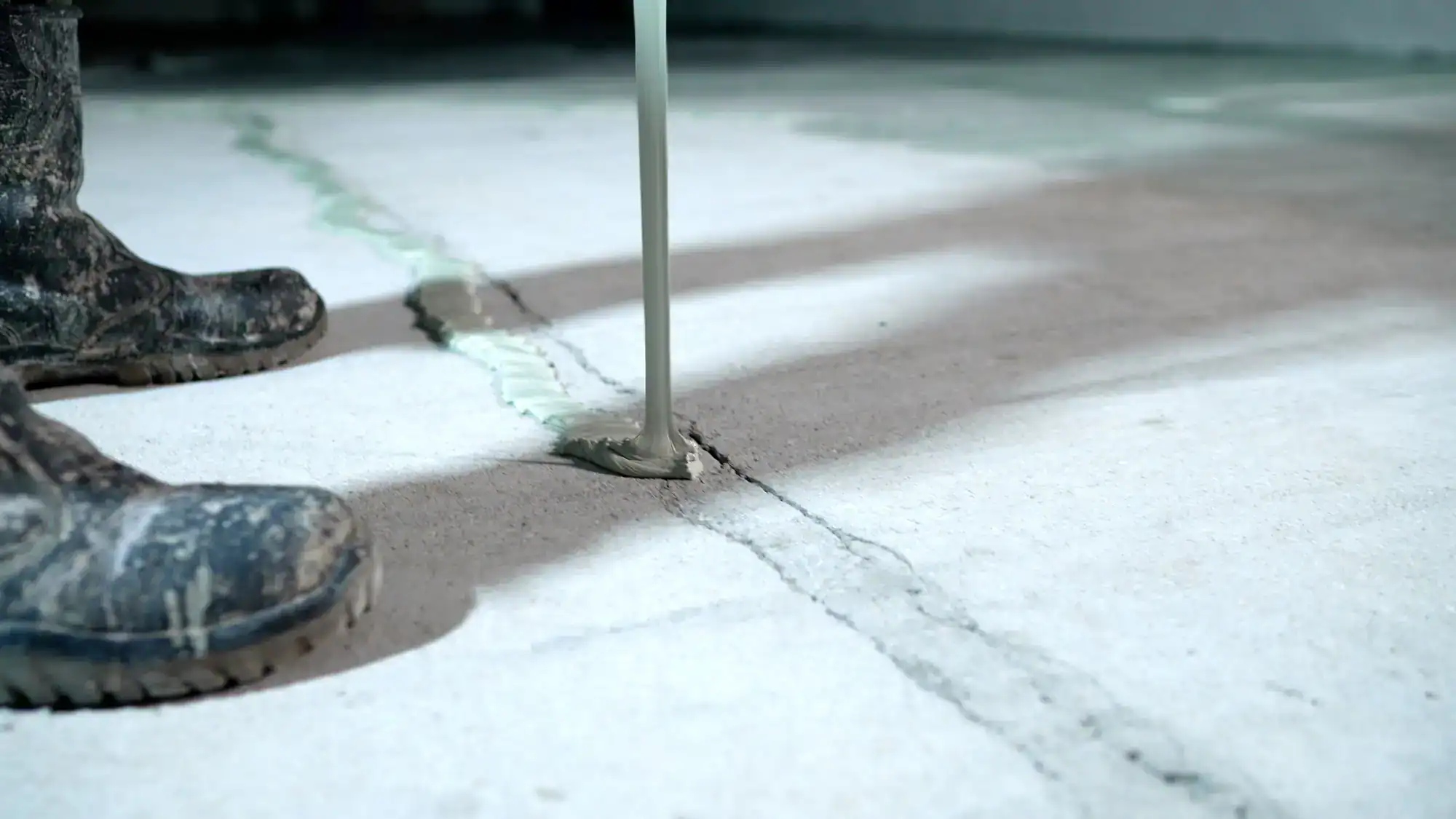
From there, we put together a written estimate that breaks down exactly what’s being done and why. If foundation crack sealing is the right move, we use epoxy or polyurethane injection depending on the crack type both bond to the concrete and restore integrity before the next freeze season widens the gap further. If the water table is the bigger issue, an interior drainage system installed at the base of the foundation wall intercepts water before it reaches the floor and channels it to a sump basin. We’ll also make sure your sump pump discharge is directed to the yard or a dry well, as required under Suffolk County stormwater rules not into the sanitary sewer, which is a code violation that can surface at resale.
Work is scheduled at your convenience, completed cleanly, and followed up with documentation of everything that was done. If the scope requires a permit from the Town of Brookhaven, we handle that process on your behalf.
Ready to get started?
The most common issues we find in Farmingville homes are active foundation cracks, chronic wall seepage from hydrostatic pressure, and sump pumps that are either undersized, aging, or running without a battery backup. These aren’t random problems they’re predictable outcomes of 50-year-old concrete foundations sitting in clay-heavy soil with a shallow water table underneath them.
Foundation crack sealing typically runs $800–$1,500 per crack and stops the freeze-thaw cycle from compounding the damage every winter. Interior drainage systems with a sump pump generally fall in the $4,500–$10,000 range depending on the basement footprint and the severity of the water intrusion. Sump pump installation alone, if the drainage system is already in place, runs $600–$1,900. These aren’t small numbers but compare them to $2,000–$6,000 in mold remediation, or $10,000–$30,000 in structural foundation repair, and the math gets clear fast.
For Farmingville homeowners specifically, battery backup sump pump installation is something we recommend seriously. When a Nor’easter knocks out power which happens your primary pump goes down at exactly the moment it needs to run. A battery backup system keeps the basement protected through the outage. We also waterproof basement walls using interior membrane systems where appropriate, and we assess exterior grading and downspout discharge as part of every job, because those surface-level fixes sometimes eliminate the need for more invasive work entirely.
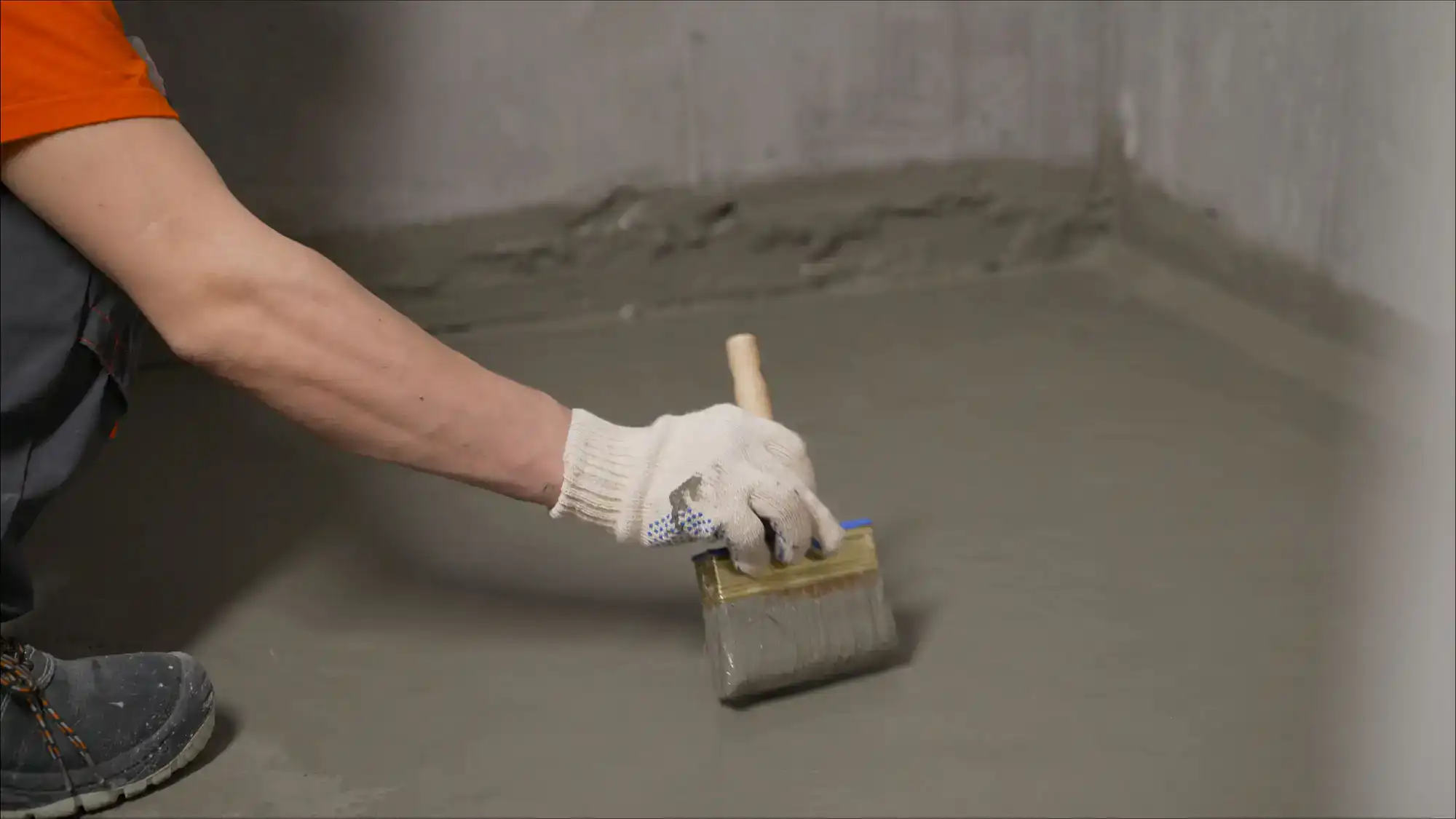
The short answer is soil and pressure. Farmingville sits on dense clay soil that absorbs water slowly and holds it against your foundation for an extended period after a storm sometimes days. That sustained saturation creates hydrostatic pressure, which is the force water exerts against your foundation walls and floor as it looks for the path of least resistance. Concrete isn’t perfectly sealed, especially after 50 years, so that path usually runs through a crack, a joint, or a porous section of the wall.
Snowmelt adds another layer to this. When a Nor’easter drops significant snow and temperatures rise quickly, the ground thaws faster than it can drain. That water has nowhere to go but sideways and the side it goes toward is often your foundation. If your basement gets wet specifically during or right after those events, that’s a drainage and pressure problem, not just a crack problem. The fix needs to address both.
It depends on what the inspection finds, and anyone who gives you a firm number over the phone before seeing the basement isn’t being straight with you. That said, here are honest ranges so you know what you’re evaluating: foundation crack sealing runs $800–$1,500 per crack; interior drainage systems with a sump pump typically fall between $4,500 and $10,000 for a standard Farmingville ranch or cape cod; and sump pump installation alone is $600–$1,900 if the drainage infrastructure is already in place.
The more useful comparison is what deferred maintenance costs. Mold remediation after water damage averages $2,000–$6,000 and grows every season you wait. Structural foundation repair the kind that becomes necessary when crack damage compounds over years of freeze-thaw cycles runs $10,000–$30,000. In Farmingville, where home values are averaging $481,000 and climbing, the waterproofing investment is asset protection more than it is a repair bill.
It depends on the scope of work. In the Town of Brookhaven which governs all permits for Farmingville certain foundation-related work does require a building permit, particularly if it involves structural modifications or the installation of an interior drainage system. Cosmetic crack sealing on a non-structural level typically doesn’t trigger a permit requirement, but more involved work often does.
This is one of the areas where working with a contractor who knows Brookhaven’s process matters. We handle permit applications and inspection scheduling on your behalf when required, so you’re not navigating that on your own. It also protects you at resale unpermitted foundation work can become a problem during a buyer’s inspection, and in a market like Farmingville where homes are selling at strong values, that’s not a complication you want. We make sure everything is documented and code-compliant from the start.
Efflorescence is the white, chalky residue you sometimes see on concrete or block foundation walls. It forms when water moves through the concrete, dissolves the salts inside it, and then deposits them on the surface as the water evaporates. It’s not structurally dangerous on its own, but it’s one of the clearest signals that water is actively moving through your foundation walls which means the problem is already happening, even if you haven’t seen standing water yet.
In Farmingville homes built in the 1960s and 70s, efflorescence often shows up on concrete block foundations where the original parging the mortar coating applied to the exterior of the block has deteriorated over decades. Once that coating breaks down, the blocks themselves become the primary barrier against moisture, and they’re not designed to handle that load alone. If you’re seeing efflorescence, it’s worth having the foundation inspected before the next wet season, not after.
For most Farmingville homeowners, yes and here’s the specific reason why. The times your sump pump works hardest are during heavy storms, rapid snowmelt events, and Nor’easters. Those are also the exact conditions under which Long Island’s power grid is most likely to go down. A primary sump pump that runs on electricity is useless the moment the power cuts out, which means the basement that most needs protection is the one that’s most exposed during an outage.
A battery backup system runs independently of your home’s power and kicks in automatically when the primary pump loses power or when water volume exceeds what the primary can handle. For a home in Farmingville with clay-heavy soil, a shallow water table, and a 50-year-old foundation, that’s not a luxury feature it’s the difference between a dry basement and a flooded one after a bad storm. The cost is modest relative to what a single flood event can do to a finished basement, HVAC equipment, or personal property stored below grade.
The honest answer is that most Farmingville homeowners end up with interior waterproofing, and there are practical reasons for that. Exterior waterproofing excavating around the full perimeter of the foundation, applying a waterproofing membrane, and installing drainage board is the most comprehensive approach, but it’s also the most invasive and expensive. It also requires careful planning around cesspools and septic systems, which are nearly universal in Farmingville since most of the hamlet isn’t served by public sewer. Excavating near a cesspool without accounting for it is a serious problem.
Interior waterproofing manages hydrostatic pressure from inside the basement by intercepting water at the base of the foundation wall before it reaches the floor and routing it to a sump system. For the vast majority of Farmingville homes standard ranches and cape cods on standard lots with aging concrete or block foundations interior drainage is the right call. It’s effective, less disruptive, and addresses the actual mechanism driving water into the basement. We assess both options during the inspection and recommend based on what we actually find, not on which approach carries a higher ticket price.