
Hear from Our Customers
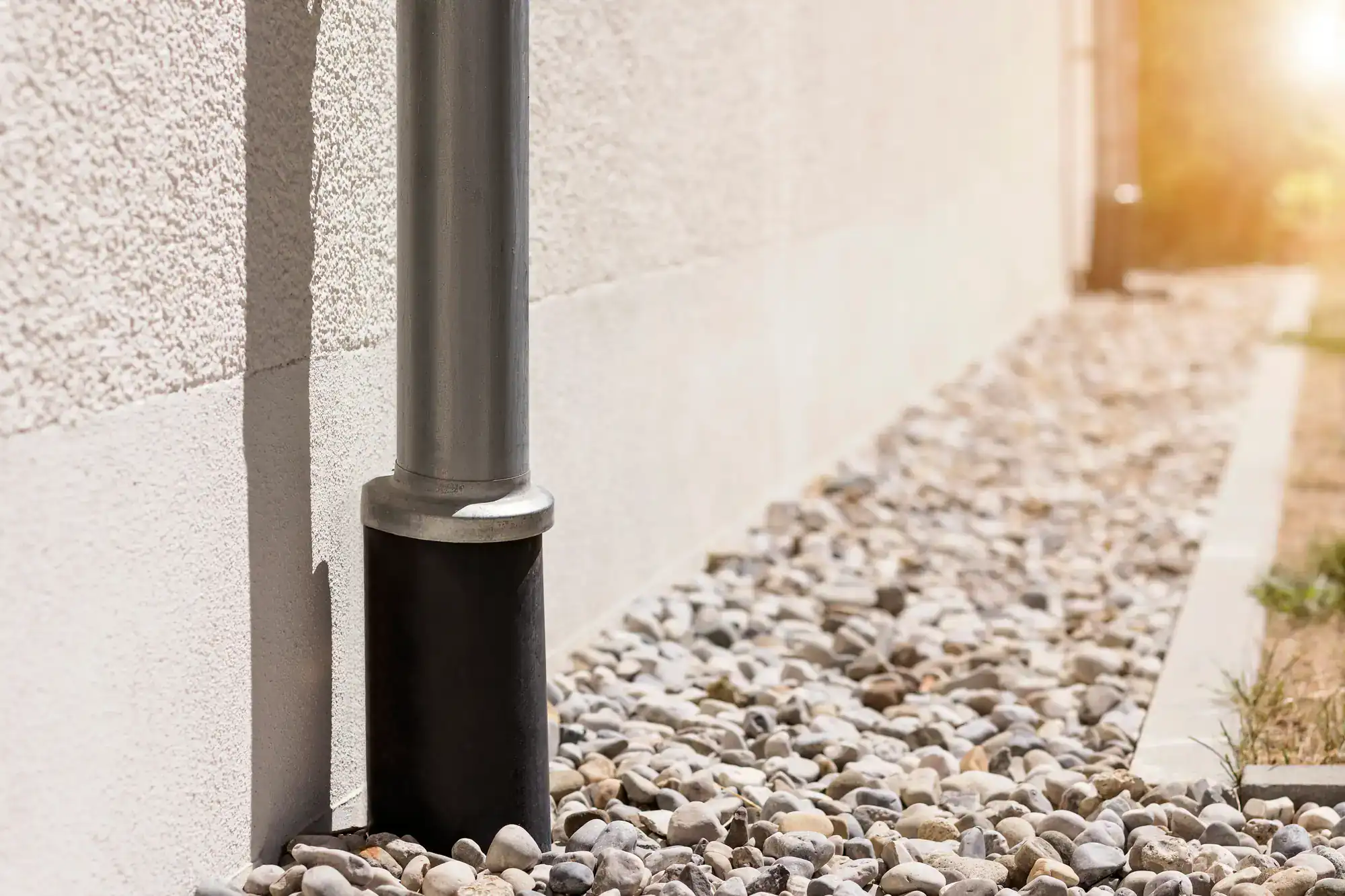
When a French drain system is installed correctly, the difference shows up fast and it holds. That corner of the yard in East Setauket that turns into a pond every March? Gone. The basement wall that sweats after every nor’easter? Dry. You get your yard back, your basement back, and the peace of mind that comes with knowing your home is protected before the next storm rolls in off Long Island Sound.
East Setauket’s housing stock tells part of the story. Close to half the homes here were built before 1970, and the original drainage infrastructure if there was any is long past its useful life. Clay tile systems from the 1950s and 60s crack, clog with roots and silt, and eventually stop working entirely. A modern French drain system replaces that aging infrastructure with perforated PVC pipe, geotextile filter fabric, and properly graded outlets that move water away from your foundation the way the original system never could.
The financial side matters too. With median home values near $860,000 in East Setauket, a wet basement isn’t just a nuisance it’s a liability. Foundation repair in this region runs $15,000 to $50,000. Mold remediation starts around $3,000 and climbs quickly. A properly installed French drain system that lasts 30 to 40 years is one of the most straightforward protective investments you can make in a home at this price point.
We’re a Long Island drainage contractor that works specifically in the conditions you’re dealing with in East Setauket clay-heavy North Shore soils, older homes with failing original drainage, and spring storm seasons that push saturation levels to the limit. This isn’t a general landscaping company that installs drains on the side. Drainage is the work.
The Three Village area has a specific drainage profile that generic contractors don’t always understand. The Harbor Hill Moraine underlying East Setauket behaves differently than the sandy outwash soils on the South Shore water doesn’t percolate, it pools, and it pushes toward whatever’s lowest on the property. Knowing that changes how a system gets designed and installed.
Every project starts with a free on-site assessment a real look at your yard, your soil, your grading, and where the water is actually coming from. That’s the only honest way to tell you what your property needs and what it’s going to cost.
It starts with a site visit. Before anything gets quoted or scheduled, we do a drainage assessment on your property walking the yard, reading the grading, identifying where water is entering and where it needs to go. In East Setauket, that assessment almost always includes evaluating soil depth to clay, checking for any existing drainage infrastructure, and confirming the right outlet point for the system. A phone quote isn’t a real quote for this type of work.
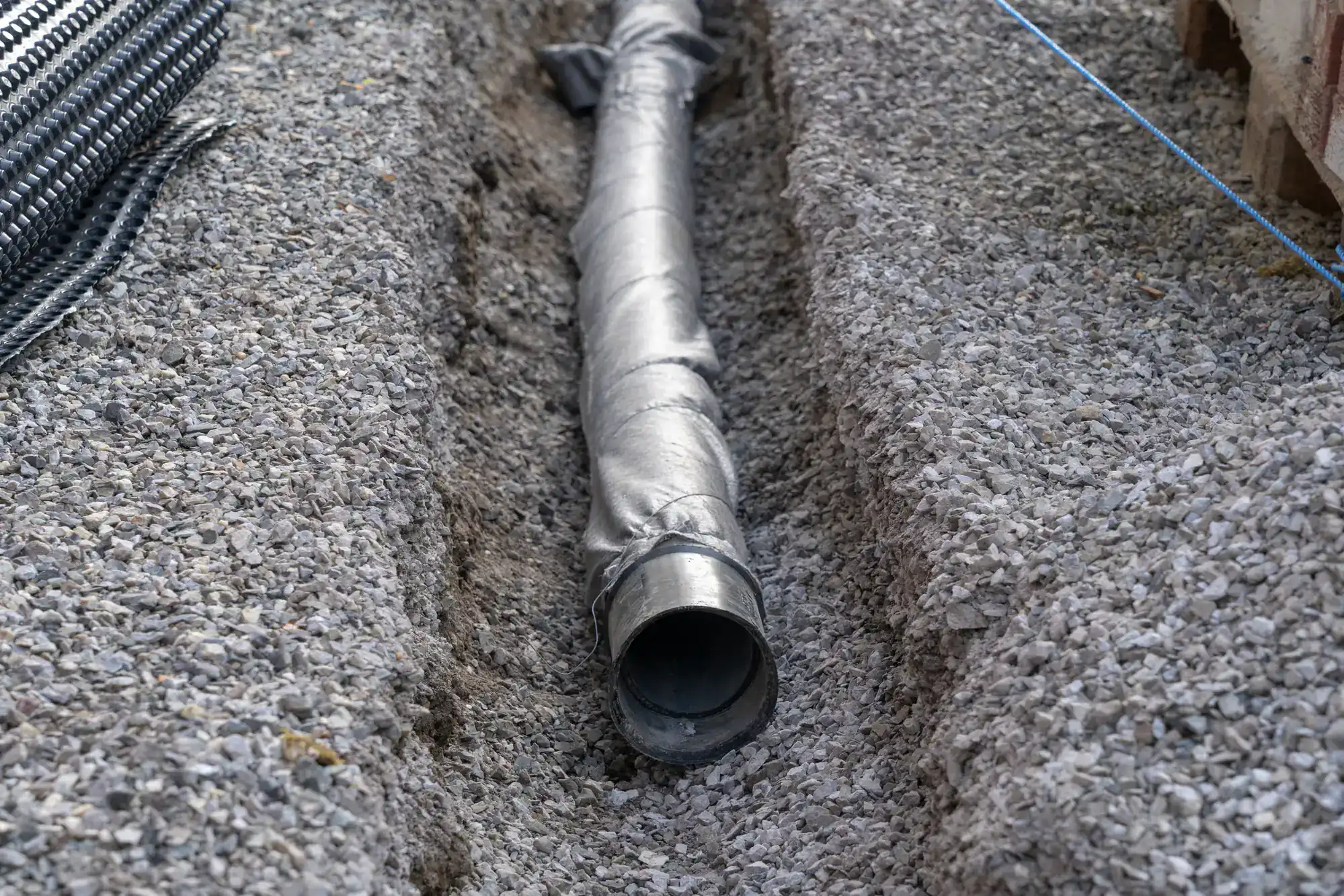
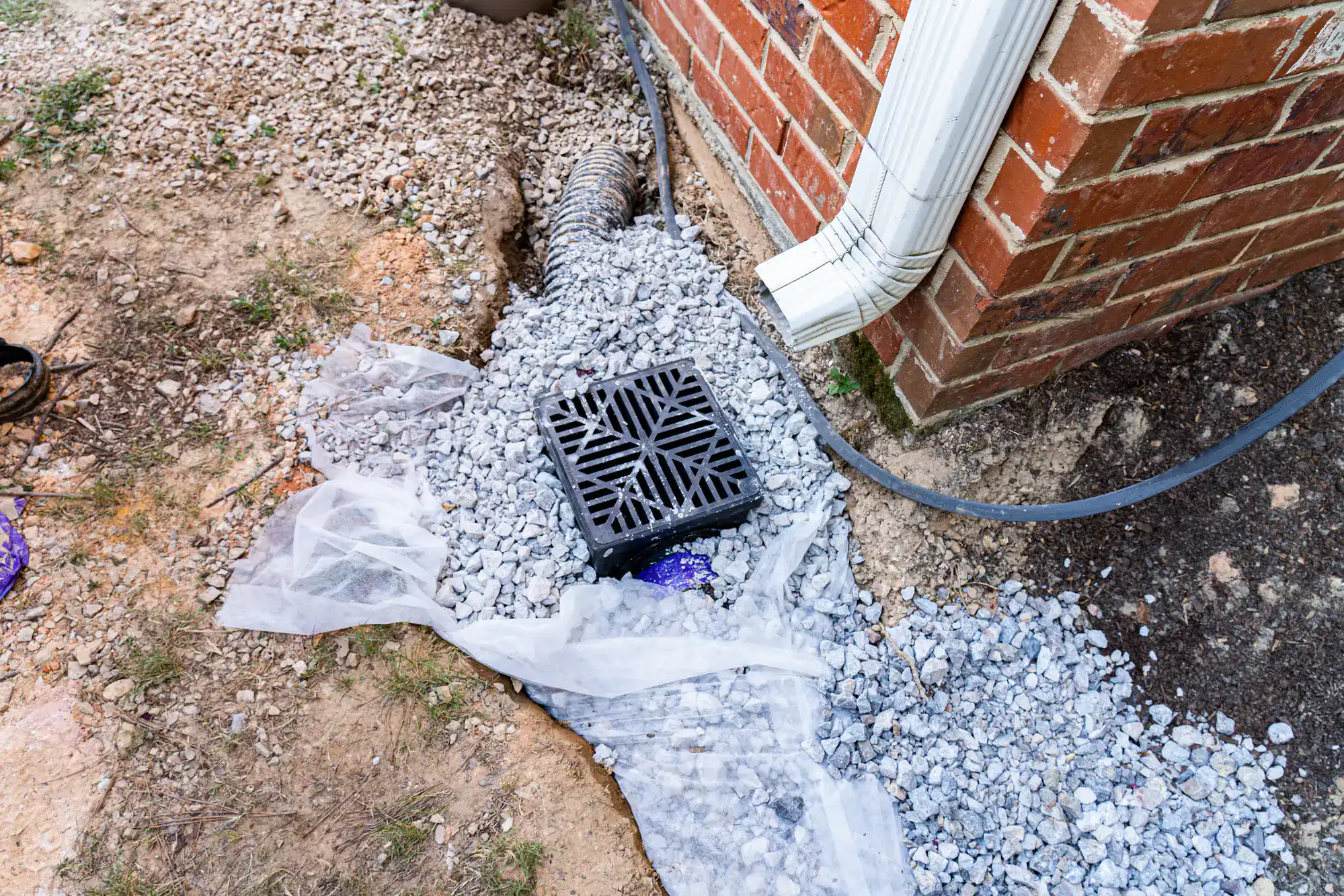
Once the system design is confirmed, the installation begins with utility marking calling 811 before any excavation is legally required in New York State, and that step is never skipped. The trench is dug to the correct depth for Long Island’s frost conditions, lined with geotextile filter fabric, filled with washed angular gravel, and fitted with perforated PVC pipe sloped toward the outlet. Pipe depth matters here more than in warmer climates a drain installed too shallow on Long Island will freeze solid in January, crack, and fail by the time you need it most in March.
After the pipe and gravel are set, the trench is backfilled, topsoil is restored, and the surface is seeded or sodded to match your existing lawn. For homes in the Three Village area with established landscaping, plantings near the trench line are protected throughout the process. We handle the Town of Brookhaven permit requirements as part of the project you don’t need to navigate that on your own.
Ready to get started?
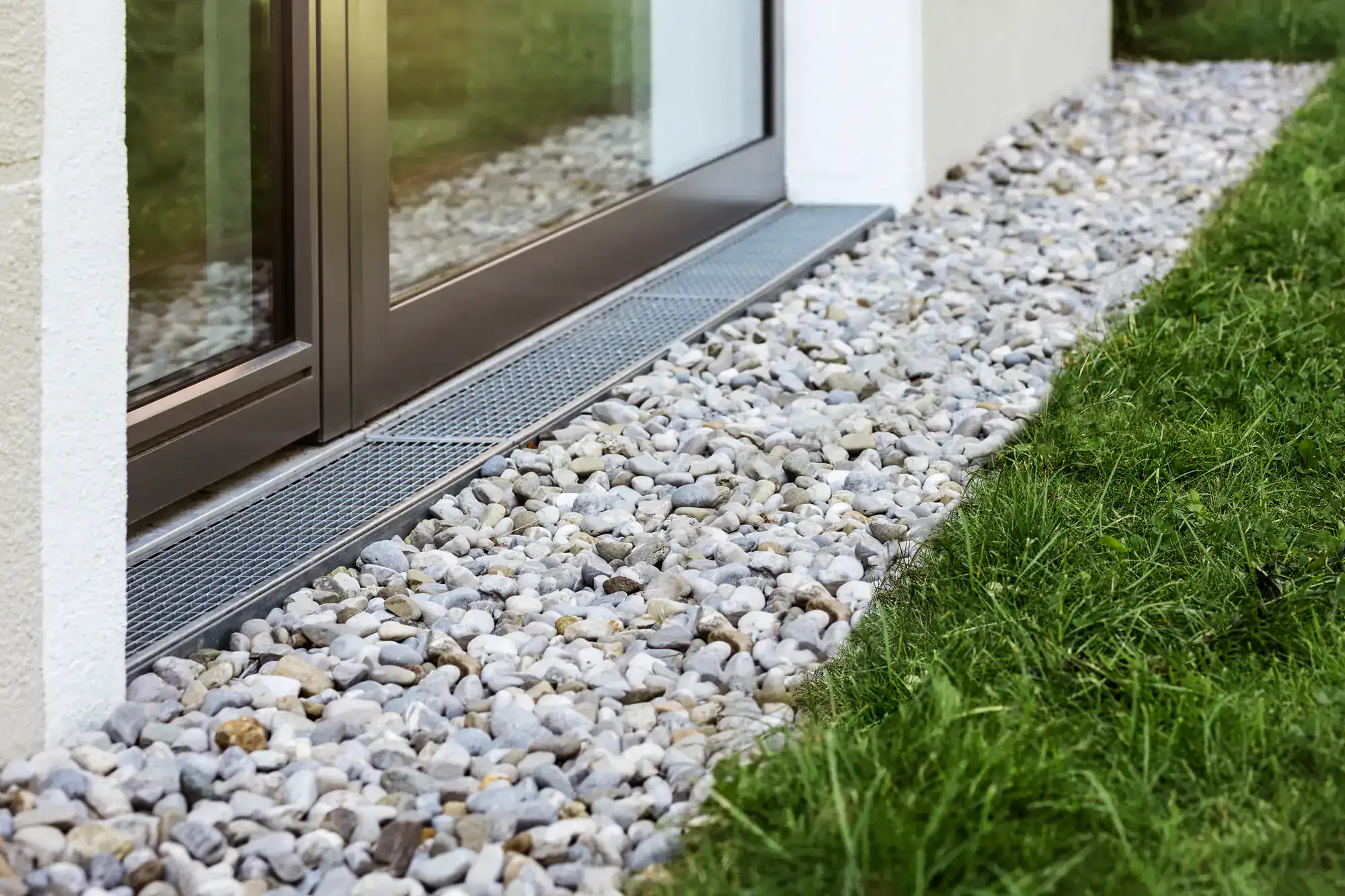
Our French drain systems aren’t one-size-fits-all trenches with a pipe in them. Every installation in East Setauket is designed around the specific conditions of the property soil composition, lot grading, proximity to the foundation, and the location of the outlet point. The system includes perforated PVC pipe, double-punched geotextile filter fabric to keep silt out of the gravel bed over time, and washed angular stone that maintains drainage capacity for decades.
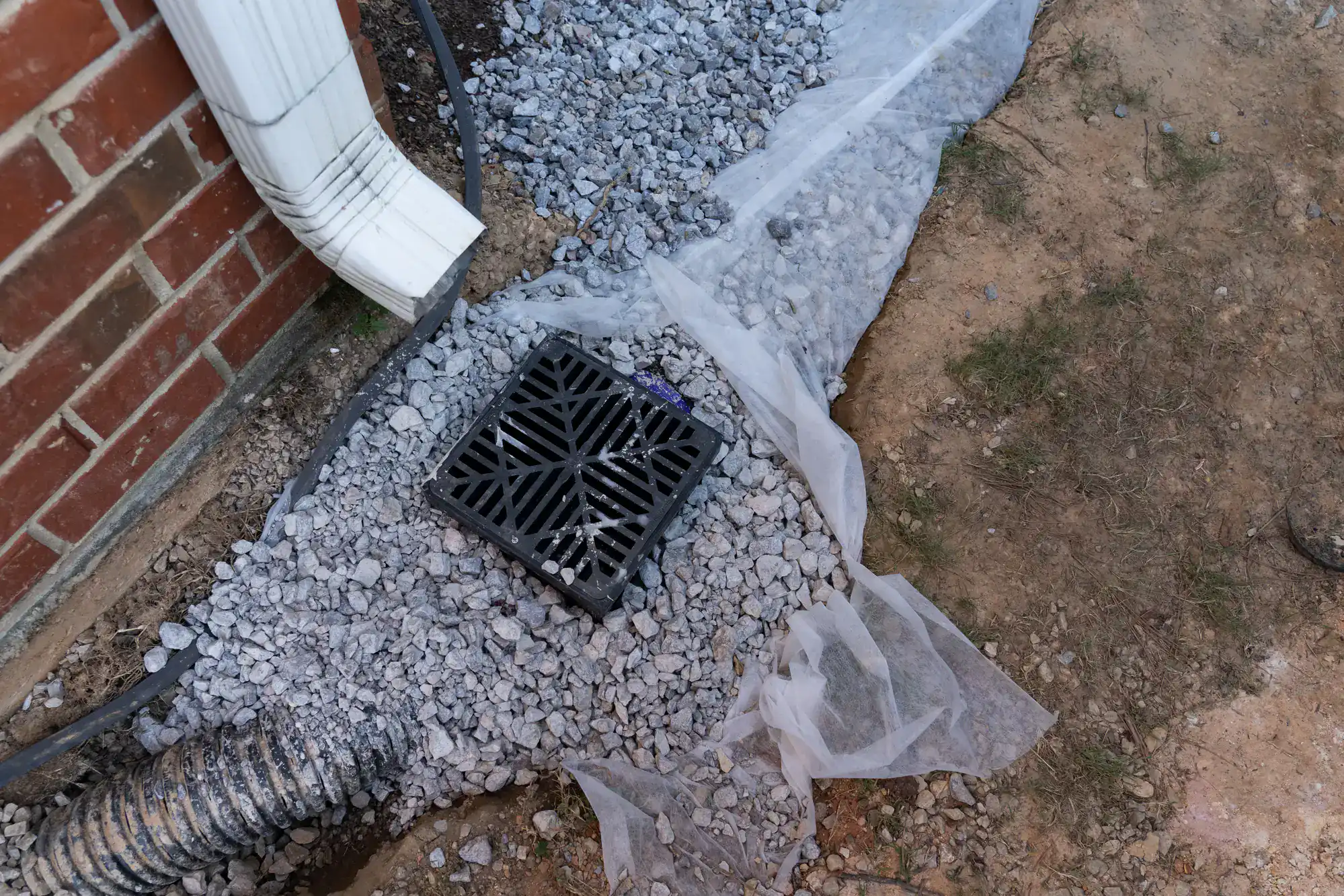
For homes near the foundation, we design the system to intercept subsurface water before it reaches the basement wall addressing the hydrostatic pressure that builds up in clay-heavy North Shore soils after a sustained rain event or a spring nor’easter. For yard drainage problems, the system captures surface and near-surface water and redirects it to a dry well, a daylight outlet, or another code-compliant discharge point. Suffolk County stormwater regulations govern where that water can go, and every outlet we install meets those requirements.
If your property has an aging clay tile system from the 1950s or 60s common in the older homes throughout the Three Village area we remove that failed infrastructure and replace it as part of the installation. You’re not patching a system that’s already done. You’re starting with something that’s built to last.
East Setauket sits on the Harbor Hill Moraine a glacial deposit of dense, unsorted clay, gravel, and silt left behind at the end of the last ice age. Unlike the sandy soils on Long Island’s South Shore that drain quickly, the clay-heavy pockets throughout the North Shore hold water rather than letting it percolate downward. When rain falls on a yard with a clay layer close to the surface, the water has nowhere to go. It pools on top of the clay, saturates the surrounding soil, and sits there for days.
This isn’t a grading problem you can fix with topsoil, and it’s not something that improves on its own over time. A French drain system intercepts that water at the soil level and redirects it to a defined outlet a dry well, a daylight discharge, or an approved drainage structure. Once it’s in, the yard drains the way it should after every rain, not just when conditions happen to cooperate.
Most residential French drain installations in the East Setauket area fall between $5,000 and $12,000, with a national average around $9,250 according to current HomeAdvisor data. Where your project lands in that range depends on the length of the trench, whether a dry well needs to be installed or replaced, the depth required given soil and frost conditions, and the complexity of the outlet design.
For East Setauket specifically, older homes that have aging clay tile drainage infrastructure often add some scope to the project that failed original system needs to come out before the new one goes in. Properties with mature landscaping may also require additional care around established plantings. The only way to give you an accurate number is to walk the property. A free on-site assessment covers all of that and gives you a clear, written proposal before any commitment is made.
East Setauket is an unincorporated hamlet governed by the Town of Brookhaven there’s no village board or separate village code here. Permit requirements for drainage work run through the Town of Brookhaven Building Department, and whether a permit is required depends on the scope of the project. Work that involves connecting to a dry well, significant excavation near the foundation, or alterations to surface water flow may require a permit before installation begins.
Suffolk County also has stormwater regulations that govern where drainage discharge can go. The system’s outlet cannot direct water onto a neighboring property or into a public road without authorization. We handle the permit process and ensure the outlet design meets Suffolk County requirements as part of every installation. You shouldn’t have to figure out Brookhaven Town’s permitting thresholds on your own that’s part of working with a contractor who actually knows the area.
For most East Setauket homes, yes a properly installed French drain system addresses the primary mechanism behind basement flooding after a major storm. When a nor’easter hits the North Shore in March or April, it lands on ground that’s already saturated from snowmelt, with subsoil that may still be partially frozen and a water table that’s at its seasonal high. That combination creates intense hydrostatic pressure against basement walls water pushing laterally through the soil toward the lowest point it can find.
A French drain system installed along the foundation perimeter intercepts that water before it builds pressure against the wall. The perforated pipe collects subsurface water as it moves toward the foundation and redirects it away from the house entirely. It doesn’t rely on a sump pump to react after water enters it stops the water from getting there in the first place. For homes in the Three Village area that have dealt with the same wet basement every spring, that’s a meaningful difference.
Yes, and it’s one of the most common French drain failures on Long Island. When perforated drain pipe is installed too shallow, it freezes solid during a hard winter cracking the pipe, compressing the gravel bed, and destroying the system’s drainage capacity. The problem typically goes unnoticed until spring, when the drain is needed most and no longer works.
Preventing freeze damage comes down to installation depth. On Long Island, drain pipe needs to be buried at a depth that accounts for the local frost line and the system’s slope requirements. This is technical knowledge that matters a landscaper who adds French drains as a side service may not account for it the way a dedicated drainage contractor does. We install every system in East Setauket at the correct depth for Long Island’s winter conditions, so the drain that needs to perform in March actually does.
A properly installed French drain system perforated PVC pipe, geotextile filter fabric that keeps silt out of the gravel bed, washed angular stone, correct slope, and a defined outlet will typically function effectively for 30 to 40 years. The fabric is the critical component for longevity in North Shore soil conditions. Without it, the fine clay particles that are abundant in East Setauket’s glacial till will migrate into the gravel bed over time, slowly reducing drainage capacity until the system stops working.
With quality materials and correct installation depth for Long Island’s frost conditions, there’s very little maintenance required over the life of the system. Outlet points should be checked periodically to confirm they’re clear and unobstructed, but the system itself doesn’t need servicing the way mechanical equipment does. For an East Setauket homeowner planning to stay in their home long-term or one who wants to protect resale value in a market where median home prices sit near $860,000 a 30 to 40 year service life makes this one of the most durable home improvement investments available.