
Hear from Our Customers
Montauk sits at the end of the road literally. One highway in, ocean on three sides, and a water table that gets recharged by roughly 21 inches of precipitation annually according to USGS data. In lower-elevation areas near Fort Pond, Napeague, and the harbor, that water doesn’t have far to go before it starts working against your foundation, your yard, and your investment.
A properly installed French drain system intercepts subsurface water before it reaches the places that matter. Your basement stays dry. Your yard stops holding water for days after a storm. Your foundation isn’t sitting under constant hydrostatic pressure through a winter you spent somewhere else. That last part matters more in Montauk than almost anywhere because seasonal homeowners often don’t discover drainage failures until spring, when the damage has already been building for months.
On a property worth $1.7 million or more, foundation repair runs $15,000 to $50,000. Mold remediation starts at $3,000 and climbs fast. A French drain installation that lasts 30 to 40 years costs a fraction of either. The math isn’t complicated and in a coastal market that’s already dealt with Sandy, nor’easters, and tidal flooding that happens on clear days, the cost of doing nothing is the real risk.
We’re a residential drainage contractor serving Long Island’s East End, including Montauk and the surrounding Town of East Hampton. We work specifically in this region because the drainage conditions here coastal exposure, glacial moraine soil variability, tidal flooding, and the Town of East Hampton’s stormwater management requirements under Chapter 216 are genuinely different from what you find in the interior of Suffolk County.
We don’t quote over the phone and we don’t install the same system everywhere. A property near Fort Pond drains differently than one in Ditch Plains or out on Napeague. We assess each site before we propose anything, because a system that isn’t designed for your specific conditions isn’t going to solve your problem it’s just going to look like it did.
Every installation we complete is fully permitted through the Town of East Hampton. We handle the 811 utility marking, the permitting process, and all coordination so you’re not navigating any of that yourself.
We start with a site assessment not a phone call, not a satellite view. We come to your property, look at where water is collecting, check the grade, and evaluate the soil conditions. In Montauk, that last step matters. The terminal moraine geology under the South Fork creates real variability: some areas drain quickly through outwash sands, others hold water in glacial till. That assessment determines everything about the system design.
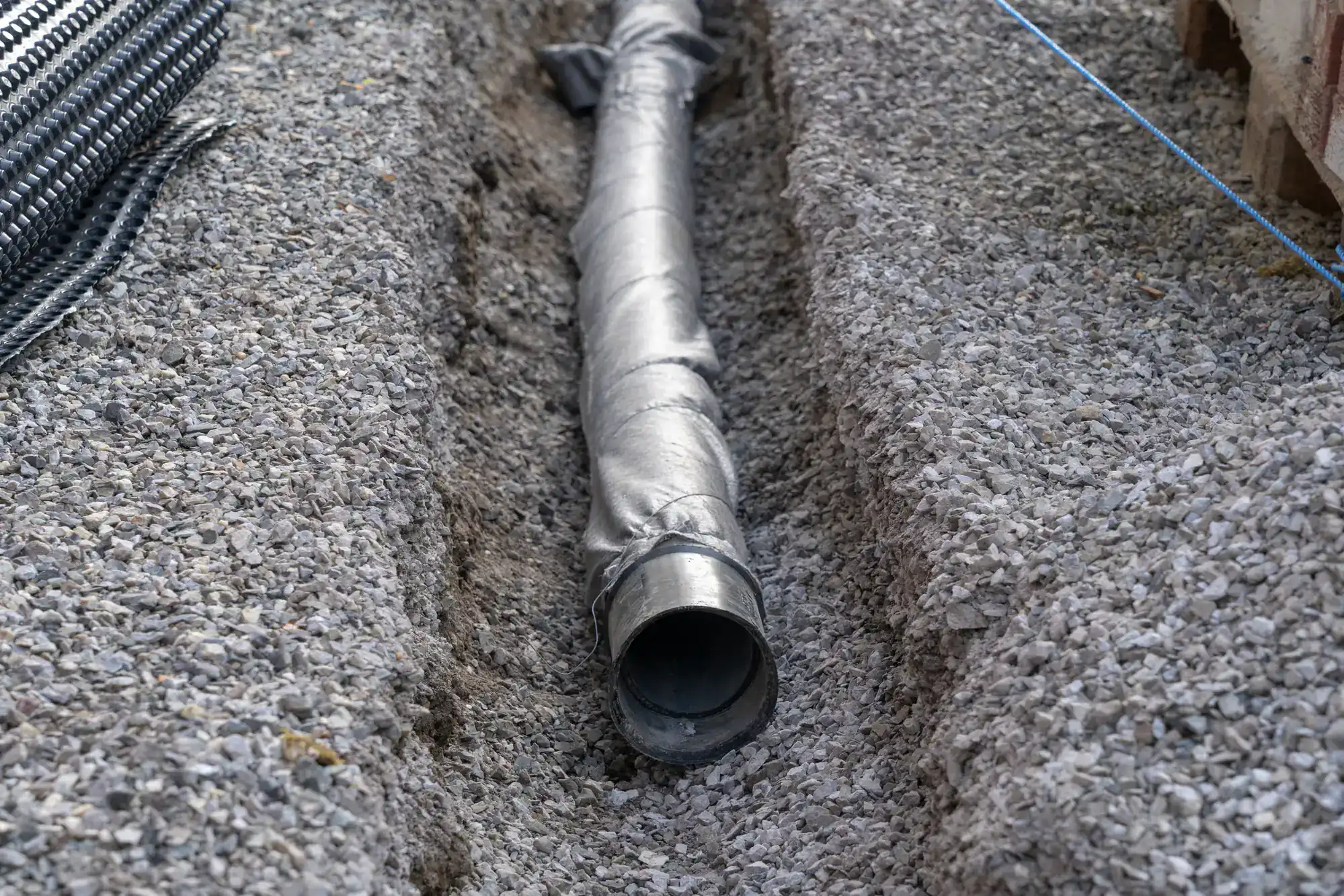
Once we know what we’re working with, we submit for any required permits through the Town of East Hampton and call 811 before any excavation begins. Then we trench to the correct depth deep enough to stay below the freeze line through a Long Island winter, which is a detail that separates a system that lasts from one that cracks in year two. We install perforated pipe at the proper slope, wrap it in double-punched geotextile filter fabric appropriate for the local soil type, and backfill with washed angular gravel that maintains void space and keeps the system flowing.
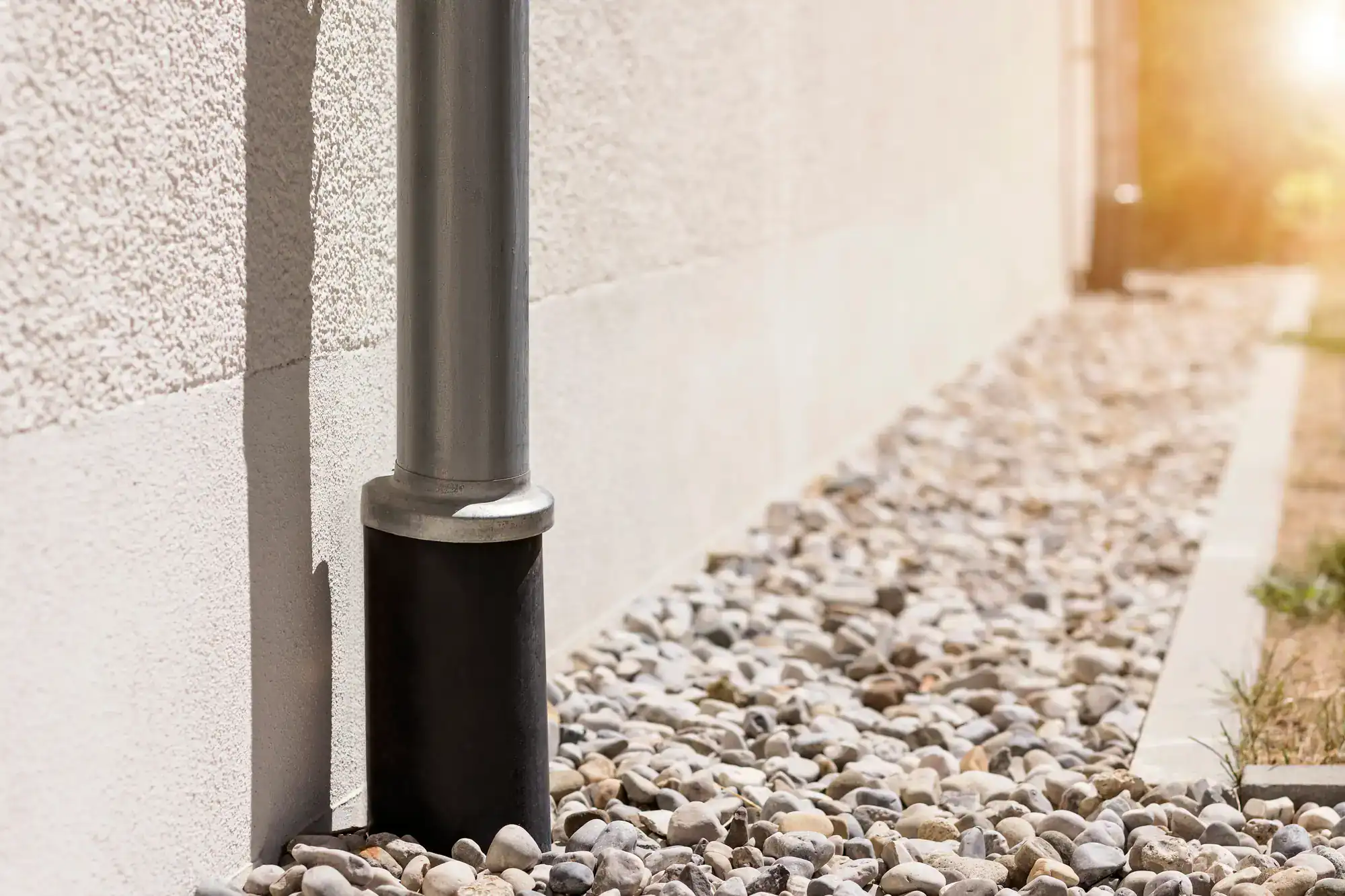
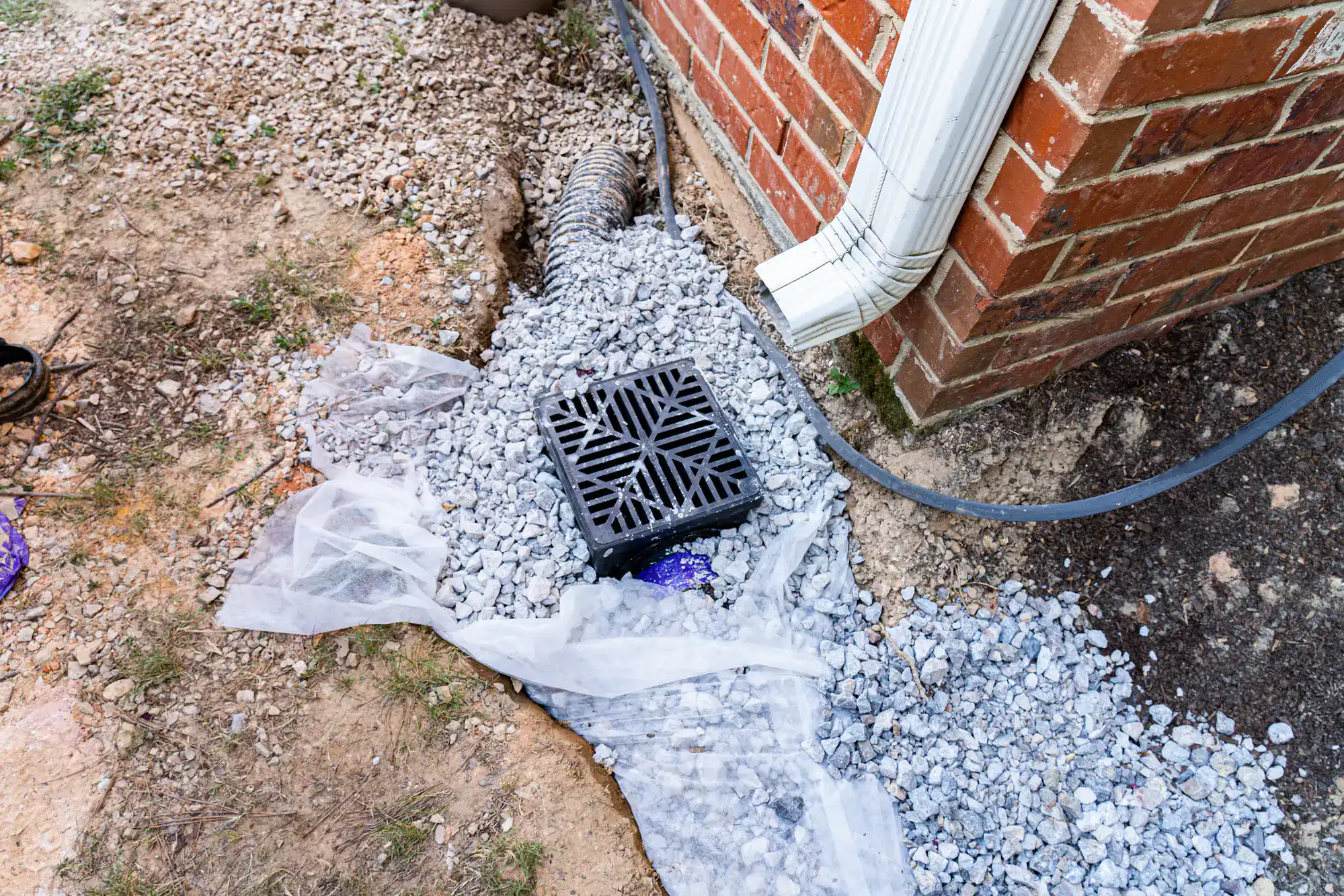
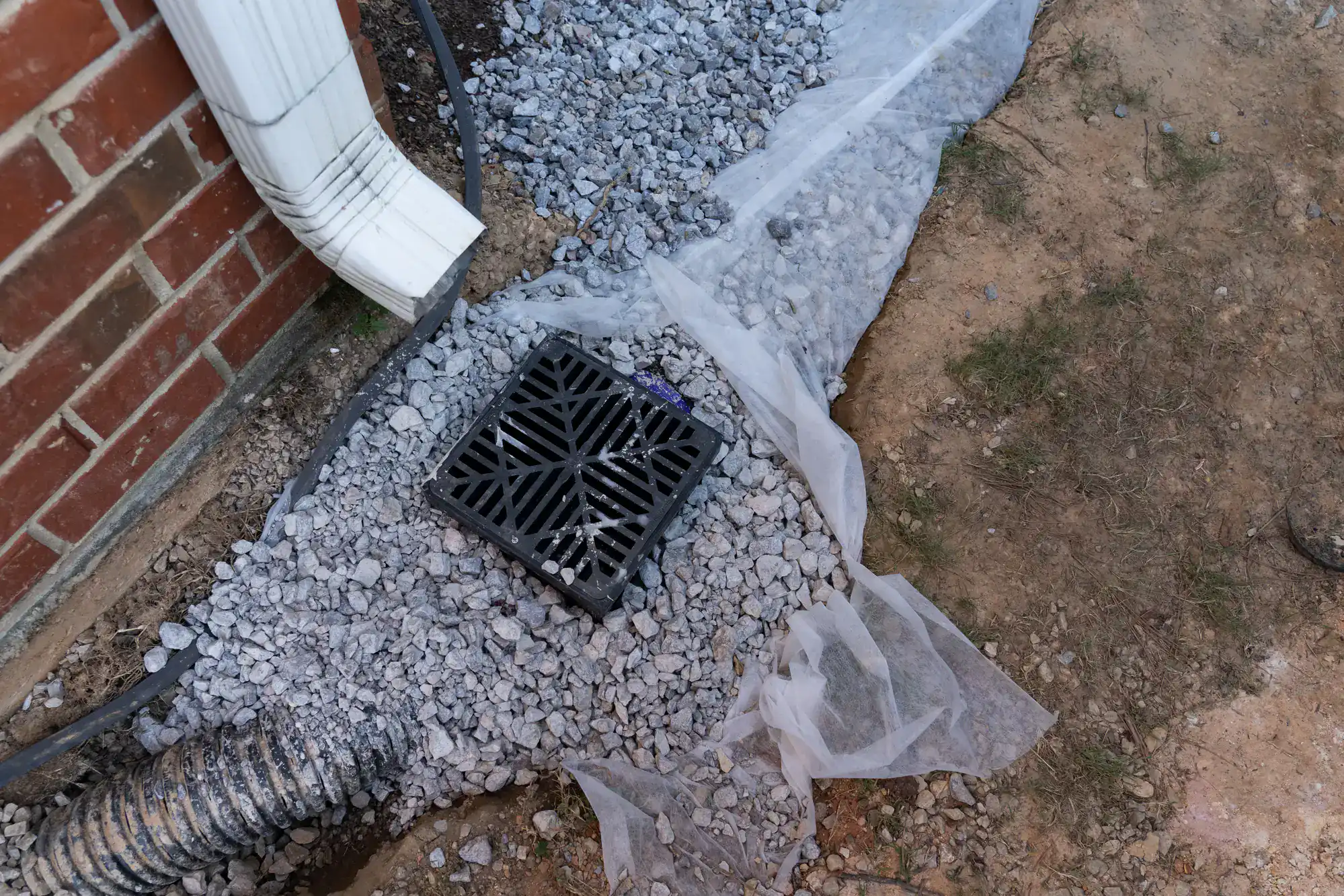
The discharge outlet is designed to meet the Town’s requirement that stormwater runoff be contained within the site perimeter and returned to the ground appropriately which, near Montauk’s coastal zones, may also involve coordination with NYSDEC guidelines. When we’re done, the yard is restored as close to its original condition as possible. Most residential installations take one to three days.
Ready to get started?
A French drain installation in Montauk, NY has to account for more than rainfall. Tidal influence, a high and active water table, salt-air exposure, and a freeze-thaw cycle that runs through every winter mean the materials and design specifications that work fine inland aren’t necessarily the right call here. We use NDS-grade perforated pipe not corrugated tubing paired with geotextile fabric rated for the local soil conditions and washed angular gravel that won’t compact and lose function over time. These aren’t upgrades. They’re what the system needs to actually last 30 to 40 years in this environment.
Every French drain system we install in Montauk includes a defined discharge point engineered to comply with the Town of East Hampton’s Chapter 216 stormwater requirements. If your property sits near a regulated coastal zone, wetland buffer, or tidal wetlands area, we factor in any applicable NYSDEC review requirements from the start not as an afterthought. For seasonal homeowners who won’t be on-site to monitor things, that compliance piece isn’t a formality. It’s protection.
When you’re dealing with a soggy yard that won’t dry out after a nor’easter, a basement that collects water every time the water table rises, or a property you’ve returned to in spring and found worse than you left it the right French drain system, designed and installed correctly, is what stops the cycle.
In most cases, yes and in Montauk specifically, the permitting environment is more detailed than what you’d encounter in many other Long Island towns. Montauk falls under the jurisdiction of the Town of East Hampton, which enforces Chapter 216 of the Town Code governing stormwater management and erosion control. That chapter requires that all stormwater drainage from improvements be contained within the site perimeter and returned to the ground by appropriate means which means your discharge point and system design need to meet specific standards.
If your property is near a coastal zone, tidal wetland buffer, or Coastal Erosion Hazard Area, there may also be NYSDEC review involved under New York State’s Tidal Wetlands Act. We handle all permitting through the Town of East Hampton and call 811 before any excavation begins. You won’t need to navigate any of that on your own.
Most residential French drain installations in the Montauk area fall somewhere between $5,000 and $12,000, depending on the length of the system, the depth required, the soil conditions on your specific property, and whether the discharge point requires any additional engineering. Per linear foot, costs typically run $20 to $60. Properties with more complex drainage needs multiple collection points, proximity to regulated coastal zones, or significant grade challenges will land toward the higher end.
In a market where the median home value exceeds $1.7 million, that investment is genuinely small relative to what it’s protecting. Foundation repair after chronic water intrusion runs $15,000 to $50,000. A wet basement that goes undetected through a winter season can develop mold that costs $3,000 to $25,000 to remediate. We provide a free on-site assessment and a clear, itemized estimate before any work begins no phone quotes, no surprises.
A French drain is actually one of the most effective tools for managing a high water table which is exactly the condition many Montauk properties deal with, particularly in lower-elevation areas near Fort Pond, the harbor, and Napeague. The system works by intercepting groundwater before it rises to the surface or reaches your foundation, redirecting it to a defined discharge point away from the structure.
That said, the system has to be designed around your property’s specific water table depth and soil conditions. Montauk’s glacial moraine geology creates real variability some areas have high-permeability outwash sands that drain relatively quickly, while others sit on glacial till that holds water longer. A proper site assessment tells us what we’re actually dealing with before we design anything. A French drain installed without accounting for the local water table depth and soil type may not solve the problem or may create a new one.
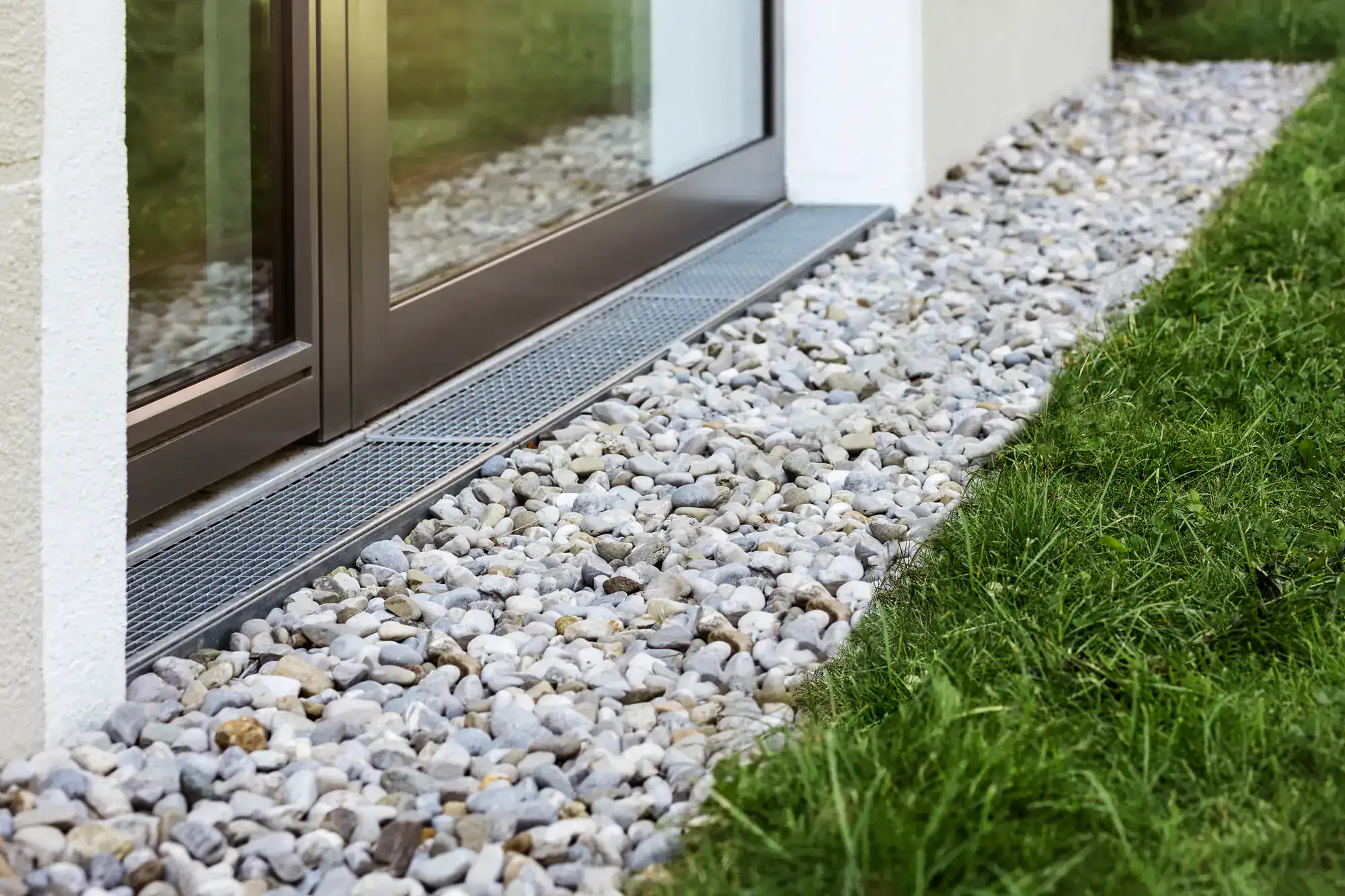
A catch basin collects surface water at a single point think the drain in a low corner of your yard. A regular drainage pipe moves water from one location to another. A French drain does something different: it collects subsurface water continuously along its entire length, not just at one point. The perforated pipe sits in a gravel-filled trench wrapped in geotextile fabric, which allows groundwater to enter the pipe through the surrounding soil and gravel before it surfaces or reaches your foundation.
For Montauk properties where the problem is a rising water table, soil saturation after a nor’easter, or chronic moisture against a foundation wall not just a puddle in a low spot a French drain is usually the right tool. In some cases, a French drain works best as part of a larger water drainage system that includes a catch basin at the surface and a French drain handling the subsurface load. We assess both during our site visit.
A properly installed French drain system should last 30 to 40 years. In Montauk’s coastal environment, getting there depends heavily on material quality and installation depth. Pipe buried too shallow will freeze and crack during a hard Long Island winter the freeze-thaw cycle on the East End is real, and it destroys systems that weren’t installed with that in mind. Corrugated tubing, which is cheaper and commonly used, degrades faster and is more vulnerable to both freezing and root intrusion than the NDS-grade perforated pipe we use.
The salt-air environment in Montauk also affects material longevity over time, which is another reason material specification matters here more than it does inland. Geotextile fabric that’s the wrong grade for the local soil type will silt up within a few years, cutting off the system’s ability to collect water. We specify materials for Montauk’s actual conditions not the cheapest option that gets the job done on paper.
Fall is actually one of the better times to schedule a French drain installation in Montauk. The ground is still workable, the summer crowds are gone, and you’re getting the system in place before the property sits unattended through winter which is exactly when drainage failures tend to compound quietly. If you’re a seasonal homeowner who returns in spring to find water damage that built up over months, installing in the fall is the most practical way to break that cycle.
Winter installations are limited by ground frost, but early spring before the summer season begins is also a strong window. We can coordinate the assessment and permitting process remotely if you’re not on-site, and schedule the installation around your access to the property. For seasonal Montauk homeowners managing this from the city or elsewhere, we’re used to working within those logistics.