
Hear from Our Customers
Mount Sinai sits on glacial till a dense, poorly sorted mix of clay, silt, sand, and gravel left behind by the last ice age. Unlike the sandy soils on Long Island’s South Shore that drain quickly, North Shore soil holds water. After a heavy rain, that water doesn’t disappear. It backs up against your foundation, saturates your lawn for days, and quietly works its way into your basement. A properly installed French drain system intercepts that water before it gets there and moves it away from your home entirely.
The terrain here makes this worse for certain properties. If your home sits in a low-lying area or at the base of a grade common throughout Mount Sinai’s hilly landscape you’re not just dealing with the rain that falls on your lot. You’re collecting runoff from neighboring slopes, the road, and the land above you. That’s not a grading problem. It’s a subsurface drainage problem. And once a French drain system is in place, the difference is immediate: no standing water, no soggy patches, no more watching the rain and wondering what’s happening under your lawn.
For homeowners in Island Estates or anywhere near Mount Sinai Harbor, there’s an added layer. Coastal storm events can push the local water table higher than usual, and when that happens, even properties that normally drain fine can get overwhelmed. A drainage system engineered for your specific site not a generic one-size-fits-all install is what keeps your property protected when the worst storms hit.
We work on Long Island’s North Shore, which means we know the difference between the sandy outwash soils further south and the glacial till that sits beneath Mount Sinai’s established neighborhoods. We know that the hollows in this hamlet aren’t just poetic road names they’re real low points in the terrain where water flows and collects. That kind of local knowledge shapes how we design every system we install.
We handle the full scope: site assessment, system design, permitting through the Town of Brookhaven, utility marking, installation, and yard restoration. Nothing gets handed off or glossed over. If your property is near the harbor and DEC review applies, we handle that too. You shouldn’t have to figure out what permits you need or who to call that’s on us.
Mount Sinai homeowners have invested a lot in their properties. We treat every yard accordingly working around mature trees, established gardens, and existing landscaping so the drainage problem disappears without your yard looking like a construction site when we leave.
It starts with a free on-site assessment. We come to your Mount Sinai property, walk the yard, identify where the water is coming from, and trace where it needs to go. No phone quotes, no guesswork. Every property on the North Shore has its own drainage pattern the slope of the lot, the proximity to neighboring grades, the soil composition, the outlet options and we need to see it in person before we can design a system that actually works.
Once we have a clear picture, we put together a written scope of work with transparent pricing. If permits are required through the Town of Brookhaven, we handle the application. Before any digging starts, we coordinate the 811 utility locate required by New York State law before excavation so there are no surprises underground. For properties near Mount Sinai Harbor, we assess DEC applicability upfront and manage any required review.
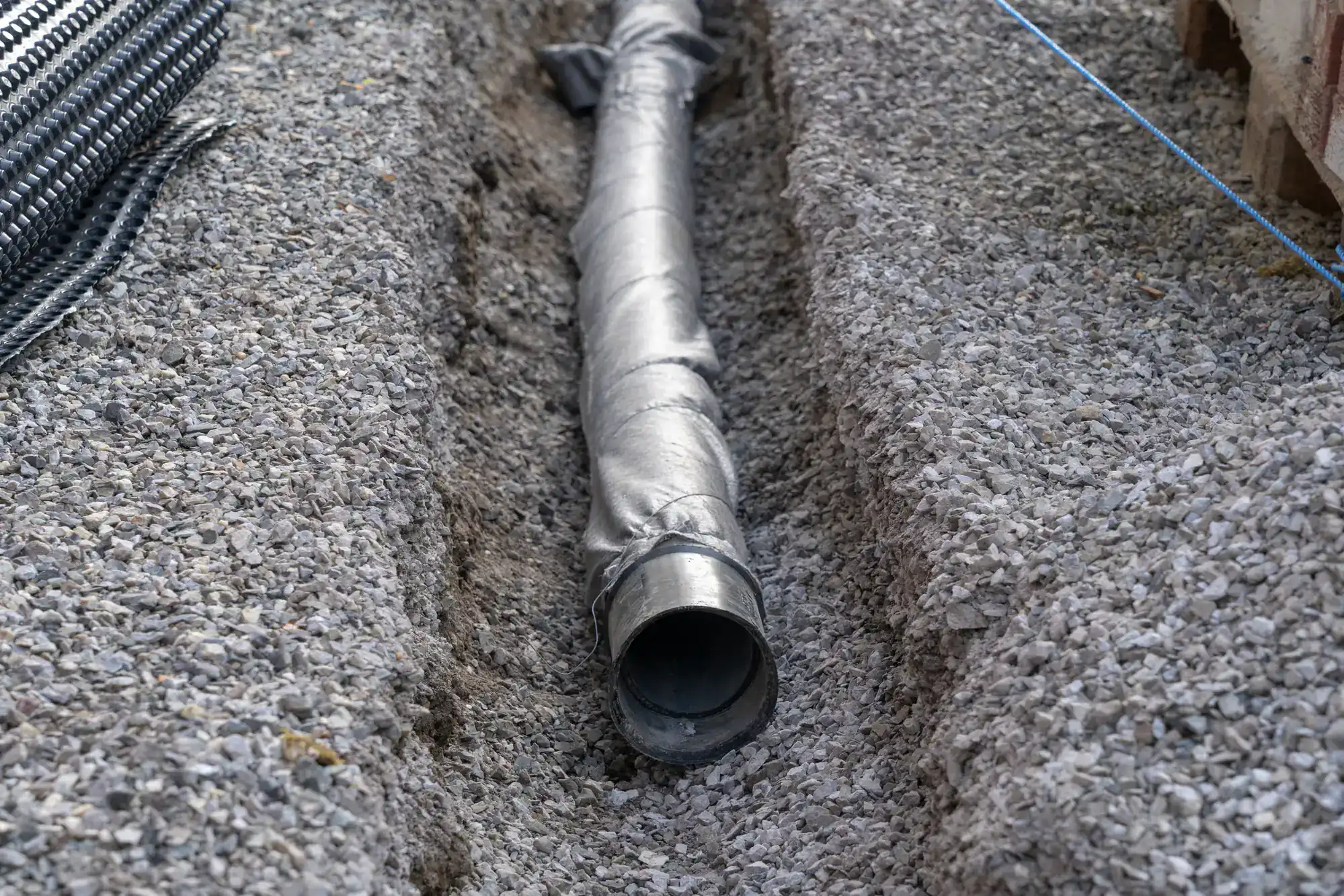
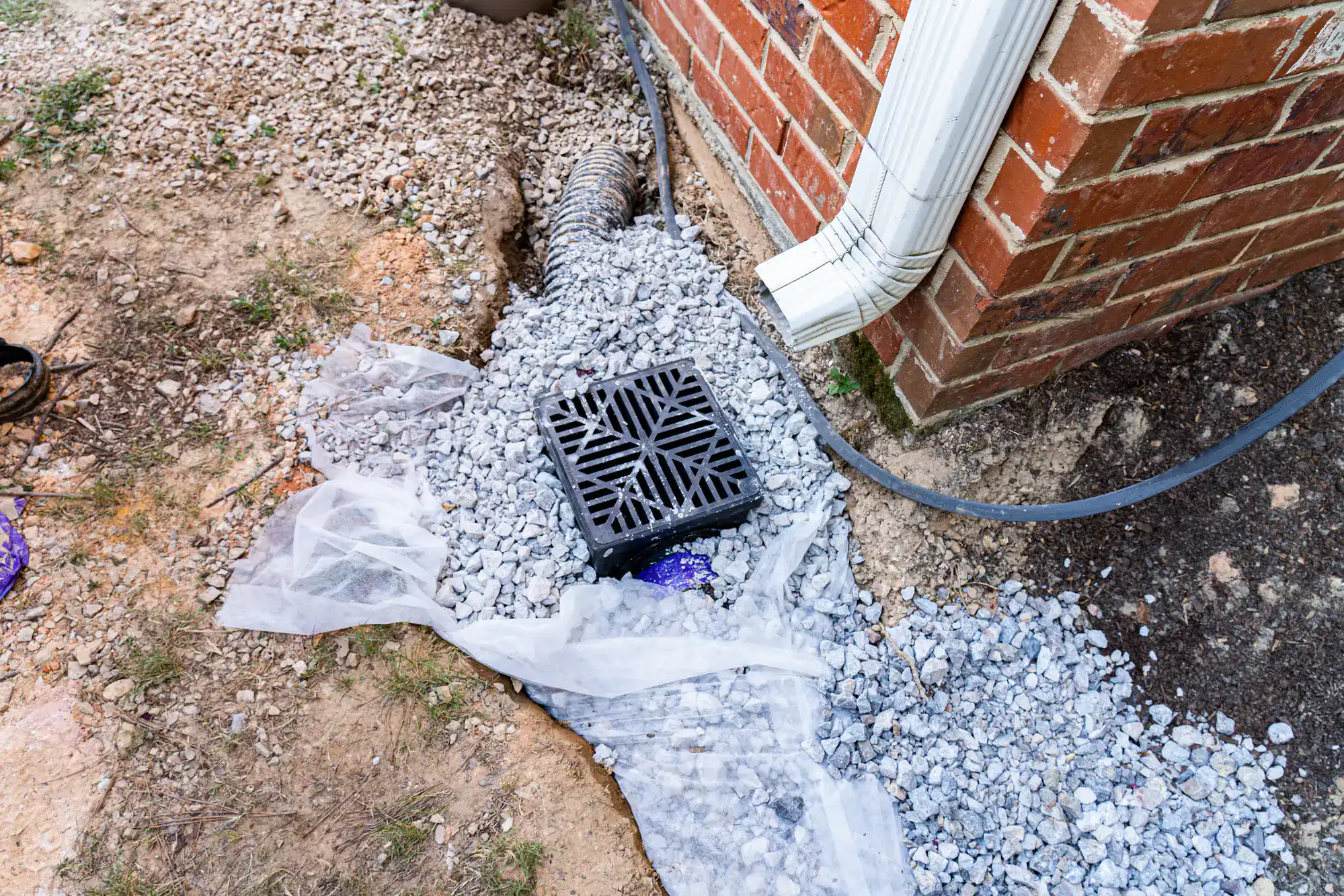
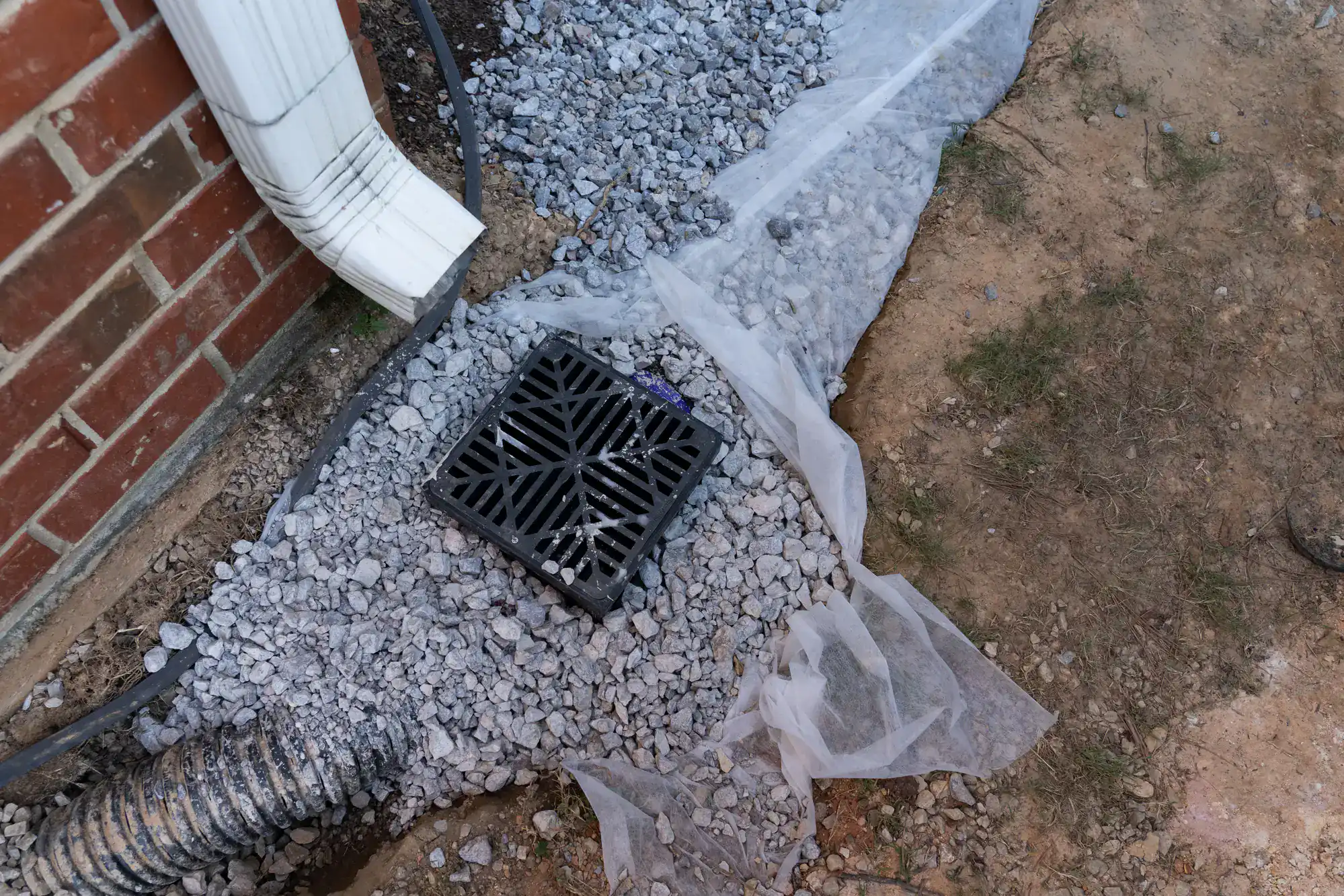
Installation means trenching to the right depth below Long Island’s frost line, which typically reaches 24 to 36 inches laying perforated pipe wrapped in geotextile fabric rated for fine-grained soil, backfilling with washed angular gravel, and verifying the slope so water actually flows to the outlet. When the work is done, disturbed lawn areas are restored with topsoil and seed. The yard goes back to looking like a yard. The drainage problem doesn’t come back.
Ready to get started?
Most of the drainage contractors ranking for Mount Sinai are interior basement waterproofing companies. They install perimeter drain channels inside your basement and call it done. That’s a different product for a different problem. If your issue is exterior yard drainage standing water, saturated soil, water migrating toward your foundation from uphill an interior system doesn’t address the source. We work on the outside of the problem, where the water actually starts.
Every French drain installation we do in Mount Sinai is designed for the specific conditions of the North Shore: glacial till subsoil that drains slowly, rolling terrain that concentrates runoff in low-lying areas, and a freeze-thaw cycle that destroys shallow pipe installations within a season or two. We don’t cut corners on depth, fabric, or gravel because those are exactly the three places where cheap installs fail. A French drain that fails is worse than no French drain you’ve spent the money and the problem is still there.
For properties in Island Estates or near the harbor, we factor in elevated groundwater conditions and plan outlet routing carefully to stay compliant with DEC requirements. For homes in the Mountain Ridge area or along the slopes feeding into the hamlet’s hollows, we design curtain drain configurations that intercept uphill flow before it reaches your foundation. The system is always specific to your site not a template dropped onto your yard.
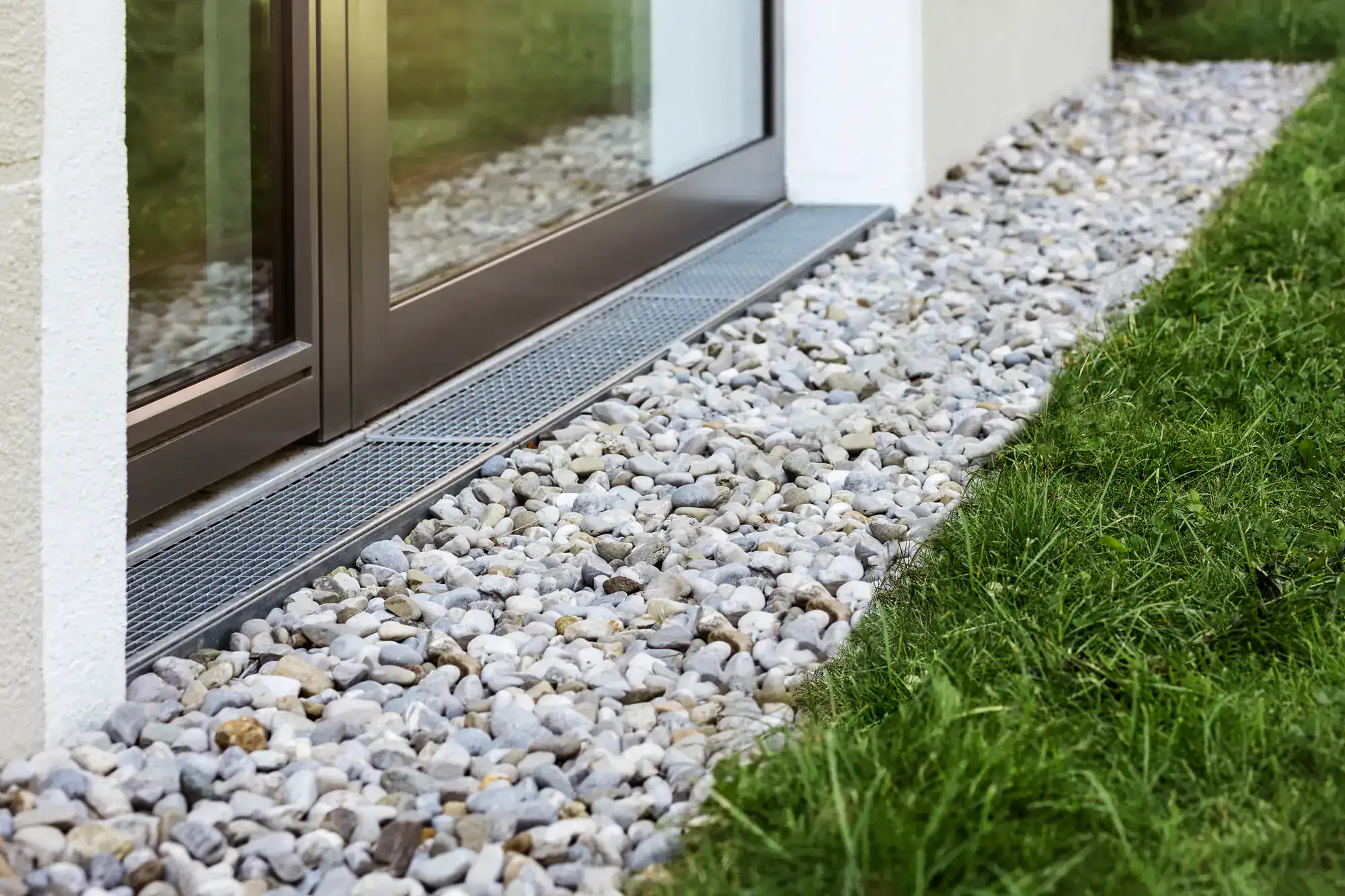
It depends on where the water is coming from and what’s stopping it from draining. Regrading helps when the problem is purely surface flow water pooling because the ground slopes toward your house instead of away from it. But in Mount Sinai, the more common issue is subsurface. The glacial till beneath the topsoil drains slowly, and water backs up in the soil column long before it reaches the surface. You might have a yard that looks like it drains fine but still ends up with a wet basement after a heavy rain because the water is moving through the subsoil, not over the surface.
If you’re seeing standing water that lingers for more than 24 to 48 hours after rain, water coming into your basement without an obvious surface entry point, or persistently soggy areas in your yard that don’t improve with dry weather, that’s a subsurface drainage problem. Regrading won’t fix it. A French drain system that intercepts water below the surface and routes it to a defined outlet will. The best way to know for certain is a site assessment we can tell you which solution actually fits your property.
Depth depends on two things: the purpose of the system and the frost line. On Long Island, the frost depth typically reaches 24 to 36 inches. Any perforated pipe installed above that depth is at risk of freezing solid during a hard winter and when pipe freezes, it can crack and fail entirely. A French drain that works fine in October and fails in January isn’t protecting your property when you need it most.
For yard drainage systems in Mount Sinai, we typically install pipe at 18 to 24 inches for surface-level drainage applications, and deeper for foundation perimeter systems where we need to get below the footing. The exact depth is determined by your specific site the water table, the soil profile, and what the system needs to accomplish. What we don’t do is install shallow because it’s faster or cheaper. A system built to the right depth is one that works year-round for decades. One built too shallow is a system you’ll be replacing in a few years.
A French drain installed with the right materials and at the right depth should last 30 to 40 years with minimal maintenance. The main things that shorten a system’s lifespan are pipe installed too shallow (freeze-thaw damage), wrong fabric that allows fine clay particles from North Shore glacial till to infiltrate and clog the pipe, and improper slope that leaves water sitting in the pipe instead of flowing to the outlet. These aren’t rare mistakes they’re the three most common reasons French drains fail within five years of installation.
Annual inspection is the only routine maintenance a well-built system needs. You’re checking for root intrusion at the outlet, making sure the outlet itself is clear and unobstructed, and confirming there’s no settling that’s changed the slope of the pipe. That’s it. If the system was built correctly right depth, right fabric, right gravel, verified slope it should outlast your current landscaping, your current lawn, and possibly your current mortgage.
Possibly, depending on the scope of the work. Mount Sinai is an unincorporated hamlet, which means all permitting falls under the Town of Brookhaven not a local village hall. Drainage projects that alter surface water flow or involve significant excavation may require a building permit or site plan review through the Brookhaven Building Department. Projects near Mount Sinai Harbor, wetland buffers, or tidal areas may also require review under New York State DEC regulations, specifically the Tidal Wetlands Act.
Before any installation, New York State law requires calling 811 to locate underground utilities gas, electric, telecommunications prior to any excavation. That’s non-negotiable regardless of permit status. We handle all of this: permit applications, utility marking, and DEC assessment where applicable. You won’t be left trying to figure out which agency to call or whether your project triggers a review. If it does, we manage it. If it doesn’t, we document that too so you have a clear record of the installation.
They solve different problems, and confusing the two is one of the most common mistakes homeowners make when shopping for drainage help. An interior basement waterproofing system the kind most of the companies ranking for Mount Sinai install is a perimeter channel system that collects water after it’s already entered your basement and routes it to a sump pump. It manages the symptom. A French drain system is installed outside, in the yard or around the foundation perimeter, and intercepts water before it ever reaches your basement wall.
If you have hydrostatic pressure building against your foundation because water is saturating the soil around your home which is common in Mount Sinai given the slow-draining glacial till subsoil an interior system doesn’t relieve that pressure. It just catches the water that gets through. An exterior French drain reduces the pressure at the source. For many Mount Sinai homeowners, the right answer is an exterior yard drainage system, a foundation perimeter drain, or a combination of both depending on where the water is coming from and how it’s reaching the structure.
Spring and fall are the two best windows for French drain installation in Mount Sinai. Spring is when most homeowners discover they have a drainage problem snowmelt combined with spring rains hits the still-partially-frozen ground and has nowhere to go. If you’re seeing water in your basement or a saturated yard in March or April, that’s the right time to call. We can assess the property while the problem is visible and active, which actually helps us design a more accurate system.
Fall is the other strong window specifically September through mid-November, before the ground freezes. Installing before winter means your system is in place and functioning before the next freeze-thaw cycle begins. Once the ground freezes hard, installation becomes difficult and in some cases impossible until spring. Summer installations are fine when the schedule allows, but if you’re on the fence about timing, don’t wait until December. Mount Sinai winters can be hard on unprotected foundations, and a French drain installed in October is one less thing to worry about when the nor’easters start arriving.