
Hear from Our Customers
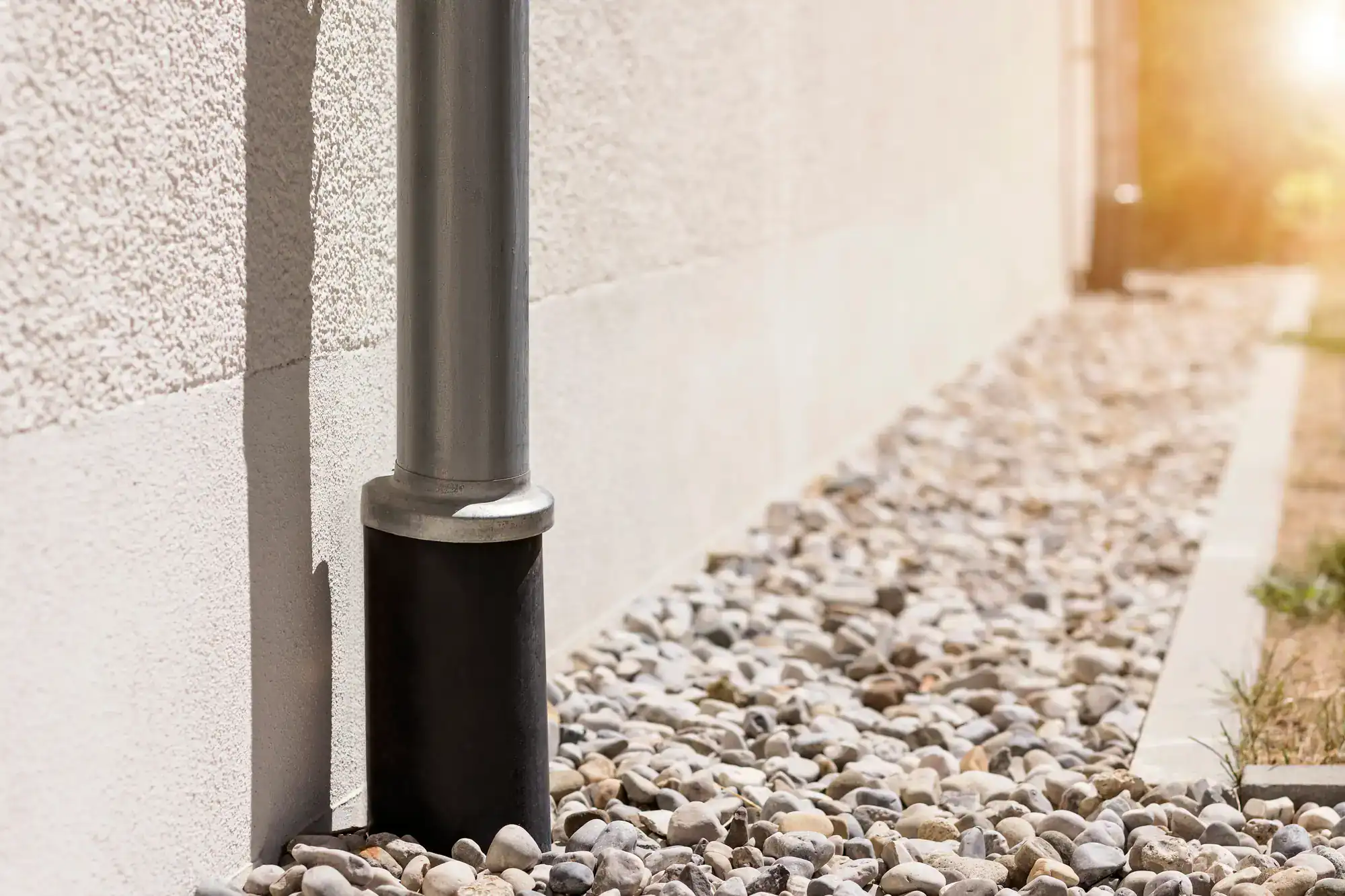
Once we install a properly engineered French drain system, the water has somewhere to go and it stops going where you don’t want it. No more soggy patches that never dry out, no more damp basement smell after a nor’easter, and no more watching the same low corner of your yard turn into a pond every spring.
Nesconset sits on glacial moraine soil a mix of clay, silt, and compacted till that doesn’t drain the way sandy south shore soil does. That clay holds water against your foundation walls, and over time, that pressure finds its way in. Our French drain systems intercept that water at the source and redirect it before it ever becomes a structural problem.
For homeowners near Lake Ronkonkoma, the challenge runs deeper. Part of the lake falls within Nesconset’s boundaries, and the water table in the southern portions of the hamlet is naturally elevated. When the ground is already saturated and a storm rolls through, the math doesn’t work in your favor without a drainage system that accounts for what’s happening below the surface not just on top of it.
Gold Coast Landworks is a residential drainage contractor serving Nesconset homeowners who are done dealing with the same water problem every season. We specialize in French drain installation and water management not general excavation with drainage as a side service. There’s a difference, and it shows in how we design and build each system.
We work throughout the Smithtown area, including Nesconset neighborhoods that sit in the shadow of Blydenburgh County Park and the Nissequogue River watershed an area the Smithtown Highway Department actively monitors for flooding and high water table issues. We understand the soil composition here, the freeze-thaw depth requirements for Long Island winters, and why homes built in the 1970s throughout Nesconset are showing up with drainage problems today.
Every job starts with a free on-site assessment. Not a phone quote an actual site visit where we look at what’s happening, identify what’s driving it, and tell you exactly what the solution involves before you spend a dollar.
It starts with the site assessment. We walk the property, look at where water is entering or pooling, check the grade, and evaluate the soil conditions. In Nesconset, that often means accounting for clay-bearing glacial soil that holds moisture and, for properties closer to Lake Ronkonkoma, a water table that doesn’t give water anywhere to go on its own. That assessment shapes the entire system design pipe depth, outlet location, gravel spec, fabric type.
Before any digging starts, we handle the 811 utility marking notification required by New York State and coordinate any permit requirements with the Town of Smithtown’s Building Department. Smithtown has over 470 miles of roads and underground infrastructure you don’t want a contractor skipping that step. We manage it so you don’t have to.
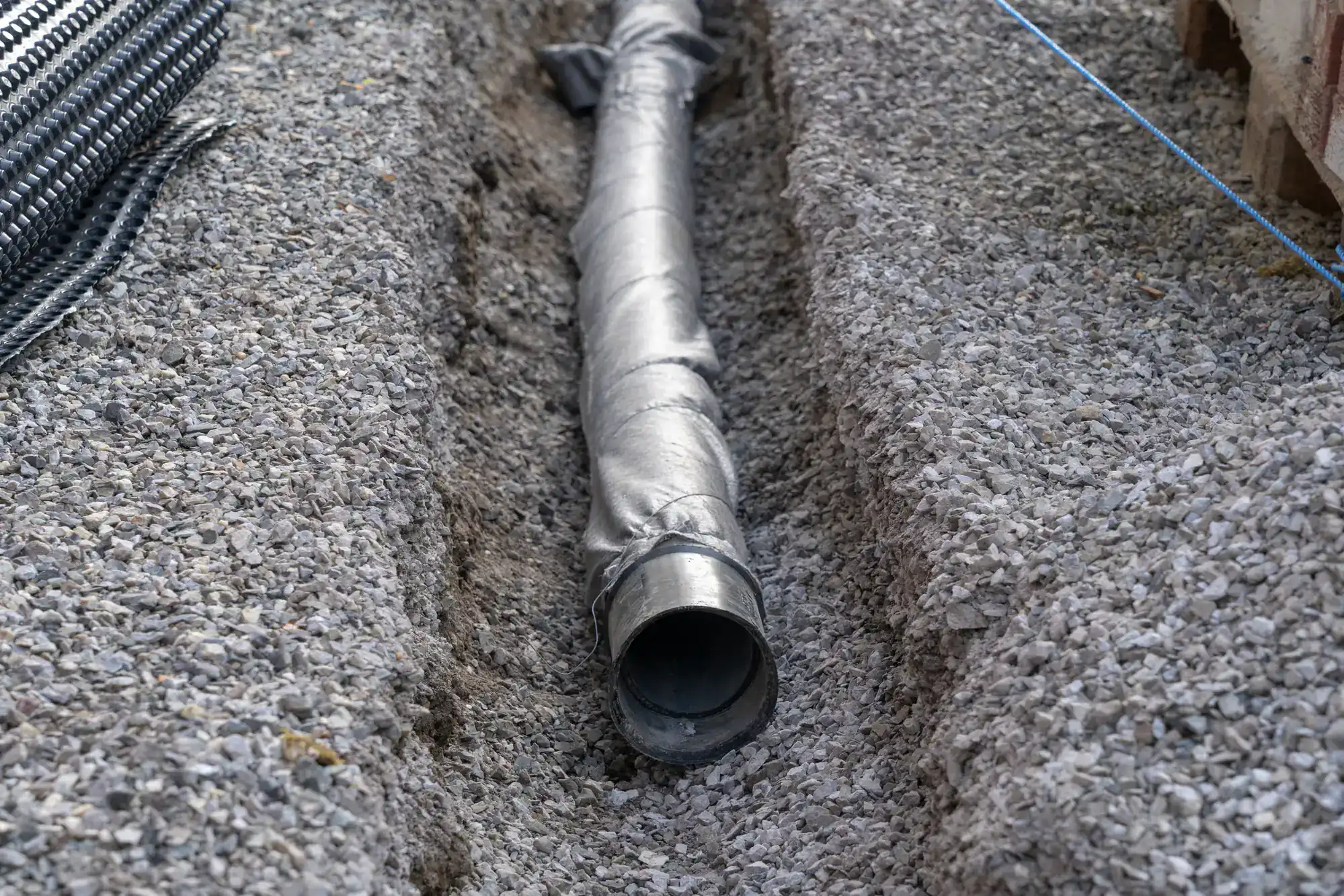
Installation means excavating a trench at the right depth deep enough to get below Long Island’s frost line so the pipe doesn’t crack in February laying geotextile fabric, placing washed angular gravel, setting perforated pipe at the correct slope, and wrapping it clean before backfill. When the work is done, disturbed areas are restored with topsoil and seed. The goal is a yard that looks like we were never there except that it drains now.
Ready to get started?
Every French drain installation we complete in Nesconset is built with the same material standard: double-punched geotextile fabric that keeps silt out of the gravel bed, rigid perforated pipe (not corrugated garden hose), washed angular gravel for maximum void space, and a defined outlet point that actually takes water somewhere. These aren’t upgrades they’re the baseline for a system that lasts 30 to 40 years instead of failing in five.
For homes in the Nesconset area, that means pipe depth is never a shortcut. Long Island frost depth can reach 36 inches in northern Suffolk County, and shallow installs crack. We also pay attention to slope a French drain that doesn’t move water continuously is just a trench full of gravel. Every system we design is built with fall into the run, so water keeps moving toward the outlet year-round.
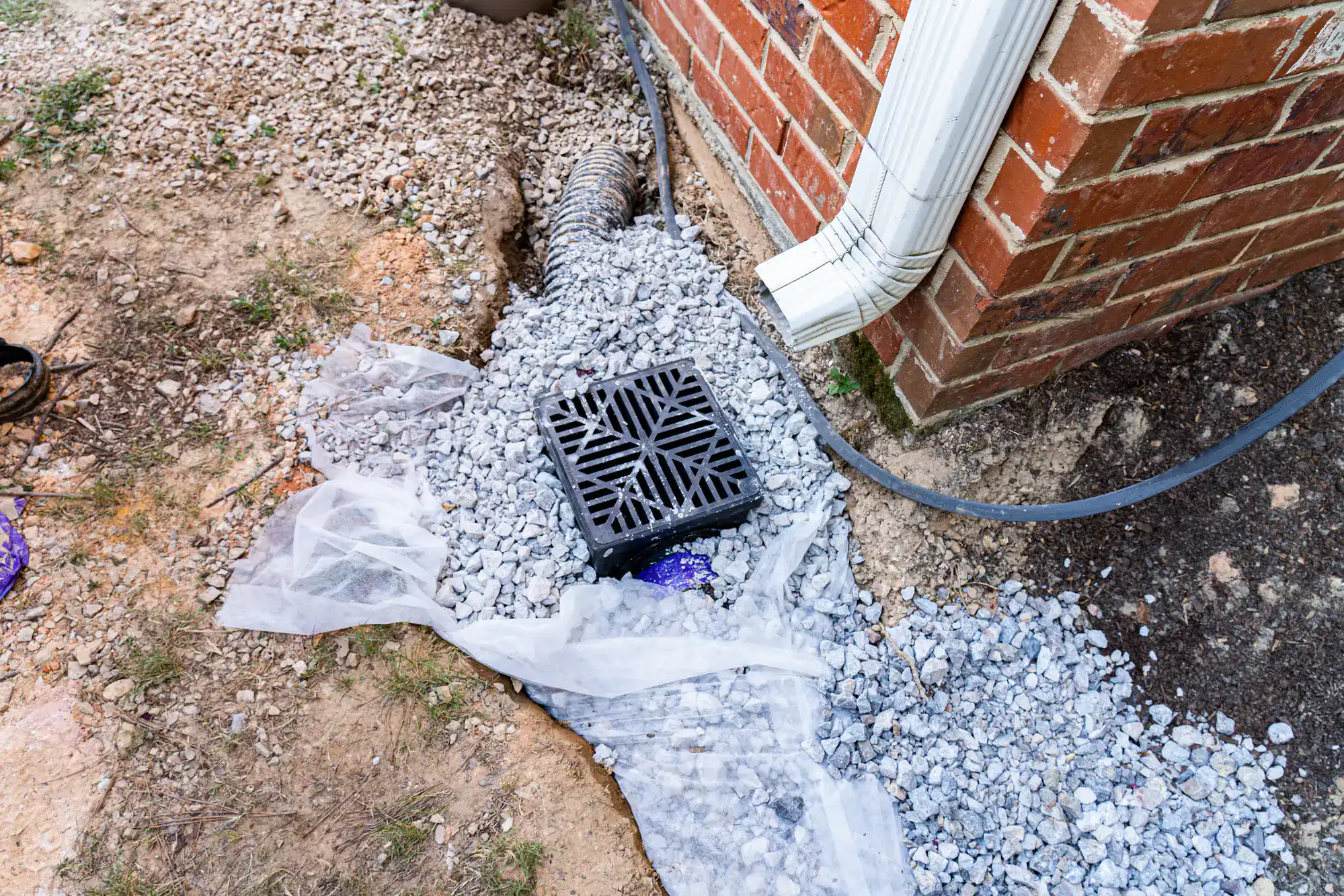
What’s included in every residential French drain installation we perform: the on-site drainage assessment, all utility marking and permit coordination with the Town of Smithtown, full excavation and installation, and yard restoration after the work is complete. If your situation calls for a dry well connection, a sump pump outlet tie-in, or regrading to redirect surface flow, we’ll tell you during the assessment and build it into the plan before work begins, not as an add-on surprise.
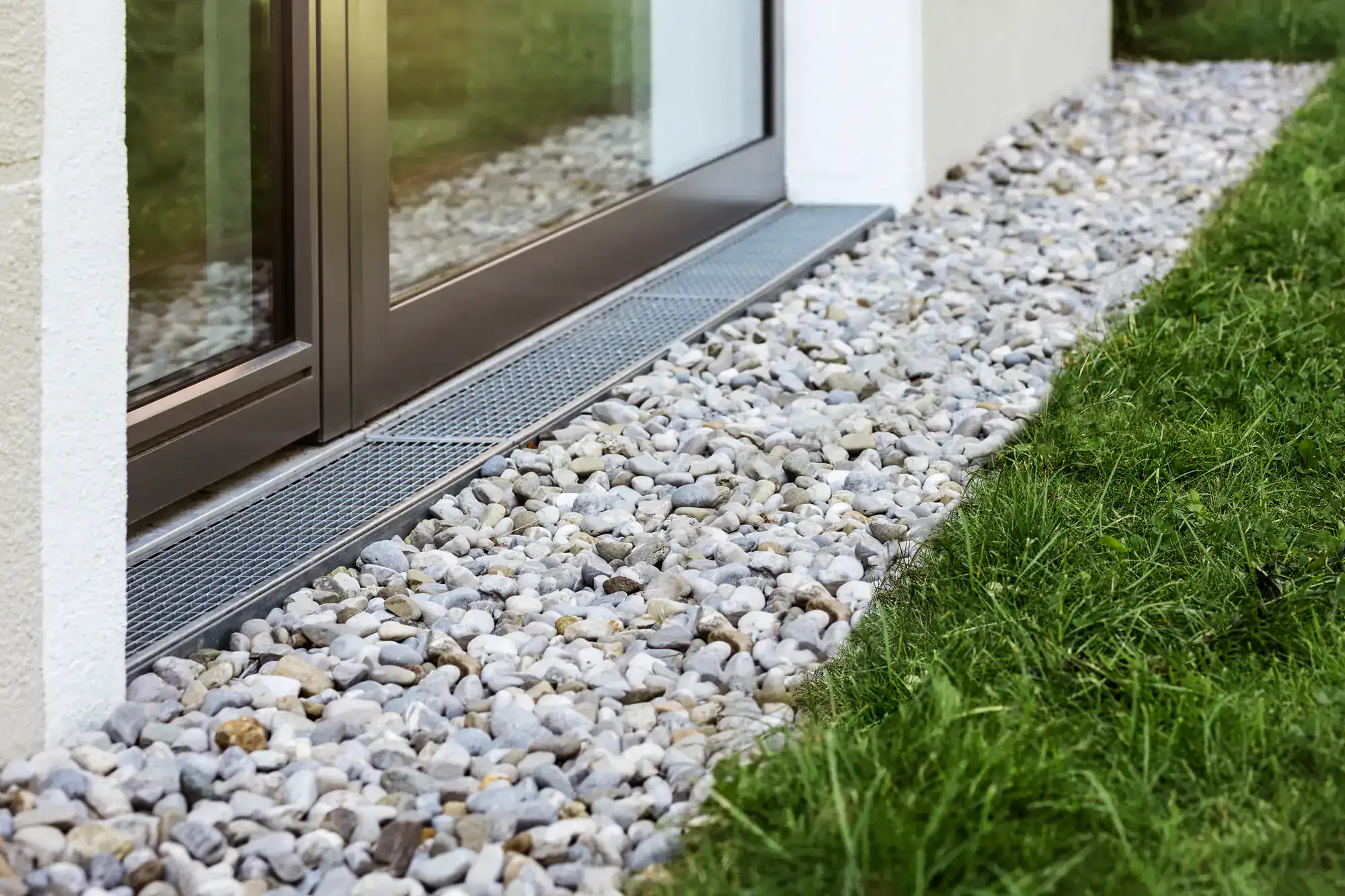
The most common reason is the soil. Nesconset sits on Long Island’s glacial moraine a zone of mixed clay, silt, and compacted glacial deposits that doesn’t drain the way the sandy south shore soils do. When clay-heavy soil gets saturated, it holds water rather than letting it percolate down. That’s why you’ll see standing water linger for two or three days after a storm that a sandier property would shed in a few hours.
The other factor is grade. Many homes in Nesconset were built in the 1960s and 70s, and over decades, settling and landscaping changes can create low spots that collect water with nowhere to go. A French drain for your yard intercepts that water at or below the surface and moves it to a proper outlet. In some cases, light regrading is part of the fix too we identify all of it during the site assessment so you get a complete picture, not a partial solution.
Most residential French drain installations fall somewhere between $5,000 and $12,000, with the national average sitting around $9,250. The range depends on how much linear footage the system requires, how complex the outlet situation is, and whether any additional work like regrading, a dry well connection, or a sump pump tie-in is part of the solution.
For Nesconset homeowners with median home values around $700,000, it helps to put that number in context. Foundation crack repair runs $15,000 to $50,000. Mold remediation starts at $3,000 and climbs fast. A wet basement can knock 10% or more off your home’s value at sale that’s $70,000 on a $700,000 home. A properly installed French drain system that solves the problem permanently is not an expense in that frame it’s the cheaper outcome by a wide margin. We give you an exact number after the site assessment, not a ballpark over the phone.
It depends on the scope of the work. The Town of Smithtown’s Building Department issues permits for drainage structures, and Smithtown’s zoning code explicitly recognizes them as regulated installations. If your French drain installation involves any excavation near a public right-of-way, road, or sidewalk, coordination with the Smithtown Superintendent of Highways is also required.
Beyond the permit itself, New York State law requires 811 utility notification before any excavation and in a community like Nesconset, where the town manages over 470 miles of roads, drainage systems, and underground infrastructure, that step is not optional. We handle all of it: the 811 call, the permit application with the Town of Smithtown, and inspection coordination. You don’t navigate the Building Department on your own. Unpermitted drainage work creates real problems at resale, and in a market where Nesconset homes are selling at a premium, that’s not a risk worth taking.
Deep enough to stay below the frost line and on Long Island, particularly in northern Suffolk County where Nesconset is located, that means frost depth can reach up to 36 inches. Drainage pipe installed too shallow freezes during winter, cracks, and fails by spring. It’s one of the most common reasons homeowners call us after a previous install stopped working the pipe was laid at 12 or 18 inches, froze solid, and split.
The correct depth also depends on what you’re draining. A surface water French drain for a soggy yard doesn’t need to go as deep as a perimeter system designed to relieve hydrostatic pressure against a foundation. We determine the right depth during the site assessment based on your specific drainage goal, the soil profile, and the outlet location. There’s no universal number but there is a minimum, and we don’t cut below it.
Possibly, but it’s worth checking. Corrugated plastic pipe, which was commonly used in drainage installations from that era, has a functional lifespan of roughly 20 to 30 years. If your home was built in the 1970s and has never had its drainage system professionally assessed, that system if one was even installed is likely past its useful life. Silt infiltration, root intrusion, and freeze-thaw cracking are the most common failure modes, and none of them are visible from the surface.
The other issue is design standards. Drainage systems from the 1960s and 70s were not engineered for the storm intensity Long Island sees today. A system that handled rainfall adequately in 1978 may be completely overwhelmed by a modern nor’easter. If your yard or basement started having water problems in the last 5 to 10 years and the house is 50 years old, the drainage infrastructure is often the first place to look not the last.
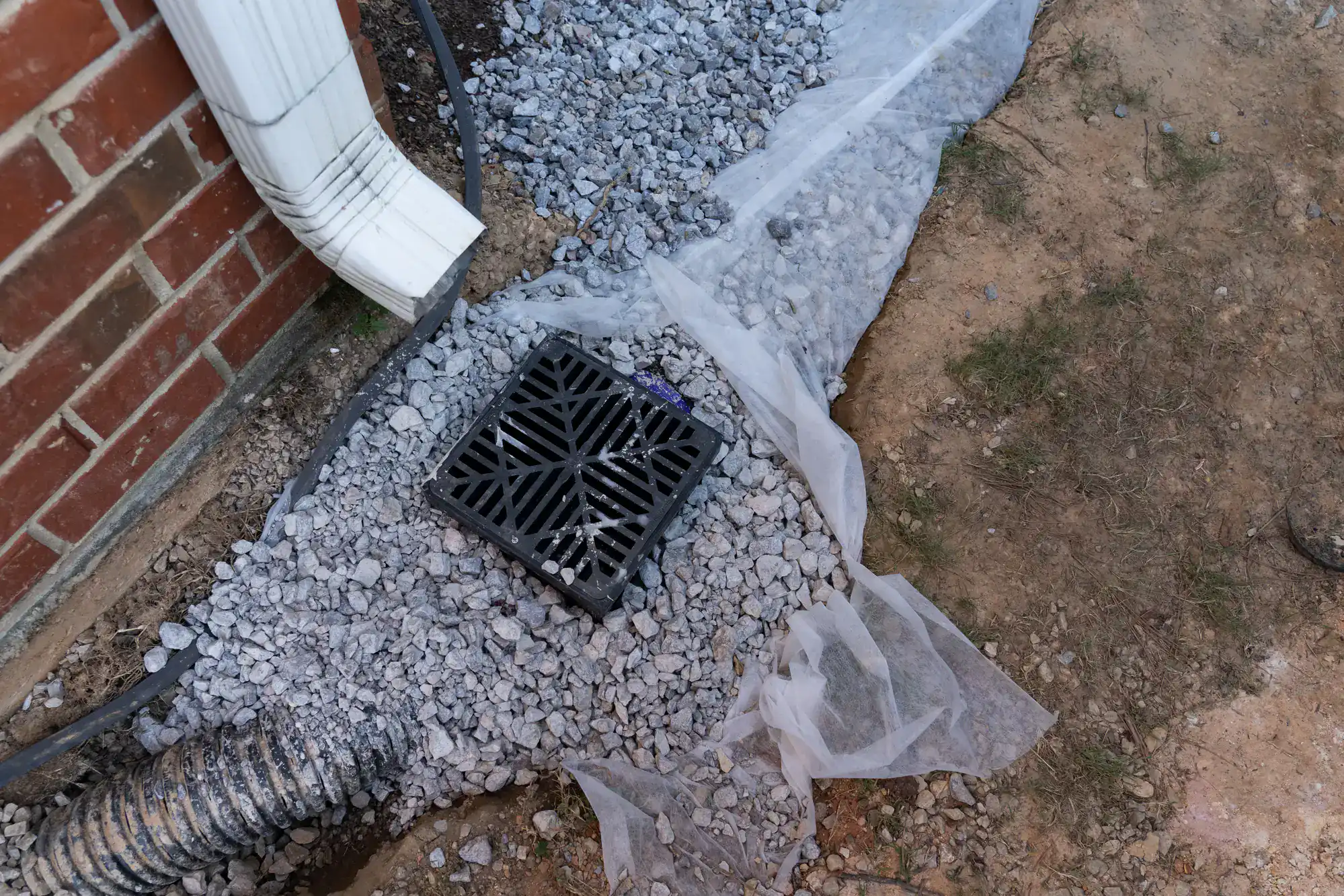
They solve different parts of the same problem. A French drain is a linear system it collects water along a trench and moves it from one place to another, typically to a daylight outlet, a storm drain connection, or a dry well. A dry well is a vertical infiltration structure that receives water and allows it to percolate slowly into the surrounding soil. In a lot of Nesconset installations, they work together: the French drain collects and conveys the water, and the dry well is where it ultimately discharges.
Whether you need one, the other, or both depends on your soil’s infiltration rate and where the water is coming from. In areas of Nesconset with heavier clay content which is common in the glacial moraine zone soil infiltration is slow, and a dry well alone may not be enough to handle storm volume. In those cases, a French drain that moves water to a better discharge point is the more reliable fix. We assess the soil and the drainage pattern during the site visit and recommend the combination that actually works for your specific property not the cheapest option, and not more than you need.