
Hear from Our Customers
When your yard stays soggy for three days after every storm, or your basement takes on water every spring, it stops being an inconvenience and starts being a liability. In Smithtown, that liability is measured in real dollars. With median home sale prices approaching $940,000, a documented drainage problem wet basement, saturated lawn, visible water intrusion can cost you 10% or more at the time of sale. That’s roughly $94,000 walking out the door on a median-priced home. A properly installed French drain system runs $5,000 to $9,250 for most residential projects. The math isn’t complicated.
What makes Smithtown different from most of Long Island is what’s underneath it. The “Smithtown clay” a documented glaciolacustrine clay formation in north-central Suffolk County actively prevents water from percolating downward. After any meaningful rain event, that clay holds moisture in place, keeping it pressed against your foundation and saturating your yard long after the storm has passed. A French drain system designed for this specific soil condition intercepts that water before it reaches your foundation and redirects it to a controlled outlet point. That’s not a general Long Island fix. That’s a fix built for what’s happening under your property specifically.
And for homes near the Nissequogue River watershed which includes large portions of Kings Park, Smithtown hamlet, and Nesconset groundwater flooding isn’t a seasonal fluke. It’s a documented, cyclical pattern with records going back to 1936. A French drain system for yard drainage in Smithtown, NY isn’t optional in these areas. It’s the difference between a home that holds its value and one that quietly loses it every wet season.
Gold Coast Landworks is a residential drainage contractor that works specifically in Suffolk County. We’re not a general landscaping company that added drainage to the service list drainage is what we do, and Smithtown’s north shore terrain, clay soil profile, and Nissequogue watershed conditions are part of our working knowledge, not something we look up after you call.
We’ve worked across Smithtown’s hamlets from Kings Park and Nesconset to St. James and Fort Salonga and we understand that drainage problems here don’t all look the same. A property on rolling terrain above the Nissequogue has different challenges than one in a flat Commack subdivision. We assess the actual conditions on your lot before we recommend anything, and we design systems that match what’s really happening, not what’s easiest to install.
Every project we complete is backed by a workmanship warranty, and every system we install uses materials specified for longevity not the minimum required to get the job done and move on.
It starts with a free on-site assessment. We come to your property, walk the yard, evaluate the slope and soil conditions, and look at where water is entering and where it needs to go. In Smithtown, that assessment always includes an evaluation of your proximity to the Nissequogue River basin and whether the clay layer beneath your yard is contributing to surface saturation or subsurface pressure against your foundation. These aren’t questions we can answer over the phone they require eyes on the ground.
From there, we design the system. That means engineering the correct slope typically one inch of drop per eight to ten feet of pipe selecting the right outlet point for your lot, and specifying the materials that will hold up in Suffolk County’s clay-dominant soil. We also handle any applicable permitting or review required under Smithtown’s Stormwater Management Program. You don’t need to figure out what the Town’s Department of Environment and Waterways requires we already know, and we manage that process as part of the job.
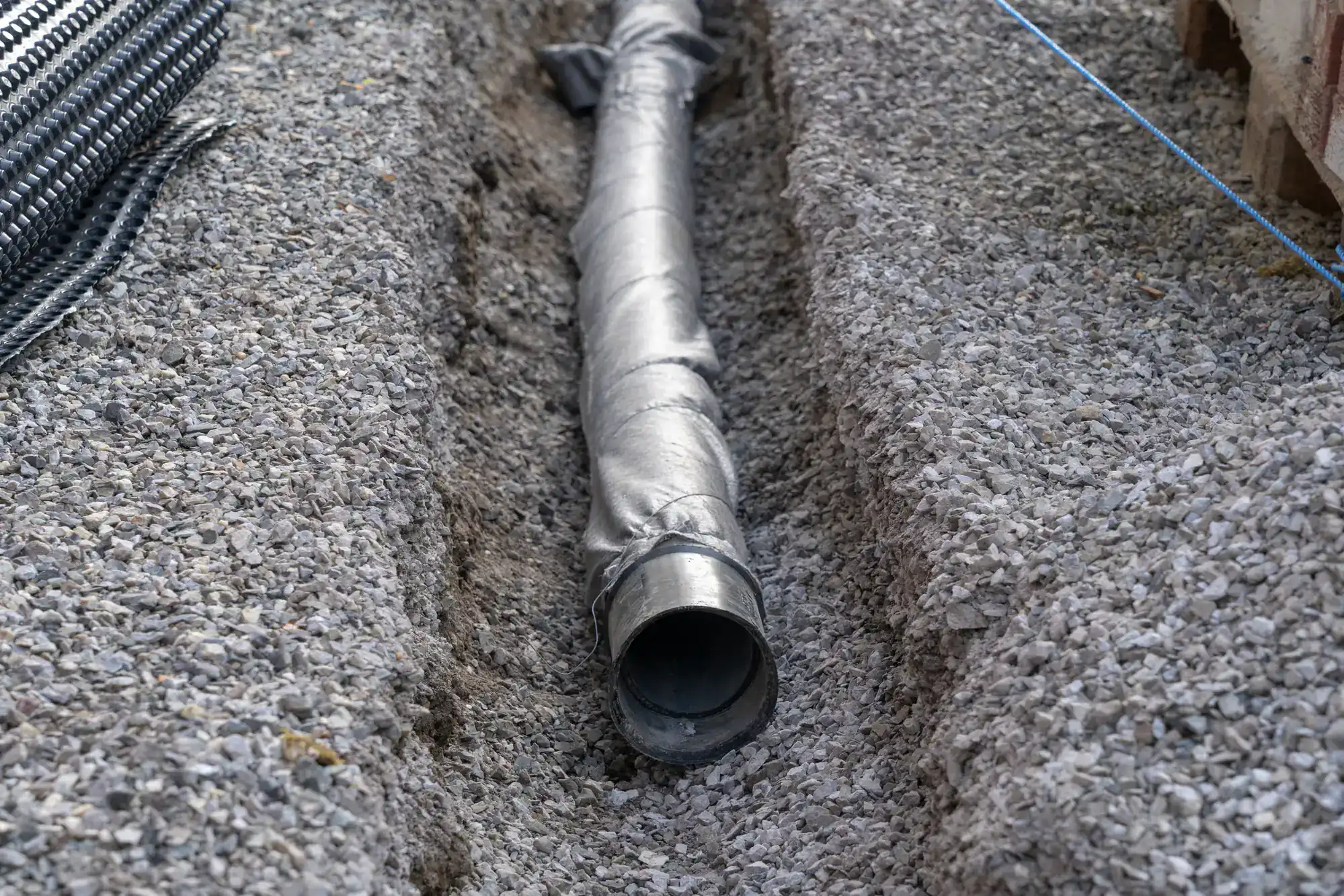
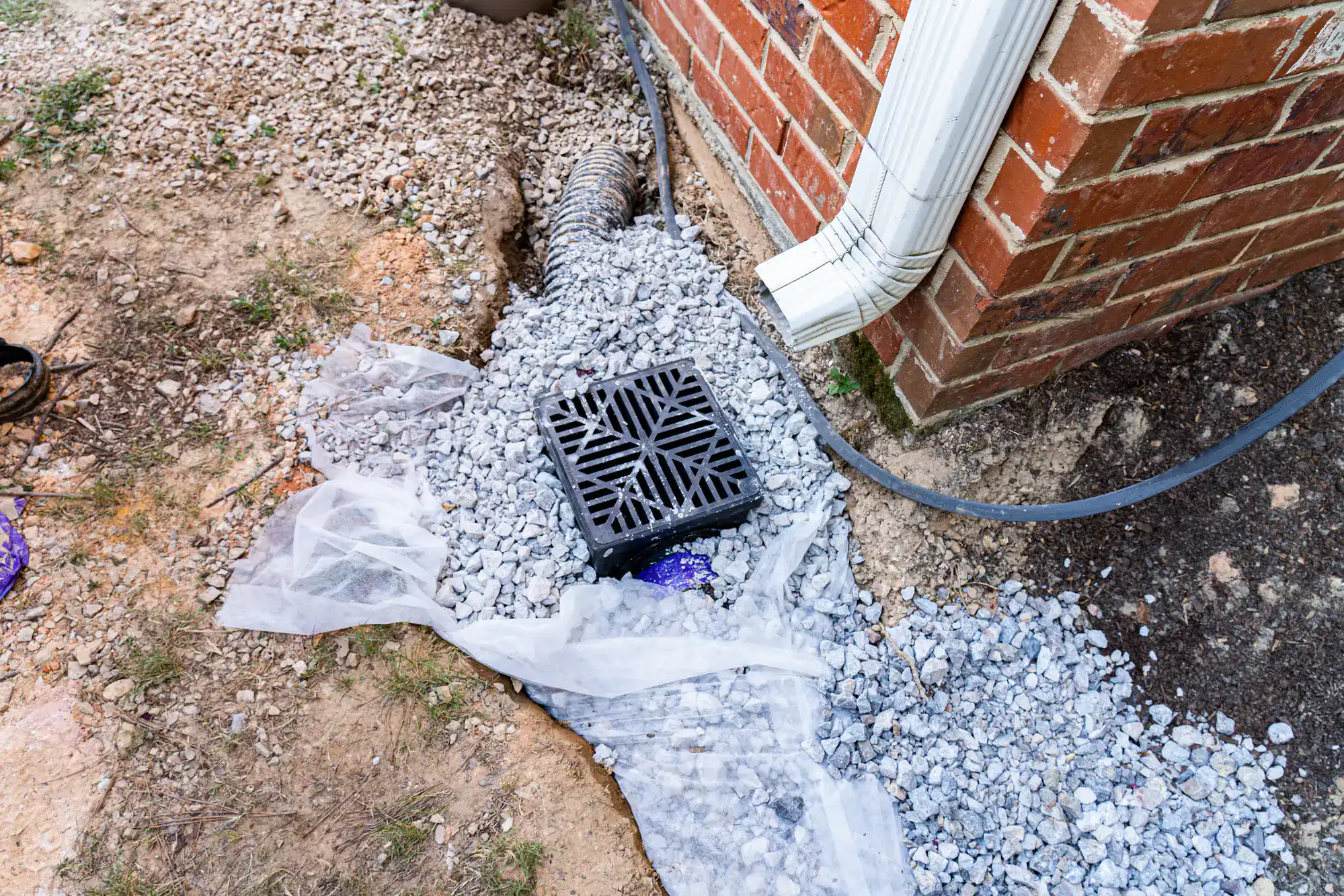
Installation typically takes one to three days depending on system complexity and yard size. We excavate the trench, line it with double-punched geotextile filter fabric, fill it with washed angular gravel, lay the perforated pipe at the correct slope, wrap and backfill the system, and restore your yard topsoil, seeding or sod matching, cleanup. When we leave, your yard looks like we were there to fix a problem, not create a new one.
Ready to get started?
The difference between a French drain that lasts 30 to 40 years and one that clogs within five comes down to a short list of decisions that most homeowners don’t know to ask about. In Smithtown’s clay-heavy soil environment, those decisions matter more than almost anywhere else on Long Island. Clay is full of fine particles that migrate into drainage systems over time. If your contractor skimps on filter fabric using a thin, single-layer material instead of double-punched geotextile those particles will infiltrate the gravel bed and eventually choke the system. We don’t cut that corner.
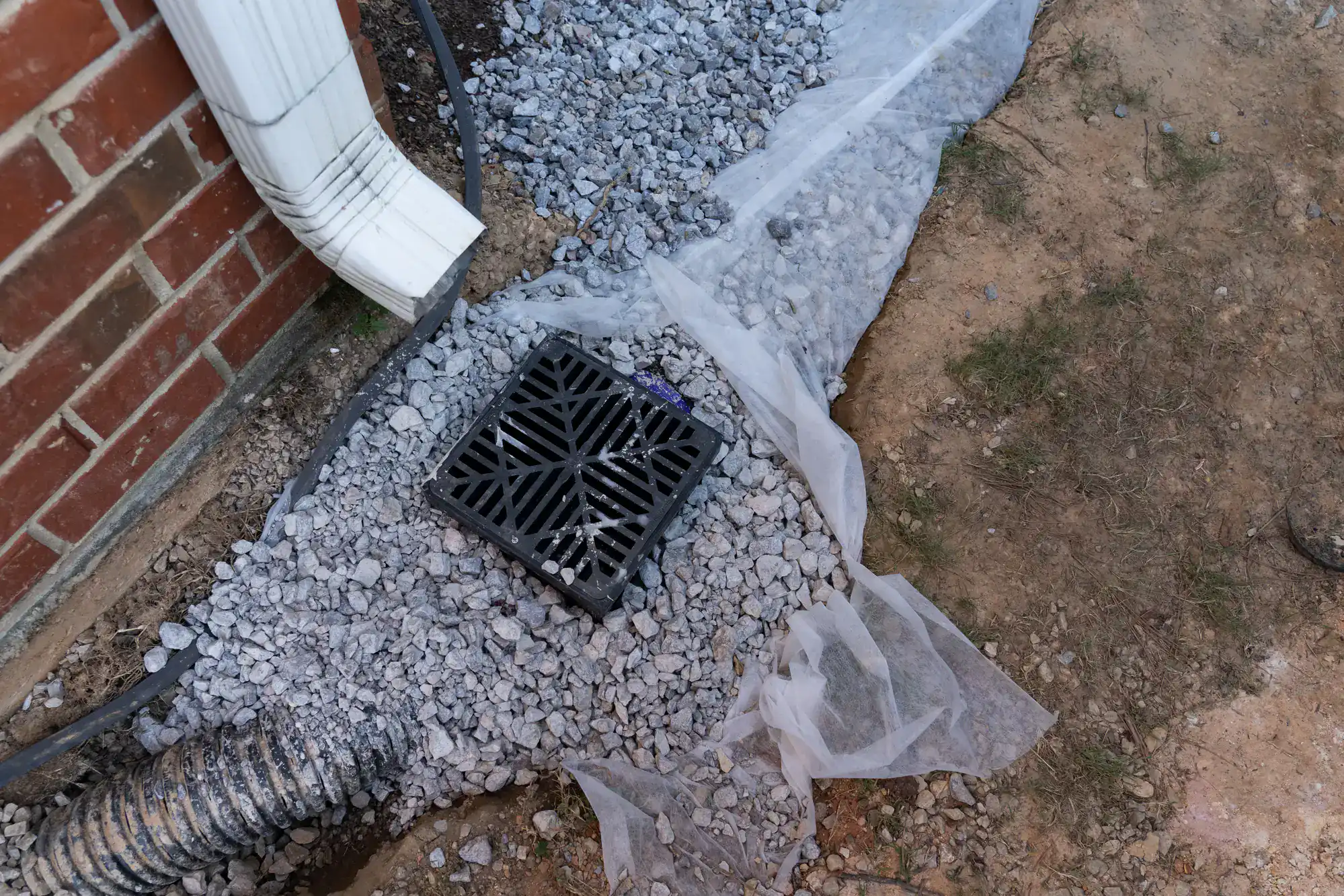
Every French drain system we install in Smithtown uses double-punched geotextile filter fabric wrapping the entire gravel bed, not just the pipe. We use washed angular gravel not round pea gravel, which compacts over time and loses the void space that makes drainage work. The perforated pipe is properly sloped and connected to a designed outlet point whether that’s a daylight outlet, a dry well, or a catch basin that’s matched to your specific lot and compliant with Suffolk County’s stormwater discharge requirements. We also account for Smithtown’s freeze-thaw cycle, burying pipe at depths that prevent winter freeze damage, which is a failure point that catches a lot of DIY and low-quality installs in their first season.
For homes near the Nissequogue River or in flood-designated zones, we factor in the Town of Smithtown’s DEW review process and any environmental setback requirements that apply to your property. This is a regulatory layer that out-of-area contractors often miss entirely, and it can create real problems for homeowners down the line. We handle it as a standard part of every project in this area.
The most common reason is the clay soil that sits beneath most of Smithtown’s residential neighborhoods. There’s a documented geological feature in north-central Suffolk County called the “Smithtown clay” a glaciolacustrine clay layer that actively prevents water from percolating downward into the ground. When it rains, that clay becomes saturated quickly and holds moisture in place rather than allowing it to drain away. The result is a yard that stays soggy for days, sometimes longer, after every significant storm.
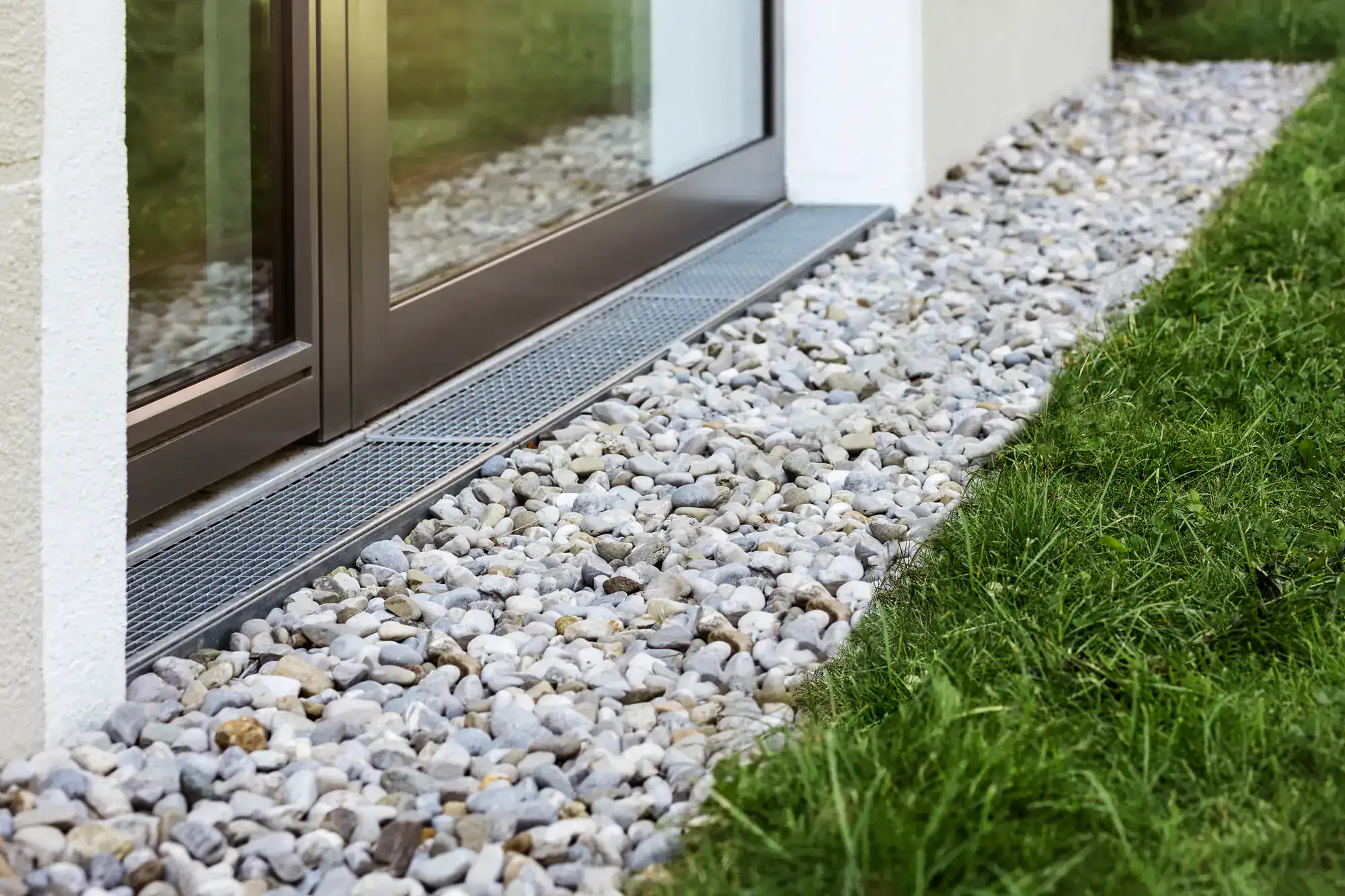
The fix isn’t adding topsoil or regrading the surface those approaches don’t address what’s happening underground. A French drain system intercepts the water before it accumulates, channels it through a properly sloped pipe bedded in angular gravel, and routes it to a controlled outlet away from your yard and foundation. In Smithtown’s soil conditions, this is the correct long-term solution. Surface fixes in clay-dominant soil are temporary at best.
For most residential properties in Smithtown, French drain installation runs between $5,000 and $9,250. The range depends on the length of the system, the complexity of the outlet design, the depth required to clear the frost line, and whether any permitting or environmental review is needed which can apply to properties near the Nissequogue River or in flood-designated zones within the town.
It’s worth putting that number in context. Smithtown homes are selling at a median of close to $940,000. Foundation repair which is what you’re often looking at when drainage problems go unaddressed for years runs $15,000 to $50,000. Mold remediation starts around $3,000 and escalates quickly. A properly installed French drain system is the least expensive option on that list by a significant margin, and it’s the only one that addresses the cause rather than the damage. When you frame it that way, the cost of a quality drainage system is easy to justify.
It depends on where the water is coming from, and that’s exactly why a site assessment matters before any work is recommended. An exterior French drain installed around the perimeter of the foundation intercepts groundwater and surface water before it reaches the foundation wall, which is the right solution when water is entering through the foundation due to hydrostatic pressure from saturated soil. In Smithtown, where the clay layer holds water against foundation walls for extended periods after every storm, this is a common and effective application.
If water is entering through cracks in the foundation wall itself or through the floor, an interior drain system may be needed in addition to or instead of an exterior one. These are different systems with different functions. A contractor who recommends the same solution for every wet basement without evaluating the specific source of the water isn’t giving you an honest assessment. We look at your basement, your soil conditions, your grade, and your proximity to the Nissequogue watershed before we tell you what we think will actually work.
It depends on the scope of the project and where your property is located within the town. The Town of Smithtown operates a formal Stormwater Management Program under state and federal Clean Water Act requirements, and stormwater management facilities on private property can require maintenance agreements that get recorded with the Suffolk County Clerk as deed restrictions. For properties near the Nissequogue River, adjacent wetlands, or within flood-designated zones, the Town’s Department of Environment and Waterways may also need to review the project before work begins.
This isn’t bureaucratic trivia it’s something that can affect your property’s title and your ability to sell the home down the road. We’re familiar with Smithtown’s permitting requirements and the DEW review process, and we handle that side of the project as part of our standard scope. You shouldn’t have to figure out which regulatory boxes apply to your specific lot. That’s our job.
A French drain installed with the right materials and proper engineering should last 30 to 40 years. The variables that determine whether yours hits that range or fails within five years are the quality of the filter fabric, the type of gravel used, the slope of the pipe, and the design of the outlet. In Smithtown’s clay-dominant soil, the filter fabric is the most critical component it’s what prevents fine clay particles from migrating into the gravel bed and eventually clogging the system. Double-punched geotextile fabric is the correct specification for this soil type. Thin, single-layer fabric is not.
Smithtown’s freeze-thaw cycle also matters. Average January lows here drop close to 29°F, which means pipe installed too shallow will freeze in winter and crack, destroying the system before the second season. Proper burial depth accounts for frost penetration and protects the pipe through Long Island’s winters. These aren’t details that come up in a quick online quote they’re the kind of things that separate a system that works from one that fails quietly and expensively.
They solve related but different problems, and many Smithtown properties actually benefit from both working together. A French drain is a linear system it collects water along a trench, moves it through a sloped perforated pipe, and routes it to a discharge point. A dry well is a vertical structure that receives water and allows it to slowly percolate into the surrounding soil. The right choice depends on your lot’s specific conditions: how much water you’re dealing with, where it’s coming from, what your soil’s percolation rate is, and where a discharge outlet can realistically be located.
In Smithtown, the clay soil layer complicates the dry well equation. If a dry well is installed into clay-dominant soil without reaching a more permeable layer below, it fills up and stops functioning essentially becoming an expensive hole. A French drain routed to a daylight outlet or a dry well positioned below the clay layer can be the more reliable long-term solution depending on the site. This is exactly the kind of evaluation that needs to happen on your specific property before any recommendation is made. There’s no universal answer that applies to every yard in Smithtown, which is why we assess before we propose anything.