
Hear from Our Customers
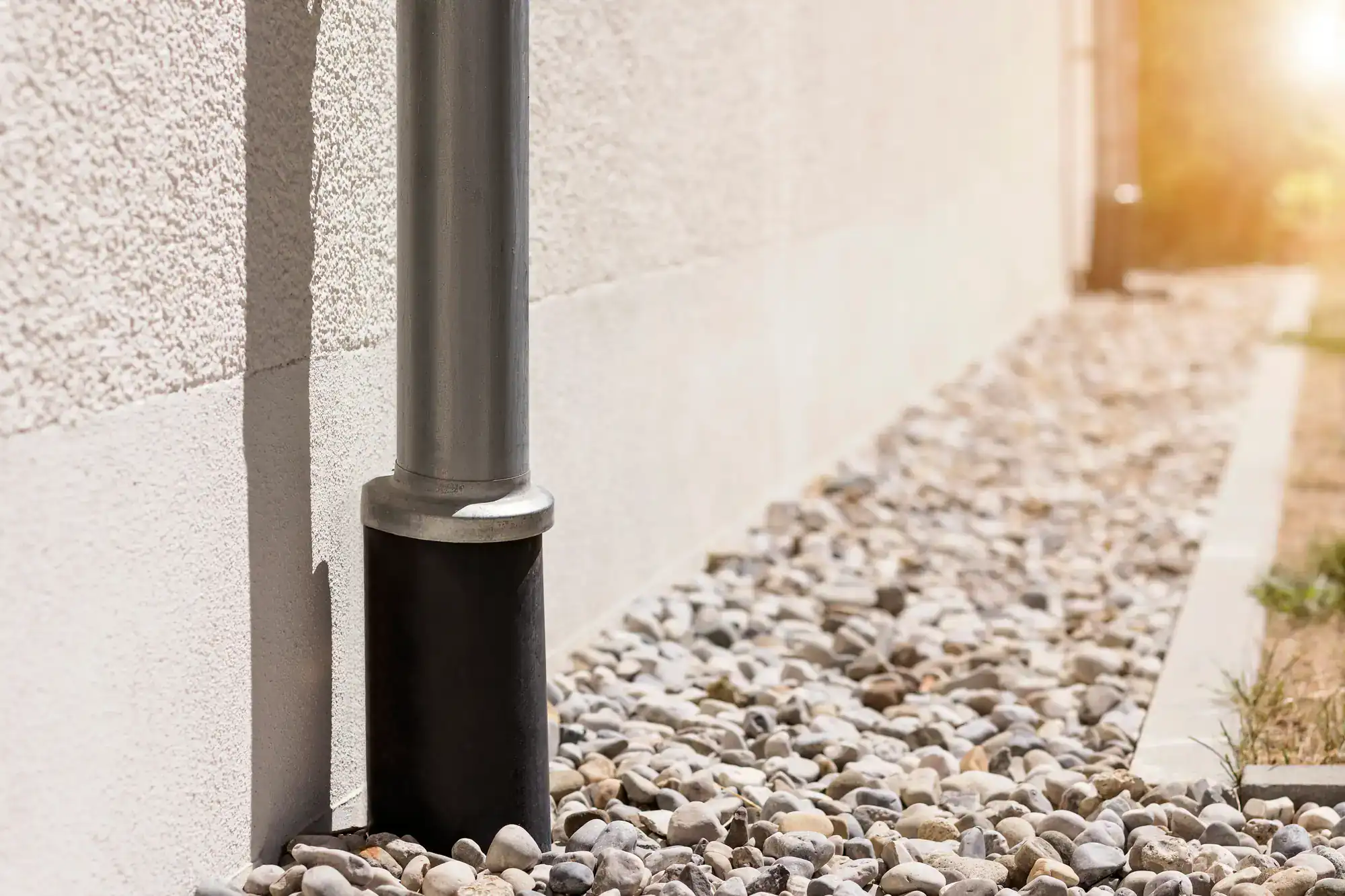
Standing water isn’t just an eyesore. On a Fort Salonga property where lots run an acre or more, mature trees shade the ground, and clay-heavy soil slows absorption to a crawl pooling water puts real pressure on your foundation over time. Left unaddressed, that pressure finds its way in. Once water starts seeping into a basement, you’re not just dealing with a drainage problem anymore. You’re dealing with mold, structural damage, and a repair bill that dwarfs what it would have cost to fix the drainage in the first place.
A properly installed French drain intercepts groundwater before it reaches your foundation and channels it away from the areas where it causes damage. For most Fort Salonga homeowners, that means a drier basement through every nor’easter, every spring snowmelt, and every heavy summer storm not just the manageable ones. The system works quietly underground, year after year, without requiring anything from you.
The homes in Fort Salonga were largely built between the 1950s and 1970s, when drainage engineering wasn’t a priority. Many of them have no functional perimeter drainage at all. If your yard stays soggy for days after rain or your basement shows signs of moisture every spring, that’s not bad luck it’s a system that was never there to begin with. That’s exactly the kind of problem a French drain installation is designed to solve permanently.
We’re not a national chain that added Fort Salonga to a service area list. Our name comes from the same stretch of North Shore that Fort Salonga sits on the eastern end of Long Island’s historic Gold Coast. That’s not a coincidence. This is the area we work in, and the drainage challenges here are the ones we’ve built our process around.
Fort Salonga properties are not typical suburban lots. Large wooded acreage, significant grade changes, and the clay-rich glacial soil that runs through north-central Suffolk County create drainage conditions that require actual site-specific engineering not a generic trench-and-pipe approach. Whether your property falls under the Town of Huntington or the Town of Smithtown side of Fort Salonga’s split jurisdiction, we handle the permit research and filings as part of the job.
We do one thing in this space and we do it well: residential French drain installation on North Shore properties, designed to last and built to perform through Long Island’s full range of weather.
It starts with a free on-site assessment. There’s no way to accurately design a French drain system for a Fort Salonga property without seeing it. The lot size, the slope, the soil conditions, where water is entering, where it needs to go all of that shapes the design. A phone quote without a site visit isn’t a real quote. We walk the property, identify the source of the problem, and map out a system that addresses it at the root.
From there, we handle permit research before any work begins. Because Fort Salonga straddles the Town of Huntington and Town of Smithtown boundary, the applicable jurisdiction depends on where your property sits and each town has its own process. We confirm which applies to your address, manage the filings, and call 811 for utility marking as required by New York State law before any excavation starts. You don’t have to navigate any of that.
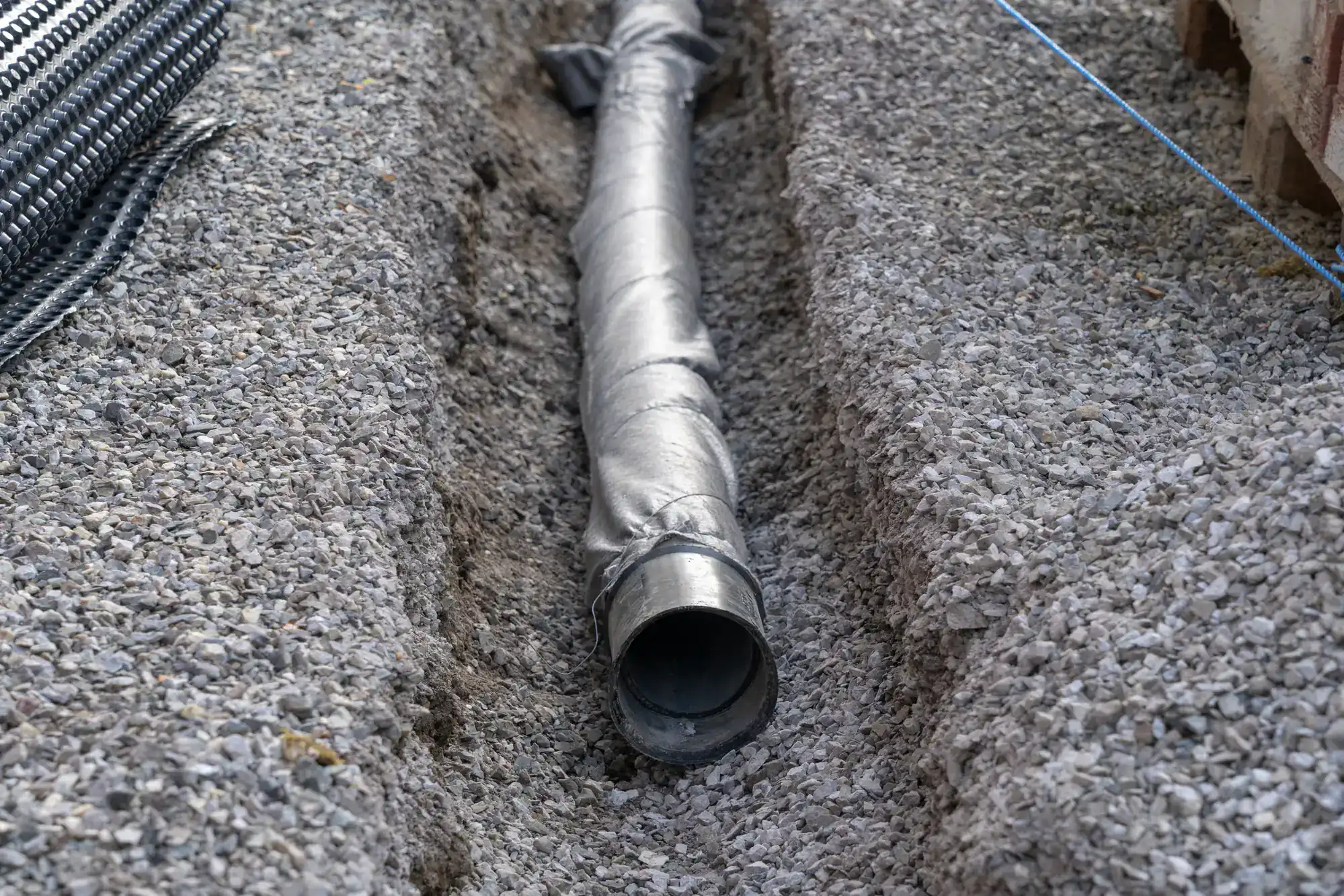
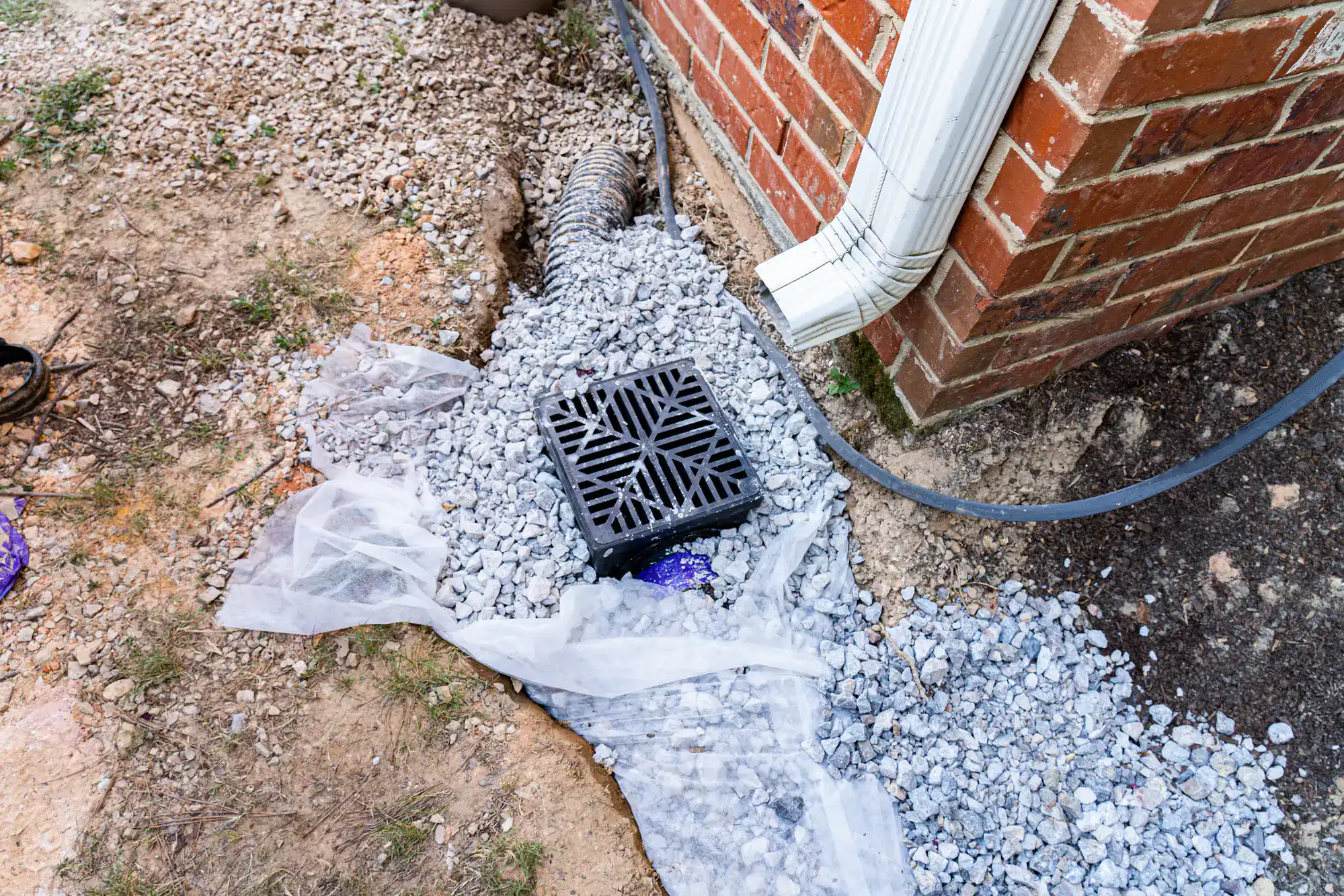
Installation involves excavating a trench along the path designed during the assessment, laying a geotextile filter fabric, placing perforated pipe at the correct depth for Long Island’s frost line, backfilling with washed angular gravel, and routing the system to a proper outlet. Pipe depth matters here systems installed too shallow will freeze during North Shore winters and fail by spring. Once the system is in, we restore the disturbed ground: topsoil replaced, lawn seeded or sodded to match. The finished result should be invisible. You’ll know it’s working because the water problem is gone.
Ready to get started?
Every French drain installation we complete starts with a site-specific design not a template. Fort Salonga’s combination of large wooded lots, glacially-formed terrain, and the clay-heavy soil documented in north-central Suffolk County means the system needs to be engineered for what’s actually on your property. That includes calculating the correct slope across your real grade, selecting filter fabric appropriate for clay-influenced soil, and positioning the outlet point so it discharges safely without redirecting water toward a neighbor’s property or toward the Crab Meadow Watershed along Fort Salonga’s northern edge.
The installation itself uses professional-grade materials throughout perforated pipe rated for subsurface drainage, heavy-duty non-woven geotextile fabric to keep fine clay particles from infiltrating the system over time, and washed angular gravel that maintains void space for water movement. These aren’t interchangeable choices. The wrong fabric in clay soil clogs within a few years. Corrugated pipe that’s standard on lower-cost jobs cracks under freeze-thaw stress. The material decisions made during installation determine whether the system lasts five years or thirty.
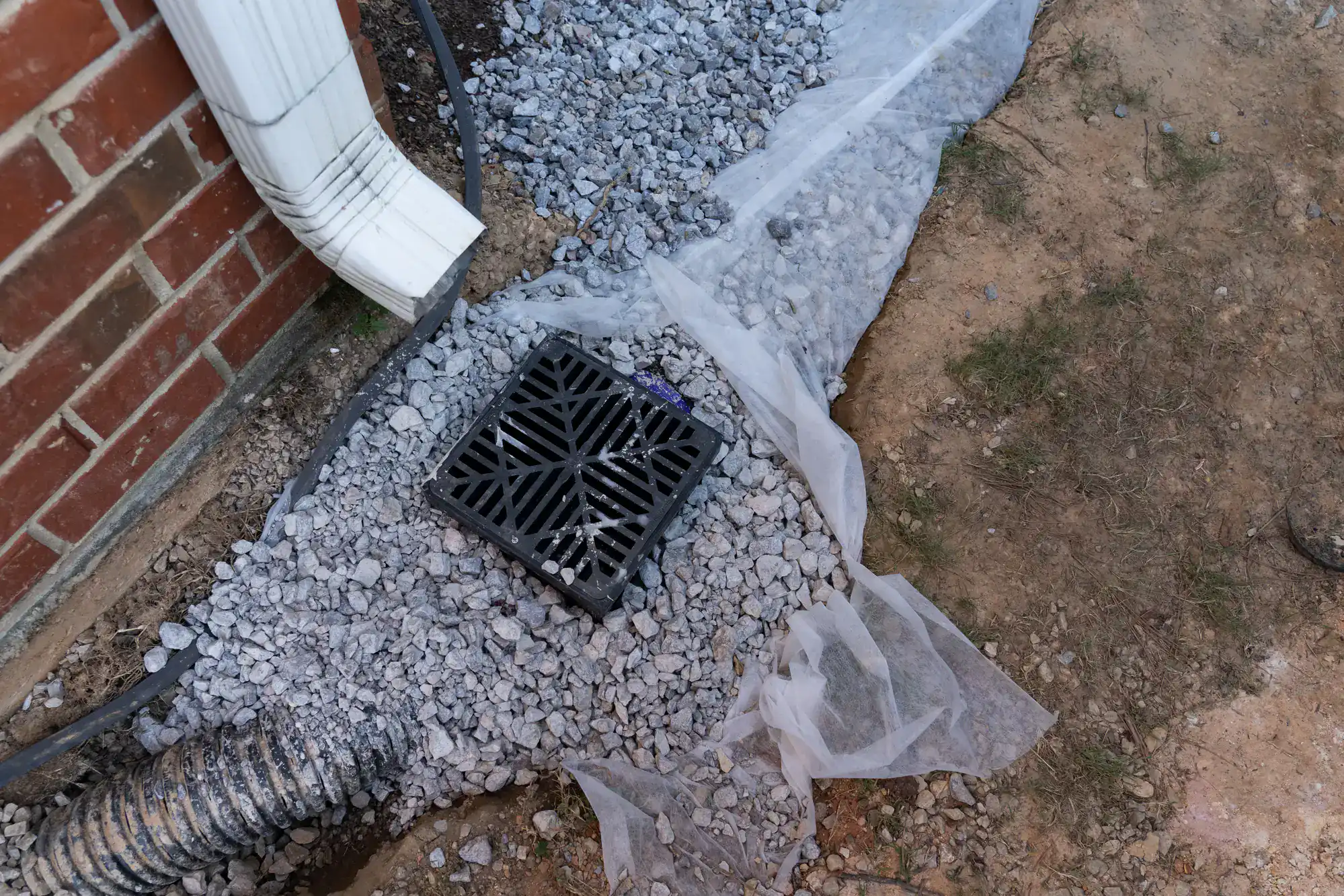
For properties with multiple drainage challenges a wet basement, a low spot in the yard that pools after rain, downspouts discharging too close to the foundation we assess the full picture and design an integrated solution. That may include catch basins, dry wells, or corrected downspout routing alongside the French drain system. One assessment, one cohesive plan, one contractor responsible for the outcome.
Yes, and it’s one of the first things we confirm before any work begins. Fort Salonga straddles the boundary between the Town of Huntington and the Town of Smithtown, which means your permit requirements depend entirely on which side of that line your property falls on. The two towns have different application processes, different environmental review requirements, and different stormwater management regulations. The Town of Smithtown’s Department of Environment and Waterways governs drainage work on the Smithtown side, while Huntington has its own building and environmental department procedures particularly relevant for properties near the Crab Meadow Watershed.
Most homeowners don’t know which town they fall under until they try to pull a permit. We handle that research as part of the job, confirm the correct jurisdiction for your address, and manage the filing process from start to finish. New York State also requires calling 811 before any excavation that’s a legal requirement we handle on every project, not something that gets skipped. You shouldn’t have to figure out municipal bureaucracy to fix a drainage problem on your own property.
The most likely reason is the soil itself. Fort Salonga sits on the Harbor Hill moraine the terminal moraine left by the last glacial advance on Long Island and the soil in this part of north-central Suffolk County contains significant clay content. Geologists have specifically documented a clay unit in this area that impedes the downward movement of water. When rain falls on clay-heavy soil, it doesn’t percolate down the way it would in sandier ground. It sits on the surface, moves laterally, and collects in low spots. That’s not a grading issue you can fix with topsoil. It’s a soil permeability issue that requires a subsurface drainage solution.
A French drain system works by intercepting that water underground before it pools on the surface or builds up against your foundation and channeling it to a controlled outlet point. On Fort Salonga’s larger lots with mature tree canopy and significant grade changes, the system needs to be designed around the actual topography of your property. The slope, the soil conditions, the location of low spots, and the available outlet points all factor into the design. A properly engineered French drain for yard drainage in Fort Salonga will eliminate chronic pooling in most cases permanently.
For most residential French drain installations on Long Island, you’re looking at a range of roughly $5,000 to $15,000 depending on the scope of the system. The main cost drivers are the total length of pipe needed, the depth required, the complexity of the terrain, and whether the project involves additional components like catch basins, dry wells, or corrected downspout routing. Fort Salonga’s larger-than-average lot sizes and the engineering demands of clay-influenced North Shore soil tend to push projects toward the middle and upper end of that range compared to smaller suburban lots in other parts of Suffolk County.
That said, the more useful number to hold in mind is what it costs to do nothing. Foundation repair on a North Shore home runs $15,000 to $50,000. Mold remediation starts at $3,000 and climbs quickly once it spreads through a finished basement. In a market where Fort Salonga homes regularly sell for $1 million or more, a drainage problem that suppresses your sale price by even 10% represents a six-figure loss. A French drain installation is not an expense it’s protection for an asset you’ve spent years building equity in. We provide a detailed, transparent quote after the on-site assessment so you know exactly what you’re paying for before any work begins.
It’s a fair concern, especially on Fort Salonga properties where mature trees and established landscaping represent years sometimes decades of investment. The honest answer is that installation does involve excavation, and the trench path needs to be planned carefully to avoid root systems from large, established trees. During the site assessment, we map the trench route with that in mind. In most cases, it’s possible to design the system in a way that avoids the root zones of significant trees entirely, or routes around them with minimal impact.
Yard restoration is a standard part of every installation, not an add-on. Once the system is in and the trench is backfilled, we replace topsoil and seed or sod disturbed areas to match the existing lawn. The goal is a finished result that looks like the work was never done except that the drainage problem is gone. For homeowners with formal gardens, specific plantings near the trench path, or specimen trees they’re particularly concerned about, bring that up during the assessment. We’ll factor it into the design and be direct with you about what the tradeoffs are, if any.
Depth depends on what the system is designed to do, but on Long Island, frost depth is a non-negotiable factor in that calculation. The frost line on Long Island is typically 36 inches, and French drain pipes installed too shallow will freeze during North Shore winters cracking the pipe, compromising the filter fabric seal, and allowing fine soil particles to infiltrate and clog the system. By the time the ground thaws in spring and you realize the system isn’t working, the damage is already done. This is one of the most common failure points in both DIY French drain installations and work done by contractors who don’t specialize in drainage.
For perimeter foundation drains, the pipe typically needs to be installed at or below the footing level of the foundation which on many of Fort Salonga’s older homes built in the 1950s and 1960s may be 4 to 6 feet down. For yard drainage systems addressing surface pooling, the depth is shallower but still needs to account for frost. The correct depth for your specific system depends on what you’re trying to solve and the conditions on your property, which is why the on-site assessment matters before any design decisions are made.
A properly installed French drain system using the right pipe, the right geotextile fabric, and correctly sized washed angular gravel should last 30 to 40 years under normal conditions. The operative word is properly. The lifespan of a French drain comes down almost entirely to the material and installation decisions made on day one. Cheap corrugated pipe cracks under freeze-thaw stress, which Fort Salonga’s North Shore winters deliver reliably every year. The wrong filter fabric or no fabric at all allows the clay-heavy soil in this area to migrate into the gravel bed over time, gradually reducing the system’s ability to move water. Once a system silts up, it stops working, and the fix is essentially reinstalling it.
The other longevity factor specific to this area is outlet placement. A French drain system that discharges into a location that floods, backs up, or gets blocked will fail regardless of how well it was installed. On Fort Salonga properties near the Crab Meadow Watershed or with limited outlet options, outlet design is part of the engineering conversation from the start. When the system is designed correctly for the actual conditions on your property soil type, frost depth, outlet availability, lot topography it runs quietly underground for decades without requiring anything from you.