Hear from Our Customers
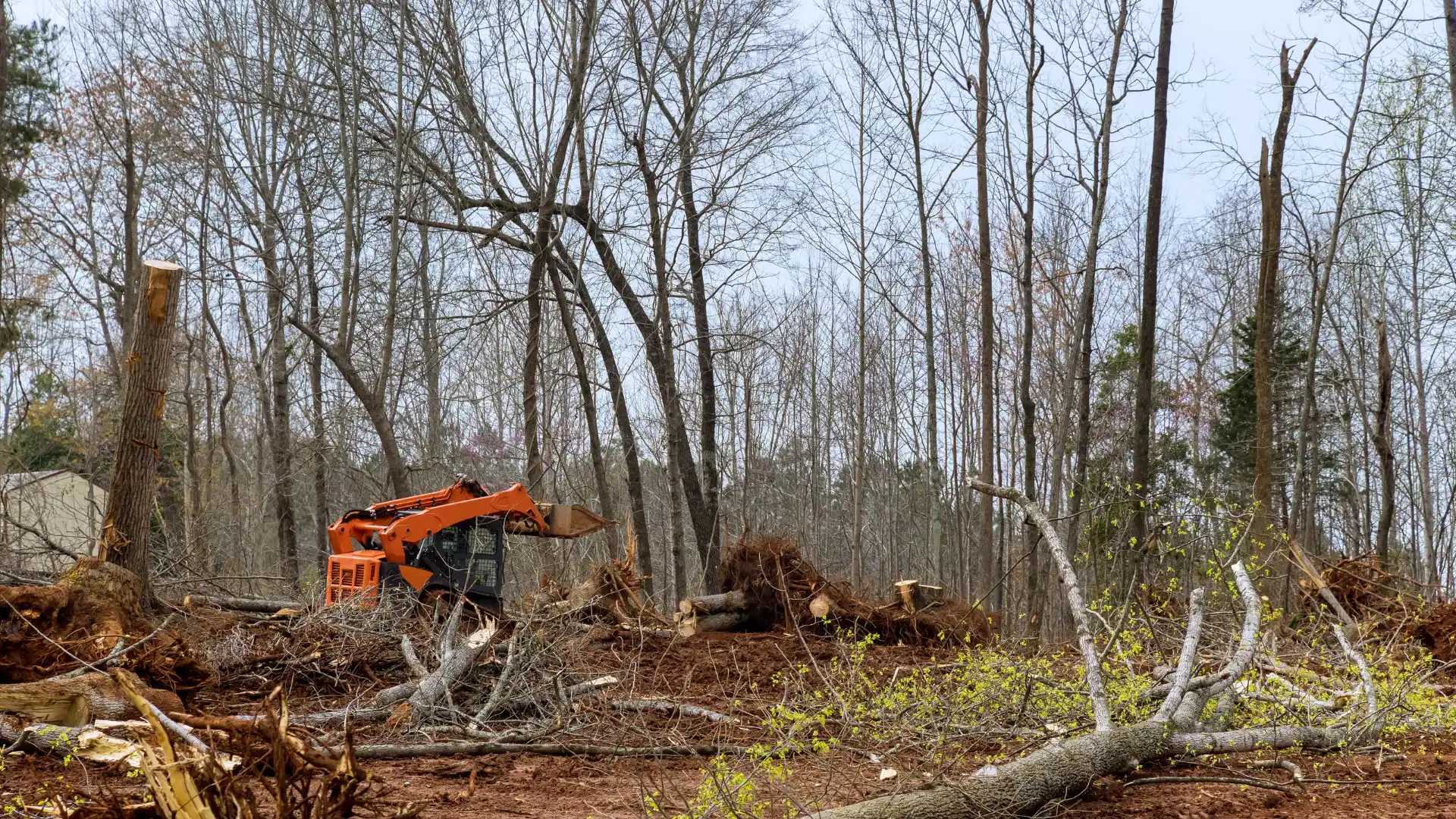
Fort Salonga lots are not your average suburban quarter-acre. You’re dealing with mature hardwood canopy, naturalized woodland edges, and in many cases, decades of unchecked growth that has made portions of your property completely inaccessible. When we clear land properly here, the result is not a stripped, bare lot it is a usable, open property that still looks like it belongs on the North Shore. The wooded character that makes Fort Salonga what it is gets preserved. What gets removed is what was always supposed to go.
The dual-municipality reality of Fort Salonga adds a layer that most homeowners don’t think about until something goes wrong. Your property may sit in the Town of Huntington or the Town of Smithtown and the tree preservation and permit requirements are different between the two. A cleared property that was handled without that knowledge is not just a liability risk, it is a problem that can follow the title. When we handle the permit process correctly from the start, you end the job with a clean site, no enforcement exposure, and documentation that holds up if you ever sell or develop.
If your property is near Crab Meadow Beach, Callahan’s Beach, or the Jerome A. Ambro Memorial Wetland Preserve, there is also the question of New York State DEC jurisdiction. Tidal and freshwater wetland buffers apply to a meaningful number of Fort Salonga properties, and clearing work that crosses those lines without the right permits creates real problems. We identify those triggers before the first tree comes down not after.
We work specifically on Long Island’s North Shore the kind of properties that have mature woodland, uneven terrain, and a lot of value tied up in how the land looks and functions. Fort Salonga is the easternmost point of the historic Long Island Gold Coast, and the name of this business is not a coincidence. This is the landscape we know.
That means we understand the Huntington and Smithtown jurisdictional split that makes Fort Salonga unique. We know which permit process applies depending on where your property sits, and we handle that navigation as part of the job not as an add-on. Whether you are in Highview Estates, near Indian Hills Country Club, or on a larger parcel closer to the Kings Park border, the approach is the same: assess the site honestly, quote it accurately, and leave it in better shape than we found it.
It starts with a site walk. Before any quote is written, we need to see the property the tree density, the terrain grade, what is invasive versus what is worth keeping, and whether there are any wetland or coastal buffers that affect the scope. Fort Salonga’s North Shore terrain is hilly and heavily wooded in most areas, and a quote written without a site visit is not worth the paper it is on.
Once the assessment is done, you get an itemized quote that breaks out clearing, stump removal, debris disposal, and any permit-related steps as separate line items. If your property falls under the Town of Huntington’s tree preservation ordinance, we identify that upfront. If it falls under Smithtown’s Chapter 285 requirements, same thing. You know what the permit process looks like, what it costs, and what the timeline is before any work is scheduled.
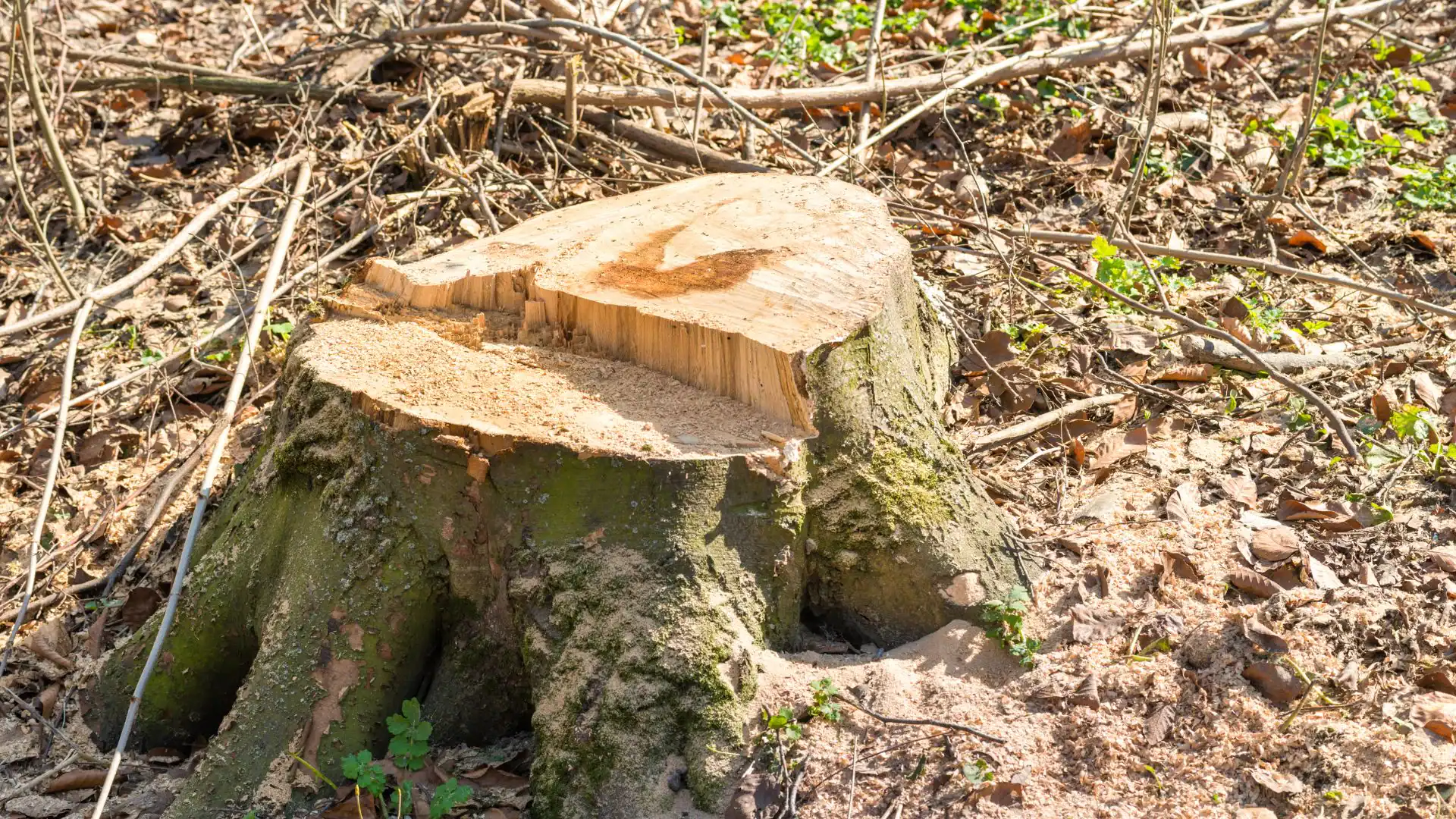
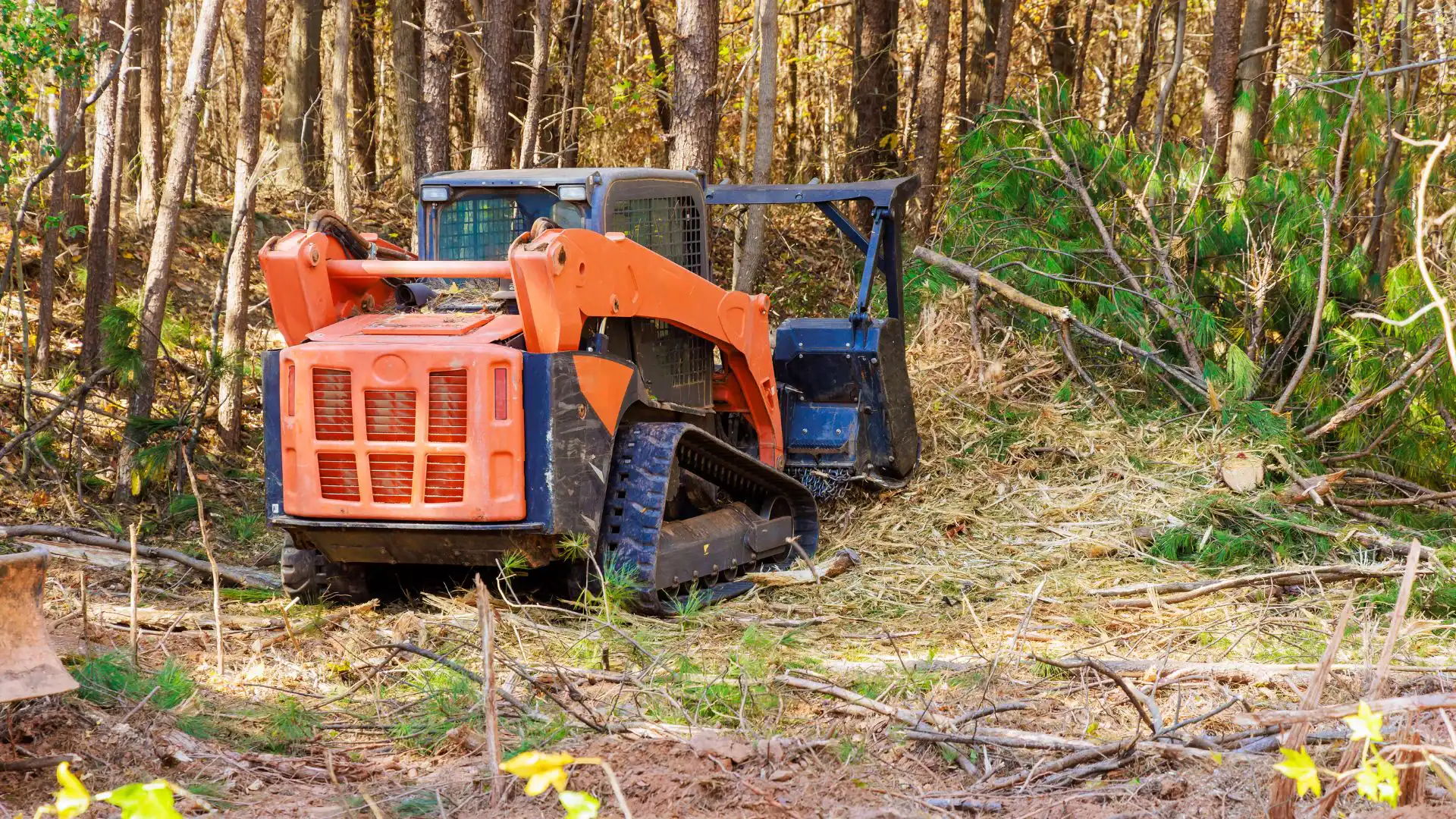
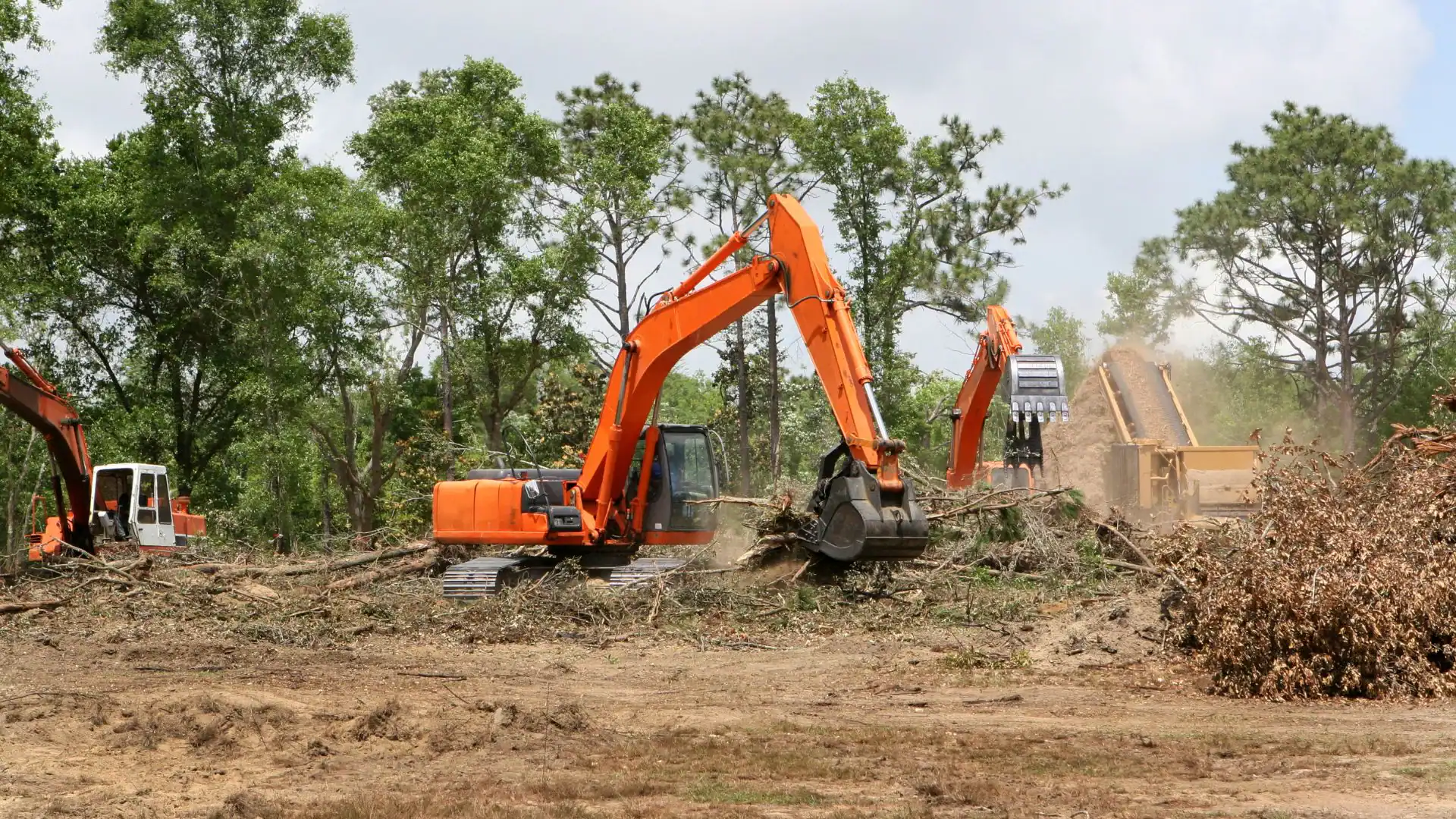
When our crew arrives, the work moves in a clear sequence canopy trees first, then understory, then invasive brush, then stumps and root systems. Debris is hauled off site. Nothing gets piled at the property line, which matters specifically in Smithtown’s jurisdiction where that is a code violation. By the time we leave, the site is cleared, the ground is clean, and the job is documented. No surprises on the invoice, no cleanup left for you to deal with.
Ready to get started?
Land clearing in Fort Salonga covers a wide range of scenarios, and the scope depends entirely on what you are working with. New construction lot clearing on a wooded acre-plus parcel requires a different approach than brush clearing on a naturalized estate edge or overgrown property clearing on an inherited site that has not been touched in years. We handle all of it and the service is built around the actual conditions on your land, not a one-size package.
Invasive species are a persistent issue on North Shore Long Island properties. Multiflora rose, Oriental bittersweet, Japanese knotweed, and porcelain berry are common throughout Fort Salonga’s woodland edges, and they do not stay gone if they are only cut at the surface. The brush clearing services we provide address these plants at the root level, which is the only way to prevent the same overgrowth from coming back within a single growing season.
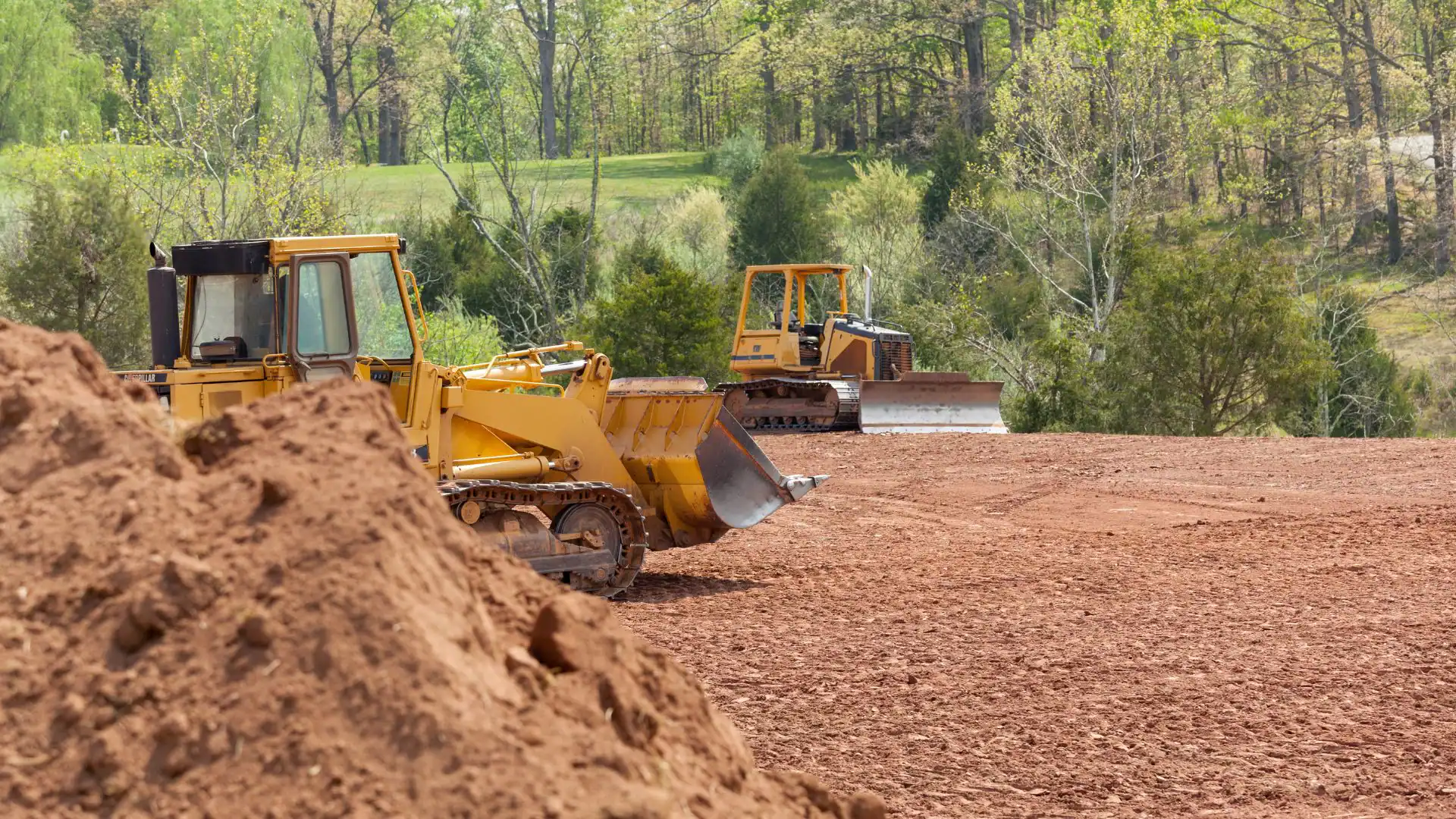
For properties near the coast Crab Meadow, Callahan’s Beach, or any parcel with wetland adjacency we assess DEC permit requirements as part of the initial site visit. Land reclamation services on larger or long-neglected Fort Salonga properties are handled as a full-scope operation: clearing, stump grinding, grading where needed, and complete debris removal. When the job is done, you have a property that is genuinely usable not one that looks cleared from the road but still has root systems and debris just below the surface.
This is one of the most common questions we get from Fort Salonga homeowners, and it is the right one to ask first. Fort Salonga is one of the few places on Long Island that sits across two separate town jurisdictions the Town of Huntington governs the western portion of the hamlet, and the Town of Smithtown governs the eastern portion. The town boundary runs through the middle of Fort Salonga, and most homeowners do not know which side they are on until they look it up.
The reason it matters is that the permit requirements differ between the two towns. Huntington’s Tree Preservation and Protection ordinance requires a permit for removal of more than three small trees, or any medium, large, or Landmark Tree within a one-year period. Smithtown’s Chapter 285 covers removal on unimproved property and property subject to further subdivision or non-residential expansion. The application forms, fees, and exemption categories are different. We identify your jurisdiction before we quote and walk you through the correct process for your specific property so there are no surprises and no compliance gaps.
The permit requirement depends on two things: which town your property is in, and what the scope of the clearing involves. For properties in the Town of Huntington portion of Fort Salonga, the Tree Preservation and Protection ordinance applies. Removing more than three small trees, or any tree classified as medium, large, or Landmark, within a one-year period requires a permit from the Planning Department. There are exemptions for example, trees within 25 feet of a permitted construction project but those exemptions require an active construction permit, not just an intention to build.
For properties in the Town of Smithtown portion of Fort Salonga, Chapter 285 governs tree removal on unimproved land and certain improved parcels. The Smithtown code also specifically prohibits leaving tree debris and woody material piled at property lines a detail that matters for how the job gets cleaned up. If your property is near the coast or a wetland area, New York State DEC permits under Article 24 or Article 25 may also apply. We assess all of this during the site visit so you know exactly what is required before any work begins.
The honest answer is that it depends on the property and any contractor who gives you a firm number before seeing the site is guessing. For a typical wooded residential lot in Fort Salonga in the one-to-two acre range, with mixed mature hardwood canopy and invasive understory, land clearing generally runs in the range of $3,500 to $8,000 or more depending on tree density, terrain, stump removal, and debris disposal. Larger estate parcels or heavily naturalized properties with significant root systems and access challenges will run higher.
What drives cost up on North Shore Long Island properties specifically is the combination of mature tree size, hilly terrain that limits equipment access, and the density of invasive shrub growth that has to be cleared at the root level rather than just cut back. Stump grinding is usually quoted separately and is worth including if the site is going to be built on or graded. The itemized quote we provide breaks all of this out so you can see exactly what you are paying for and make decisions about scope before work starts rather than after.
Not safely, and not legally in most cases. Fort Salonga has several areas where New York State DEC jurisdiction applies properties near Crab Meadow Beach, Callahan’s Beach, and the Jerome A. Ambro Memorial Wetland Preserve may fall within regulated tidal or freshwater wetland buffers. Under DEC Article 25, clearing within 300 feet of a tidal wetland boundary can require a permit. Under Article 24, freshwater wetland buffers are typically 100 feet. These distances are measured from the wetland boundary, not from the water’s edge, so properties that do not feel particularly close to the water can still fall within regulated areas.
The Town of Smithtown’s reconstruction of Callahan’s Beach in 2023 and 2024 required full DEC permitting and bluff rehabilitation which gives you a sense of how seriously the state takes clearing work in this coastal zone. If your property is anywhere near these features, we assess the DEC buffer situation during the initial site walk. If a permit is required, we identify it before work begins not after a complaint has been filed.
Spring and fall are the two peak windows for land clearing on North Shore Long Island properties, and each has its advantages. Spring clearing typically March through May is ideal if you are preparing a lot for construction or want to get ahead of the growing season before vegetation becomes denser and access gets harder. Property owners who have spent winter looking at overgrown sections of their land tend to call in March and April, which means scheduling fills up quickly in that window.
Fall clearing October and November is the other strong season. Leaf drop makes site assessment easier, you can see the full structure of the tree canopy without foliage, and dry fall conditions firm up the ground on Fort Salonga’s hilly terrain, which improves equipment access. Dormant season clearing is also preferred for invasive species management, since many invasive plants are easier to identify and treat when native vegetation has gone dormant. Winter clearing is not out of the question on this terrain frozen ground can actually improve access on steep or wet North Shore properties but spring and fall are where most jobs get scheduled.
This is the right question to ask, and the answer depends entirely on how the job is scoped and executed. Fort Salonga properties derive a significant part of their value from mature woodland, privacy buffers, and the North Shore estate character that comes with a well-established tree canopy. Clearing work that removes trees beyond the agreed scope, or that damages root systems and neighboring canopy through careless equipment operation, is one of the most damaging outcomes a contractor can produce on a property like this.
The way we prevent that is straightforward: the site walk before quoting includes a clear conversation about which trees stay and which go. That scope gets documented in the quote. When our crew works, equipment selection and positioning are chosen specifically to avoid root compaction and canopy damage on the trees being preserved. On boundary work which is common on Fort Salonga’s large lots where woodland buffers are shared with neighboring properties we work with precision on the approach and the equipment reach. You should ask any contractor you are considering how they handle tree preservation on the job, not just what they plan to remove. The answer tells you a lot about how the work will actually go.