
Hear from Our Customers
When a French drain system is installed correctly, the difference is immediate and lasting. Water stops pooling in the low spots of your yard after every storm. Your basement stays dry even after a nor’easter drops three inches of rain overnight. The soggy patches near your foundation that never seem to go away gone.
Port Jefferson Station homes have a specific challenge that a lot of generic drainage contractors miss. The clay-bearing glacial till soil on the North Shore doesn’t drain the way sandy South Shore soil does. It holds saturation for days, expands when wet, and pushes against foundation walls. A French drain system designed for these conditions moves water away from your property before it becomes your problem not after.
With median home values in Port Jefferson Station climbing toward $550,000 to $745,000, the math isn’t complicated. Foundation repairs in this market run $15,000 to $50,000. Mold remediation starts around $3,000. A properly installed residential French drain system typically runs $5,000 to $9,000 and it lasts 30 to 40 years. That’s not an expense. That’s protection for the most valuable thing you own.
We’re a dedicated residential drainage contractor not a general landscaper who added drains to the service list, and not a basement waterproofing chain with a franchise model. Drainage is our entire focus, which means every system is designed with the right materials, the right depth, and the right outlet point for the specific property.
Serving Port Jefferson Station and the surrounding North Shore communities including Mount Sinai, Stony Brook, Miller Place, Sound Beach, and East Setauket means working in clay soil conditions every day. That matters when it comes to pipe depth, gravel specification, and geotextile fabric selection. These aren’t details a generalist thinks about. They’re the difference between a system that works for decades and one that fails in two years.
Every job starts with a free on-site assessment. No phone quotes, no guessing. Because drainage problems in Port Jefferson Station are site-specific and the right solution depends on what’s actually happening on your property.
It starts with a free on-site assessment. A drainage specialist walks your property, identifies where water is entering, where it’s pooling, and what’s driving the problem whether that’s surface runoff, subsurface groundwater, a failed dry well, or a downspout discharging against the foundation. In Port Jefferson Station’s clay soil conditions, the source of the problem isn’t always obvious from the surface, which is why a proper site evaluation matters before any work begins.
Once the assessment is complete, you get a written estimate that explains exactly what’s being installed and why. Before any excavation starts, New York State’s 811 utility marking service is called that’s required by law, and it’s handled automatically. If a permit is required through the Town of Brookhaven Building Department, we manage that as part of the process. You don’t have to navigate Brookhaven’s permit office on your own.
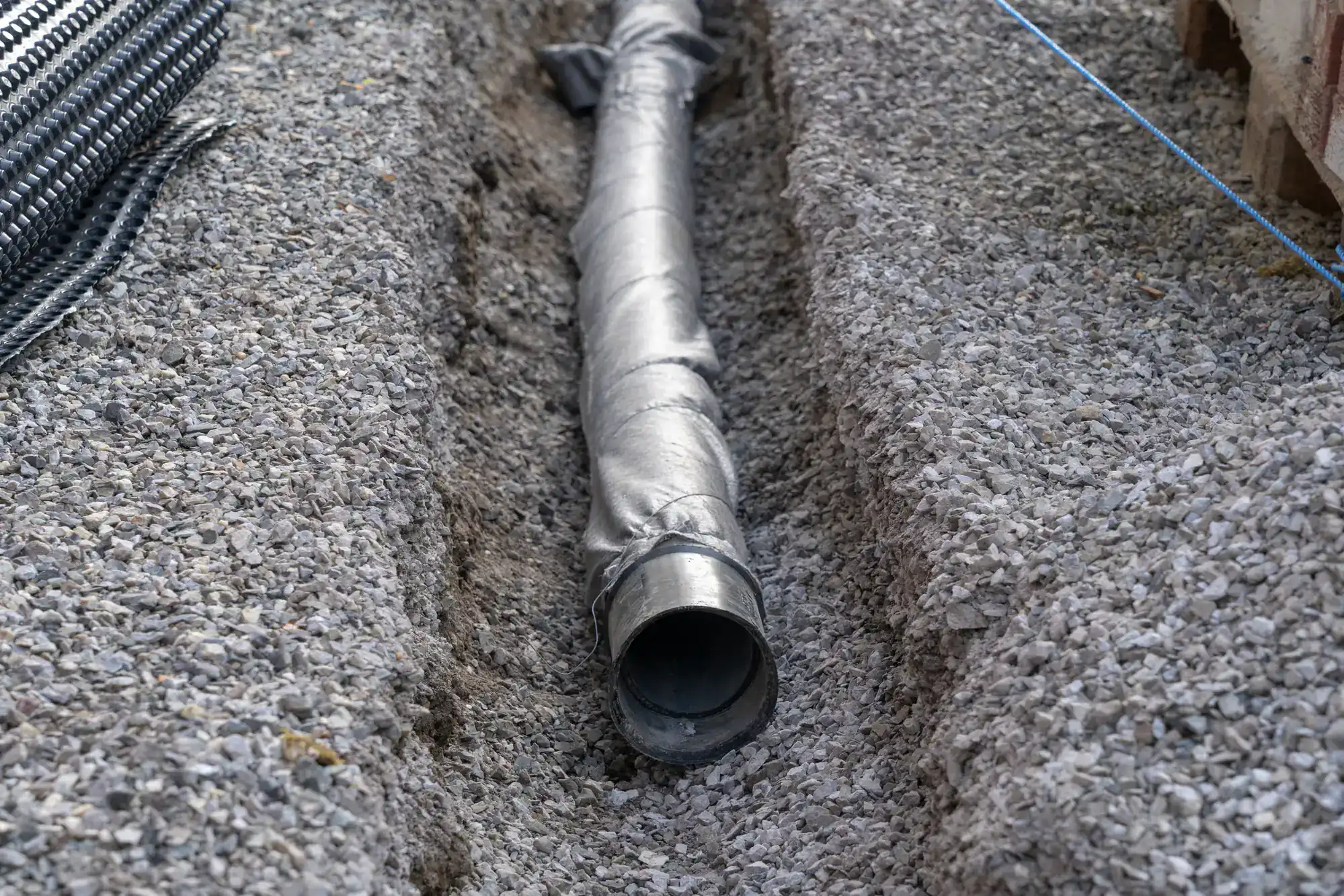
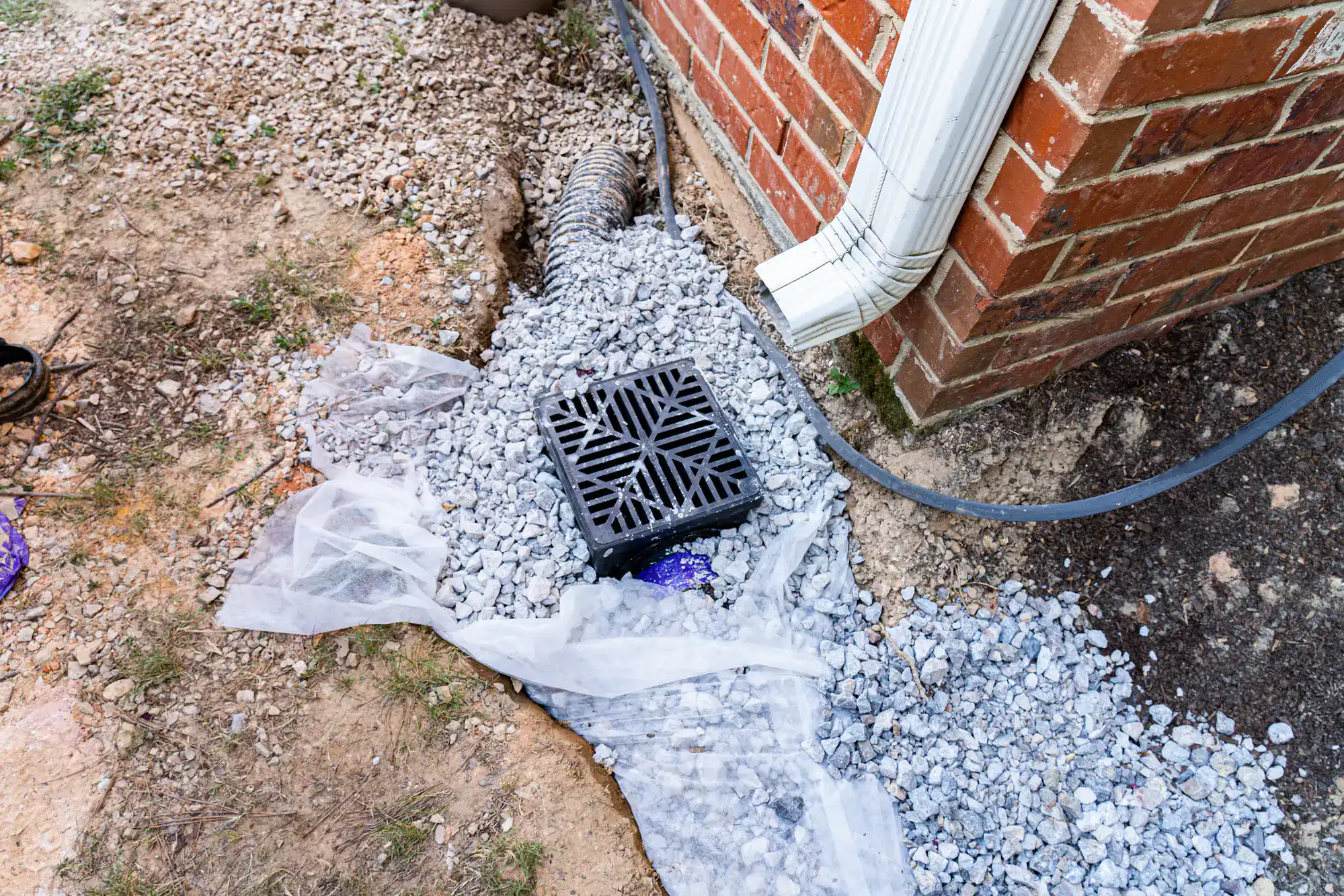
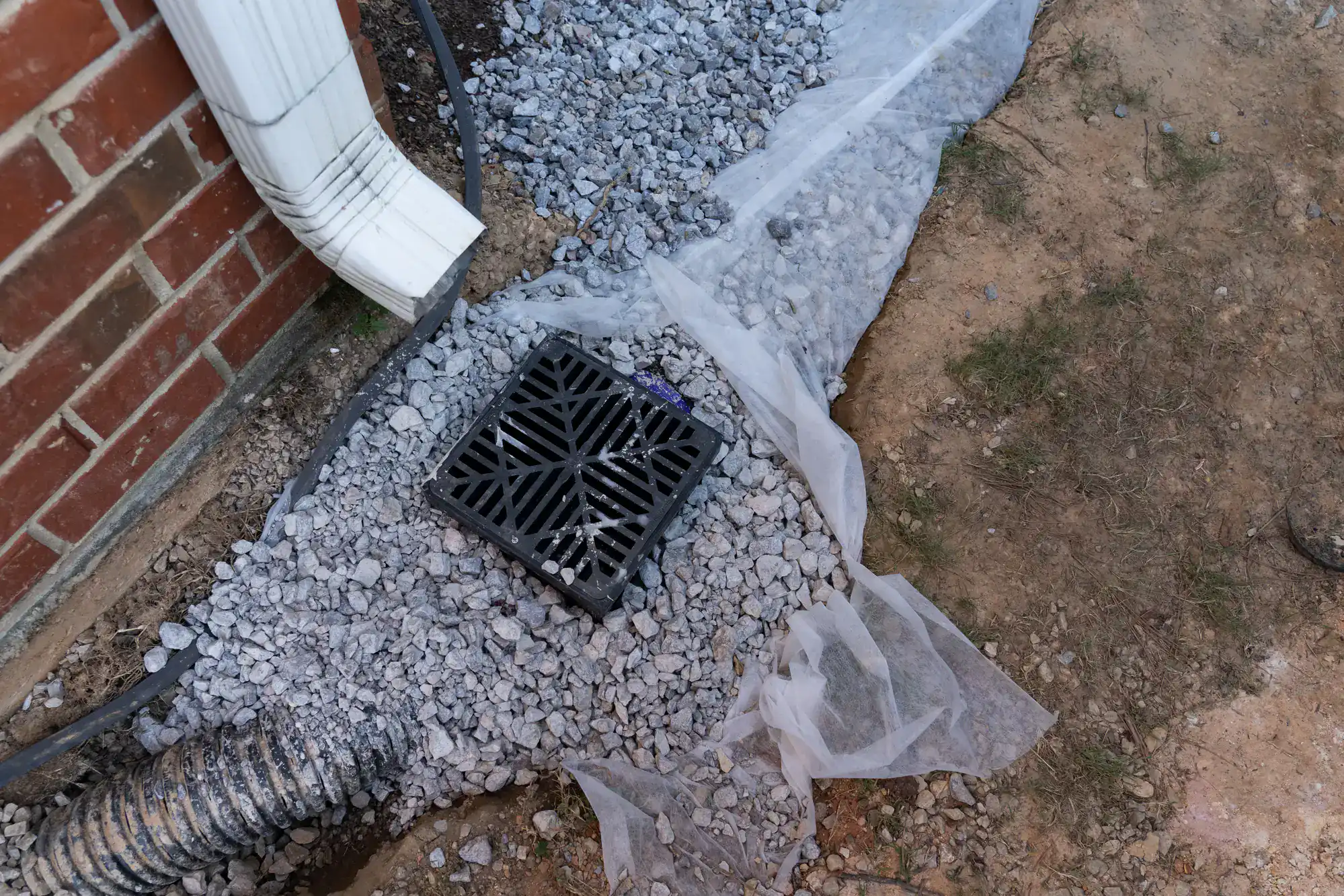
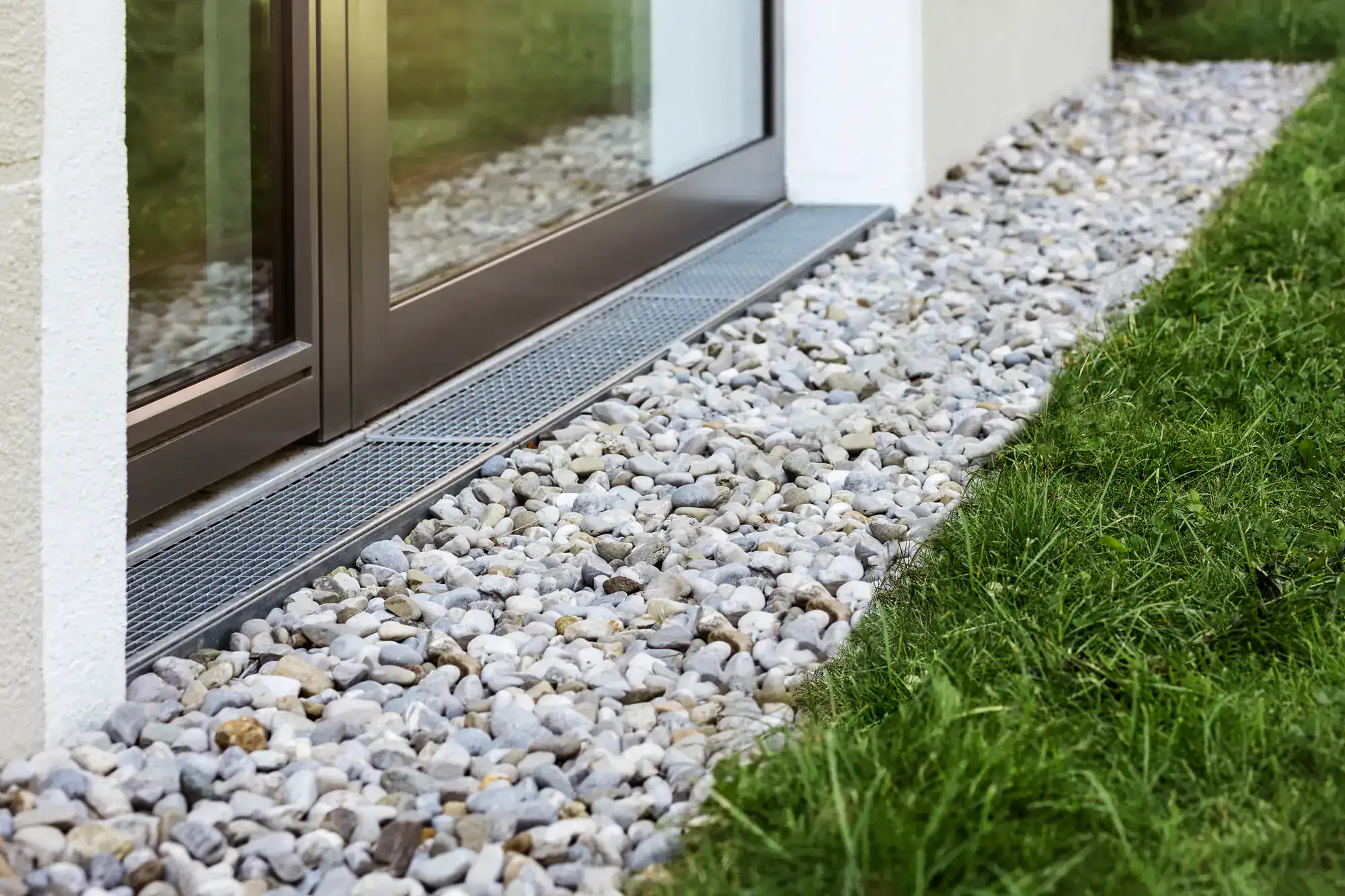
Installation typically takes one to three days depending on the scope of the system. The trench is excavated, lined with geotextile filter fabric, filled with angular washed gravel, and fitted with perforated pipe routed to a defined outlet point. When our crew leaves, the yard is restored topsoil, seeding, or sod matched to what was there. The work is done. The drainage problem isn’t.
Ready to get started?
Every French drain system we install is designed around what’s actually happening on the property not a standard template. In Port Jefferson Station, that means accounting for clay-heavy soil that holds water instead of draining it, aging drainage infrastructure in homes built before 1970, and a water table that runs naturally high across much of the North Shore. These aren’t abstract concerns. The August 2024 storm that flooded the Port Jefferson fire station a building that sits on what was historically a salt marsh is a reminder of what this area’s drainage conditions actually look like under pressure.
The system components matter here more than they do in sandy-soil environments. Perforated pipe is bedded in angular washed gravel not pea stone, which compacts and wrapped in double-punched geotextile filter fabric that prevents clay migration into the drainage aggregate over time. Pipe depth is designed for Long Island’s frost line so the system doesn’t freeze and fail in winter. Outlet points are engineered to move water away from the property without redirecting it onto a neighbor’s lot or into the municipal storm system in a non-compliant way.
Whether the issue is a chronically wet yard along the Route 112 corridor, water intrusion in a basement on the north side of Route 347, or a low-lying lot in Port Jefferson Station that pools after every rain, the system is designed for that specific problem. That’s what separates a drainage specialist from a landscaper who installs drains on the side.
It depends on the scope of the work, but in many cases, yes. Port Jefferson Station falls under the jurisdiction of the Town of Brookhaven Building Department, and drainage installations that involve significant excavation, changes to existing drainage patterns, or work near wetlands or FEMA-designated flood zones will typically require a permit. New York State’s SPDES stormwater regulations also govern how drainage discharges are handled in this area, particularly when work is located near a municipal storm sewer or a natural water feature.
Beyond the building permit, New York State law requires that 811 the “Call Before You Dig” service be contacted before any excavation begins. That’s not optional, and it’s not something a homeowner needs to manage. We handle permit applications, utility marking, and inspections as part of every installation. You don’t have to figure out Brookhaven’s building department process on your own.
The most likely reason is the soil. Port Jefferson Station sits on Long Island’s North Shore, where the ground is composed of clay-bearing glacial till a dense, heavy soil that absorbs water slowly and holds it for extended periods. This is fundamentally different from the sandy outwash soils on the South Shore, which drain relatively quickly. In clay soil, water has nowhere to go after a heavy rain. It sits on the surface, saturates the root zone, and eventually finds its way to the lowest point on the property which is often right next to your foundation.
Compounding the problem is the age of most Port Jefferson Station homes. The median construction year here is 1969, which means the original grading and drainage infrastructure on a lot of these properties is 50 to 70 years old. Dry wells have silted up. Downspout systems have deteriorated. The lot grading that was done when the home was built has been altered by decades of landscaping and additions. A French drain system intercepts that water before it pools and it’s designed specifically for clay soil conditions, not sandy ones.
Most residential French drain installations in Port Jefferson Station fall somewhere between $5,000 and $9,000, though larger or more complex systems properties with multiple drainage problem areas, significant grading challenges, or installations near wetlands that require additional permitting can run higher. The range is wide because drainage problems vary significantly from one property to the next. A single trench system routed to a street outlet is a different scope than a perimeter system designed to protect a foundation on a lot with a high water table.
What’s worth keeping in mind is the comparison. Foundation repair in this market runs $15,000 to $50,000. Mold remediation starts around $3,000 and climbs fast. Port Jefferson Station home values are sitting between $550,000 and $745,000 and in some cases higher with new construction. A drainage system that costs $7,000 and lasts 30 to 40 years is not a large investment relative to what it’s protecting. Every job with us starts with a free on-site assessment and a written estimate, so you know exactly what you’re looking at before any decision is made.
A French drain system can address both but the right system design depends on what’s causing the water intrusion in the first place. If basement flooding is coming from surface runoff that’s pooling against the foundation and seeping through the wall, an exterior French drain system installed around the perimeter of the home intercepts that water before it ever reaches the foundation. This is the most common scenario in Port Jefferson Station, where clay soil holds water against foundation walls for days after a storm.
If the water is coming up through the basement floor due to hydrostatic pressure from a high water table which is a real factor in parts of Port Jefferson Station, given the North Shore’s naturally elevated water table that’s a different problem that may require a combination of exterior drainage and interior solutions like a sump pump. The on-site assessment is what determines which approach is right for your property. A contractor who quotes you a system before walking the property hasn’t actually diagnosed the problem yet.
A dry well is a buried chamber that collects water and slowly releases it into the surrounding soil through percolation. It works well in sandy, fast-draining soil the kind you find on Long Island’s South Shore. In Port Jefferson Station’s clay-heavy North Shore soil, dry wells are a much weaker solution. Clay doesn’t percolate quickly, so a dry well fills up and stays full, functioning more like a buried bucket than a drainage system. Many of the older dry wells in Port Jefferson Station have also silted up over decades and no longer function at all.
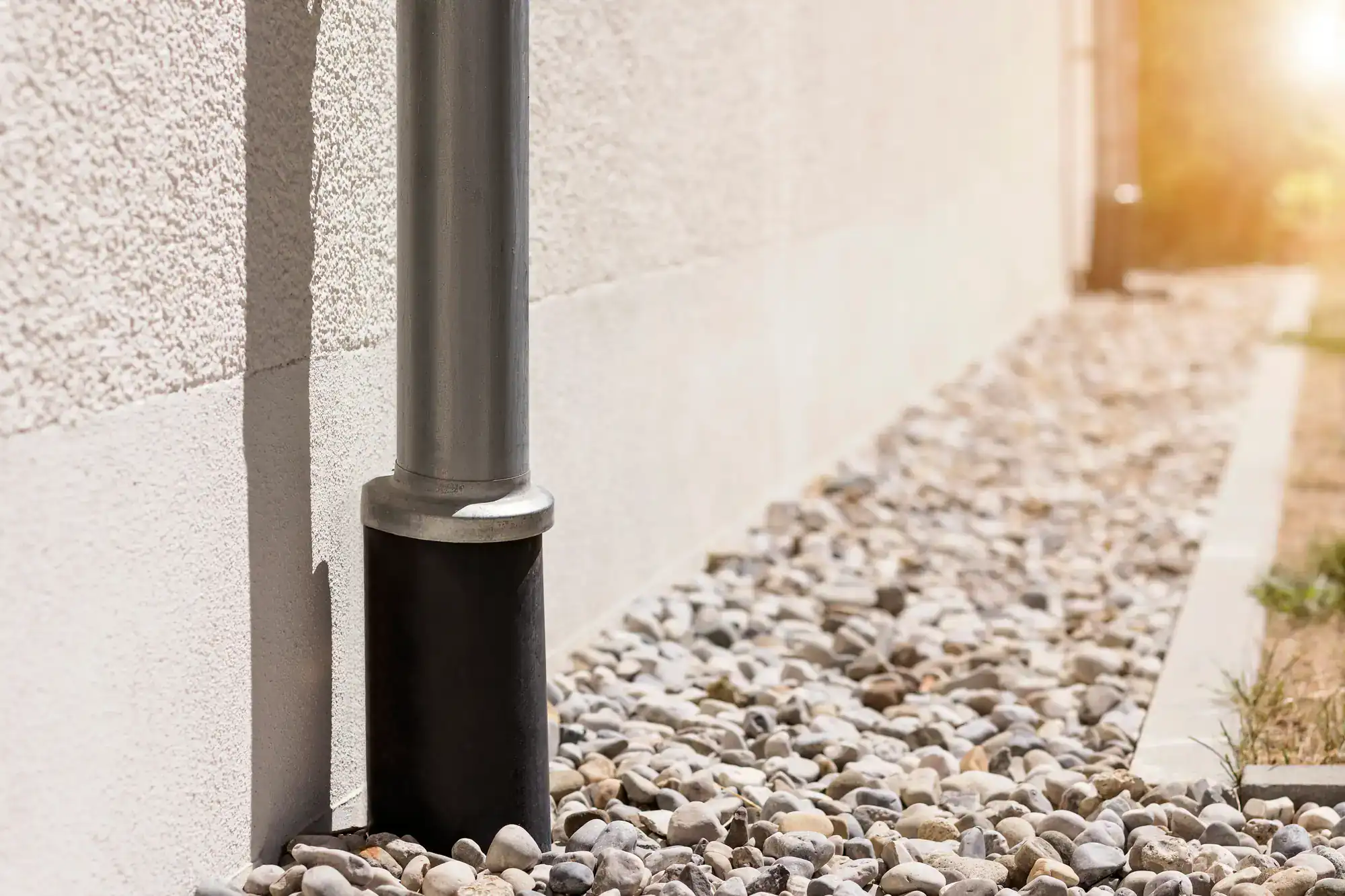
A French drain is a fundamentally different approach. Instead of trying to push water down through clay, it captures water at grade or below and moves it laterally through a perforated pipe bedded in gravel to a defined outlet a street, a drainage swale, or a lower point on the property. It keeps moving water rather than holding it and hoping the soil absorbs it. For the majority of Port Jefferson Station properties, a French drain system is the more effective long-term solution, particularly for homes dealing with chronic yard saturation or foundation moisture.
Most residential installations in Port Jefferson Station are completed in one to three days. The timeline depends on the length of the system, the complexity of the outlet routing, and whether any permit inspections are required through the Town of Brookhaven. A straightforward single-trench installation on a standard lot is typically a one-day job. A more extensive perimeter system or a property with multiple problem areas will take longer but the timeline is always discussed upfront, not discovered after the work starts.
As for yard disruption it’s real, but it’s temporary. A trench needs to be excavated, and that means some disturbance to the lawn and landscaping along the route. Port Jefferson Station homes are known for their large, established yards with mature trees and long driveways, and that’s not something to be careless about. Yard restoration is a standard part of every installation topsoil is replaced, and the disturbed area is seeded or sodded to match the surrounding lawn. The excavation is temporary. The drainage system underneath it is not.
Other Services we provide in Port Jefferson Station