
Hear from Our Customers
When water sits against your foundation or pools in your yard after every rain, it’s not just an inconvenience it’s a slow drain on the value of your property. In Southampton, where homes regularly sell above $2 million, a drainage problem isn’t a minor issue. It’s a liability that shows up at inspection, suppresses your sale price, and follows you through every disclosure conversation.
The South Fork’s geography makes this especially real. With Shinnecock Bay to the north, the Atlantic to the south, and a water table that sits close to the surface across much of Southampton, properties in North Sea, Noyack, Hampton Bays, and Shinnecock Hills deal with groundwater conditions that inland Suffolk County towns simply don’t face. Sandy soil drains fine under normal conditions but once it’s saturated, it stops working fast. A properly installed French drain intercepts that subsurface water before it ever reaches your foundation or turns your lawn into a swamp.
The result is a yard that functions the way it should, a basement that stays dry through a wet spring, and a property that holds its value when it matters most. That’s not a small thing in Southampton.
We are a dedicated drainage contractor serving Southampton and the South Fork’s surrounding communities. We’re not a landscaping company that installs drains on the side drainage is the work, and it’s what we’ve built our reputation on.
Southampton is one of the more demanding markets to work in. The regulatory environment is real the Town of Southampton has a comprehensive stormwater management code, the Village has its own separate ordinance, and properties near wetlands or coastal water bodies require additional review before any digging starts. We handle all of that. Permits, utility marking, compliance with Chapter 285 of the Town Code it’s part of what you’re getting when you call us.
We’ve worked on properties from Bridgehampton to Hampton Bays, from quiet lots in Water Mill to larger estates near Gin Lane. We know what the soil looks like here, how the water table behaves in a wet spring, and what a properly designed system needs to do to hold up over time on the South Fork.
It starts with a free on-site assessment. A phone call can’t tell us where your water is coming from or how your property drains we need to see the grade, check the soil, evaluate the water table conditions near your foundation, and understand what’s already in the ground. In Southampton, that last part matters more than most places. Irrigation systems, pool equipment lines, and older drainage infrastructure are common on South Fork properties, and we account for all of it before we design anything.
Once we understand the site, we put together a written proposal that specifies exactly what’s going in pipe type, fabric specification, gravel depth, slope, and outlet location. Nothing verbal, nothing vague. You know what you’re getting before we show up with equipment.
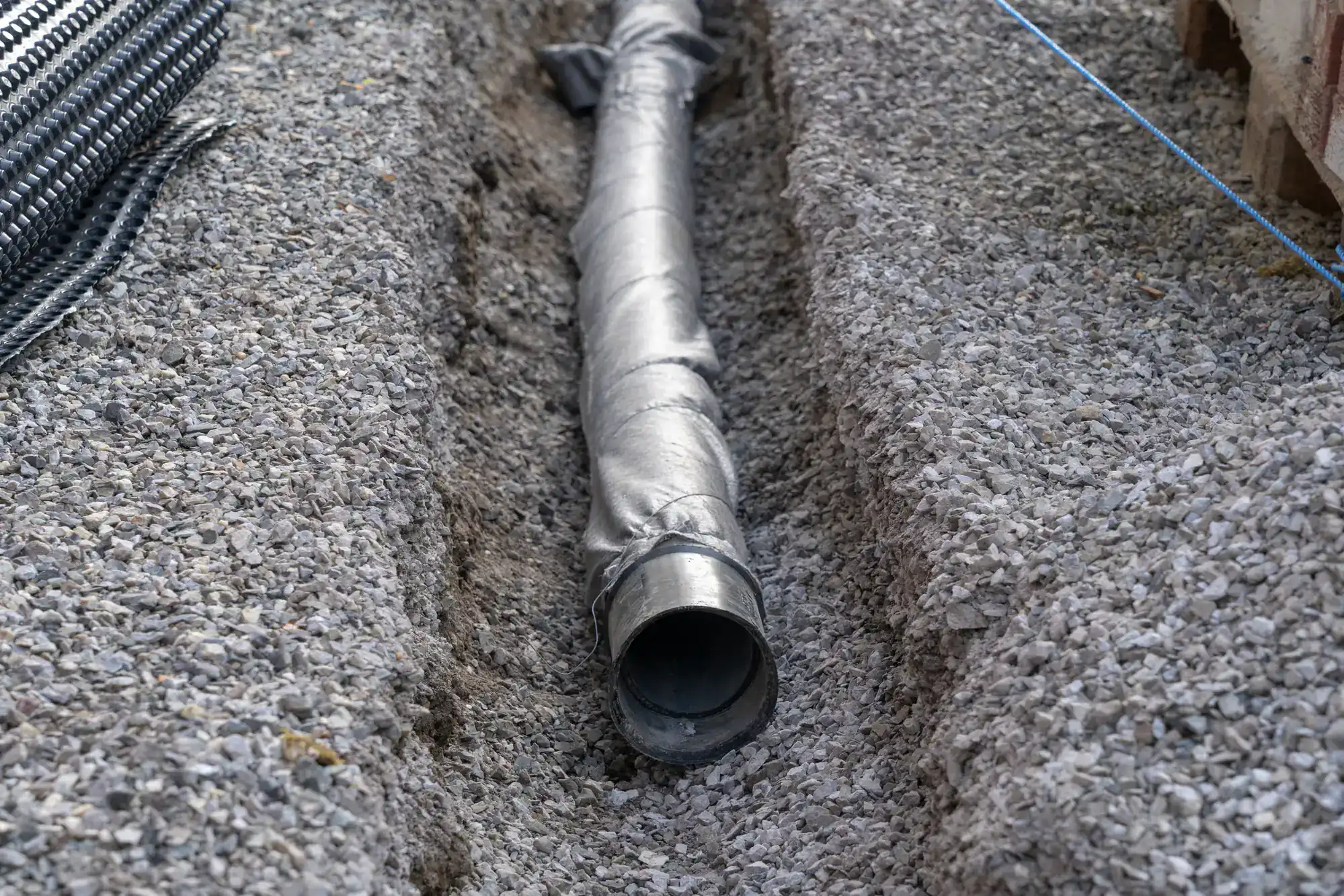
Installation uses perforated pipe wrapped in double-punched geotextile filter fabric, set in washed angular gravel, with a consistent slope of one inch per eight to ten feet of run. That’s the standard that produces a system lasting 30 to 40 years not the corrugated tubing and bare gravel that fails in three. After installation, we restore your lawn with matched topsoil and seed or sod. If you have an established landscape, we treat it carefully on a Southampton property, that’s not optional, it’s expected.
Ready to get started?
A French drain installation in Southampton isn’t the same job it is somewhere inland. The proximity to Shinnecock Bay, the shallow water table in areas like North Sea and Noyack, the pool drainage and irrigation systems common on larger properties all of it affects how the system needs to be designed and where it needs to outlet. We factor in every water source on your property: downspout discharge, pool backwash, irrigation runoff, and surface flow from hardscaping. An undersized system that only accounts for rainfall is going to underperform from day one.
We also take the regulatory side seriously. Southampton’s stormwater code and the Village’s separate ordinance aren’t just paperwork non-compliant drainage that outlets incorrectly toward a wetland or a neighboring property creates legal exposure for you as the homeowner. We design outlet points that comply with local code, and for properties near the town’s regulated wetland areas, we handle the additional review that’s required before work begins.
For seasonal residents returning to their Southampton properties in spring, we understand the urgency. If you’ve come back to a soggy yard or a damp basement after a long winter, we can assess quickly, schedule efficiently, and get the work done before your summer season is underway. That’s a situation we handle regularly on the South Fork, and we’re built for it.
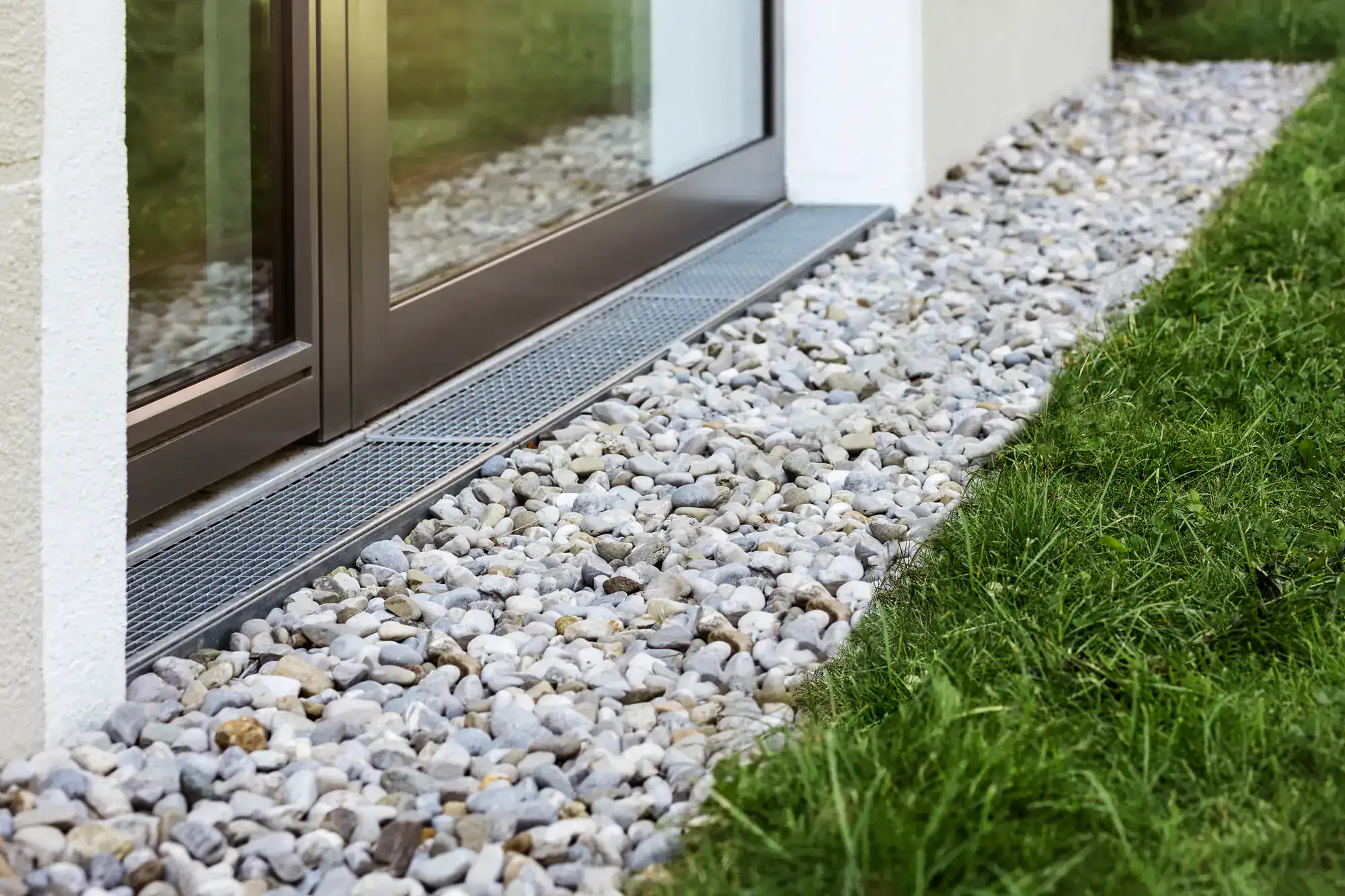
The honest answer is: it depends on what’s causing the water problem, and you can’t know that without looking at the site. A French drain is designed to intercept and redirect subsurface water it’s the right tool when groundwater or lateral water movement is the issue. But if your problem is surface runoff from a sloped yard, a catch basin or regrading might be more effective. If water is entering through the foundation wall itself, that’s a waterproofing conversation, not just a drainage one.
In Southampton specifically, the shallow water table in areas near Shinnecock Bay, Noyack Bay, and the Atlantic coast means subsurface water is often a real factor not just surface pooling after rain. That’s exactly the scenario where a French drain earns its keep. The free on-site assessment is how we figure out which solution actually fits your property, rather than guessing over the phone.
Most residential French drain installations in the Southampton area run between $5,000 and $18,000, depending on the length of the system, the complexity of the site, and how the outlet needs to be engineered. Larger estate properties with multiple drainage zones, pool integration, or extensive hardscaping will land toward the higher end of that range. Simpler installs on smaller lots can come in well under it.
What’s worth keeping in mind in this market is the cost of not installing one. A drainage issue that shows up during a home inspection on a $2.5 million Southampton property can suppress the sale price by far more than the cost of the fix. Lenders won’t finance properties with active water intrusion, and disclosure requirements follow you into any transaction. The investment in a properly built French drain system is a fraction of what a drainage failure costs at closing.
For most standard residential French drain installations, a full permit isn’t required but it’s not that simple in Southampton. The Town of Southampton has a stormwater management code (Chapter 285), the incorporated Village has its own separate stormwater ordinance, and properties near wetlands, tidal areas, or coastal water bodies require additional review before any excavation begins. The Village of Southampton’s wetlands code specifically regulates activity near hydric soils, which are common throughout the South Fork given the area’s shallow water table.
Beyond local code, all excavation in New York State requires an 811 utility marking call before digging that’s a legal requirement, not a suggestion. We handle all of this as part of every installation: utility marking, code compliance review, and any additional regulatory steps required for your specific property. You shouldn’t have to navigate Southampton’s drainage regulations on your own, and with us, you don’t.
A properly built French drain won’t stop a nor’easter from bringing water onto your property nothing will. What it does is give that water somewhere to go quickly, rather than letting it saturate the soil around your foundation and sit there for days. Southampton’s position on the South Fork makes it directly exposed to nor’easters, tropical storm remnants, and compound flooding events. The town’s own hazard mitigation documents identify shallow groundwater flooding as a recurring, persistent hazard the kind that lasts long after the storm passes because the water table itself has risen.
The key to storm performance is system capacity and outlet design. An undersized system with a poorly placed outlet will back up under high-volume conditions. We size systems based on the full water load a property can receive including downspout discharge, pool drainage, and surface runoff not just typical rainfall. That’s what separates a system that works in a bad storm from one that fails exactly when you need it most.
Most residential installations take one to three days on-site, depending on the length of the system and the complexity of the property. Larger Southampton estate properties with multiple drainage zones, integration with existing pool or irrigation infrastructure, or extensive hardscaping to work around can take longer we’ll give you a realistic timeline in the written proposal before work starts.
Scheduling lead time varies by season. Spring is the highest-demand period on the South Fork seasonal residents returning to their properties after winter often discover drainage problems that developed during the off-season, and everyone wants the work done before summer. If you’re planning ahead, fall is an excellent time to install: the ground is workable, demand is lower, and you’ll have the system in place before the next wet spring. We’ll always give you an honest timeline based on current scheduling, not an optimistic one to close the job.
Yes and on most Southampton properties, it needs to. A French drain that only accounts for groundwater and rainfall will be undersized if your property also has pool backwash discharge, irrigation runoff, or surface flow coming off a large patio or driveway. These are common features on South Fork properties, and each one adds to the total water volume the system has to manage.
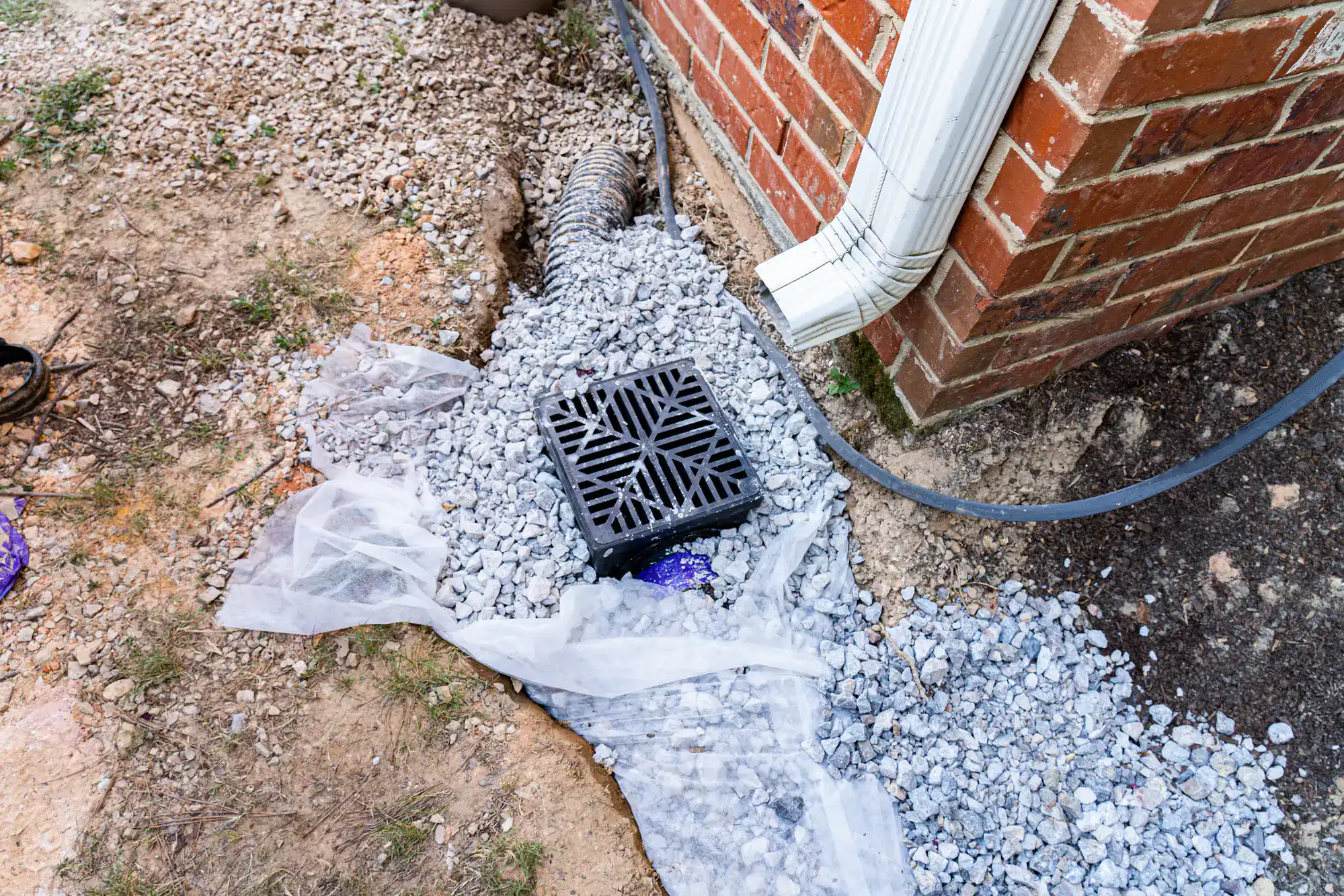
The design phase is where this gets sorted out. We map every water source on your property during the on-site assessment where the pool backwash outlets, where the irrigation zones drain, where downspouts discharge, and how hardscaping directs surface flow. The French drain system is then sized and routed to handle all of it, with an outlet point that’s both code-compliant and positioned to move water away from the property effectively. Getting this right at the design stage is what prevents an expensive reinstall two years later when the system can’t keep up.