
Hear from Our Customers

In Southampton, the construction calendar doesn’t move on your schedule it moves on the season’s. If excavation isn’t completed before the spring window closes, you’re not just behind on a project. You’re potentially losing a full summer’s use of a property you’ve invested heavily in. That’s a real cost, and it’s one that starts at the excavation stage.
The soil conditions across Southampton’s coastal and southern areas add another layer of complexity most contractors underestimate. Sandy glacial outwash soils drain freely but shift easily, and in lower-lying areas near Shinnecock Bay, the Peconic, or the town’s many freshwater ponds, groundwater can sit within two feet of the surface. Pool excavation, foundation prep, and septic work in these conditions requires more than a machine and an operator it requires someone who’s worked in these specific conditions and knows how to manage them before they become a problem.
When the excavation is done correctly from the start, everything downstream moves cleaner. Your builder isn’t waiting on remediation. Your pool contractor isn’t dealing with a compromised dig. Your summer deadline is still intact. That’s what good site preparation actually buys you in this market.
We’ve been working across Long Island’s East End long enough to understand that Southampton isn’t like other towns in this order. The projects are larger, the clients are more demanding, and the regulatory environment between the Town of Southampton’s Building Department, the village-level codes, and Suffolk County’s own requirements is more layered than most contractors are prepared for. We’re prepared for it.
From estate lots in Water Mill and Bridgehampton to residential sites in Hampton Bays and North Sea, we’ve worked across the full range of terrain and project types Southampton produces. We understand what the architects, builders, and project managers operating in the Hamptons market expect from an excavation contractor, and we show up ready to meet that standard.
Fully licensed and insured, with 811 notifications completed on every job before any ground is broken that’s not a talking point, it’s how we operate on every site, every time.

It starts with a site assessment. Before any equipment is mobilized, we walk the property, review the scope, and identify anything that could affect the timeline or the work groundwater depth, soil conditions, proximity to wetlands, existing underground utilities. In Southampton, that last point matters more than most places realize. We contact 811 on every job without exception, because a service strike on a Hamptons property doesn’t just delay the project it creates liability that lands on the property owner.
From there, we pull the required permits. The Town of Southampton imposes double permit fees on any excavation that starts without proper approvals in place that’s a penalty that falls on you, not the contractor, so we make sure everything is in order before a single bucket moves. If your project is within village boundaries or near a wetland, we factor in those additional review requirements upfront so there are no surprises mid-project.
Once work begins, we execute the scope whether that’s land clearing, bulk excavation, cut and fill, pool dig, septic preparation, or grading and we leave the site in a condition that lets the next trade walk straight in. Clean, accurate, and on schedule.
Ready to get started?
Southampton isn’t a one-size-fits-all market, and the excavation work here reflects that. On a flat coastal lot south of Route 27, the challenge is usually groundwater and spoil management. On a larger agricultural parcel in Bridgehampton or Water Mill, it’s bulk earthworks and grade accuracy across a wider footprint. On a tight residential lot in Southampton Village or a waterfront site in Noyac, it’s precision work with environmental constraints on multiple sides. We carry the equipment range and operator experience to handle all of it.
Our core services for Southampton include land clearing, residential and commercial excavation, cut and fill, dig and haul, pool excavation, septic system excavation and replacement, retaining wall preparation, and finish grading. For properties near the town’s extensive wetland and waterway network, we implement erosion and sediment controls as a standard part of every job not an add-on. That’s a regulatory requirement under Southampton Town Code, and it’s also just the right way to work near sensitive land.
Suffolk County’s nitrogen reduction mandate is currently driving a significant wave of septic upgrades across Southampton. If you’re replacing a cesspool or upgrading to an I/A OWTS system, we handle the full excavation and dig and haul scope that makes that work possible, coordinating with the Suffolk County Health Department approval process so the project moves without unnecessary delays.
Yes, and the consequences of skipping that step are significant. The Town of Southampton’s code specifically states that any land clearing or excavation that begins without the required permits triggers double fees on all associated applications and permits. That penalty falls on the property owner, not the contractor so if you’re working with someone who suggests starting before permits are in place, that’s a real financial risk you’re absorbing.
The permitting process in Southampton involves the Town’s Building and Zoning Division, and depending on your project’s location and scope, it may also involve the Zoning Board of Appeals, the Architectural Review Board, or wetlands review at the village level. Projects within the incorporated Village of Southampton have an additional layer of oversight beyond the town. We handle the permit coordination as part of our process so nothing gets missed and nothing gets started before it’s approved.
It’s one of the most common site challenges we deal with across the East End, and it catches a lot of contractors off guard. In the coastal and southern portions of Southampton particularly in areas near Shinnecock Bay, the ocean, or the town’s many freshwater ponds groundwater can be found within two feet of the surface. Tidal patterns and rainfall can push that level even higher during wet periods.
For pool excavation, this means the dig needs to be managed carefully to prevent the hole from flooding before the shell is set. For foundation work, it affects shoring requirements and spoil management. For septic installation, it directly influences system design and placement. We assess groundwater conditions during our site walkthrough before any equipment is mobilized, so the scope we quote you reflects the actual conditions on your Southampton property not an optimistic assumption that gets revised once we’re already on site.
Cut and fill is the process of balancing a site’s grade by cutting material from higher areas and using it to fill lower areas rather than importing or exporting large volumes of soil. When it’s done well, it reduces the cost of spoil removal and creates a more stable, level base for construction. When it’s done poorly, you end up with improperly compacted fill that settles unevenly under a foundation, driveway, or pool deck.
In Southampton, cut and fill work comes up frequently on larger lots in the agricultural hamlets Water Mill, Bridgehampton, and the hinterland portions of North Sea where the terrain has more natural grade variation than the flat coastal lots closer to the ocean. It’s also common on properties where significant landscaping or hardscaping is planned as part of a luxury build. The key is accurate grading from the start, because fixing a poorly graded site after the fact is expensive and disruptive to every trade that follows.
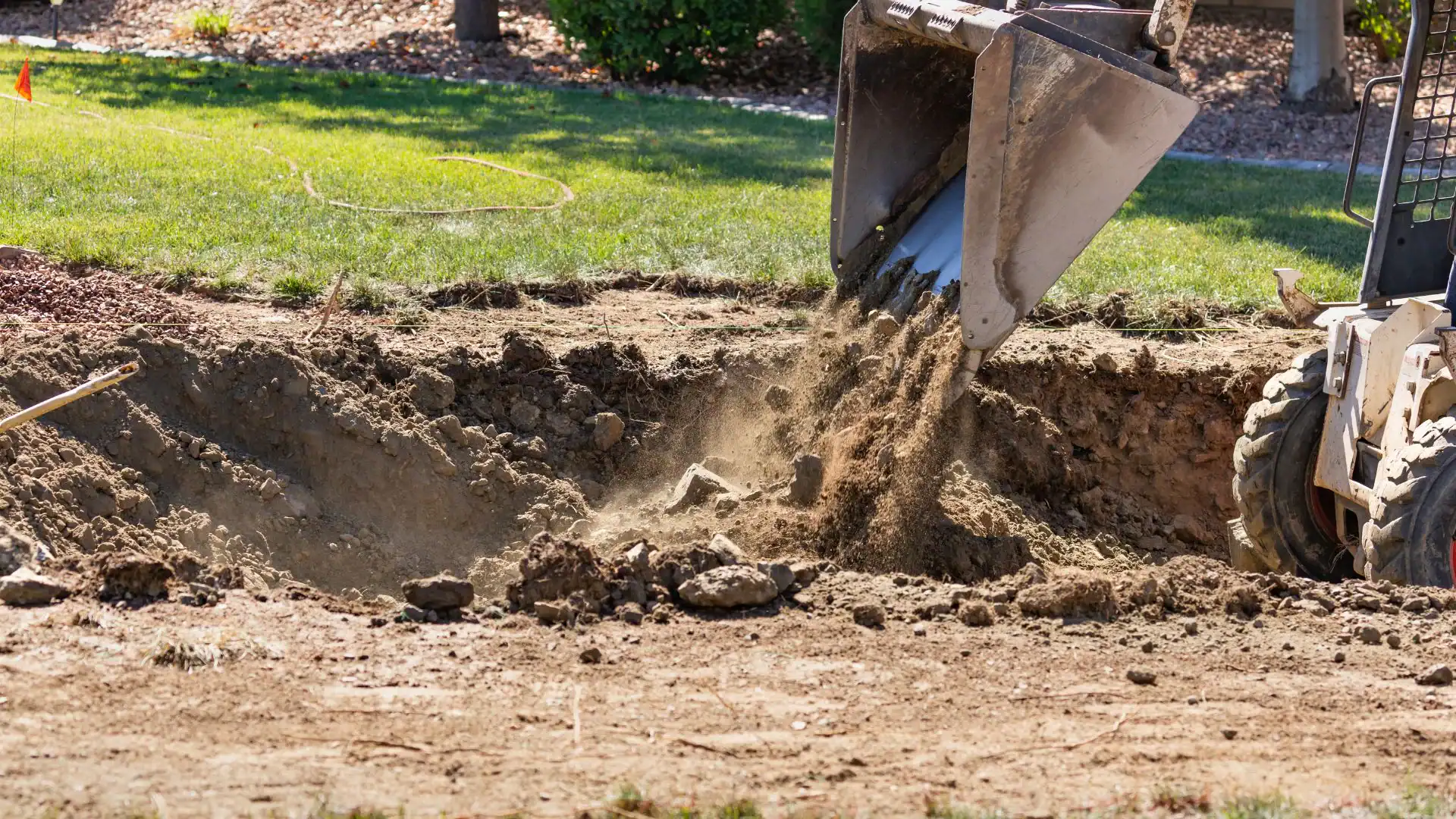
Pool excavation in Southampton is more involved than it sounds, primarily because of the soil and groundwater conditions that define much of the town. Sandy soils near the ocean and bay areas are loose and can shift during excavation, especially when groundwater is close to the surface. The dig needs to be precise the right dimensions, the right depth, the right slope stability so the pool contractor can set the shell without dealing with a compromised or flooded excavation.
Beyond the dig itself, there’s spoil management to consider. A standard residential pool generates a significant volume of excavated material that needs to be hauled off site or redistributed on the property. In Southampton, where properties are often large and landscaping plans are detailed, we coordinate with the project team on where spoil goes so it doesn’t create problems for the grading and landscape work that follows. We also implement erosion controls during the dig to prevent runoff particularly important on properties near the town’s waterways and wetlands.
Yes, and this is an area where a lot of property owners get caught off guard. Southampton has one of the most extensive wetland networks of any town on Long Island coastal marshes, tidal zones, freshwater ponds, and bay margins are distributed across virtually every part of the town. The Village of Southampton’s wetlands code governs any excavation, filling, or grading activity that could affect wetland function, and violations can result in stop-work orders, mandatory restoration, and fines.
Depending on where your property sits relative to wetland boundaries, you may need a wetlands permit before any excavation can begin. This is separate from the standard building permit process and involves its own review timeline. We identify wetland proximity during our initial site assessment and factor the appropriate approvals into the project schedule upfront. Working near wetlands without the right permits isn’t just a regulatory risk it can permanently affect the ecological character of your property, which in Southampton often represents a significant part of its value.
It depends on the scope, the lot size, and critically in Southampton how early in the process the permits are in place. For a standard residential new build on a cleared lot, site preparation including excavation and rough grading can take anywhere from one to three weeks of active work. On larger estate lots in areas like Water Mill or Bridgehampton, or on sites that require significant cut and fill, land clearing, or infrastructure preparation, that timeline extends accordingly.
What compresses timelines in Southampton more than anything else is the spring construction rush. Builders and homeowners throughout the Hamptons are all pushing toward the same summer occupancy deadline, which means excavation contractors are heavily booked from March through June. If you’re planning a build or major site project with a summer target, the best thing you can do is get your permitting started early and lock in your excavation contractor before that window fills up. We recommend reaching out as early as possible in the planning process not once you’re already behind schedule.