Hear from Our Customers
When you’re building or improving a property on the edge of Noyac Bay, the ground beneath you tells a story before the first bucket goes in. Sandy coastal soils near the waterfront behave differently than the glacially deposited material you’ll find on higher ground. And if your lot sits near the Long Pond Greenbelt or borders tidal wetlands, the rules around what you can disturb and how you disturb it add another layer entirely. A contractor who doesn’t know this going in will figure it out at your expense.
What you actually want is a project that starts on time, holds its grade, and doesn’t generate a stop-work order three days in because someone missed a Town of Southampton permit requirement. That’s not a high bar it should be the baseline. But in Noyack, where regulatory requirements stack up fast and site conditions vary block to block, it takes real local experience to deliver it consistently.
The outcome here isn’t just a cleared or graded site. It’s a site that’s ready for whatever comes next foundation work, a pool installation, a drainage correction without the rework, the delays, or the compliance headaches that come from cutting corners on the front end.
We work across Long Island’s East End, and Noyack is the kind of market that keeps us sharp. Properties here sit close to the water, lots are large, and the clients whether they’re year-round residents on Noyac Road or seasonal homeowners coming in for the summer expect the work to be done right the first time.
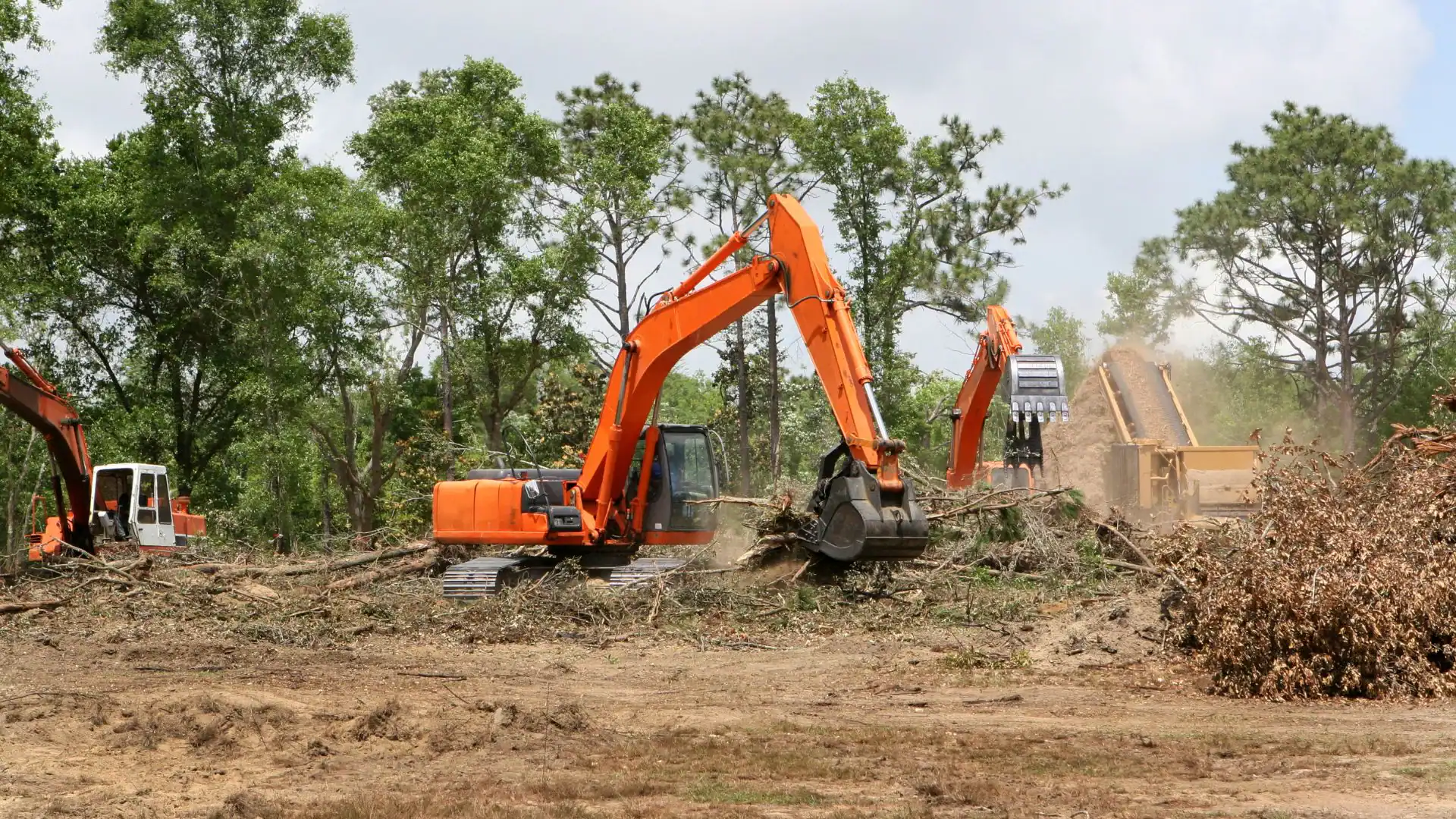
We’re a licensed and insured excavation contractor handling land clearing, site preparation, cut and fill, dig and haul, grading, trenching, and retaining wall excavation. One crew, one contract, one point of accountability from start to finish. You’re not coordinating between three different operators while your build timeline slips.
We’ve worked in the Town of Southampton long enough to understand the permit landscape what triggers a Coastal Erosion Management Permit, when a DEC wetlands review applies, and why calling 811 before any dig isn’t optional. That working knowledge protects your project. It’s also just how we operate.

It starts with a site assessment. Before any equipment moves, we look at what you’re working with lot access, existing grades, proximity to water or wetlands, soil conditions, and what the project actually requires versus what the plan assumes. On a Noyack property, that assessment often surfaces things that matter: a high water table that will affect how deep you can safely dig, a boulder field from the area’s glacial geology, or a property boundary that edges close enough to Noyac Bay to trigger coastal zone permit requirements.
From there, we walk you through what permits are needed before work begins. The Town of Southampton’s building code is specific about land clearing and excavation work started without the right approvals comes with double fees and potential stop-work orders. We contact Dig Safely New York (811) to identify all underground utilities before any ground is broken. That’s a legal requirement in New York State, and it’s a step we take on every job without exception.
Once the site is cleared and prepped, we execute the scope whether that’s a full cut and fill to achieve engineered levels, dig and haul to remove material from a tight access site, or precision grading ahead of a pool or foundation install. We clean up as we go and leave the site in the condition your next contractor needs it in.
Ready to get started?
Noyack’s residential fabric is built on large lots many of them an acre or more with high-value homes that often require substantial earthworks before any vertical construction begins. Site preparation, cut and fill, retaining wall excavation, drainage correction, and dig and haul are all part of what we handle. You don’t need to bring in separate crews for each phase. That matters in Noyack, where contractor availability is tight and your build window is tied to a season.
The services most in demand on Noyack properties tend to fall into a few categories. New construction site prep clearing, rough grading, and getting to engineered levels is a significant part of what we do here. Pool excavation on large residential lots is another, requiring precise depth and dimension and careful management of excavated material on sites that don’t always have easy haul-out access. Drainage correction is increasingly common given the area’s high water table and the low-lying lots that run close to the bay.
We also work alongside contractors handling I/A sanitary system installations the innovative alternative septic systems now being required across much of the East End to address nitrogen loading in the bay. That work requires excavation contractors who understand the specific requirements of those systems, and it’s a growing part of what we see in Noyack and the surrounding Southampton Town area.
Yes and in Noyack, the answer is often more layered than people expect. At minimum, most excavation and land clearing activity in the Town of Southampton requires a building permit from the Town. What catches people off guard is that the Town’s code imposes double fees for any work started without the required approvals in place. That’s not a minor administrative issue it’s a real financial penalty that applies before you’ve even addressed the underlying violation.
Beyond the Town permit, Noyack’s position on Noyac Bay and Little Peconic Bay means many properties fall within New York State’s Coastal Erosion Hazard Area. Any excavation, grading, or fill activity in that zone can require a Coastal Erosion Management Permit from the NYS DEC. If your lot borders wetlands whether tidal wetlands along the bay or freshwater wetlands near the Long Pond Greenbelt additional DEC permits may apply. The right answer for your specific property depends on exactly where it sits and what you’re planning to do. That’s a conversation worth having before any equipment shows up.
It means you need to know what you’re getting into before you start digging. Noyack’s coastal position puts many properties especially those on lower-lying lots near the bay closer to the water table than you’d find in inland Long Island communities. When you’re excavating for a foundation, a pool, or a septic system and you hit saturated ground unexpectedly, the job changes. You may need dewatering equipment, adjusted excavation methods, or a revised scope. None of that is insurmountable, but it needs to be planned for not discovered mid-dig.
A contractor who’s worked on the South Fork understands this. Part of a proper site assessment before work begins is evaluating the likely depth to groundwater based on the lot’s elevation, its proximity to the bay, and the time of year. Spring excavation in Noyack, when the water table is at its highest after winter, requires different planning than fall work when ground conditions are typically drier and more stable. Getting that assessment right upfront is what keeps the project on schedule.
The NYS DEC maintains official Coastal Erosion Hazard Area maps that identify regulated zones along New York’s coastline. For Noyack, which sits directly on Noyac Bay and borders Little Peconic Bay, a significant number of properties particularly those with bay frontage or in close proximity to the shoreline fall within the CEHA boundary. The DEC maps are publicly accessible, and the Town of Southampton’s building department can also advise on whether a specific parcel is in a regulated zone.
What matters practically is that you find out before work begins, not after. If your property is in the CEHA and you excavate or grade without a Coastal Erosion Management Permit, you’re looking at a stop-work order, potential fines, and possibly a requirement to restore the site to its original condition which can be more expensive than the original project. If you’re not sure whether your lot is affected, that’s one of the first questions to resolve in the planning process. We can help you think through what’s likely to apply based on where your property sits.
Pool excavation on a Noyack lot involves more than just digging a hole to the right dimensions. The first step is confirming the excavation doesn’t conflict with any underground utilities which means contacting Dig Safely New York (811) at least 48 hours before any digging starts. From there, the excavation itself needs to hit precise depth and dimensional tolerances so your pool contractor has a correctly prepared shell to work with. Getting those dimensions wrong creates expensive rework downstream.
On Noyack properties specifically, a few additional factors come into play. Access for equipment and spoil removal needs to be thought through on lots where mature landscaping or tight site conditions limit where machinery can move. The water table is a real consideration if you’re excavating in spring or on a low-lying lot near the bay, groundwater management may be part of the scope. And if the pool is going in close to the property boundary or near any wetland buffer, the permit picture needs to be clear before work begins. These aren’t unusual complications for Noyack they’re just part of working on the South Fork.
Fall is often the best window for excavation in Noyack, and it’s worth planning ahead to secure it. Ground conditions from September through November are typically the most favorable dry enough for heavy equipment to move without tearing up the site, and the water table is usually lower than in spring. Projects that need to be ready for the following summer construction season are ideally set up with excavation done in the fall, giving foundation work or other follow-on trades a clean, settled site to start from.
Spring is the other high-demand period, as seasonal homeowners commission projects ahead of summer. The challenge is that spring ground conditions in a coastal community like Noyack can be wet and soft, particularly on lots that sit close to the bay. That doesn’t make spring excavation impossible it just means the site assessment and equipment selection need to account for it. Summer is technically workable but contractor availability on the East End gets tight fast once the season starts. If your project has a specific deadline tied to a season, book earlier than you think you need to.
Licensing and insurance are the baseline not a differentiator, just the minimum. In New York State, excavation contractors should carry appropriate liability coverage for the scale of work they’re doing. On a Noyack property where the land alone can be worth seven figures, working with an uninsured operator isn’t a risk worth taking. Ask for proof of both before anyone sets foot on your property.
Beyond credentials, what actually separates contractors in this market is local knowledge. Noyack has specific conditions the coastal regulatory environment, the variable soil profile from the South Fork’s glacial geology, the water table dynamics near the bay that a contractor who mostly works in central Suffolk County may not be equipped for. Ask whether we’ve worked in the Town of Southampton before, whether we understand when a DEC Coastal Erosion Management Permit applies, and how we handle groundwater if we hit it unexpectedly. The answers will tell you quickly whether you’re talking to someone who knows this area or someone who’s figuring it out on your dime. Also confirm we contact Dig Safely New York (811) before every dig that’s a legal requirement in New York State and a non-negotiable standard for any reputable contractor.