
Hear from Our Customers
Water doesn’t care what your home is worth. But you do and in Noyack, where median property values push past $1.1 million, the cost of ignoring a drainage problem compounds fast. Foundation repairs run anywhere from $15,000 to $50,000. Mold remediation can start at $3,000 and climb well beyond that. A properly installed French drain system stops that chain of damage before it starts.
The conditions in Noyack make drainage more than a routine maintenance issue. Properties near Noyack Bay, the Long Pond Greenbelt ponds, and the low-lying areas around Trout Pond sit on glacially formed terrain with variable sandy soils and a water table that responds quickly to rainfall. After a nor’easter or a heavy spring rain, that water has to go somewhere and without a drainage system designed for these specific conditions, it goes toward your foundation.
For seasonal homeowners in Noyack, the risk is even more concentrated. A drainage problem that develops between visits doesn’t pause. It quietly saturates the soil, pressures the foundation, and creates the conditions for mold all before you arrive for the summer. Getting the right French drain system installed means that when you pull into the driveway on Memorial Day weekend, the yard is dry and the basement is fine.
We work on the East End of Long Island, with deep experience in Noyack and the surrounding South Fork communities. That means we understand the soil variability along this stretch of the South Fork, the wetlands setback requirements under Southampton Town’s regulations, and the drainage dynamics that come with being a few hundred yards from Noyack Bay or the Greenbelt corridor. This isn’t general knowledge it’s the kind of thing we learn from doing this work here, on these properties.
We handle the full scope: site assessment, system design, permit coordination through the Town of Southampton, installation, and complete landscape restoration when the job is done. You don’t manage multiple contractors or chase down paperwork. One call covers everything from diagnosis to a dry yard.
Every property we work on in Noyack gets a system designed for its specific conditions soil type, topography, proximity to water, and how the lot drains after a heavy storm. That’s not a pitch. It’s just how drainage work should be done.
It starts with a free on-site assessment. We walk the property, look at where water is collecting, evaluate the soil, check the grade, and identify where the problem is actually coming from not just where it’s showing up. In Noyack, that often means accounting for proximity to the bay, the natural depressions left by glacial activity, and whether the property sits within Southampton Town’s wetlands setback zones. If permits are required, we handle that before any work begins.
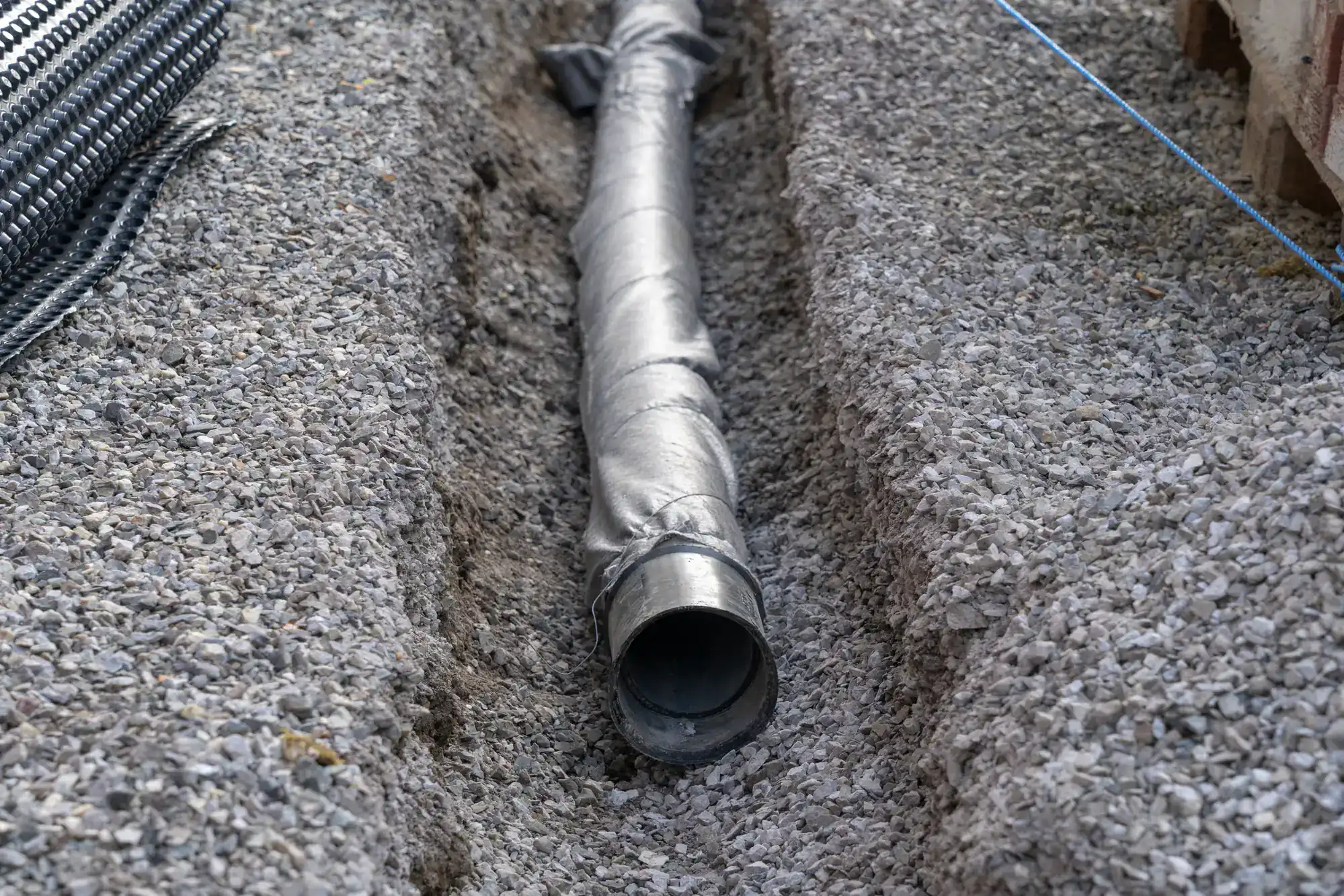
Once the design is confirmed, we mark all utilities through the 811 process required by law before any excavation and begin installation. The trench is dug to the appropriate depth for Long Island’s frost line, which matters more than most contractors acknowledge. A French drain pipe installed too shallow will freeze solid in January and fail exactly when spring snowmelt creates the most drainage demand. We use perforated pipe, washed angular gravel, and geotextile filter fabric on every job not because it’s an upgrade, but because it’s what actually holds up over time in these soil conditions.
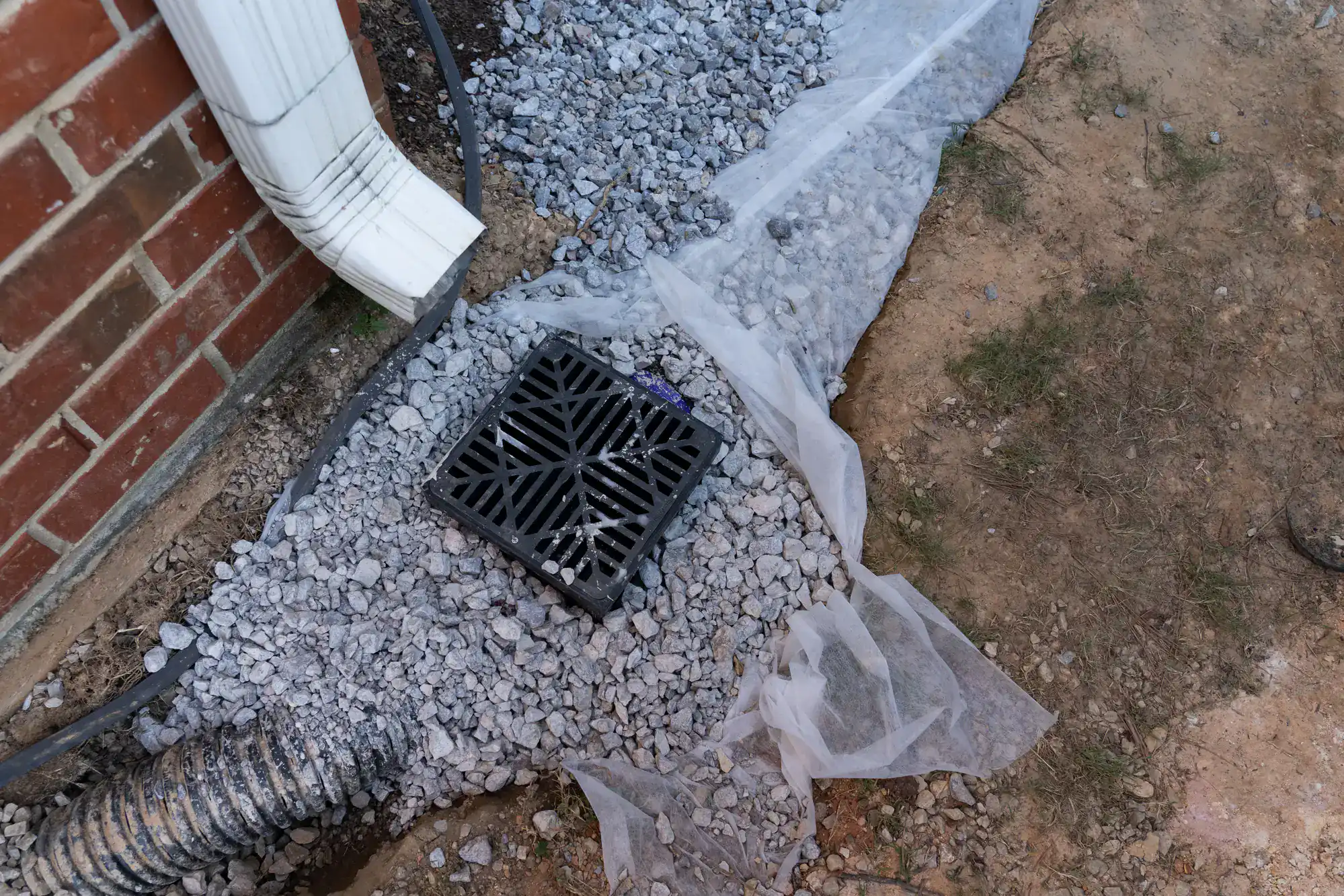
After installation, we fully restore the landscape. Topsoil, seeding, and surface grading are part of the job. When we leave, the system is underground and invisible and your yard looks the way it did before we arrived.
Ready to get started?
Every French drain installation we do in Noyack is designed around what’s actually happening on that specific lot. The glacially formed landscape of the South Fork produces real variability two properties on the same stretch of Noyack Road can have completely different soil profiles and drainage patterns. We account for that in every design, rather than applying a one-size approach that works fine in a flat suburban neighborhood but underperforms here.
For properties near Noyack Bay, the Long Pond Greenbelt, or the Elizabeth A. Morton National Wildlife Refuge buffer zone, Southampton Town’s wetlands regulations add a layer of complexity that not every contractor is prepared to navigate. We are. We know where the setback lines fall, what the permit process looks like through the Town of Southampton’s Engineering Division, and how to design a system that solves your drainage problem while staying fully compliant with local environmental requirements.
The materials we use perforated pipe, double-punched geotextile filter fabric, washed angular gravel are specified to perform in sandy, variable soils and to hold up through Long Island’s freeze-thaw cycles year after year. We always include landscape restoration. What you get at the end is a drainage system that works, a yard that looks right, and no loose ends.
It depends on the scope of the project and where the property is located. Most standard residential French drain installations in Noyack don’t require a full building permit, but properties near Noyack Bay, the Long Pond Greenbelt ponds, or the Elizabeth A. Morton National Wildlife Refuge buffer zone may fall within Southampton Town’s regulated wetlands setback zones and work in those areas does require review and approval before installation begins.
Southampton Town operates under a stormwater management program that aligns with New York State SPDES permit requirements, and the Town’s wetlands chapter governs any work within designated setback distances from tidal or freshwater wetlands. Getting this wrong exposes you to stop-work orders and remediation costs that far exceed the original project. We handle all permit research and coordination as part of every job, so you’re not left guessing whether your Noyack property triggers a review requirement.
Most residential French drain installations fall somewhere between $5,000 and $12,000, with the national average sitting around $9,250 according to current industry data. The actual cost for a Noyack property depends on the length of the trench, the depth required, the complexity of the drainage design, and whether any permit coordination is needed for properties near wetlands-adjacent areas like the Greenbelt or the bay.
What’s worth keeping in mind at Noyack property values is the cost-of-inaction math. Foundation crack repair typically runs $15,000 to $50,000. Mold remediation starts at $3,000 and can climb significantly from there. A persistent drainage problem on a property worth $1.5 million or more doesn’t just cost money to fix it affects what that property is worth when it’s time to sell. A French drain system is one of the more straightforward ways to protect a significant asset, and the investment is proportionally modest relative to what’s at stake.
Depth depends on the purpose of the system, but frost depth is a factor that’s often underestimated in this climate. Long Island’s frost depth runs approximately 36 inches, and a French drain installed significantly shallower than that is at real risk of freezing during a cold snap in January or February which means the system fails exactly when spring snowmelt and early-season rain create the highest drainage demand.
For yard drainage applications, French drains are typically installed between 18 and 24 inches deep. For systems designed to address foundation or basement water intrusion, deeper installation is often necessary. In Noyack specifically, the variable soils left by glacial activity mean that the right depth also depends on where suitable leaching material begins in some areas, you need to excavate past poor-draining layers before you reach soil that will actually accept the redirected water. A proper site assessment identifies this before installation begins, not during it.
This is one of the most common concerns we hear from Noyack homeowners, and it’s a fair one. Properties here often have established landscaping mature trees, custom garden beds, stone walkways, and carefully maintained lawns that represent real investment on top of the property itself. Excavation is part of the process, but how it’s handled makes a significant difference in what the yard looks like when the job is done.
We approach every installation with landscape preservation as a built-in priority, not an afterthought. That means careful hand-digging around root zones and hardscaping features, precise trench lines that minimize surface disruption, and full landscape restoration at the end of the project topsoil, seeding, and surface grading included. The drainage system goes underground and stays there. When we leave, the yard should look the way it did before we arrived, and the only evidence of the work is that water stops pooling where it used to.
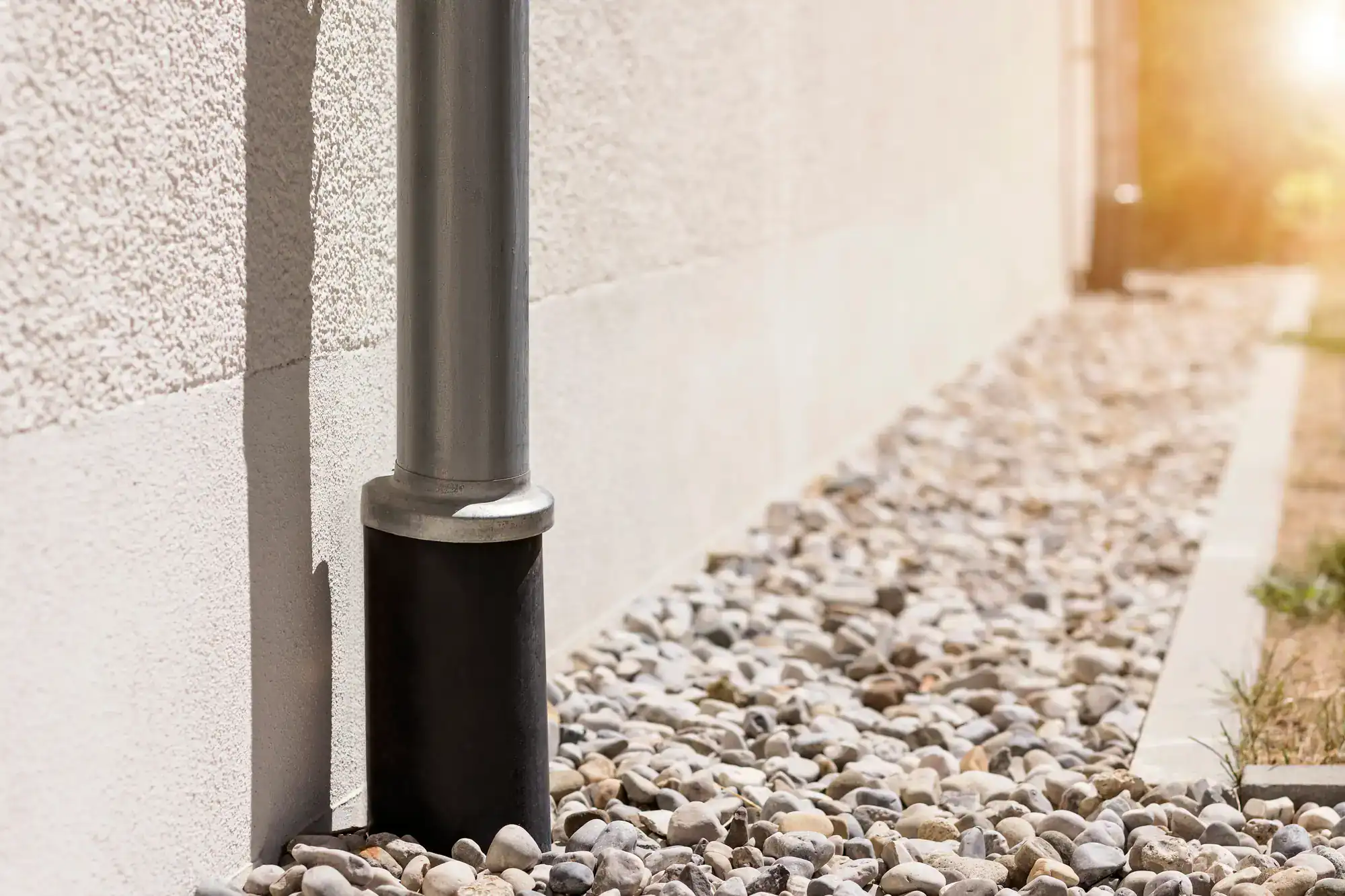
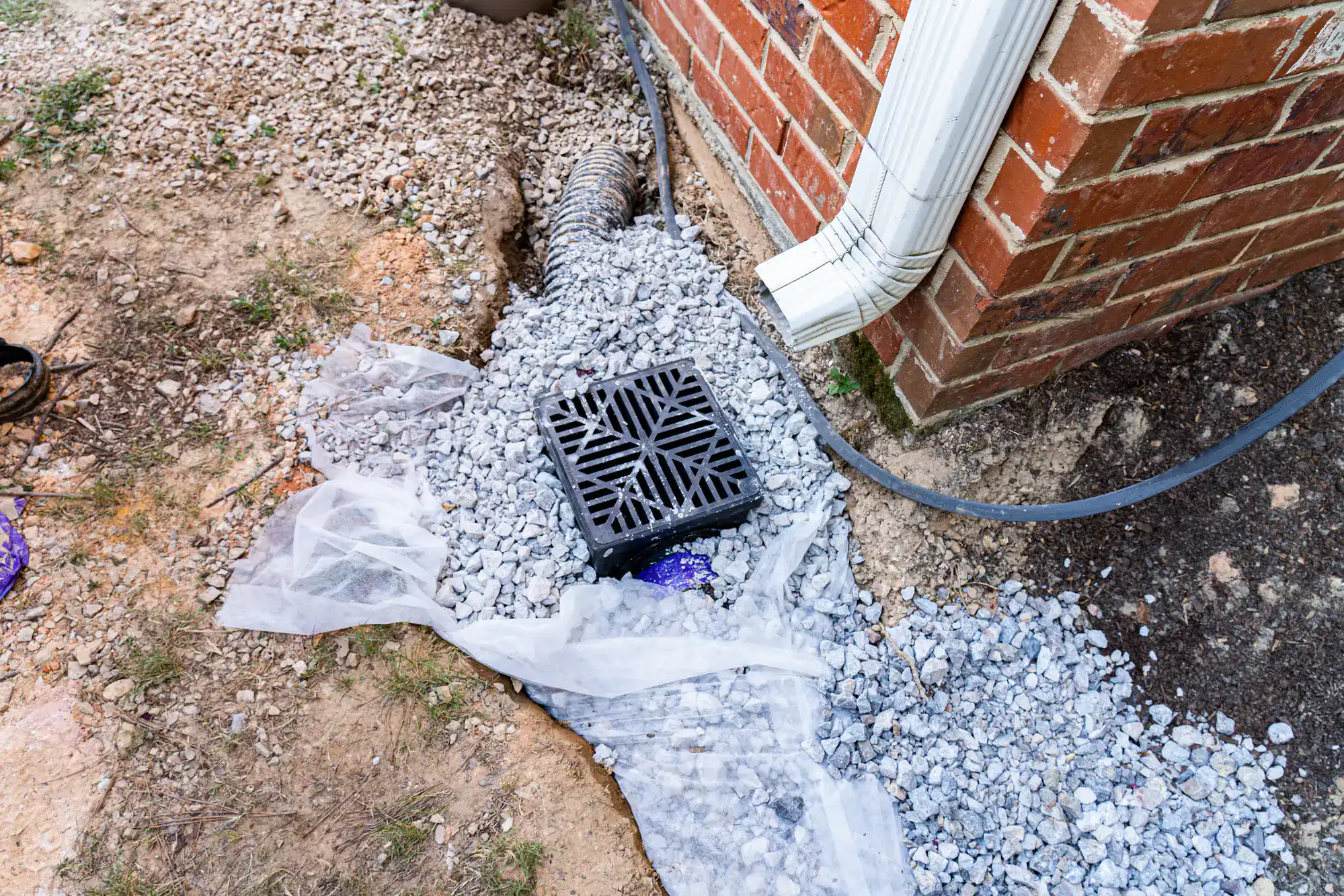
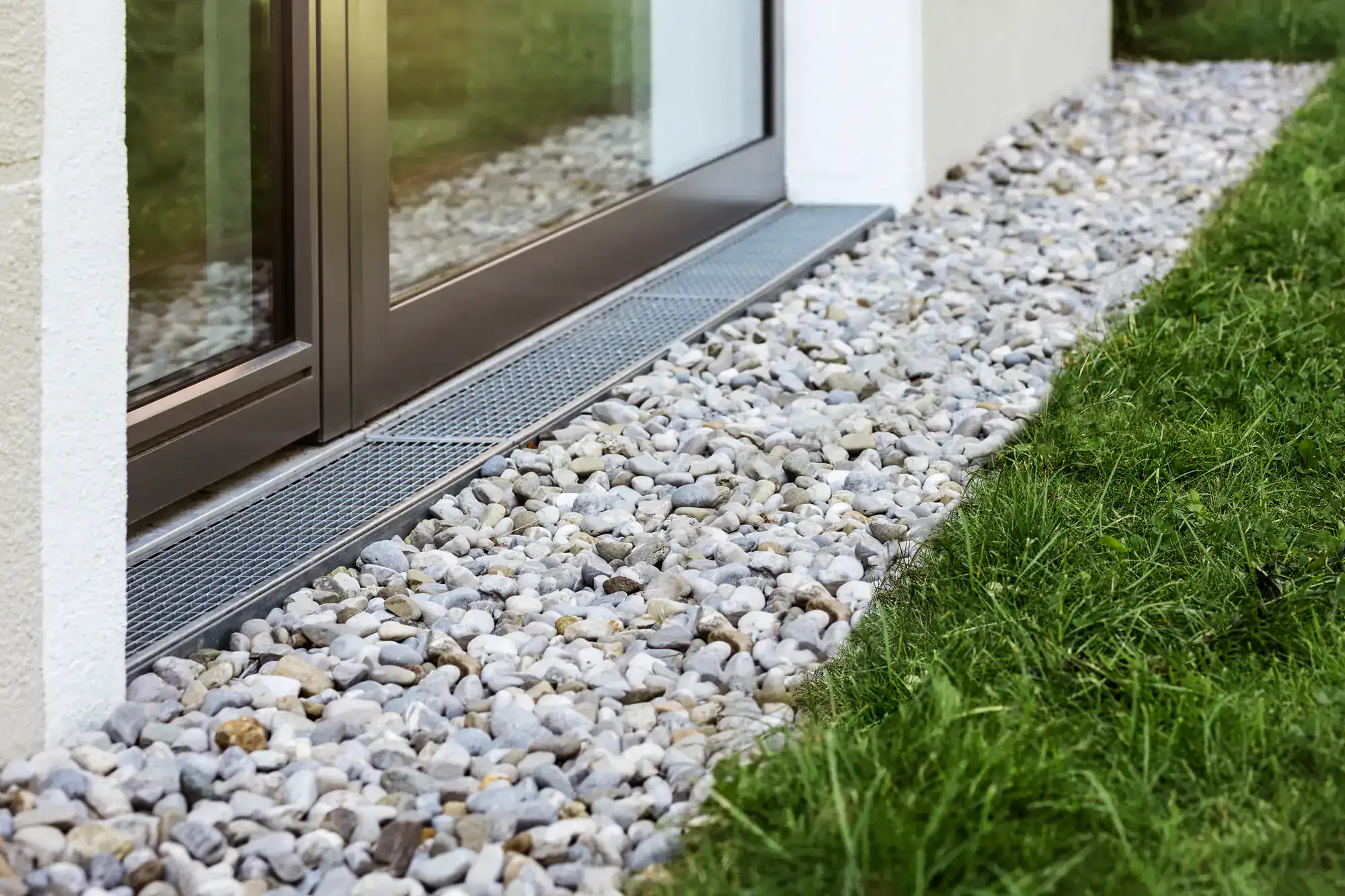
A French drain is a subsurface system it captures groundwater and surface water before it reaches your foundation or creates pooling, and redirects it away from the problem area through a gravel-filled trench with a perforated pipe at the bottom. It’s designed to manage water at the source, underground, rather than just moving surface runoff. That makes it particularly effective for the conditions common in Noyack: elevated water tables near the bay, low-lying areas that collect water after rain, and properties on glacially uneven terrain where surface grading alone doesn’t solve the problem.
Other options like catch basins, dry wells, and surface swales each have their place, but they address different problems. Catch basins handle concentrated surface runoff from specific collection points. Dry wells manage roof downspout discharge. A French drain is typically the right solution when water is entering from multiple directions, when the soil is saturated and slow to drain, or when the issue is hydrostatic pressure against a foundation wall. In many Noyack installations, the best system combines a French drain with one or more of these other components which is why a proper site assessment matters before any design is finalized.
A French drain system built with the right materials and installed correctly should last 30 to 40 years. The variables that shorten that lifespan are almost always material or design failures: corrugated pipe that collapses under soil pressure, geotextile fabric that allows silt infiltration over time, insufficient gravel bed, or improper slope that causes the system to back up rather than drain. In Noyack’s sandy, variable soils, using the right filter fabric is especially important fine particles can migrate into the gravel bed and clog the system within a few years if the fabric isn’t specified correctly for the local soil profile.
Freeze-thaw cycles on the South Fork also affect longevity. A system installed at the correct depth for Long Island’s frost line will cycle through decades of winters without issue. One that’s too shallow may develop pipe stress or joint failures over time as the ground repeatedly freezes and thaws around it. Getting the installation right from the start correct depth, correct materials, correct slope is what separates a 35-year system from one that needs attention in year seven.